 Bellingham Siding
 Bellingham's Climate Is Hard on Siding — Most Products Just Aren't Built For It
Whatcom County sits in a tough spot for exterior materials. You've got salt air rolling in off Bellingham Bay and the Strait of Georgia, driving rain that comes sideways off the water most of the fall and winter, and a moss season that can run eight or nine months out of the year on north-facing walls and anything shaded by evergreens. Add in the freeze-thaw swings we get a handful of times each winter, and you've got a climate that punishes any siding material with a weak point in its moisture management.
We made a decision a while back to install only James Hardie fiber cement siding — no vinyl, no LP SmartSide, no Cemplank, no Allura, no primed spruce or cedar. This page explains the reasoning, not to bash other products, but so you understand what you're actually choosing between when you're picking siding for a home in this area.
What Fiber Cement Actually Is
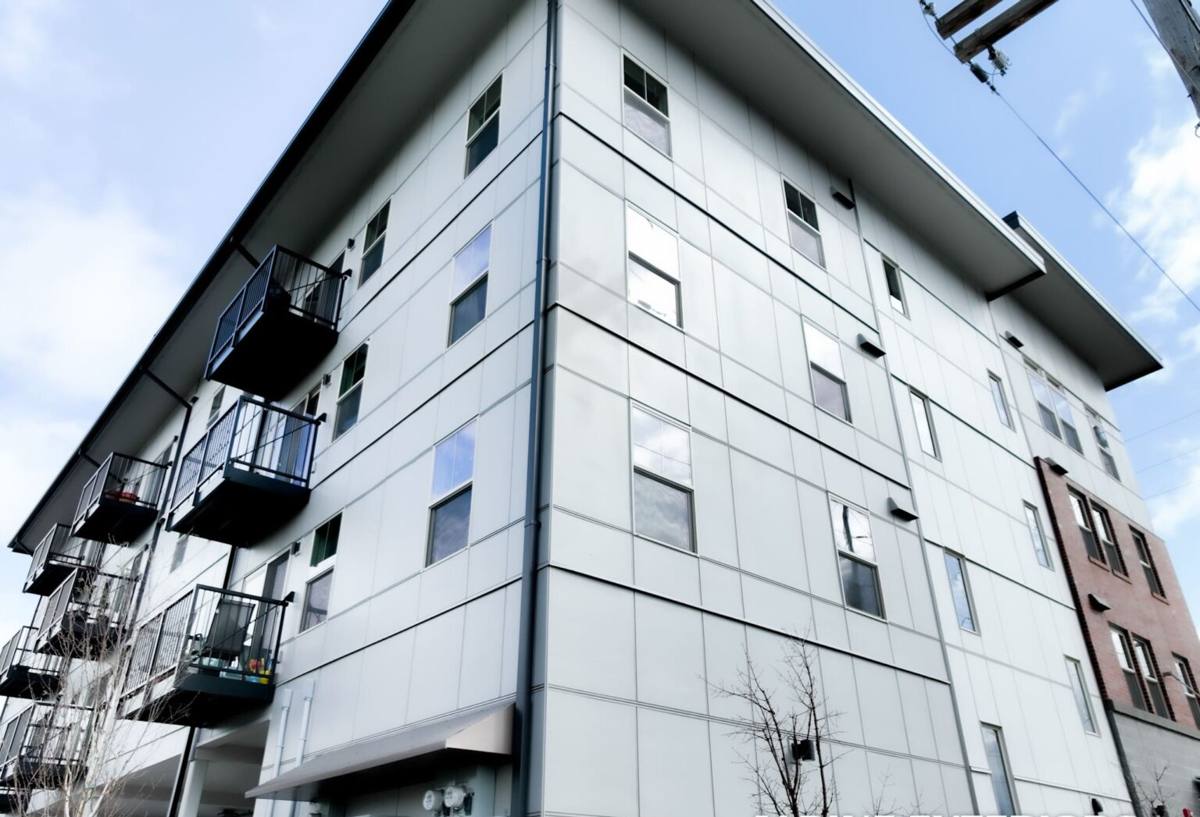
James Hardie siding is made from Portland cement, sand, and cellulose fiber, cured under pressure and heat (a process called autoclaving). The result is a dense, stable board that doesn't absorb water the way wood-based products do, doesn't expand and contract with humidity the way vinyl does, and won't support combustion the way wood or wood-composite siding will. It's heavy compared to vinyl or engineered wood — that weight is part of why it holds paint and color so well and why it doesn't rattle or flex in wind.
Why That Matters Here Specifically
In a drier inland climate, some of fiber cement's advantages are nice-to-haves. In Bellingham, they're closer to necessities. Salt-laden air accelerates corrosion of fasteners and coatings on lower-quality materials, and constant damp conditions are exactly the environment where moisture-sensitive siding starts to fail from the inside out — swelling, delaminating, or feeding mold and moss growth long before the surface looks obviously bad.
Why We Don't Install Vinyl Siding
Vinyl has real advantages: it's inexpensive, it's fast to install, and it never needs paint. We're not going to pretend otherwise. But vinyl is a thin PVC product that expands and contracts significantly with temperature swings, which means panels need room to move — done wrong, and you get buckling and gaps. It's also a poor performer in wind-driven rain unless the water-resistive barrier and flashing details behind it are close to perfect, because vinyl itself isn't a water barrier, it's a rain screen that depends entirely on what's behind it.
Our bigger concern is longevity of appearance. Vinyl color is baked into the material, which sounds good until you consider that it fades unevenly with UV exposure over 10-15 years, and it can't be repainted without specialized prep — most people just live with the faded color or replace it. In a marine climate with strong sun exposure on south and west elevations, that fade timeline often runs on the shorter end.
Why We Don't Install LP SmartSide, Cemplank, or Allura
LP SmartSide (Engineered Wood)
LP SmartSide is a wood-strand product with a resin binder, and it performs reasonably well when installation and caulking are maintained perfectly for the life of the siding. The catch is that it's still wood-based, which means any breach in the factory coating — a nail hole that wasn't sealed right, caulk that's failed at a butt joint, a corner that took a hit — gives moisture a path into a material that will swell and eventually rot from that point outward. That's a maintenance burden we don't think is fair to hand a homeowner in a county where it rains more than 200 days a year.
Cemplank and Allura (Other Fiber Cement Brands)
This one's less about the raw material — Cemplank and Allura are also fiber cement, and the core product isn't fundamentally different from Hardie's. Our reasoning here comes down to finish quality control and warranty structure. James Hardie's ColorPlus factory finish process and the depth of their installer network and warranty backing are things we've been able to verify and stand behind over years of installs. We'd rather install one system we know cold — down to the fastener spec and flashing detail — than split our crews' expertise across several similar-but-different products.
Why We Don't Install Primed Spruce or Cedar Lap Siding
Cedar has genuine appeal — it's a real wood product with a natural look that some homeowners want specifically. Primed spruce is often used as a lower-cost stand-in for cedar's look. Both share the same fundamental issue: they're solid wood, and solid wood needs a maintenance schedule (recaulking, repainting, moisture checks) that most homeowners don't keep up with consistently over 10, 15, 20 years. In a climate with our rainfall and moss pressure, gaps in that maintenance schedule show up as rot, especially at butt joints, window trim, and anywhere moss holds moisture against the wood surface longer than it should.
We're not saying cedar can't last — well-maintained cedar siding exists on plenty of older Bellingham homes. We're saying we don't think it's realistic to promise a homeowner that upkeep will happen on schedule for two decades, and we don't want to sell a product whose performance depends on that assumption.
James Hardie Product Lines We Install
| Product | Best For | Notes |
|---|---|---|
| HardiePlank Lap Siding | Most homes, classic lap look | Available in smooth or cedar-textured finish; our most common install |
| HardiePanel Vertical Siding | Modern facades, accent walls, gable ends | Often paired with lap siding for a mixed look |
| HardieTrim | Window and door trim, corners, fascia | Fiber cement trim to match the siding — no wood trim rotting next to fiber cement siding |
| HardieShingle | Accent gables, Craftsman-style detailing | Staggered or straight-edge shingle profiles |
James Hardie also engineers products by climate zone — what they call HZ5 and HZ10 formulations — with the mix and moisture engineering adjusted for the region's typical weather. Western Washington installs use the HZ5 line, engineered for wetter, moderate-freeze climates like ours rather than the hot, dry conditions the HZ10 line is built around.
ColorPlus Factory Finish vs. Field Painting
Hardie's ColorPlus finish is baked on at the factory under controlled conditions, which gives more consistent coverage and adhesion than a job-site paint job, plus a longer finish warranty. We still install primed Hardie board with a field-applied paint job when a homeowner wants a custom color outside the ColorPlus palette — it's a legitimate option, just with a shorter finish warranty than factory-applied color.
What Correct Installation Actually Involves
Fiber cement's real-world performance depends heavily on installation quality — this is true of any siding product, but it's especially true here because so much of what protects the house is invisible once the job's done.
- Proper water-resistive barrier and correctly lapped flashing at every window, door, and penetration
- Correct fastener type, spacing, and depth per Hardie's published install specs (over- or under-driven nails are a common failure point)
- Minimum clearance from grade, decks, and roof lines so board doesn't sit in standing water or snow
- Properly caulked and back-primed cut ends, especially at butt joints and trim intersections
- Rainscreen or drainage gap detailing appropriate for a high-moisture climate like Whatcom County's
- Manufacturer-approved touch-up paint at any field cuts or fastener heads
Skipping any one of these doesn't necessarily show up as a problem in year one. It shows up in year seven or ten, as moisture intrusion at a spot nobody thought twice about during installation.
Cost and Value Over Time
Fiber cement costs more upfront than vinyl and is generally comparable to or slightly above engineered wood siding, installed. Where it earns that difference back is in reduced repainting frequency (ColorPlus finishes are warrantied for decades, not years), lower vulnerability to moisture damage, and a transferable warranty that matters if you sell the home. It's also non-combustible, which some insurance carriers factor into premiums and which matters more every wildfire season, even here on the wet side of the state.
We won't tell you fiber cement is the cheapest option, because it isn't. We think it's the option that holds up honestly in this climate without asking you to maintain it perfectly every single year to avoid problems.
Moss, Algae, and Long-Term Appearance
Bellingham's moss season is long, and north-facing walls, shaded elevations, and anything near mature trees will see algae and moss growth on almost any siding material eventually — fiber cement included. The difference is that Hardie's dense cement composition doesn't feed organic growth or soften under it the way wood-based products can, so moss stays a cosmetic issue you can wash off rather than a moisture problem working its way into the substrate underneath.
Get an Honest Estimate
If you're planning a siding project in Bellingham or elsewhere in Whatcom County, we're glad to walk your home, look at what's there now, and give you a straightforward estimate for a James Hardie install — no pressure, no upsell into a product we don't stand behind. Reach out through the form below to schedule a free look at your project.