 Bellingham Siding
 Siding in Lynden's Climate — What Homes Are Up Against
Lynden sits in the Nooksack River valley in Whatcom County, close enough to the Salish Sea and Bellingham Bay that the region's marine-influenced weather shapes what happens to a house over time. Winters bring long stretches of driving rain, spring and fall carry heavy dew and fog off the valley floor, and shaded north- and east-facing walls can stay damp for days at a stretch. That combination is exactly what moss, mildew, and slow moisture intrusion feed on.
Homes on larger lots near farmland or tree lines tend to get less direct sun and more standing humidity around the siding, especially behind landscaping or under eaves that don't get wind exposure. Add in the freeze-thaw cycles that show up most winters, and any siding material with weak seams, absorbent edges, or a coating that isn't built for sustained moisture exposure is going to show wear years before it should.
None of this means Lynden is a uniquely brutal place to own a house. It means the siding has to be matched to a genuinely wet, temperate climate rather than installed the same way it would be in a dry inland region. That's the lens we use on every estimate here.
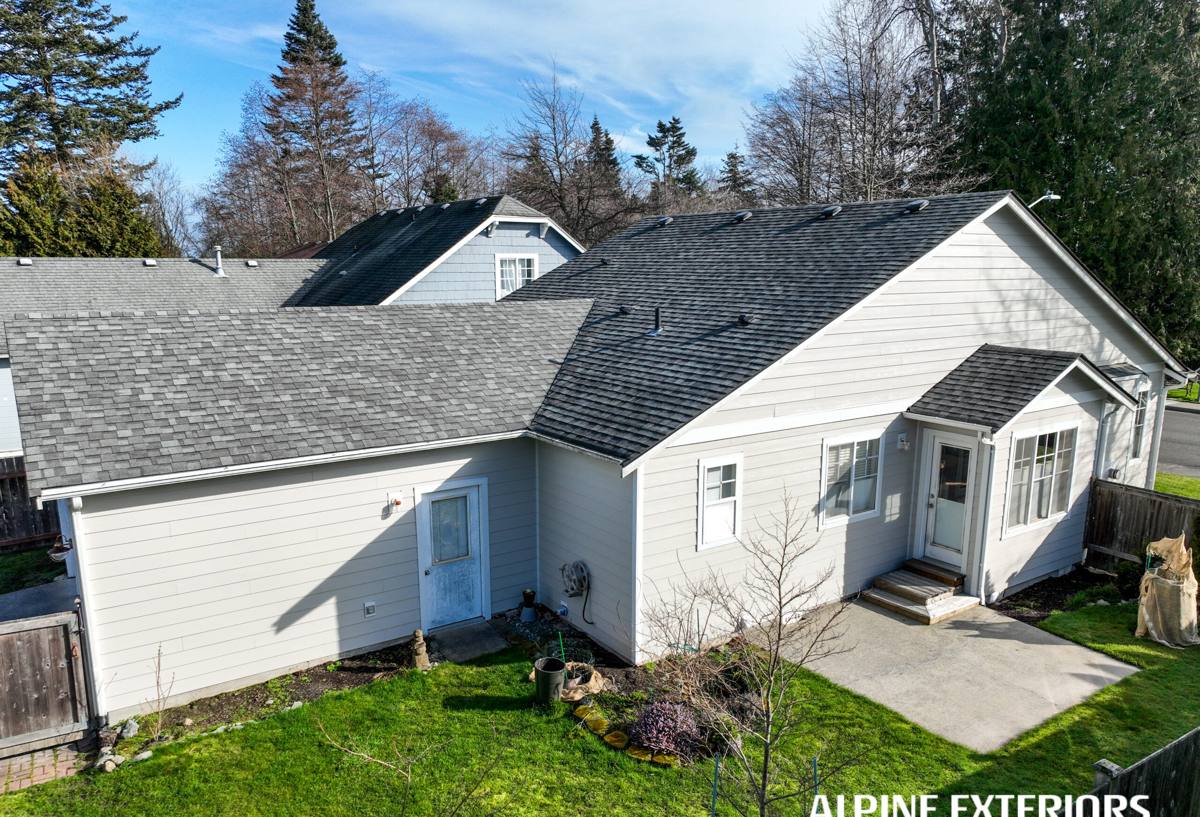
Why We Only Install James Hardie Fiber Cement
We install James Hardie fiber cement siding exclusively. We don't install vinyl, LP SmartSide, Cemplank, Allura, or bare wood siding like primed spruce or cedar. That's a deliberate standard, not a sales preference, and it's worth explaining why.
Fiber cement is made from cement, sand, and cellulose fiber, which makes it non-combustible and dimensionally stable in a way wood-based and vinyl products aren't. It doesn't expand and contract with humidity the way engineered wood siding can, it won't soften at cut edges the way OSB-based products can if a seal fails, and it holds paint and factory finishes far longer than bare wood. James Hardie also builds region-specific product lines (their HZ5 line is engineered for climates like ours, with wetter winters and more moisture cycling) and backs installations with a strong transferable limited warranty when the work is done to their specifications.
That last part matters as much as the material. A lot of siding problems we get called out to inspect aren't material failures — they're installation failures: wrong fastening, missing flashing, caulked joints that should have been left to drain, or siding hung too close to grade. We install one product system so our crews stay genuinely expert in it, rather than being generalists across five different materials with five different failure points.
Signs a Lynden Home Needs New Siding
- Visible cracking, buckling, or warping, especially on walls that don't get much direct sun
- Soft spots when you press on the siding, which usually means moisture has already gotten behind it
- Paint that's peeling, bubbling, or needs repainting far more often than it used to
- Persistent moss or dark streaking that comes back within a season of cleaning
- Gaps, rot, or staining around window and door trim
- Rising heating bills with no other explanation, which can point to failing insulation behind the siding
- Siding that's original to a home built more than 20-25 years ago, especially older wood or early-generation composite products
Any one of these on its own might just need a repair. Several at once, especially combined with visible moisture damage at the sheathing, is usually a sign it's time to talk about full replacement rather than another round of patching.
Why Moisture Damage Is Worth Taking Seriously Here
In a drier climate, a small siding gap might sit there for years without causing real damage. In Whatcom County's wet season, that same gap can let water track behind the siding for months at a time. By the time it shows up as a soft spot or interior staining, there's often sheathing or framing damage underneath that costs more to fix than the siding itself. Catching problems early — or replacing aging siding before it fails — is almost always cheaper than repairing what's behind it.
How a Siding Replacement Project Works
Assessment and Estimate
We start with a walk-around inspection, looking at trim, flashing, window and door details, and any visible moisture damage — not just the siding surface. We'll tell you honestly if what you're seeing is cosmetic or if there's underlying rot that needs addressing first.
Tear-Off and Sheathing Check
Once old siding comes off, we inspect the sheathing and framing underneath. This is the point where hidden water damage from years of small leaks usually gets found. Any compromised sheathing gets replaced before new siding goes on — covering rotten wood with new siding just hides the problem.
Weather Barrier and Flashing
A correctly installed weather-resistive barrier and properly integrated flashing around every window, door, and penetration matter more to long-term performance than the siding material itself. This is the step that's most often shortcut on poor installations, and it's the step we spend the most care on given how much rain this region sees.
Installation to Manufacturer Spec
James Hardie siding is installed following their specific fastening, clearance, and joint-treatment requirements. Getting this right is what keeps the manufacturer's warranty valid and what actually determines how the siding performs over the next 20-30 years.
Final Walkthrough
We finish with a walkthrough so you can see the completed work, ask questions, and understand what maintenance (if any) is expected going forward.
James Hardie Product Lines and Colors
James Hardie makes several board styles, and most Lynden homes end up choosing between lap siding, shingle-style panels, and trim/accent boards, often in combination.
| Product | Typical Use | Notes |
|---|---|---|
| HardiePlank lap siding | Primary wall siding | Most common choice; several plank widths and textures |
| HardieShingle | Accent gables, dormers | Staggered or straight-edge shingle look without wood's maintenance |
| HardiePanel | Modern/vertical siding | Common on garages, additions, contemporary designs |
| HardieTrim | Window, door, corner trim | Pairs with any of the above for a finished look |
ColorPlus factory-finished color options are baked on and cured, which holds up better against fading and chipping than field-applied paint, and it's a meaningful time-saver on a project since there's no on-site painting to schedule around weather. For homes in shadier, damp-prone spots, we'll also talk through which colors and textures show moss and water streaking less over time.
What Siding Replacement Typically Costs
Every home is different, but these are the main factors that move the price on a Lynden siding job:
| Factor | Why It Matters |
|---|---|
| Home size and wall area | More square footage means more material and labor |
| Number of stories and roof lines | Steep or complex rooflines add scaffolding and cutting time |
| Condition of existing sheathing | Rot repair found during tear-off adds cost but prevents bigger problems |
| Board style and trim detail | Shingle accents and custom trim take more labor than plain lap siding |
| Window and door count | Each opening needs flashing and trim work |
| Access and site conditions | Tight lots, landscaping, or long driveways affect setup time |
We give written estimates after an in-person look at the house — we don't quote off photos or square footage alone, since so much of the real cost depends on what's found once old siding comes off.
Why a Local Crew Matters for This Work
A crew that works Whatcom County regularly knows how this climate behaves on a house — where moss builds up first, which wall orientations stay damp longest, and how much clearance siding needs at grade and around irrigation or landscaping that's common on Lynden's larger lots. That's not something a crew traveling in from outside the region picks up quickly.
Local also means accountability. If a question comes up after the job is done, you're calling a business that's still down the road, not chasing a phone number for an out-of-town crew that's moved on to the next county. For a job that's supposed to protect a house for decades, that matters.
Getting Ready for a Siding Project
- Walk your home's exterior and note any soft spots, cracking, or discoloration you've noticed
- Check how old your current siding is, if you know — it affects whether repair or replacement makes more sense
- Think about whether you want to keep your current color scheme or make a change, since it affects trim and accent decisions
- Ask any contractor you're considering directly what siding products they install and why
- Get a written, itemized estimate before agreeing to any project
- Ask how sheathing repair, if needed, would be priced — this should never be a vague allowance
If your Lynden home is showing signs of aging siding, or you'd just like an honest opinion on what condition it's really in, we're happy to come take a look. Estimates are free and there's no pressure to move forward — we'll tell you straight what we see and what we'd recommend.