 Bellingham Siding
 Exterior Work Built for Blaine's Coastline
Blaine sits right where Whatcom County meets Semiahmoo Bay and the Canadian border, and that location comes with a specific set of exterior problems most inland Washington towns never have to think about. Salt-laden air off the water, wind-driven rain that comes in sideways off the Strait, and a wet season that stretches on long enough to grow moss on nearly anything that holds moisture. Homes here take a beating that's different in character from what you'd see in Lynden or Ferndale, even though those towns are only a short drive away.
We're a Bellingham-based exterior contractor that works throughout Whatcom County, and Blaine is a regular stop for us. We're not a national outfit dispatching a rotating cast of subs who've never seen a Pacific Northwest winter. We know what this coastline does to siding, trim, roofing, and decking, and we build our recommendations around that reality rather than a generic install manual.
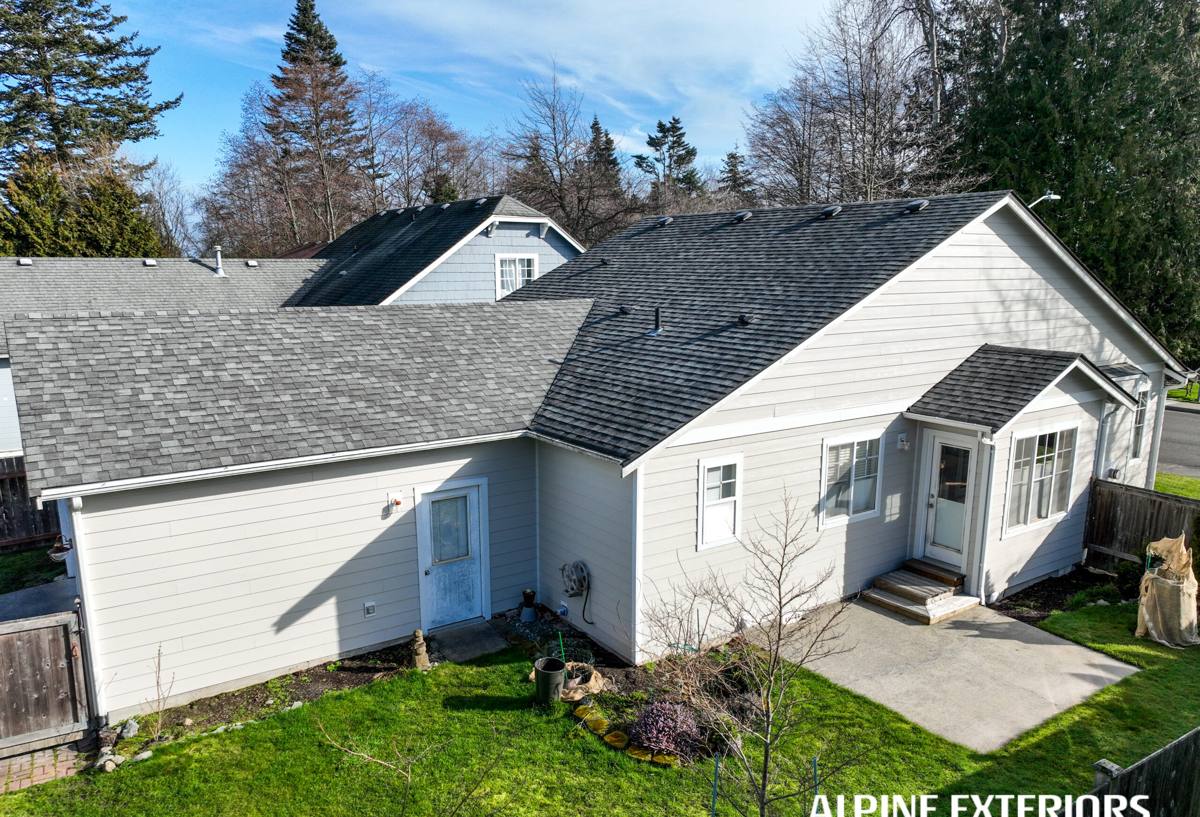
What Blaine's Climate Actually Does to a House
Salt Air and Corrosion
Proximity to salt water accelerates corrosion on anything metal — fasteners, flashing, gutter hangers, even some factory-applied trim coatings. Over years, that slow corrosion process can compromise flashing details long before the siding itself shows visible wear. It's one of the reasons fastener and flashing selection matters as much as the siding material itself on a coastal property.
Driving Rain and Wind-Driven Moisture
Blaine's exposure to weather systems moving in off the water means rain doesn't always fall straight down. Wind-driven rain gets pushed sideways into wall assemblies, seams, and butt joints. If a siding product isn't dimensionally stable or if the installation isn't detailed correctly at seams, corners, and penetrations, that moisture finds a way in. Over time it shows up as soft trim, stained soffits, or paint failure.
Moss, Mildew, and the Long Wet Season
Whatcom County's wet season runs long, and Blaine's marine exposure keeps humidity elevated even between storms. Anything that stays damp for extended stretches — north-facing walls, shaded siding runs, roof valleys — becomes a candidate for moss and mildew growth. That's a maintenance issue on some products and largely a non-issue on others, which is a big part of why material choice matters here.
Why We Only Install James Hardie Fiber Cement
We made a decision a while back to stop installing several common siding products, even though customers sometimes ask for them by name or by price point. That wasn't a marketing move — it came out of watching how different materials actually hold up in Whatcom County's coastal conditions over years, not just in the first season after install.
Vinyl siding is inexpensive and easy to install, but it's a petroleum-based product that expands and contracts significantly with temperature swings, can warp or become brittle over time, and offers no fire resistance. In a wind-driven rain environment like Blaine's, vinyl's seams and overlaps are also more prone to water intrusion than a properly installed fiber cement system. Engineered wood products like LP SmartSide use a wood-strand core with a resin coating, and while the coating is genuinely effective when intact, any breach — a cut edge, a fastener hole, a scratch from a ladder — exposes wood fiber to moisture. In a marine climate with a long wet season, that's a real long-term risk, not a hypothetical one. Primed spruce and raw cedar are honest, traditional materials, but they demand a repainting and maintenance cycle that's hard to keep up with in a climate this wet, and cedar in particular is combustible with no fire-resistance benefit. Other fiber cement brands, like Cemplank or Allura, are chemically similar to what we install, but we've standardized on one manufacturer so we can guarantee installation consistency, product availability, and warranty coverage across every job we do.
James Hardie fiber cement is non-combustible, dimensionally stable across our temperature and humidity swings, and doesn't feed moss or mildew the way wood-based products can. Hardie's ColorPlus factory-applied finish is baked on under controlled conditions rather than field-painted, which means better color retention and fewer touch-ups over the life of the siding — a meaningful advantage in a climate where field-applied paint has a shorter usable life. Hardie also builds climate-specific HZ product lines engineered for exactly the kind of moisture exposure Whatcom County sees, and backs the product with a strong transferable warranty. When it's installed to spec — correct fastener pattern, proper clearances, correctly flashed joints and penetrations — it's the material we trust to hold up on a Blaine property for decades.
Siding Options and How They Hold Up Here
| Material | Coastal/Marine Performance | Maintenance | Fire Resistance |
|---|---|---|---|
| James Hardie Fiber Cement | Engineered for moisture and temperature swings; strong seam integrity when properly installed | Low — factory finish holds color for years | Non-combustible |
| Vinyl | Prone to warping and seam intrusion under wind-driven rain | Low, but limited repair options once damaged | None — melts/ignites |
| Engineered Wood (LP SmartSide) | Vulnerable at cut edges, fastener holes, and coating breaches | Moderate — coating must stay intact | Better than raw wood, still combustible |
| Primed Spruce / Raw Cedar | Absorbs moisture readily; prone to moss/mildew in shaded, damp areas | High — regular repainting/sealing needed | Combustible |
Roofing, Windows, and Decks Along the Coast
Roofing
A roof in Blaine has to shed a lot of water fast, resist wind uplift during coastal storms, and hold up to the moss pressure that comes with sustained shade and moisture. We pay close attention to underlayment, flashing details around chimneys and valleys, and ventilation — a poorly ventilated attic traps moisture that works against the roof from underneath, which is a bigger problem in a marine climate than in a drier one.
Windows
Wind-driven rain finds gaps around window openings before it finds almost anything else on a house. Correct flashing and sealant detailing at window openings matters as much as the window unit itself, especially on walls that face the water or catch prevailing wind. We treat window replacement as an envelope detail, not just a product swap.
Decks
Outdoor structures in Blaine deal with the same salt air and moisture exposure as the siding above them. Fastener selection, board spacing for drainage, and ledger flashing all matter more here than they would in a drier inland climate, where a shortcut might not show consequences for years.
What a Blaine Job Typically Looks Like
Every property is different, but most exterior projects we do in Blaine follow a similar arc:
- On-site assessment of current siding, trim, flashing, and any moisture damage already present
- Discussion of scope — full re-side, partial repair, or roofing/window/deck work alongside siding
- Material and color selection, including Hardie's ColorPlus factory finish options
- Written estimate with a realistic timeline, accounting for weather windows
- Removal of old siding and inspection of the sheathing and weather barrier underneath
- Installation to manufacturer spec — correct fastening, clearances, and flashing at every seam and penetration
- Final walkthrough and cleanup
Why a Local Crew Matters in Blaine
Blaine is close enough to the border that it sometimes gets treated as an afterthought by contractors based further south or east in the county. We don't treat it that way. Weather patterns off the Strait, the salt exposure near Semiahmoo Bay, and the general building stock in this part of Whatcom County are things we've worked with directly, repeatedly. That matters when it comes to sequencing a job around weather windows, catching moisture damage that isn't obvious on the surface, and knowing which details actually need extra attention on a coastal property versus which ones are fine with a standard approach.
A crew that shows up once and leaves also isn't the one you can call back in five years if a warranty question comes up. We're based in Bellingham, we work this county regularly, and we're accountable for what we install here.
Questions to Ask Before You Hire
Whether you go with us or another contractor, a few questions are worth asking upfront:
- Are you licensed and insured to work in Washington, and can you provide proof?
- Who will actually be on the crew doing the installation — employees or subcontracted labor?
- What's your experience with coastal or marine-exposure properties specifically?
- What warranty applies to the material, and what warranty applies to your labor separately?
- Can you walk me through how you'll handle flashing at seams, corners, and penetrations?
Get a Free, No-Pressure Estimate
If your Blaine home is due for new siding, a roof replacement, new windows, or deck work, we're happy to come take a look and give you an honest assessment — no pressure, no scare tactics about damage that isn't there. Fill out the form below to schedule a free estimate.