 Bellingham Siding
 Exterior Work Built for the Sudden Valley Setting
Sudden Valley sits along the south shore of Lake Whatcom, tucked into forested hillsides that give the community its privacy and its shade. That same setting — mature timber, steep lots, and close proximity to the lake — creates a specific set of exterior challenges that homes in flatter, more open parts of Whatcom County don't deal with in the same way. We've worked on enough homes in this area to know that a generic siding, roofing, or window job doesn't hold up here the way it might on a sunnier, more exposed lot closer to town.
This page walks through what we see most often on Sudden Valley homes, how we approach siding, roofing, windows, and decks for this specific environment, and why using a crew that actually understands the lake-adjacent, tree-covered conditions out here matters more than it might seem.
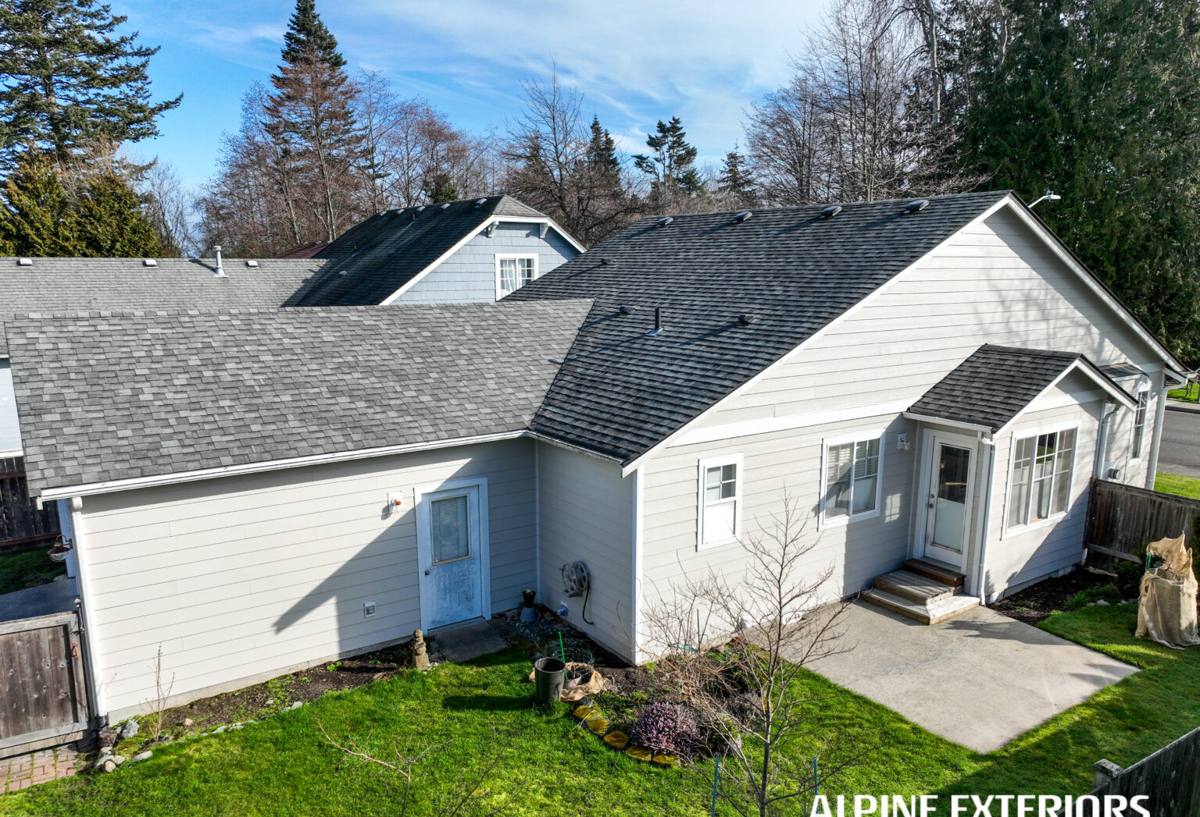
What the Lake Whatcom Environment Does to a House
Moisture That Doesn't Leave
Homes tucked under tree canopy near the lake don't dry out the way an open lot does. Morning fog off the water, shade from firs and cedars, and Bellingham's long wet season combine to keep exterior surfaces damp for extended stretches — sometimes for days after the rain itself has stopped. Wood-based siding products absorb that lingering moisture at the surface and at cut edges, joints, and fastener points. Over years, that repeated wet-dry cycling is what drives paint failure, swelling, and rot in products that aren't engineered to shed water the way fiber cement does.
A Long Moss and Algae Season
Shade plus moisture equals moss — on roofs, on north-facing siding, in gutters, and along deck boards that don't get direct sun. In Sudden Valley, that season runs longer than it does on an open, sun-exposed lot elsewhere in the county. Roofing materials and siding finishes that don't resist moss growth end up needing more frequent cleaning and, eventually, premature replacement.
Driving Rain and Wind Off the Water
Storms moving across Lake Whatcom can push rain sideways into exterior walls, especially on homes with lake-facing exposure or elevation that catches more wind than a sheltered lot. Driving rain finds every weak seam, poorly flashed window, and undersized overhang. It's a stress test that a lot of siding and window products simply aren't built to pass repeatedly over decades.
Salt-Influenced Air
Whatcom County's proximity to Bellingham Bay means the broader region deals with some salt-carried moisture in the air, particularly on days with onshore wind patterns. It's a smaller factor at Sudden Valley's inland, elevated position than it is right on the water, but it still contributes to the overall corrosive, moisture-heavy load that exterior materials and fasteners have to withstand year after year.
Why We Only Install James Hardie Fiber Cement Siding
We don't install LP SmartSide, vinyl siding, Cemplank, Allura, primed spruce, or cedar. That's a deliberate standard, not a lack of options. Each of those products has legitimate strengths, but none of them holds up to Sudden Valley's specific combination of shade, sustained moisture, and moss pressure as consistently as James Hardie fiber cement.
- Vinyl siding can warp and gap over time, and its seams give moisture a path behind the cladding — a real problem on a shaded, damp lot where wall cavities don't dry quickly.
- Wood-based engineered siding (LP SmartSide) uses treated wood strand technology that performs reasonably in drier climates, but the strand-and-resin composition is still wood at its core, and wood's weak point is sustained moisture exposure at cut edges and fastener penetrations — exactly the condition this area produces for months at a time.
- Solid wood siding (cedar, primed spruce) looks great new but demands a repainting and caulking schedule that most homeowners underestimate, and shaded, damp lots accelerate that maintenance clock.
- Other fiber cement brands (Cemplank, Allura) are the same category of material as Hardie, but we've standardized on James Hardie specifically for its ColorPlus factory finish, its climate-engineered HZ5 product line built for exactly this kind of Pacific Northwest moisture load, and the depth of its transferable warranty.
James Hardie fiber cement is non-combustible, doesn't rot, and its factory-applied ColorPlus finish is baked on to resist the fading and peeling that repainting cycles are meant to fix on other products. For a lot with tree cover and lake moisture working against the exterior every day of the year, that's the difference between a siding job that needs attention every few years and one that doesn't.
Siding Product Comparison for Lake-Adjacent, Shaded Lots
| Factor | James Hardie Fiber Cement | Vinyl | Wood / Engineered Wood |
|---|---|---|---|
| Moisture resistance | High — cement composition doesn't absorb and swell | Moderate — seams can let water behind panels | Lower — vulnerable at cut edges and fasteners |
| Moss/algae resistance | Strong with factory finish | Moderate, surface growth common in shade | Lower, especially on north-facing walls |
| Repainting needs | Rare — factory ColorPlus finish holds color for years | Never fades same way but can chalk/discolor | Every 3-7 years typically |
| Fire resistance | Non-combustible | Melts/deforms under heat | Combustible |
| Typical lifespan installed to spec | Decades with minimal upkeep | 15-25 years | Varies widely with maintenance |
Roofing for Shaded, Moss-Prone Lots
Roofing in Sudden Valley has to deal with the same moss and moisture pressure as siding, plus the added weight and debris load of overhanging tree canopy — needles, cones, and branches that collect in valleys and behind chimneys. We look at moss-resistant roofing materials and proper ventilation as standard, not upsells, because a roof that traps moisture under a mat of debris ages years faster than one that's set up to shed water and dry out between storms. Gutter placement and downspout capacity also matter more here than on an open lot, since runoff volume during a heavy Pacific storm system can be significant when it's concentrated by surrounding trees and terrain.
Windows That Handle Driving Rain and Condensation
Homes near the lake, especially those with any lake-facing exposure, take wind-driven rain directly into window assemblies more often than sheltered inland homes. Flashing detail around the window opening is often the actual point of failure — not the window unit itself — so we pay close attention to how each opening is flashed and integrated with the siding above it. Shaded, cooler lots near the water also tend to see more interior condensation on older or poorly sealed windows, which is worth flagging to any homeowner dealing with fogging or moisture between panes.
Decks: Built for Shade, Not Just Sun
A deck on a sunny, open lot dries out between rains. A deck under tree cover near Lake Whatcom often doesn't — and that changes what "regular maintenance" needs to look like. Board spacing, ledger flashing, and joist protection matter more on a shaded deck than on one that gets afternoon sun most of the year, because damp wood under a deck surface is exactly where hidden rot starts. We build and design decks in this area with drainage and airflow underneath as a priority, not an afterthought.
What a Sudden Valley Exterior Project Typically Involves
- An on-site assessment of tree cover, shade patterns, and lake-facing exposure specific to your lot
- Inspection of existing siding, trim, and flashing for moisture damage before any new material goes on
- Proper water-resistive barrier and flashing detail at every window, door, and penetration
- James Hardie fiber cement siding installed to manufacturer spec, including correct fastening and clearances
- Roofing and gutter recommendations sized for the debris and runoff load specific to tree-covered lots
- A written scope so you know exactly what's being done and why before work starts
Why a Local Crew Matters Here
A crew that mostly works flat, open, sun-exposed lots elsewhere in Whatcom County will approach a Sudden Valley home the same way they approach any other job — and that's the problem. The moisture retention, moss pressure, and driving rain exposure around Lake Whatcom call for specific choices in flashing detail, material selection, and drainage planning that only show up as a priority once you've actually seen what happens to homes out here over time. We've done exterior work throughout Bellingham and greater Whatcom County long enough to know Sudden Valley isn't a typical suburban lot, and we plan accordingly rather than applying a one-size-fits-all approach.
Get a Straightforward Look at Your Home's Exterior
If you're noticing moss buildup, soft spots in siding or trim, or a roof that never seems to fully dry out, it's worth getting an honest assessment before small issues turn into structural repairs. We offer free, no-pressure estimates for siding, roofing, window, and deck work — just fill out the form below and we'll take a look.