 Bellingham Siding
 Why the Same Job Can Cost Two Different Numbers
Ask three siding contractors in Bellingham for a quote on the same house and you'll often get three different numbers, sometimes with a wide spread between the lowest and highest bid. That's not because someone is padding the price or someone else is cutting corners for fun. Siding replacement is one of those projects where the sticker price is driven by a handful of specific, knowable factors — and once you understand them, you can look at any bid and tell whether it's realistic or whether something important got left out.
This page walks through what actually moves the number on a siding job in Whatcom County, so you can ask better questions and read a quote with a clearer eye. We'll also explain where material choice fits into that picture, because in our experience it's the single most misunderstood cost factor of all.
The Biggest Hidden Driver: What's Under the Old Siding
Before anyone can talk price with real accuracy, the old siding has to come off enough to see what's behind it. This is the step that turns a confident phone-quote into "let us take a look first." In a marine climate like Bellingham's, with salt air off the bay, driving rain off the Sound, and a long moss season that keeps north-facing walls damp for months at a time, moisture finds its way behind siding more often than homeowners expect.
What we're checking for
- Soft or delaminating sheathing, especially around old window and door flashing
- Rot in the wall studs themselves, not just the sheathing layer
- Missing or failed weather-resistive barrier (house wrap or building paper)
- Old flashing details that were never sealed correctly at the factory or in the field
- Signs of pest damage hiding under trim boards
None of this is visible from the street, and it's the reason a "simple re-side" sometimes turns into a bigger project once the old material comes off. A contractor who quotes without ever mentioning this possibility either has X-ray vision or isn't thinking it through. The honest version of a siding estimate always includes a plan for what happens if the sheathing underneath needs repair — even if the final bill ends up matching the original number because everything looked clean.
Square Footage and House Complexity
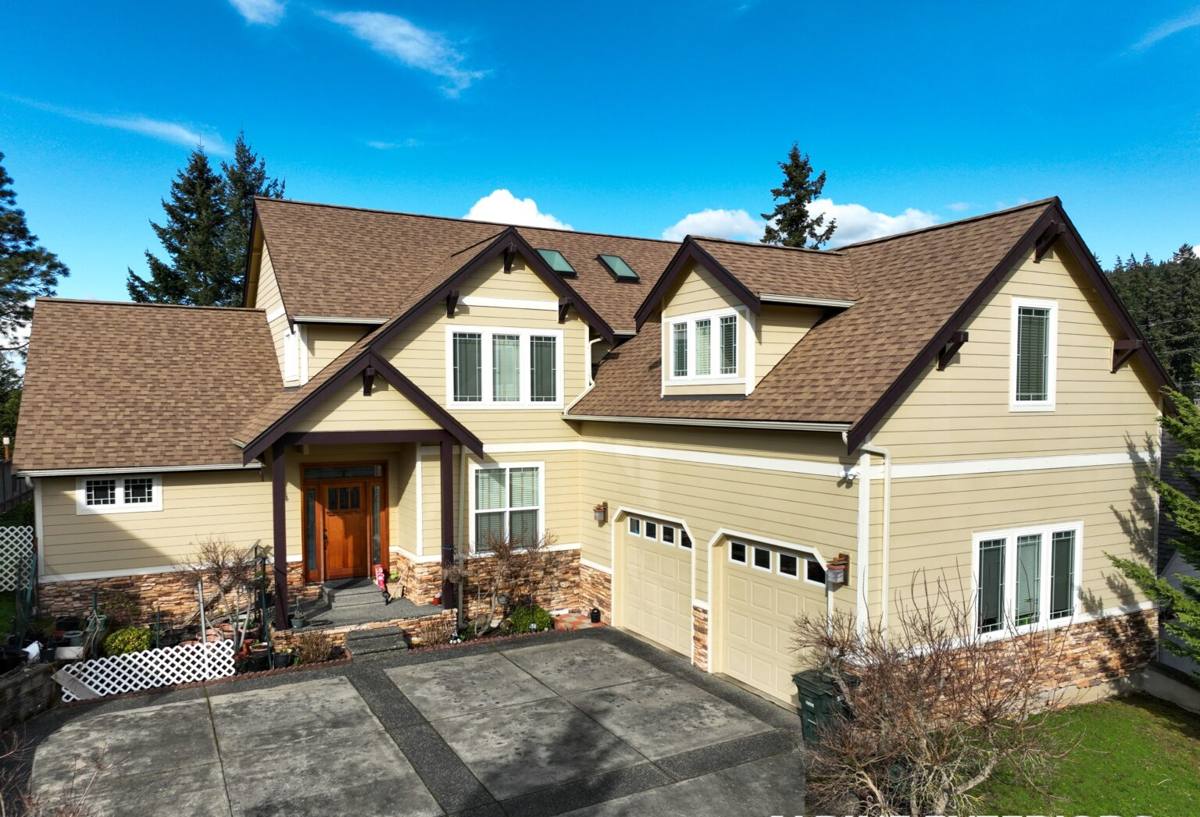
Square footage sets the baseline, but it's not the whole story. Two houses with identical wall area can cost very differently to side depending on shape. A simple rectangular one-story ranch is straightforward: long, uninterrupted runs of siding, minimal cutting, efficient labor. A two-story Craftsman with gables, dormers, bump-outs, and a wraparound porch has the same square footage on paper but far more corners, cuts, and detail work — all of which take time.
Complexity factors that add labor hours
- Number of stories (scaffolding and lift equipment for second-story and higher work)
- Roof pitch and how it intersects the walls
- Number of windows, doors, and vents that need trim and flashing
- Architectural features — bays, dormers, decorative gables
- Site access — tight side yards, slopes, or limited driveway space for material staging
This is why a per-square-foot price is only ever a rough starting point. Two bids at the "same rate" can land very differently once complexity is factored in.
Material Choice: The Line Item Most Homeowners Underestimate
Material cost gets talked about a lot, but usually in the wrong terms — homeowners compare the sticker price of vinyl, LP SmartSide, cedar, and fiber cement as if that number is the whole story. It isn't. The real comparison is cost per year of service, factoring in maintenance, repainting, and how the product holds up specifically in a wet, coastal, moss-prone climate like ours.
We install James Hardie fiber cement siding exclusively. We don't offer vinyl, LP SmartSide, Cemplank, Allura, or primed wood products, and we think homeowners deserve a plain-English explanation of why, not just a sales pitch for what we do sell.
How the categories actually compare in this climate
- Vinyl is the cheapest material up front, but it's a plastic product that expands and contracts with temperature, can crack in impact, and doesn't hold up well against the kind of driving rain and wind Bellingham gets off the water. It also can't be painted a dark color without risking warping.
- LP SmartSide is an engineered wood product — real wood strand board with a resin-saturated overlay. It performs reasonably when installed and maintained exactly to spec, but any breach in that outer layer (a missed caulk joint, a scratch, standing water at a butt joint) exposes wood fiber to moisture, and moisture plus wood is a bad combination in a climate this wet.
- Cedar and primed spruce are real wood, full stop. They look great new, but they need ongoing refinishing, are vulnerable to moss and rot in shaded, damp wall sections, and are more attractive to pests.
- Fiber cement (James Hardie) is cement, sand, and cellulose fiber — it doesn't burn, doesn't rot, and doesn't feed moss the way wood-based products can. It costs more than vinyl and is comparable to or somewhat more than engineered wood, but it's engineered specifically for climates like ours, with HZ5 product lines built for wetter, harsher regions.
None of this means the other products are junk — they have real uses and plenty of homes wear them fine in drier climates. It's why, after years of installing and repairing multiple siding types in Whatcom County conditions, we made the call to standardize on one product we trust to perform here without surprises.
A Straight Look at Cost Factors
| Cost Factor | Why It Moves the Price | What to Ask About |
|---|---|---|
| Sheathing/rot repair | Can't be priced accurately until old siding is off | How repair costs are handled if discovered mid-job |
| House complexity | Corners, cuts, and stories add labor hours | Whether the quote accounts for your specific roofline and stories |
| Material | Price and lifespan vary widely by product | Total cost of ownership, not just material sticker price |
| Finish | Factory-applied finish vs. field-painted trim | Whether color is factory-baked (like ColorPlus) or painted on-site |
| Removal & disposal | Tear-off, hauling, and dump fees add up fast | Whether disposal is included or billed separately |
| Moisture barrier detail | Rainscreen and flashing work is labor-intensive but critical here | What weather-resistive barrier and flashing system will be used |
Removal, Disposal, and the Labor You Don't See
Tearing off old siding, hauling it away, and disposing of it legally is real money — and it's a line item some quotes bury or leave vague. Old siding, especially old cedar or vinyl, isn't lightweight, and dump fees in Whatcom County add up on a full re-side. A transparent quote should tell you whether removal and disposal are included in the number you're looking at, or billed as an add-on once the old material is off the wall.
The other invisible labor cost is proper moisture management. In a climate with this much driving rain, a correctly installed rainscreen gap and weather-resistive barrier behind the new siding matters as much as the siding itself. Skipping or rushing this step is one of the most common ways a "cheap" siding job becomes an expensive repair five years later.
Paint, Trim, and Finish Details
Finish is where a lot of long-term cost hides. Field-painted siding — whether it's wood, primed fiber cement, or trim boards — needs repainting on a cycle, and paint failure shows up faster on walls that face prevailing wind and rain. A factory-applied finish, like James Hardie's ColorPlus technology, is baked on under controlled conditions before the boards ever reach the jobsite, which is a different proposition than a field coat applied outdoors between rain showers.
Trim detail also affects price. Wrapping windows, corners, and fascia in matching trim board takes more material and more labor than a bare-bones install, but it's usually what separates a finished-looking house from one that looks like the siding was simply nailed up and left.
Permits and Local Requirements
Most straightforward siding replacement in the City of Bellingham and unincorporated Whatcom County requires a permit, particularly when sheathing or structural repair is involved rather than a simple like-for-like re-side. Permit fees are a small part of the overall number, but a contractor who skips this step to save you a little money is also skipping the inspection that verifies flashing and moisture barrier work was done correctly — exactly the details that matter most in this climate.
What to Ask Before You Sign
- Is the bid based on an actual measurement of my house, or a rough estimate?
- What happens to the price if you find rot or damaged sheathing once the old siding is off?
- Is removal and disposal of the old siding included?
- What weather-resistive barrier and flashing details will be used behind the new siding?
- Is the finish factory-applied or field-painted, and what does that mean for repainting down the road?
- What's covered under warranty, and is it transferable if I sell the house?
- Are permits pulled and inspections scheduled as part of the job, or is that on me?
A contractor who can answer all of these clearly, without hedging, is telling you something about how they run a job — not just what they charge for it.
Where This Leaves You
Siding cost in Bellingham isn't really one number — it's the sum of what's found under the old material, how complex the house is, what product goes up, and how much care goes into the details you won't notice until they fail. We quote James Hardie fiber cement because, after years of working on homes exposed to salt air, driving rain, and a long moss season, it's the product we trust to hold up here without the maintenance burden or moisture risk we've seen in other materials. We're happy to walk your house, point out what we see, and give you a straight number — with no pressure and no obligation. Reach out below for a free estimate.