 Bellingham Siding
 Siding, Roofing, Windows, and Decks for Fairhaven Homes
Fairhaven sits close to Bellingham Bay, and that proximity shapes everything about how a home's exterior ages here. Salt-laden air drifts up from the water, Pacific storms push driving rain sideways into south and west-facing walls, and the tree cover that makes the neighborhood so pleasant to live in also means shade, damp ground, and a long moss season that keeps roofs and siding wet for weeks at a time. We work on homes throughout Fairhaven and the rest of Bellingham, and we build our exterior work around these specific conditions rather than treating every job the same.
Our crew handles siding, roofing, windows, and decks. We install only James Hardie fiber cement siding — we do not offer LP SmartSide, vinyl, Cemplank, Allura, primed spruce, or cedar. That is a deliberate standard, not a sales pitch, and later on this page we explain the reasoning behind it.
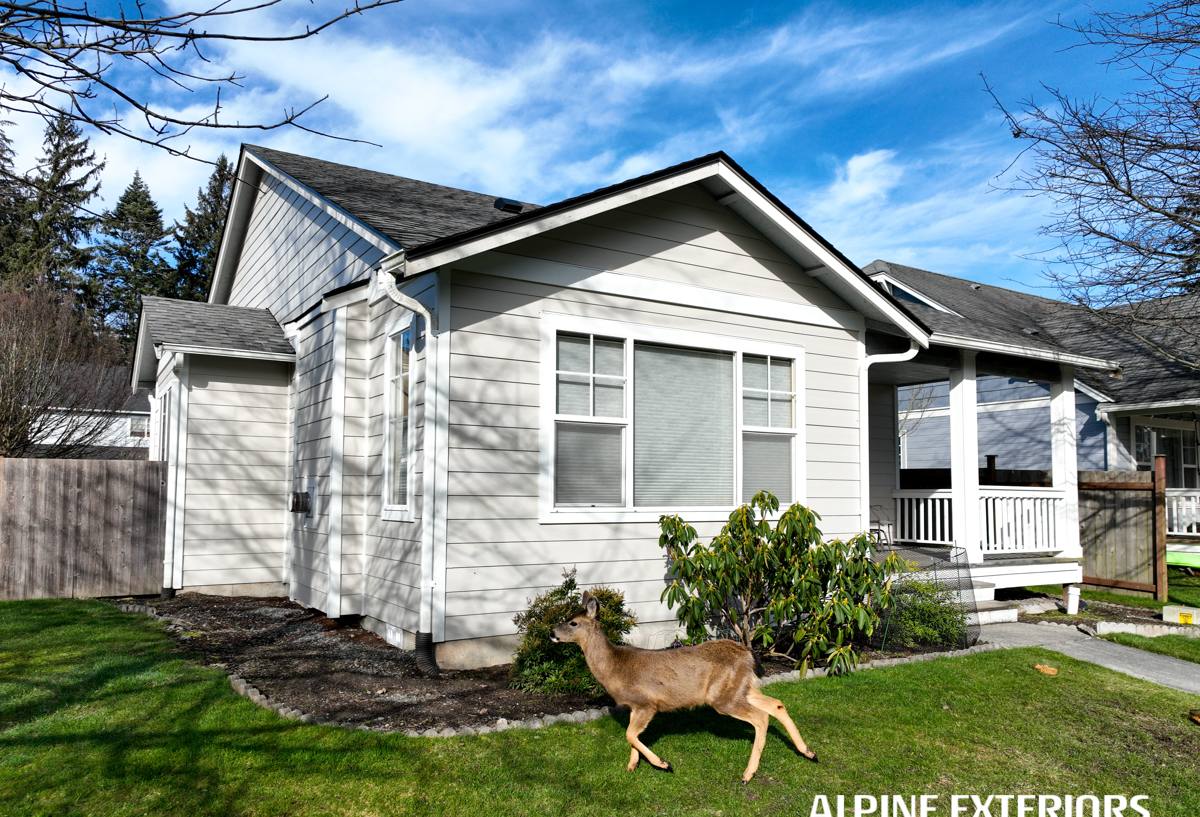
What Bellingham Bay Weather Does to a House
Salt Air and Coastal Moisture
Homes within a mile or two of the bay pick up airborne salt that settles on siding, trim, and metal fasteners. Over years, that salt film holds moisture against surfaces longer than it would inland, which accelerates corrosion on unprotected metal and speeds up paint and finish breakdown on siding that isn't built to handle it. It's a slow process, but it's constant, and it's one of the reasons we pay close attention to fastener choice and flashing details on Fairhaven jobs.
Driving Rain
Whatcom County gets a lot of rain, but it's not just the volume — it's the direction. Storms off the Strait of Georgia and the Sound often push rain at an angle rather than straight down, which means south and west walls take a heavier beating than homes further inland typically see. Poorly lapped siding, undersized trim gaps, or gaps around window and door openings become entry points for water in these conditions, even on a house that looks fine from the street.
Moss, Shade, and Slow-Drying Surfaces
Fairhaven's tree canopy is part of its character, but shaded roofs and north-facing siding stay damp far longer after a storm than sun-exposed surfaces do. That extended dampness is exactly what moss and algae need to take hold. On roofing, moss lifts shingles and traps moisture underneath. On siding, it holds water against the surface and, on the wrong substrate, contributes to softening and rot over time.
Siding: Why We Standardize on James Hardie
We used to get asked why we don't offer more siding options. The honest answer is that we looked hard at the alternatives and decided the trade-offs weren't worth it for the climate our customers live in.
Vinyl Siding
Vinyl is affordable and low-maintenance in mild climates, and it has real advantages in dry inland regions. But it's a thin plastic product that expands and contracts with temperature swings, can crack in cold snaps, and isn't fire-resistant. In a coastal, moisture-heavy environment like Fairhaven, we've seen it perform inconsistently at seams and around penetrations where wind-driven rain gets pushed hard against the wall.
LP SmartSide, Cemplank, and Allura
LP SmartSide is an engineered wood product — it holds paint well and is easier on saw blades than fiber cement, but it's still wood at its core, which makes edge sealing and caulk maintenance non-negotiable in a wet climate; skip a maintenance cycle and moisture finds the seams. Cemplank and Allura are both fiber cement, technically similar to Hardie, but neither carries the same factory-finish warranty structure or the local track record and installer network we've built our standards around.
Primed Spruce and Cedar
Cedar is a beautiful, traditional Pacific Northwest siding choice, and we understand the appeal — it's the look a lot of homeowners in this region grew up with. But it's a natural wood product that needs regular refinishing, is vulnerable to moisture absorption and insect activity, and in a salt-air, high-rainfall pocket like Fairhaven, the upkeep burden is real and ongoing. Primed spruce has similar exposure issues without cedar's aesthetic pedigree.
Why James Hardie
James Hardie fiber cement is non-combustible, doesn't absorb water the way wood-based products do, and resists the freeze-thaw and moisture cycling that's typical of a marine climate. The ColorPlus factory finish is baked on under controlled conditions, which gives it more consistent, longer-lasting color than field-applied paint. Hardie also engineers regional product lines (its "HZ5" formulation is built for climates like ours) and backs the product with a strong, transferable limited warranty. When it's installed to manufacturer spec — correct clearances, proper flashing, correct fastening — it's a siding system built for exactly the conditions Fairhaven throws at it.
| Material | Moisture Resistance | Maintenance | Fire Resistance | Typical Lifespan |
|---|---|---|---|---|
| James Hardie Fiber Cement | High | Low | Non-combustible | 30+ years |
| Vinyl | Moderate (seam-dependent) | Low | Poor (melts/warps) | 20-30 years |
| LP SmartSide | Moderate (edge-sensitive) | Moderate | Treated, still wood-based | 20-30 years |
| Cedar / Primed Spruce | Low to Moderate | High | Combustible | 15-25 years with upkeep |
Roofing for a Moss-Prone Neighborhood
Roofs in shaded, damp pockets of Fairhaven need more than a good install — they need attention to ventilation and drainage details that keep water and organic growth from lingering. We look at ridge and soffit ventilation, valley flashing, and how water sheds off the roof and away from siding and foundation areas. A roof that dries out efficiently after a storm is a roof that keeps moss from getting a foothold in the first place, which matters more here than in drier parts of the state.
Windows: Sealing Out Wind-Driven Rain
Window replacement in a coastal wind-driven-rain environment is as much about the installation as it is about the window unit itself. Flashing that integrates correctly with the water-resistive barrier, properly sloped sills, and sealed rough openings are what keep water from tracking behind the window and into the wall cavity. We treat every window opening as a potential water entry point and detail it accordingly, not just here in Fairhaven but everywhere we work in Whatcom County.
Decks: Built for Wet Ground and Constant Rain Exposure
Decks in shaded, tree-covered lots deal with slower drying times, more standing moisture, and — depending on the lot — more exposure to salt-tinged air if you're close to the water. Ledger board flashing, proper joist spacing, and fastener selection all matter more in this kind of environment than they would on a dry, sun-exposed lot elsewhere in the state. We build decks with the specific moisture load of the site in mind rather than a one-size-fits-all approach.
Why a Local Crew Matters in Fairhaven
A crew that works Bellingham and Whatcom County regularly develops a feel for which lots hold water longest, which exposures take the worst of the storms off the bay, and which older homes in neighborhoods like Fairhaven were built with materials and details that don't hold up well against decades of marine climate. That local knowledge shapes real decisions on a job — where extra flashing attention pays off, which sides of the house need the most careful sealing, and where drainage needs a second look before siding or roofing goes on.
What to Expect From an Exterior Project
- An on-site assessment that looks at moisture history, sun/shade exposure, and existing damage — not just a measurement for materials
- A clear explanation of what's driving any recommended siding, roofing, window, or deck work
- James Hardie fiber cement siding installed to manufacturer specifications, including correct clearances and flashing
- Attention to ventilation and drainage details that matter in a moss-prone, high-rainfall climate
- A written estimate before any work begins, with no pressure to commit on the spot
- A cleanup plan so your property isn't left with debris or exposed materials overnight
Cost Factors for Fairhaven Exterior Projects
Every home is different, but a few factors consistently drive cost on exterior projects in this neighborhood:
| Factor | Why It Matters |
|---|---|
| Home size and wall complexity | More corners, dormers, and trim details mean more labor and material |
| Existing moisture or rot damage | Hidden water damage found during tear-off often requires repair before new material goes on |
| Access and lot conditions | Sloped, wooded, or tight lots common in Fairhaven can affect staging and labor time |
| Material and finish selection | Hardie board profile, plank width, and ColorPlus finish options affect price |
| Scope combination | Bundling siding with roofing, window, or deck work can create efficiencies versus separate projects |
We don't quote broad numbers without seeing the house — too many of these factors are site-specific to make a generic estimate meaningful.
Get a Free, No-Pressure Estimate
If you're weighing a siding, roofing, window, or deck project on your Fairhaven home, we're glad to take a look and walk you through what we see and why. Use the form below to request a free estimate — there's no obligation, and no pressure to decide anything on the spot.