 Bellingham Siding
 Siding in Columbia: A Neighborhood Close to the Water, Close to the Weather
Columbia sits near Bellingham Bay, and that proximity shapes everything about how a home's exterior ages here. Homes in this part of Bellingham deal with a combination that's tougher on siding than most inland neighborhoods realize: salt-tinged air rolling in off the bay, driving rain that comes in sideways during winter storms, and a moss season that can stretch from October well into spring. Add in the older housing stock common to this part of the city — many homes built decades before fiber cement siding existed — and you get a lot of exteriors clad in materials that were never designed for this exposure.
We're a local siding, roofing, window, and deck contractor working throughout Bellingham and Whatcom County, and Columbia is squarely inside our regular service area. This page covers what we actually see on homes in this neighborhood, how we approach a siding replacement here, and why we install James Hardie fiber cement exclusively — no vinyl, no LP SmartSide, no primed wood.
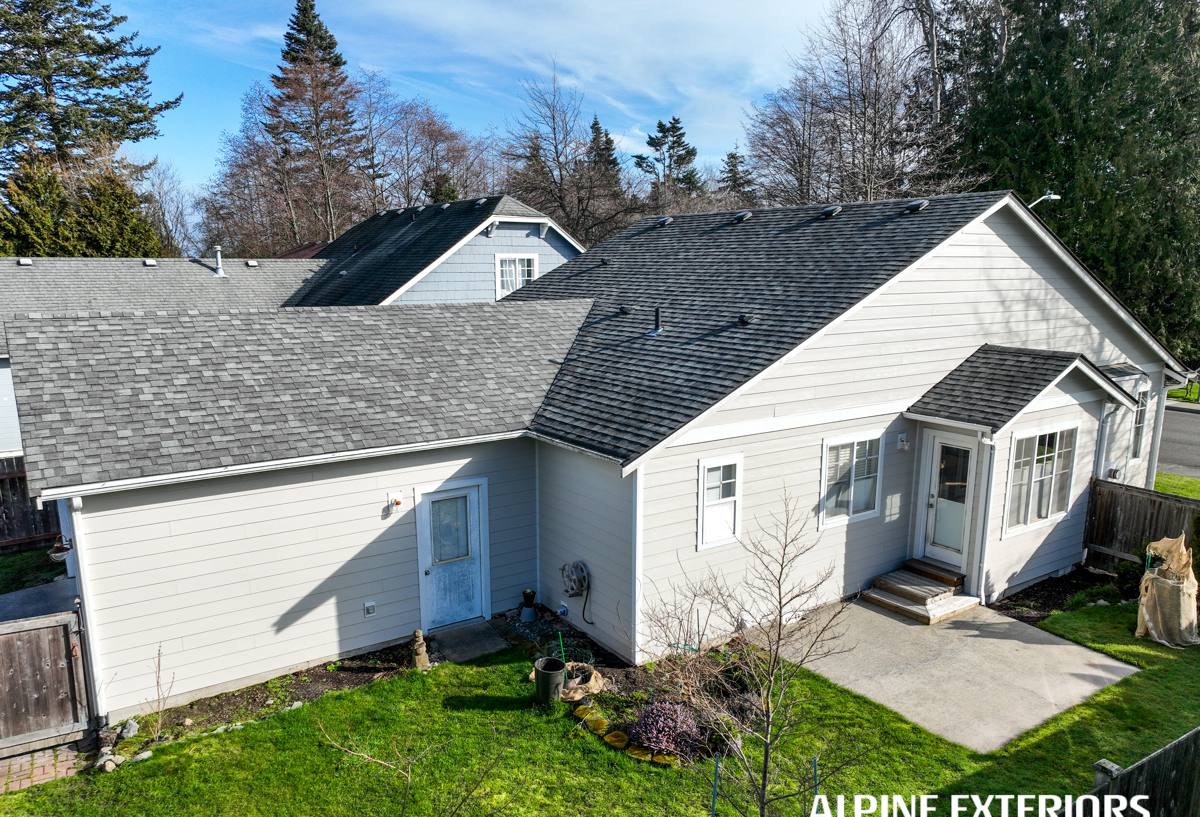
What Columbia's Climate Does to Siding
Salt Air and Moisture
Being close to Bellingham Bay means the air carries more moisture and salt content than it does further inland. Salt-laden moisture accelerates corrosion on fasteners and trim, and it keeps painted and wood surfaces perpetually a little damper than they'd be elsewhere. Materials that rely on a painted or coated surface to keep water out are under more stress in a marine-influenced environment — every hairline crack in a coating is an entry point, and this air gives water more opportunities to find one.
Driving Rain
Whatcom County doesn't just get rain — it gets rain pushed sideways by wind coming off the water, especially during fall and winter storm systems. Driving rain finds weaknesses that vertical rain never would: lap joints, butt seams, caulking that's started to shrink, and any spot where a siding panel has begun to cup or separate from the wall. Homes in Columbia that face open exposure toward the bay tend to take this harder than homes tucked into more sheltered blocks.
Moss and Sustained Dampness
Bellingham's moss season is long, and it's not just a roof problem. Moss and algae establish on siding surfaces that stay damp for extended stretches — north-facing walls, areas shaded by mature trees, and surfaces near ground level where splash-back keeps things wet. Once moss takes hold on a porous or wood-based surface, it holds moisture against that surface continuously, which is a slow but steady path toward rot underneath.
What We See on Columbia Homes
Because Columbia has a mix of older and newer construction, we run into the full range of siding conditions: original wood lap siding that's been repainted many times over, aging vinyl that's cracked or faded, and in some cases older fiber cement or hardboard products that were never rated for this level of moisture exposure. Common issues we find during inspections in this neighborhood include:
- Paint failure and bare wood exposure on sun- and rain-exposed elevations
- Soft or delaminating trim boards, especially around window and door casings
- Moss and algae buildup on shaded or north-facing walls
- Caulking that's shrunk or pulled away at seams and penetrations
- Warped or buckled panels on walls that catch wind-driven rain directly
- Fastener corrosion and rust staining, particularly on homes closer to the bay
None of this means every home in Columbia needs full replacement right away. Some homes just need attentive maintenance and targeted repair. But when siding is past the point where paint and caulk can carry it, replacement with a material actually built for this exposure is the more honest long-term answer.
Why We Only Install James Hardie
We get asked fairly often why we don't offer vinyl or LP SmartSide as cheaper options. The honest answer is that we've made a standard for our own work, and it's built around what holds up in Whatcom County's specific climate — not what's cheapest to install or easiest to sell.
Fiber Cement vs. the Alternatives
| Material | How It Handles This Climate |
|---|---|
| Vinyl siding | Doesn't rot, but it can warp or crack in wind and temperature swings, and seams can allow driving rain behind the panel with nothing to stop moisture damage to the sheathing. |
| LP SmartSide / engineered wood | Wood-strand core with an engineered coating; performs fine if flawlessly maintained, but any coating breach in a wet, salt-air climate lets moisture into the wood substrate faster than most homeowners catch it. |
| Primed wood or cedar | Classic look, but requires disciplined repainting and caulking on a strict schedule — sustained dampness and moss in this neighborhood shorten the window before problems start. |
| James Hardie fiber cement | Non-combustible, dimensionally stable, engineered specifically for wet Pacific Northwest exposure (HZ5 product line), with a factory-applied ColorPlus finish that doesn't rely on field painting to do the water-shedding work. |
James Hardie's HZ5 product line is engineered specifically for climates like ours — freeze-thaw cycles, sustained moisture, and coastal-influenced weather. The ColorPlus factory finish is baked on under controlled conditions, which gives it a more consistent, durable bond than field-applied paint ever achieves, and it comes backed by a real finish warranty. Fiber cement doesn't feed moss the way wood-based products can, and it won't cup, crack, or delaminate the way vinyl and engineered wood products can under sustained wind-driven rain.
We're not saying every other product is junk — vinyl and LP SmartSide have their place and plenty of manufacturers stand behind them. We're saying that after years of tearing off failed siding around Whatcom County, we decided we'd rather install one product we trust completely than offer several and let cost drive the decision. That's a standard we hold for our own crews, not a claim about what's on your neighbor's house.
How a Siding Replacement Works in Columbia
1. Inspection and Assessment
We start with a walk-around of the home, checking for the specific issues common to this area — moisture intrusion at trim and penetrations, moss coverage, sheathing condition where old siding is removed, and how each elevation is exposed to prevailing wind and rain.
2. Tear-Off and Sheathing Check
Once old siding comes off, we can actually see the wall assembly underneath. This is the point where hidden rot or water damage from years of marginal siding performance shows up — and it's far better to find and fix it now than to bury it under new siding.
3. Weather-Resistive Barrier and Flashing
Given how much driving rain this neighborhood sees, proper house wrap, flashing at windows and doors, and correct water-shedding detail at every penetration matter as much as the siding itself. This step is where a lot of lower-quality installs cut corners — it doesn't show once the siding is up, but it's what actually keeps water out over the next 30 years.
4. James Hardie Installation to Spec
Hardie siding performs the way it's engineered to only when it's installed to the manufacturer's specifications — correct fastening, proper clearances, and correct joint treatment. We install it that way every time, which is also what keeps the manufacturer's warranty intact.
5. Final Walkthrough
We go over the finished work with you, including care and maintenance basics specific to a marine-influenced climate like Columbia's.
Cost Factors for a Columbia Siding Replacement
Every home is different, but the factors that most often move the price on a project in this neighborhood are:
- Home size and number of stories (access and scaffolding needs)
- How much of the underlying sheathing needs repair after tear-off
- Trim and detail complexity — window casings, corner boards, fascia
- Siding profile chosen (lap, shingle-style, panel) and ColorPlus color selection
- Site access, especially on lots with limited driveway or side-yard clearance
We won't quote a number without seeing the home — anyone who does hasn't actually assessed what's underneath the existing siding. What we can tell you is that a proper tear-off-and-replace with James Hardie is a long-term investment, not a patch job, and that's reflected in both the upfront cost and the decades of performance you get out of it.
Beyond Siding: Roofing, Windows, and Decks
Siding rarely fails in isolation. If moisture has been getting behind your siding, it's worth checking roofing, window flashing, and any deck ledger connections at the same time — these are all places where the same driving-rain, high-moisture conditions cause related problems. We handle all four (siding, roofing, windows, decks), so if an inspection turns up an issue outside the siding scope, we can address it as part of the same project instead of sending you to a separate contractor.
Why Work With a Local Crew
A contractor based in and around Bellingham knows which walls in Columbia take the worst of the wind off the bay, how long moss season actually runs here versus other parts of Whatcom County, and what correct flashing and drainage detail needs to look like for this specific exposure. That's not something a crew traveling in from outside the area picks up quickly, and it shows in how the work holds up five and ten years down the line.
Get a Free Estimate for Your Columbia Home
If your siding is showing paint failure, moss buildup, soft trim, or you're just planning ahead for a home in a neighborhood that takes real weather exposure, we're happy to take a look. Reach out for a free, no-pressure estimate — we'll walk the exterior with you, tell you honestly what we see, and explain your options.