 Bellingham Siding
 Why We're Writing This Page
We get asked about LP SmartSide often enough that it deserves an honest answer instead of a vague one. This isn't a takedown of the product — it's an explanation of the trade-offs we weighed before deciding to standardize our business on James Hardie fiber cement instead. If you're comparing siding options for a home in Bellingham or anywhere else in Whatcom County, you deserve the real reasoning, not a sales pitch.
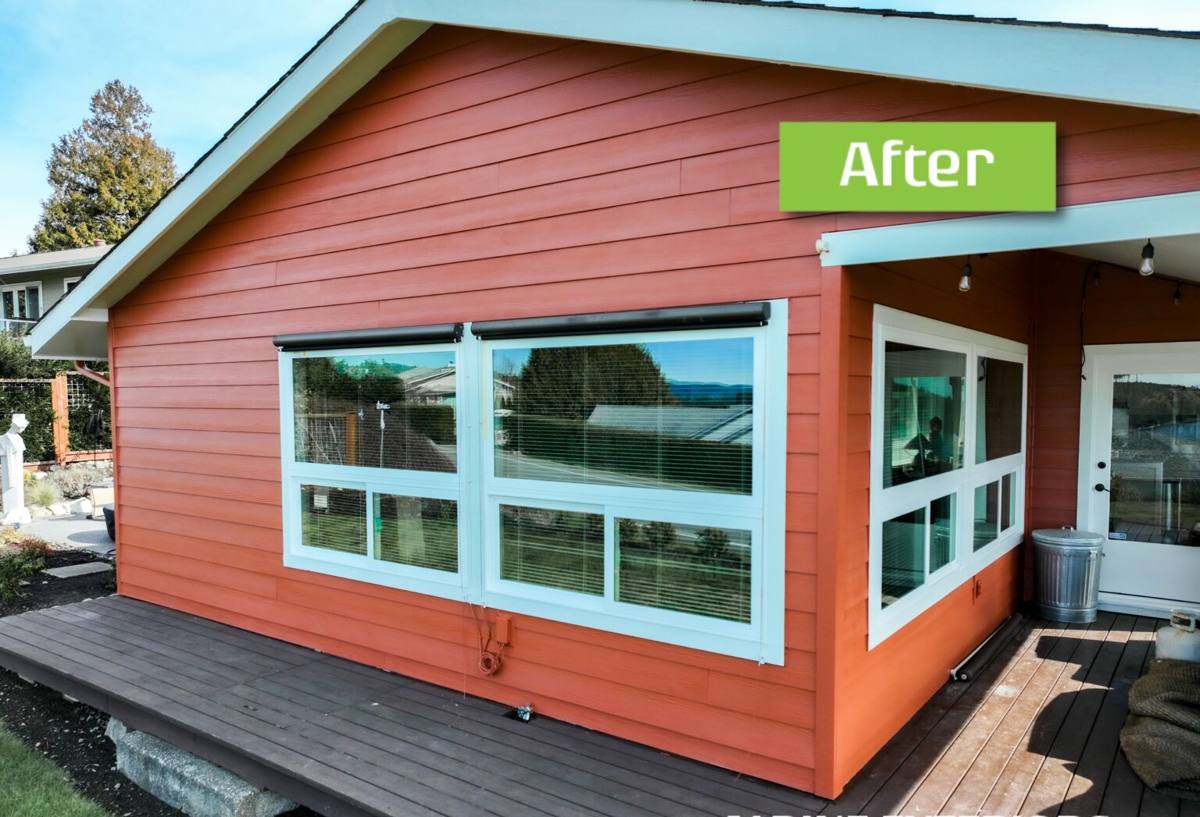
What LP SmartSide Actually Is
LP SmartSide is an engineered wood siding product. It's made from strand-based wood material (similar in concept to OSB) bonded with resins, treated with zinc borate for insect and fungal resistance, and finished with a proprietary surface treatment the manufacturer calls SmartGuard. It comes in lap boards, panels, and trim, and it installs a lot like traditional wood siding — lighter than fiber cement, easier to cut, and generally faster to hang.
To be fair to the product: it holds paint well when properly maintained, it resists impact better than vinyl, and it's noticeably lighter to handle on a job site than fiber cement. Homeowners who want a wood-look siding at a lower price point than cedar understandably find it appealing. None of that is in dispute.
Where It Tends to Fit
LP SmartSide often shows up as a value alternative to real cedar siding — same general look and workability, lower material cost, and a manufacturer treatment meant to reduce the rot and insect problems that plague untreated wood. On paper, it's a reasonable middle ground.
The Core Issue: It's Still a Wood-Based Product
Here's the fundamental thing that shapes every trade-off on this page: LP SmartSide is wood. Treated, engineered, and improved — but wood. That means its long-term performance depends heavily on keeping water out of the substrate, indefinitely, for the life of the siding. Fiber cement doesn't share that dependency in the same way, because there's no wood fiber to swell, delaminate, or feed rot once moisture gets past the surface.
This isn't a knock on the manufacturer's engineering. It's just physics. Any wood-based exterior product needs a much tighter, more consistent moisture-management system than a cementitious product does, for the entire life of the siding — not just the installation day.
Where Bellingham's Climate Adds Real Risk
This is the part that matters most for local homeowners. Whatcom County isn't a mild, dry environment — it's a sustained moisture environment, and that changes the math on wood-based siding.
- Salt air: Homes closer to Bellingham Bay and the Puget Sound shoreline deal with salt-laden air that accelerates the breakdown of caulk, sealants, and paint films — the exact materials a wood-based siding depends on to stay watertight.
- Driving rain: Wind-driven rain off the water doesn't just fall straight down — it gets pushed sideways into seams, butt joints, and trim intersections, which are the highest-risk points on any wood-based product.
- Long moss season: Our extended damp, shaded season keeps siding surfaces wet for longer stretches than drier climates. Moss and algae growth on north-facing walls and shaded elevations holds moisture against the surface for weeks at a time.
None of this means LP SmartSide will fail on every house. It means the margin for error — in installation quality, in caulk maintenance, in repainting schedule — is thinner here than in a drier climate, and the consequences of skipping a maintenance cycle show up faster.
Installation Sensitivity Is the Real Make-or-Break Factor
Most of the problems attributed to engineered wood siding over the years don't trace back to the material itself failing under normal conditions — they trace back to installation details that weren't followed to spec. That's a fair statement about the product category, and it's exactly why we treat it as a serious concern rather than a minor footnote.
The details that have to be right, every time
- Every field cut must be sealed with primer or sealant before installation — an unsealed cut edge is a direct path for water into the wood fiber.
- Butt joints and panel seams need consistent, properly applied caulking that gets inspected and refreshed over time.
- Flashing at windows, doors, and penetrations has to be detailed correctly, because any water that gets behind the siding has nowhere good to go.
- Clearance from grade, decks, and roof lines has to be maintained so the bottom edge of the siding isn't sitting in standing moisture.
Fiber cement has its own installation standards too — no siding product is install-anywhere-any-way. But the consequence of a missed detail is different: a sealing gap on fiber cement risks a cosmetic or localized issue, while the same gap on a wood-based product risks the substrate itself absorbing water and swelling from the inside out.
The Maintenance Burden Homeowners Take On
This is the trade-off that shows up years after installation, not on day one. A wood-based siding's protective finish is a maintained system, not a one-time application. That means:
- Caulked joints need periodic inspection and re-caulking as sealants age and shrink.
- Paint needs to be refreshed on a schedule to keep the moisture barrier intact — skipping a cycle in a wet climate compounds faster than in a dry one.
- Any impact, chip, or scratch that exposes raw material needs to be sealed and touched up promptly, not left for the next paint job.
James Hardie's ColorPlus factory finish is baked on in a controlled environment and is engineered to hold color and resist cracking and peeling for far longer, meaningfully cutting down this ongoing maintenance obligation. That's a big part of why we made the switch.
Warranty Reality Check
Warranty terms matter less on paper and more in how easy they are to actually use. Prorated warranties, maintenance-proof requirements, and coverage limits all affect what a homeowner can realistically recover if something goes wrong ten or fifteen years down the road.
| Factor | Engineered Wood Siding (typical) | James Hardie Fiber Cement |
|---|---|---|
| Base material behavior | Wood-based; moisture-dependent long-term | Cementitious; not wood, doesn't rot or delaminate the same way |
| Finish | Field or factory-applied; repainting on a schedule | Factory-applied ColorPlus finish; longer color/finish life |
| Warranty structure | Often prorated after an initial full-coverage period | Strong non-prorated coverage on siding, backed by transferability |
| Maintenance proof for claims | Can require documentation of caulking/painting history | Lower ongoing maintenance dependency simplifies claims |
| Fire behavior | Combustible, treated material | Non-combustible |
The warranty comparison isn't the only reason we made our decision, but it's a fair reflection of the underlying difference: one product's long-term protection depends on the homeowner's ongoing upkeep, and the other is engineered to need less of it in the first place.
Cost Considerations, Honestly
LP SmartSide is generally less expensive as a material than James Hardie, and it installs faster because it's lighter and easier to cut. If upfront cost is the only variable, it will usually come in lower on a bid.
What that comparison leaves out is the cost of ownership: repainting cycles, caulk maintenance, and the risk of localized repair if moisture gets past the finish in a joint or cut edge. We'd rather quote a project honestly against the full lifespan of the siding than win a bid on day-one price and leave a homeowner with a higher total cost over twenty years.
What We Install Instead, and Why
We install James Hardie fiber cement exclusively — specifically their HZ product lines, which are engineered for climates like ours with sustained moisture exposure. It's non-combustible, it doesn't swell or delaminate the way wood-based products can, and the factory ColorPlus finish takes a major recurring maintenance task off a homeowner's plate. Combined with a warranty structure that doesn't lean as heavily on documented maintenance history, it's the product we're comfortable standing behind on a coastal Whatcom County home, whether it's a few blocks from the bay or further inland where moss and shade dominate the north side of the house.
Questions Worth Asking Any Contractor Before You Choose
- Who is actually responsible if a sealed joint fails five years from now — the manufacturer, the installer, or the homeowner?
- What does the maintenance schedule really look like over 15-20 years, in writing?
- Is the warranty prorated, and what documentation would you need to file a claim?
- How does this product perform specifically in a marine, high-rain climate, not just a national average?
- What's the manufacturer's own installation manual requirement for field-cut sealing, and how does your crew verify it's followed on every board?
If you're weighing siding options for a home anywhere in Bellingham or Whatcom County, we're glad to walk through what we see on real houses in this climate and give you a straight answer — not a sales pitch. Reach out for a free, no-pressure estimate and we'll look at your home's specific exposure, elevation, and condition before recommending anything.