 Bellingham Siding
 Exterior Work in Silver Beach
Silver Beach is one of Bellingham's established residential neighborhoods, with a mix of older homes on wooded lots and newer construction filling in over the years. Like most of Whatcom County, it sits inside a marine-influenced climate zone: damp winters, a long shoulder season of drizzle and fog, and enough moisture in the air most of the year to keep exterior surfaces working overtime. Add in the salt-tinged air that moves through the broader Bellingham Bay region and the shade cast by mature evergreens on many lots, and you've got a neighborhood where siding, roofing, and trim take a steady beating whether or not a storm ever hits.
We're a local exterior contractor, not a national franchise dispatching whoever's available. When we quote a job in Silver Beach, we're accounting for the specific exposure of that lot — how much sun it gets, how close it sits to tree cover, which side of the house takes the weather — because that's what actually determines how a product performs over 20 or 30 years, not just what's printed on the spec sheet.
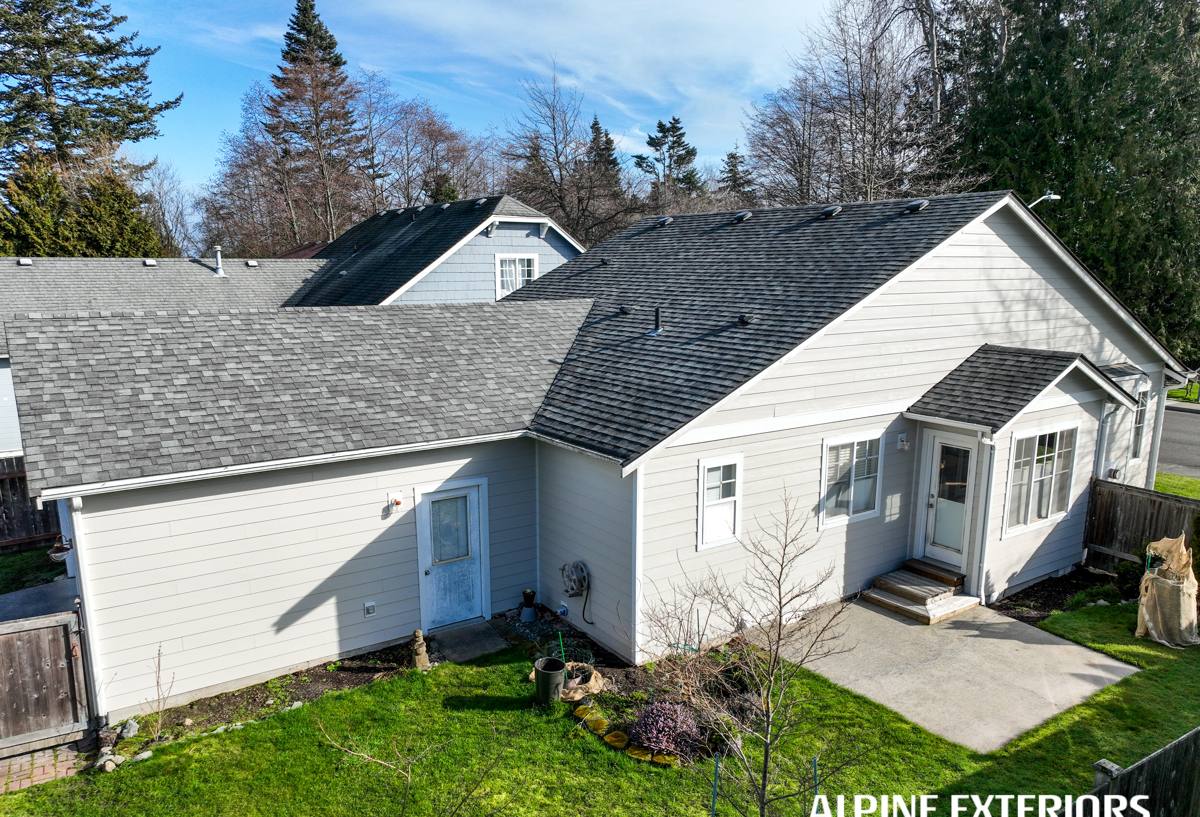
What the Climate Does to a House Here
Driving Rain and Wind-Driven Moisture
Bellingham doesn't get the heaviest rainfall totals in the state, but it gets a lot of low-intensity, wind-pushed rain that finds its way into seams, laps, and fastener points that a sunnier climate would never stress-test. Over years, that's how water gets behind siding that isn't installed — or isn't engineered — to shed it properly.
Moss, Mildew, and Shade
Whatcom County's moss season runs long. On shaded north- and east-facing walls, and anywhere tree canopy blocks direct sun for most of the day, moss and mildew growth on siding is less a possibility than an inevitability if the material and finish aren't up to it. Porous or absorbent siding surfaces hold moisture longer, which feeds the problem instead of shedding it.
Salt Air and Coastal Exposure
Homes throughout the greater Bellingham area, including neighborhoods set back from the immediate shoreline, still see some benefit of salt-laden air moving in off the water. Salt air accelerates the breakdown of unprotected wood fibers, promotes corrosion in fasteners and flashing, and works against paint films faster than an inland climate would. It's a slow, cumulative effect — the kind of thing that doesn't show up as a problem until year twelve or fifteen, when a homeowner is suddenly facing peeling, cupping, or soft spots they didn't budget for.
Why We Only Install James Hardie Siding
We get asked fairly often why we don't offer vinyl, LP SmartSide, or other fiber cement brands. The honest answer is that after years of doing exterior work in this exact climate, we standardized on one product because it holds up to what Whatcom County actually throws at a house, and we'd rather turn down a job than install something we don't trust to still look good in twenty years.
- Non-combustible core: Fiber cement doesn't feed a fire the way wood-based products can, which matters more every year as wildfire smoke and dry-season risk creep further into western Washington's calendar.
- Engineered for moisture, not just painted against it: Hardie's HZ5 product line is formulated specifically for climates like ours — freeze-thaw cycles, prolonged damp, and coastal humidity.
- ColorPlus factory finish: The color is baked on in a controlled factory process, not brushed on at the jobsite, which gives it far better resistance to fading, chipping, and the mildew staining that plagues site-painted or absorbent surfaces.
- Transferable warranty: A real, backed warranty that survives a sale of the home is worth something to buyers and appraisers, not just to the person who ordered the siding.
That's not a knock on every alternative product in isolation — some have legitimate uses in the right climate. It's that we've drawn a line based on what performs here, in this specific rain, moss, and salt-air environment, and we'd rather install one product exceptionally well than juggle several and hope the crew gets each one right.
How We Approach a Silver Beach Project
Assessment First
Every project starts with a walk-around of the specific house — sun exposure, tree cover, existing moisture damage, drainage patterns, and the condition of the sheathing underneath the current siding. That assessment drives the actual scope, not a generic package.
Correct Installation Matters More Than the Material
Fiber cement siding is only as good as the install behind it. Improper clearances, missing flashing, wrong fastener patterns, or caulked-instead-of-flashed joints are the most common reasons any siding job fails early — regardless of brand. Our crews install to Hardie's published specifications, not shortcuts that save an afternoon and cost a homeowner a callback five years later.
One Crew, Full Exterior
Because we also handle roofing, windows, and decks, we look at the exterior as one connected system rather than isolated trades. A roof that's shedding water onto a wall, a window that's not flashed correctly into new siding, or a deck ledger board tying into the house — these all affect each other, and having one crew responsible for the whole envelope means fewer gaps between contractors to fall through.
Comparing Siding Materials for This Climate
| Factor | James Hardie Fiber Cement | Vinyl | LP SmartSide / Engineered Wood |
|---|---|---|---|
| Moisture resistance | Engineered for wet climates; doesn't rot | Doesn't absorb moisture, but seams can trap it | Wood-based; vulnerable if seals fail |
| Moss/mildew resistance | Factory finish resists staining and buildup | Can trap moisture behind panels, promoting growth | Absorbent surface can encourage growth if coating wears |
| Fire performance | Non-combustible | Combustible, can melt/deform | Combustible |
| Salt air durability | Strong; fasteners and finish rated for coastal use | Can become brittle and discolor over time | Coating and wood fibers degrade faster near salt exposure |
| Finish longevity | Factory-baked ColorPlus finish | Color molded in; can fade and chalk | Site or factory coating; vulnerable at cut edges |
What a Homeowner Should Check Before Hiring
Whether you go with us or someone else, a few basics separate a job that lasts from one that doesn't:
- Confirm the contractor is licensed and insured in Washington State, and ask to see current proof.
- Ask specifically how they flash windows, doors, and roof-to-wall transitions — this is where most failures start.
- Get manufacturer installation specs in writing as part of the scope, not just "we'll install it right."
- Ask who handles the warranty if something goes wrong five or ten years down the road — the manufacturer, the installer, or both.
- Get a clear look at how tear-off, disposal, and any sheathing repair are priced, since hidden damage under old siding is common in this climate.
Roofing, Windows, and Decks Alongside Siding
Most Silver Beach projects that start as a siding conversation end up touching at least one other part of the exterior, and that's not upselling — it's how houses actually age in this climate.
Roofing
A roof nearing the end of its service life is often replaced at the same time as siding, since both trades need to coordinate flashing at the roofline, and it avoids paying for a scaffold or lift setup twice.
Windows
Old, leaky, or poorly flashed windows are one of the most common sources of hidden water damage behind siding. Replacing windows during a siding project lets us integrate the flashing correctly the first time, instead of working around an existing installation that may already be compromised.
Decks
Decks that tie into the house structure share the same exposure issues — rain, shade, and moss — and a deck ledger that isn't properly flashed against the wall is a common point of rot that eventually shows up in the siding above or below it.
Cost Factors to Expect
| Factor | How It Affects Your Project |
|---|---|
| House size and wall complexity | More corners, dormers, and trim details mean more labor and cutting |
| Existing damage | Rot or damaged sheathing found during tear-off adds repair cost before new siding goes on |
| Access and lot conditions | Tree cover, slopes, and tight side yards common in Silver Beach can affect staging and labor time |
| Siding profile and trim package | Lap width, trim style, and accent details all shift material cost |
| Scope bundling | Combining siding with roofing, windows, or decks can reduce duplicated setup costs |
We don't publish blanket price lists because lot conditions and existing damage vary too much to make that honest. What we can do is walk the property, give you a real number, and explain exactly what's driving it.
A Local Crew, Not a Call Center
Bellingham and Whatcom County have their own particular mix of weather, tree cover, and coastal exposure, and a crew that works this area regularly knows what to look for before a wall is even opened up. That's the value of hiring local: fewer surprises, faster response if something needs a look after the job's done, and a contractor who's still around in this community next year and the year after.
If you're weighing a siding, roofing, window, or deck project on a Silver Beach home, we're happy to take a look and give you a straightforward, no-pressure estimate — just fill out the form below.