 Bellingham Siding
 Siding Built for Barkley's Weather, Not Against It
Barkley sits close enough to the water and to Bellingham's tree cover that homes here take a steady beating most of the year: salt-tinged air rolling in off Bellingham Bay, driving rain that comes in sideways during winter storms, and a moss season that seems to start earlier and last longer every year. None of that is unusual for Whatcom County. But it does mean the siding on a Barkley home is doing real work, not just sitting there looking nice, and the material and installation choices behind it matter more here than they would somewhere drier and more sheltered.
We're a local exterior crew that works siding, roofing, windows, and decks across Bellingham and the surrounding communities, and Barkley is regular territory for us. We're not dispatching a crew from out of the area who's never dealt with this specific mix of moisture and salt air before. We know what this climate does to a house over ten, twenty, thirty years, because we've been pulling old siding off Whatcom County homes and seeing the damage firsthand.
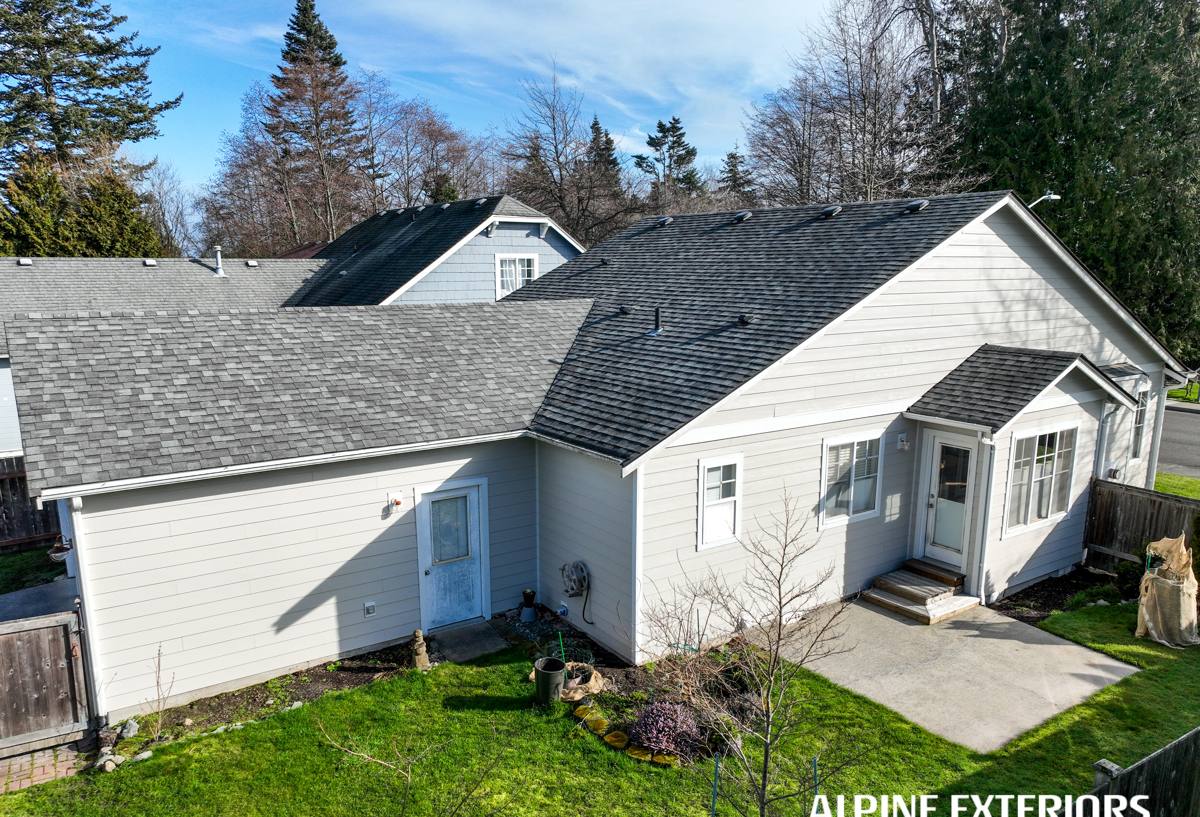
What Barkley Homes Actually Face
Moisture That Doesn't Let Up
Bellingham's rainfall isn't the heaviest in the state, but it's persistent — long stretches of steady, low-intensity rain punctuated by the occasional driving storm off the Sound. Siding here rarely gets a chance to fully dry out between weather events, especially on north- and west-facing walls or anywhere shaded by mature trees. Materials that absorb moisture, swell, or delaminate under sustained dampness are working against the climate instead of with it.
Moss, Mildew, and Shade
Wherever there's tree cover and consistent moisture, moss and mildew follow. It's a fact of life in this part of Whatcom County. Moss holds moisture against a wall surface longer than it would otherwise sit there, and on wood-based siding products that's a slow path toward rot, especially at butt joints, corners, and anywhere caulking has started to fail.
Salt Air in the Mix
Barkley isn't waterfront, but Bellingham's proximity to the bay means salt-laden air reaches inland further than people expect, especially during windier winter months. Salt air accelerates corrosion on fasteners and trim hardware and can be tougher on certain paints and finishes over time. It's one more reason we pay attention to what fasteners and finish systems we're using, not just the siding panel itself.
Why We Install Only James Hardie Fiber Cement
We made a decision a while back to install one siding system: James Hardie fiber cement. We don't carry vinyl, LP SmartSide, Cemplank, Allura, or primed wood species like spruce or cedar. That's not because those products don't have a place in the market — some of them are perfectly reasonable choices in the right climate and budget. It's because we wanted to standardize on the product that performs best against exactly the conditions Barkley and the rest of Whatcom County throw at a house.
Why Not the Alternatives
Vinyl siding is affordable and low-maintenance in a general sense, but it's a petroleum-based product that can warp or crack in temperature swings and doesn't hold paint the way fiber cement does if a homeowner ever wants to change the color down the road. It also doesn't offer the same fire resistance.
Wood-based composite products like LP SmartSide use engineered wood strand technology with a resin binder, and manufacturers have improved moisture resistance over the years. But it's still an engineered wood product at its core, and in a climate with our level of sustained dampness and moss pressure, wood-based products ask more of ongoing maintenance and caulking discipline to keep water out at seams and cut edges.
Primed cedar and spruce siding is a real wood product with real character, and some homeowners want that look specifically. But solid wood siding demands the most maintenance of any option — regular repainting or restaining, vigilant caulk maintenance, and real vulnerability to rot if that maintenance schedule slips even one season in a climate like ours.
Other fiber cement brands, like Cemplank or Allura, are chemically similar products to Hardie. Our reason for standardizing on Hardie specifically comes down to their climate-engineered HZ product lines (formulated differently for different regions), the factory-applied ColorPlus finish system, and a warranty structure we're comfortable standing behind on every job.
What James Hardie Gets Right for This Climate
- Non-combustible material — fiber cement doesn't burn, which matters more every wildfire season in the Pacific Northwest.
- Engineered for moisture — Hardie's HZ5 product line is formulated specifically for climates like ours with sustained rain and humidity.
- Factory-cured ColorPlus finish — baked on in a controlled environment rather than field-painted, so it resists fading and holds up against UV and moisture better than site-applied paint.
- Doesn't feed moss and mildew — fiber cement isn't an organic wood substrate, so it doesn't provide the same food source for fungal growth that wood-based products can.
- Dimensionally stable — it doesn't expand, contract, warp, or crack the way vinyl or wood products can with temperature and moisture swings.
- Strong transferable warranty — backed by a large, established manufacturer, and transferable if the home sells.
None of that means fiber cement is maintenance-free. It still needs to be installed correctly, caulked at the right joints, and painted at cut edges. But it's engineered to be far more forgiving of this climate than the alternatives, and that's the whole reason we standardized on it.
Installation Quality Matters as Much as the Product
Fiber cement siding is only as good as the installation behind it. Hardie's own warranty terms require correct installation — proper flashing, correct fastener spacing and type, proper clearances from grade and roof lines, and sealed joints — and a rushed or careless install can undercut even the best material. In a climate that gives siding as little downtime to dry out as ours does, gaps in flashing or caulking show up as real problems faster than they would somewhere drier.
What Correct Installation Involves
- Proper weather-resistant barrier and flashing details at windows, doors, and roof-to-wall intersections
- Correct fastener type and spacing per Hardie's published installation specs
- Appropriate clearance between siding and grade, decks, roofing, and other surfaces to avoid trapped moisture
- Factory-mitered or properly sealed field joints, not just butted panels
- Correct painting of any field-cut edges to protect the exposed substrate
Beyond Siding: The Rest of the Exterior
Siding doesn't work in isolation — it's one piece of an exterior envelope that also includes the roof, windows, and any attached structures like decks. We handle all four because they interact with each other more than most homeowners realize. A roof with poor drip-edge or flashing details can send water straight down onto a wall. Windows with failed flashing can leak into the wall cavity behind perfectly good siding. A deck ledger board attached without proper flashing is one of the most common rot points on Pacific Northwest homes. When we're on a Barkley property for a siding job, we're looking at the whole envelope, not just the panels going up.
Cost Factors on a Barkley Siding Project
| Factor | Why It Affects Cost |
|---|---|
| Home size and wall complexity | More corners, dormers, and cutouts mean more labor and material waste |
| Existing siding removal | Tear-off of old wood, vinyl, or damaged siding adds labor and disposal cost |
| Underlying damage or rot | Moisture-damaged sheathing found during tear-off needs repair before new siding goes on |
| Hardie product line and profile | Lap width, plank vs. panel, and trim choices affect material cost |
| ColorPlus vs. field-painted | Factory finish costs more upfront but eliminates a future repaint cycle |
| Access and site conditions | Slopes, mature landscaping, and limited driveway access can affect labor time |
We give honest, project-specific numbers after actually looking at a home — broad online estimates rarely hold up once someone accounts for tear-off condition and site access.
Signs a Barkley Home Might Need New Siding
- Visible cracking, warping, or bulging panels, especially on north- or shade-facing walls
- Soft or spongy spots when pressed, a sign of moisture damage underneath
- Persistent moss or mildew staining that keeps coming back after cleaning
- Peeling or bubbling paint that won't hold even after a fresh coat
- Rising energy bills that suggest failing insulation or air sealing behind the siding
- Visible gaps at trim, corners, or window/door edges
Working With a Local Crew
Whatcom County's exterior contractors deal with a specific, recurring set of conditions — sustained moisture, moss pressure, and salt-influenced air near the bay — that isn't the same challenge a crew from a drier inland region is used to solving for. A local crew has already seen how different products and installation details hold up here over years, not just on paper. That's the value of hiring someone who works this area regularly rather than a traveling install team passing through for one job.
If you're considering new siding, a roof update, replacement windows, or a deck project for a home in Barkley, we're glad to come take a look and give you a straightforward, no-pressure estimate — just fill out the form below.