 Bellingham Siding
 Exterior Work Built for Happy Valley's Climate
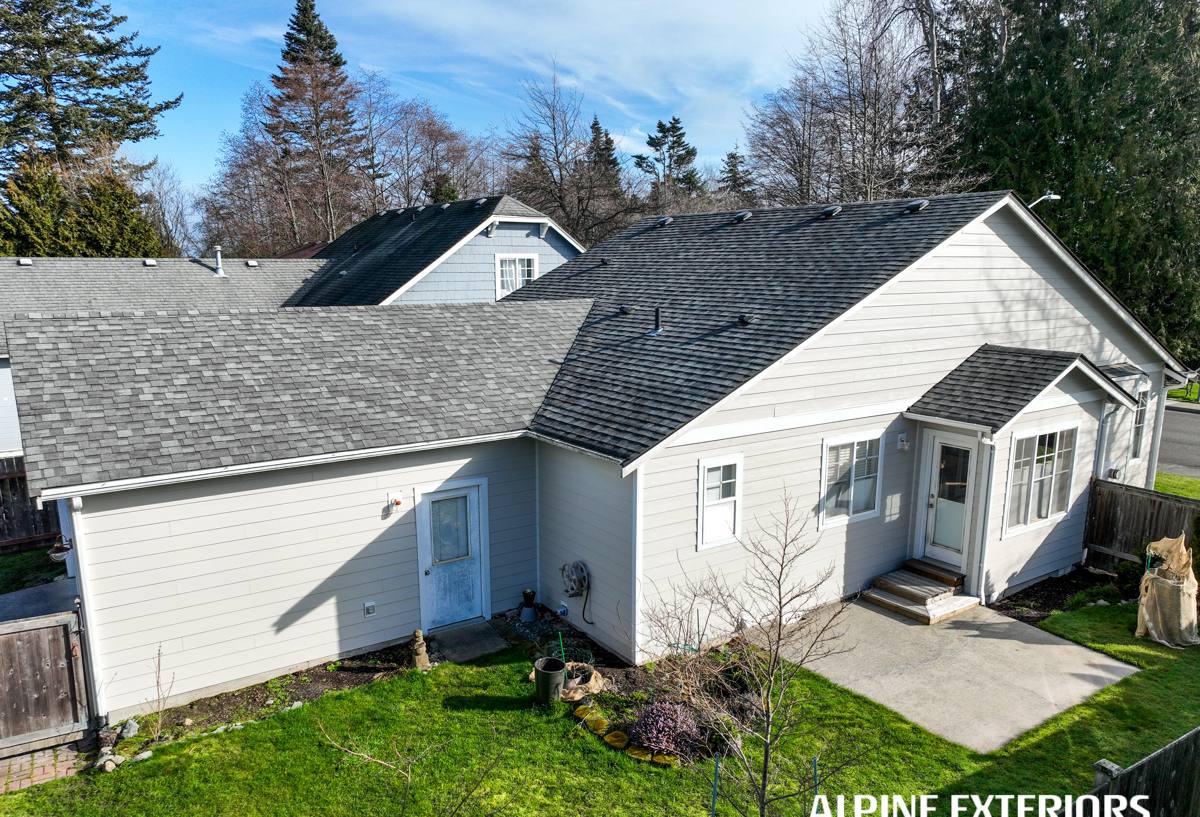
Happy Valley sits close enough to Bellingham Bay that salt-laden air is a daily fact of life for the homes here, not an occasional nuisance. Add in Whatcom County's long wet season, driving rain off the water, and the deep shade that mature trees throw over a lot of these lots, and you get a specific set of exterior problems: moisture that lingers instead of drying out, moss and algae that colonize north-facing walls and rooflines, and paint and trim that fail years before they should. We work this neighborhood regularly, and the wear patterns are consistent enough that we can usually predict what we'll find on a given home before we even walk the site.
None of that means Happy Valley homes are doomed to constant repair. It means the materials and installation details matter more here than they would in a drier inland climate, and that's the lens we bring to every siding, roofing, window, and deck job in this part of Bellingham.
What Salt Air and Moss Season Actually Do to a House
Salt Air
Proximity to the bay means airborne salt settles on siding, trim, fasteners, and metal flashing. Over time it accelerates corrosion on unprotected metal and speeds up the breakdown of paint films, especially on the weather-facing sides of a house. It's a slow process, but it's relentless, and it's part of why fastener choice and flashing detail work matter as much as the siding material itself.
Moss and Algae
Shaded, damp walls in Happy Valley — especially north and west elevations under tree cover — are prime real estate for moss and algae growth. On absorbent or poorly finished siding, that growth holds moisture against the wall long after a storm has passed, which is exactly the kind of sustained dampness that leads to rot, delamination, and paint failure. On a well-finished, non-absorbent material, moss can still land on the surface, but it doesn't get the foothold it needs to actually damage the substrate underneath.
Driving Rain
Storms coming off the water tend to drive rain sideways into a house rather than straight down, which puts more stress on seams, butt joints, window and door flashing, and anywhere two materials meet. This is where a lot of siding failures actually start — not from the field material itself, but from water finding its way behind it at a poorly flashed joint.
Why We Only Install James Hardie Fiber Cement
We install one siding system on Bellingham homes: James Hardie fiber cement. That's a deliberate standard, not a lack of options. We've made the call not to install vinyl, LP SmartSide, Cemplank, Allura, or primed wood siding, and in a climate like Happy Valley's, the reasoning comes down to how each of those materials handles sustained moisture and salt exposure over decades, not just years.
- Non-combustible core: Fiber cement doesn't feed a fire the way wood-based or vinyl products can, which matters for insurance conversations and long-term peace of mind.
- Moisture-resistant by design: Hardie's fiber cement formulation doesn't absorb and swell the way engineered wood products can when they take on repeated rain exposure.
- Factory-cured ColorPlus finish: The color and protective coating are baked on at the factory under controlled conditions, which gives a more consistent, durable finish than field-applied paint and resists the fading and chalking that coastal UV and salt air accelerate.
- Climate-engineered HZ product lines: Hardie makes region-specific formulations, and the HZ10 line is built for wetter, more humid climates like ours — it's not a generic national product stretched to fit every region.
- Strong transferable warranty: A longer, non-prorated warranty that transfers to a new owner adds real resale value, which matters if a Happy Valley home changes hands down the road.
Vinyl is inexpensive and low-maintenance in the short term, but it can warp under temperature swings, fades unevenly with UV exposure, and doesn't hold paint if a homeowner ever wants to change the color. Engineered wood products like LP SmartSide perform well when installation and maintenance stay on schedule, but they rely on an intact factory coating and diligent caulking to keep moisture out — miss a maintenance cycle in a climate this wet, and the margin for error shrinks fast. Primed wood and cedar are beautiful, and cedar in particular has real appeal, but both demand a repainting and sealing schedule that's hard to keep up with here, and both are more vulnerable to the moss and rot cycle we see on shaded Happy Valley walls. We'd rather put one product on a house that we know handles this climate correctly than offer five and let a homeowner discover the trade-offs the hard way.
Siding Material Comparison for This Climate
| Material | Moisture Behavior | Maintenance Here | Fire Rating |
|---|---|---|---|
| James Hardie Fiber Cement | Resists swelling and moisture intrusion; factory-cured finish | Low — occasional wash, no repainting cycle required | Non-combustible |
| Vinyl | Doesn't absorb water but seams and gaps allow moisture behind panels | Low, but can warp, fade, and crack over time | Combustible |
| LP SmartSide / Engineered Wood | Can swell or delaminate if coating fails or caulking is neglected | Moderate — coating and caulk need regular inspection | Combustible |
| Cedar / Primed Wood | Absorbs moisture readily; prone to rot without diligent upkeep | High — repainting and sealing on a recurring schedule | Combustible |
Roofing, Windows, and Decks in Happy Valley
Siding is only part of the moisture picture. A roof that's shedding water properly, and flashing that's tied in correctly at every penetration, is what keeps water out of the wall assembly in the first place — a perfect siding job can't compensate for a leaking roof feeding moisture down behind it. Moss on a roof isn't just cosmetic; it holds water against shingles and speeds up granule loss and shortens roof life, which is a common issue on the shaded sections of Happy Valley roofs.
Windows take a similar beating from wind-driven rain. Old or poorly flashed windows are one of the most common water-intrusion points we find during siding tear-off, and replacing siding without addressing a failing window nearby just moves the problem down the wall a few feet. Decks, meanwhile, face constant exposure to rain and standing moisture, and material choice and proper drainage detailing matter just as much there as they do on the walls of the house.
We handle all four — siding, roofing, windows, and decks — as one exterior envelope rather than four disconnected trades, because in a climate like this, they all affect each other.
What a Correct Installation Looks Like Here
Fiber cement performs the way it's rated to only when it goes on correctly, and that's especially true in a coastal, high-moisture area. Details we pay particular attention to on Happy Valley homes:
- Proper rain-screen or drainage gap behind the siding so any incidental moisture can drain and dry rather than sit against the wall
- Correct fastener spacing and stainless or coated fasteners rated for coastal, corrosive environments
- Flashing at every window, door, and roof-to-wall intersection, installed to shed water outward rather than trap it
- Proper clearance between siding and grade, decks, and roof lines to avoid wicking moisture up from below
- Caulking only where Hardie's installation guidelines call for it — over-caulking can trap moisture just as easily as under-caulking lets it in
- Field-cutting and priming exposed edges to maintain the factory finish's protection
These aren't optional extras. They're the difference between a fiber cement installation that lasts for decades in this climate and one that develops problems well ahead of schedule despite using the right material.
Why a Local Crew Matters
A crew that works Bellingham and Whatcom County regularly has already seen how a given wall orientation, tree cover, and proximity to the water plays out over years, not just at the moment of installation. That local knowledge shapes real decisions — where to add extra flashing attention, which elevations need closer inspection during a quote, and how a home's specific microclimate on its lot compares to the house next door. It also means warranty support and follow-up don't involve a crew driving in from out of the area; we're already here, and we stand behind our own installation work on the homes we've done throughout the neighborhood.
Maintenance Realities for Happy Valley Homeowners
Even with the right material and correct installation, coastal Bellingham homes benefit from a little routine attention:
- Periodic gentle washing of siding and roofing to keep moss and algae from establishing, especially on shaded north and west walls
- Keeping gutters clear so water isn't overflowing onto siding or pooling near the foundation
- Trimming back vegetation and tree limbs that keep walls shaded and damp longer than necessary
- Periodic visual checks of caulking and flashing at windows and doors, since these are the first points to show wear
- Prompt attention to any roof moss buildup before it starts holding water against shingles
None of this is heavy lifting, but skipping it in a climate this wet lets small issues compound faster than they would elsewhere.
Get a Local, No-Pressure Estimate
If you're noticing moss, fading, soft spots, or general wear on a Happy Valley home's siding, roof, windows, or deck, we're happy to take a look and give you a straightforward assessment of what's actually going on and what it would take to fix it right. There's no pressure and no obligation — just an honest read from a crew that knows this stretch of Bellingham's coastline. Use the form below to request your free estimate.