 Bellingham Siding
 Sunnyland's Exterior Challenges Are Real, Not Generic
Sunnyland sits close enough to Bellingham Bay and Whatcom Creek that homes here deal with a specific mix of weather stress most inland neighborhoods never see. It's not just "it rains a lot in Washington." It's salt-tinged air moving in off the water, wind-driven rain that hits siding sideways instead of straight down, and long stretches of gray, damp months where surfaces barely get a chance to fully dry out before the next system rolls through. Add in the mature tree canopy common throughout this part of Bellingham, and you get shaded, slow-drying wall sections that stay damp longer than a homeowner might expect just by looking at them.
None of this makes Sunnyland a bad place to own a home — it's a great neighborhood. But it does mean the exterior materials on that home are working harder than a spec sheet from a warmer, drier climate ever accounted for. That's the lens we bring to every siding, roofing, window, and deck project we take on here.
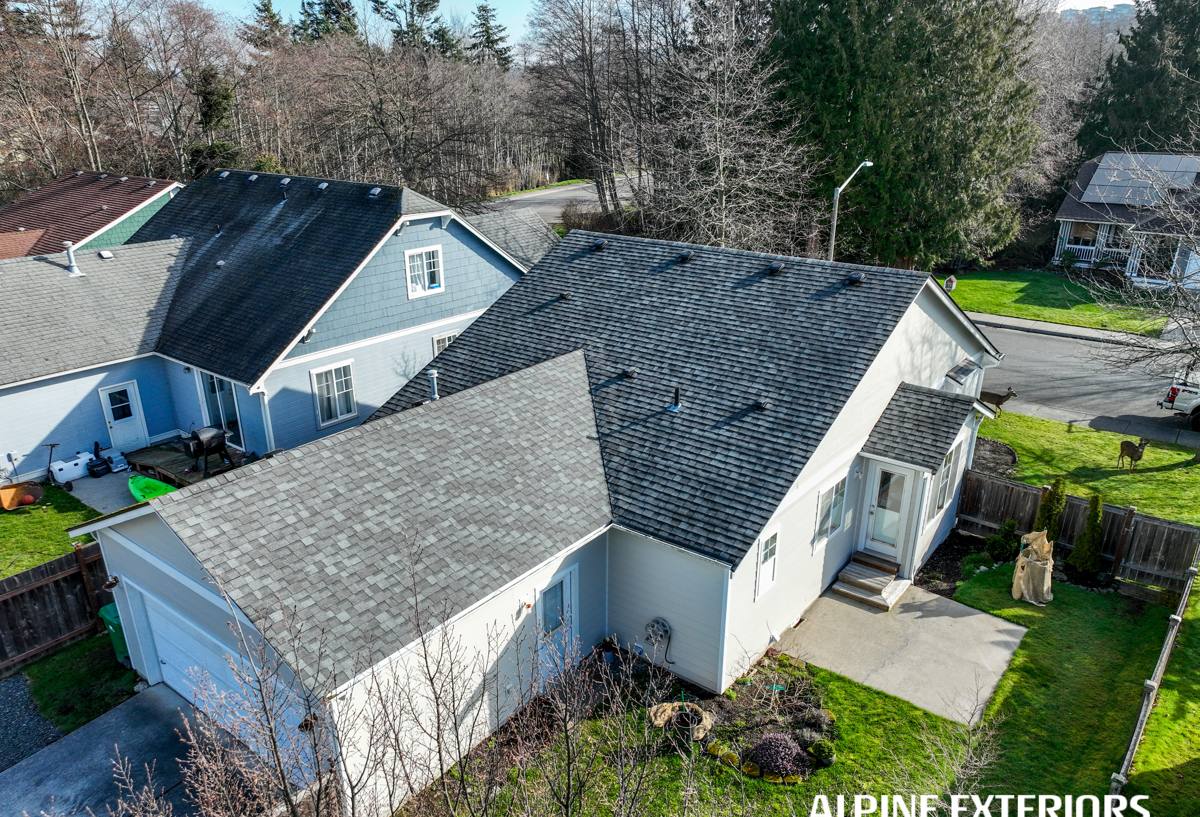
What Salt Air, Driving Rain, and Moss Season Actually Do to Siding
Salt Air and Coastal Moisture
Proximity to saltwater doesn't just mean a little extra corrosion on metal fasteners and flashing — it also means the air itself carries more moisture, more of the time. Materials that rely on a factory coating or field-applied paint to keep water out are under more or less constant low-grade attack. Over years, that shortens the interval between repaints and increases the odds of moisture finding a seam, a fastener head, or a cut edge that wasn't properly sealed.
Wind-Driven, Sideways Rain
Bellingham's storms frequently come with real wind behind them, which pushes rain up and under laps and trim instead of letting it run straight down and off. Siding and flashing details that would be perfectly adequate in a calmer climate can underperform here if they weren't designed or installed with wind-driven rain in mind.
Moss, Algae, and the Long Damp Season
Western Washington's moss season isn't a two-week nuisance — it's most of the year on shaded, north-facing, or tree-covered walls. Moss and algae hold moisture directly against the siding surface, and on materials that are sensitive to sustained moisture contact, that's exactly the wrong condition to sit in for months at a time.
Why We Install James Hardie Fiber Cement — and Nothing Else
We made a deliberate decision to standardize on James Hardie fiber cement siding for every siding project we do, including here in Sunnyland. We don't install vinyl, LP SmartSide, Cemplank, Allura, or primed wood siding like spruce or cedar. That's not a marketing angle — it's a call we made after weighing how each of those materials actually holds up under exactly the conditions Sunnyland homes face.
Vinyl is inexpensive and low-maintenance in the sense that it doesn't need repainting, but it's a petroleum-based product that can warp, fade, and become brittle over time, and it offers no real fire resistance. Engineered wood products like LP SmartSide perform well when detailed and maintained precisely, but they're wood-based, which means they carry an inherent vulnerability to sustained moisture exposure — a real concern in a neighborhood with a long wet season and plenty of shade. Cemplank and Allura are also fiber cement, and reasonable products in their own right, but we've standardized on Hardie specifically for its factory-applied ColorPlus finish and its climate-engineered HZ5 formulation, which is built for the Pacific Northwest's wet-side conditions. Primed cedar or spruce siding looks beautiful when new, but it demands a maintenance commitment — regular repainting, caulking, and moisture vigilance — that most homeowners underestimate until the first signs of rot show up at the bottom courses.
James Hardie fiber cement is non-combustible, dimensionally stable, and holds its ColorPlus factory finish far longer than field-applied paint on wood or engineered wood products. It doesn't feed moss and algae the way organic-based siding can, and it's backed by a strong, transferable warranty when installed to Hardie's spec — which is exactly how we install it, every time.
James Hardie Product Lines We Work With
| Product | Best Suited For | Why It Fits Sunnyland |
|---|---|---|
| HardiePlank Lap Siding | Most Sunnyland homes, classic and modern styles | HZ5 formulation engineered for wet, freeze-prone climates like ours |
| HardieShingle | Accent gables, Craftsman and cottage-style homes | Won't rot or cup the way cedar shingle can in shaded, damp areas |
| HardiePanel Vertical Siding | Modern facades, accent walls | Clean lines with the same moisture and fire performance as lap siding |
| HardieTrim | Corners, fascia, window and door surrounds | Matches siding durability so trim doesn't become the weak point |
How We Approach a Sunnyland Siding Project
Every siding job starts with an honest look at what's underneath the current siding, not just what's visible from the curb. In a neighborhood like Sunnyland, that inspection matters more than usual — moisture damage under aging siding can be well advanced before it ever shows up as a visible problem outside. Our process typically includes:
- Full exterior inspection, including moisture checks at vulnerable points like window sills, deck ledgers, and grade-level courses
- Removal of old siding and inspection of the sheathing and weather-resistive barrier underneath
- Repair of any rot, damaged sheathing, or compromised flashing before new siding goes on
- Correct installation of house wrap and flashing details sized for wind-driven rain, not just vertical drainage
- Installation of James Hardie siding to manufacturer spec, including proper fastening, clearances, and caulking at penetrations
- Final walkthrough covering care, warranty registration, and what to watch for over the coming seasons
Roofing, Windows, and Decks: The Rest of the Building Envelope
Siding doesn't work in isolation. A roof that's shedding water improperly, windows with failed seals, or a deck ledger that's trapping moisture against the house can all undermine even a well-installed siding job. Because we handle roofing, windows, and decks in addition to siding, we can look at a Sunnyland home's exterior as one connected system rather than a series of unrelated projects.
Roofing
Roof condition directly affects how much water ends up running down your walls. Moss buildup, worn flashing, or aging shingles in this climate tend to show up as siding problems before they're diagnosed as roofing problems.
Windows
Window flashing and siding integration is one of the most common failure points we see when we open up a wall during a siding replacement. Replacing windows and siding together lets us get that detail right the first time instead of patching around an existing installation.
Decks
Deck ledger boards attached directly to the house are a frequent source of hidden moisture intrusion, especially on homes with limited overhangs. When we're already working on a home's exterior, addressing deck-to-house connections at the same time closes off one more entry point for water.
What Affects the Cost of a Siding Project in Sunnyland
Every home is different, but the same handful of factors tend to drive the price of a siding project up or down. We won't quote a number without seeing the house, but here's what typically matters most:
| Factor | Why It Matters |
|---|---|
| Condition of existing sheathing | Hidden rot or moisture damage found during tear-off adds repair scope |
| Home size and complexity | More corners, dormers, and trim details mean more labor and material |
| Siding profile chosen | Lap width, shingle accents, and trim detailing affect material and install time |
| Access and site conditions | Tight lots, slopes, or mature landscaping can affect staging and labor |
| Scope of related work | Bundling window, deck, or roofing work can affect overall project efficiency |
What to Look for When Hiring a Siding Contractor Here
Sunnyland homeowners deserve a contractor who understands the specific stresses this neighborhood's climate puts on a building, not a generic national playbook. A few things worth checking before you hire anyone for exterior work:
- Are they licensed and insured to work in Washington State, and will they show you proof without being asked twice?
- Do they explain why they use the materials they use, or just quote a price and move on?
- Will they inspect and repair sheathing and flashing issues before covering them up with new siding?
- Do they offer a manufacturer-backed warranty, and do they understand what installation practices are required to keep it valid?
- Can they speak specifically to how Whatcom County's climate — not just "Pacific Northwest weather" in general — affects the materials they're proposing?
Why a Local Crew Matters in Whatcom County
A contractor based in and around Bellingham has seen how Sunnyland homes actually age — which walls hold moss longest, which details fail first when a wind-driven storm blows in off the bay, which older homes were built with materials and methods that don't hold up to today's conditions. That local pattern recognition is hard to replicate from a crew that isn't consistently working in this specific climate. It shapes everything from how we sequence a tear-off around the weather to which flashing details we insist on regardless of what a builder-grade installation might have skipped.
If your Sunnyland home's siding is showing its age — or if you're just planning ahead before the next wet season sets in — we're happy to take a look and give you a straightforward, no-pressure assessment. Use the form below to request a free estimate, and we'll walk you through exactly what we see and what we'd recommend.