 Bellingham Siding
 South Hill's Weather Is Harder on Siding Than It Looks
South Hill sits above downtown Bellingham with open exposure toward Bellingham Bay, and that elevation and view come with a trade-off: the same air that gives South Hill homes their outlook also carries salt moisture off the water, driving rain that hits west- and south-facing walls at an angle instead of straight down, and long stretches of gray, damp weather that keep exterior surfaces wet for days at a time. Add Whatcom County's mossy, shaded microclimates on the north and east sides of homes, and you get an exterior environment that punishes anything less than a properly installed, genuinely weather-resistant siding system.
Homeowners in this neighborhood often notice the same patterns: paint that fails years before it should, caulk joints that open up and let water behind the cladding, and moss or algae staining that keeps coming back no matter how many times it's cleaned off. None of that is bad luck. It's what this specific stretch of Bellingham does to exterior materials over time, and it's the reason we approach siding here differently than we would in a drier inland climate.
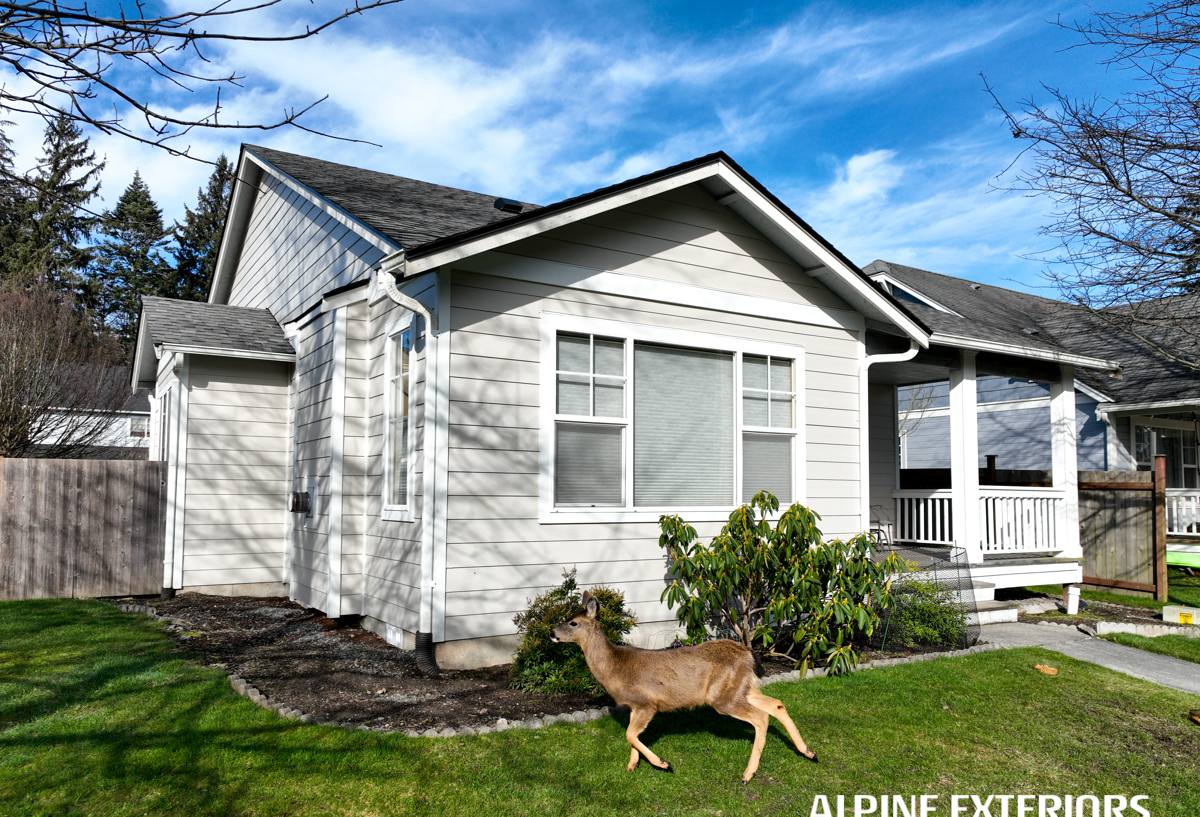
An Established Neighborhood With Its Own Siding Considerations
South Hill is one of Bellingham's older, more established residential areas, and that means a lot of the housing stock predates modern siding and moisture-barrier standards. Many homes here have already been re-sided once, sometimes with materials that weren't well suited to the climate in the first place. That history matters when we're bidding a job — we're not just measuring walls, we're looking at what's underneath the current siding, how the original construction handled water management, and whether there's hidden rot or trapped moisture that needs to be dealt with before new siding goes up.
Hillside lots also mean more wind-driven exposure on some elevations than others, and mature tree cover on many South Hill properties means more shade, more moss, and slower drying times on north-facing walls. A siding plan that treats every wall of the house the same way isn't accounting for the reality of how weather actually moves across a hillside property.
What We Look For on a South Hill Site Visit
- Signs of moisture intrusion at trim, window flashing, and butt joints from the current siding
- Moss and algae buildup patterns that reveal which elevations stay wet longest
- Condition of the water-resistive barrier and flashing once the old siding is opened up
- Soffit, fascia, and roofline details that affect how water sheds off the house
- Whether existing trim, windows, or deck structures will be disturbed by the siding work
Our Approach to Siding in South Hill
We install James Hardie fiber cement siding, and that's it. We don't carry vinyl, LP SmartSide, Cemplank, Allura, primed spruce, or cedar on our trucks, and we won't quote a job using them. That's a deliberate standard, not a limitation of what we know how to install. After years of servicing homes throughout Bellingham and Whatcom County, we've seen which products hold up to this exact combination of salt air, sustained rain, and moss pressure — and which ones require homeowners to fight the same maintenance battle every few years.
James Hardie fiber cement is non-combustible, engineered specifically for wet marine climates through its HZ10 product line, and finished at the factory with ColorPlus technology, which bonds color to the board under controlled conditions rather than relying on field-applied paint that has to cure in Bellingham's damp air. That factory finish is a real advantage on a hillside lot where drying time between rain events can be short.
Why We Don't Install Other Products Here
This isn't a knock on every homeowner who has vinyl or wood siding today — those products have legitimate uses and plenty of homes wear them fine in other climates. But in this specific environment, we've made a professional call:
- Vinyl can warp and become brittle with UV and temperature swings, and its seams and J-channels give driving rain more opportunities to find a path behind the cladding.
- Wood siding (cedar, primed spruce) looks great new but demands a repaint and recaulk cycle that's tough to keep up with in a climate this consistently wet, and it's the material most vulnerable to the rot and moss staining South Hill's shaded elevations produce.
- LP SmartSide is a treated engineered wood product, which means its long-term performance still depends heavily on caulking, painting, and cut-edge sealing being done — and redone — correctly.
- Cemplank and Allura are fiber cement competitors to Hardie, but we've standardized on one manufacturer so we can guarantee consistent installation detailing, warranty support, and color-match availability for repairs down the line.
Beyond Siding: Roofing, Windows, and Decks
Siding is only one piece of how a South Hill home handles moisture. We also work on roofing, windows, and decks, because a house's exterior systems function together — a roof that's shedding water poorly will overload the siding and trim below it, leaky or poorly flashed windows will undercut even a perfect siding installation, and a deck built without the right ledger flashing can channel water straight into a wall assembly.
When we're on a South Hill property for a siding estimate, we'll flag anything we see on the roof, around window openings, or at deck attachment points that's contributing to moisture problems, even if it's outside the scope of the siding work itself. Homeowners are usually better served knowing about it upfront than finding out later when it undoes new siding from behind.
What to Expect From a Local Crew
A crew that works Bellingham and Whatcom County regularly knows the seasonal window for exterior work here, understands how to sequence a job around rain rather than getting caught by it, and has already solved the flashing and drainage-plane details that this climate requires — because they've done it on other homes in the same weather. That matters more on a hillside neighborhood like South Hill than it might elsewhere, since wind exposure and shade patterns vary block to block.
A typical siding project moves through the same general phases regardless of house size:
- Site walkaround and existing siding/moisture assessment
- Removal of old siding and inspection of sheathing and water-resistive barrier
- Repair of any rot or damaged sheathing found underneath
- Installation of drainage plane, flashing, and trim details
- James Hardie panel or lap installation per manufacturer fastening and clearance specs
- Final trim, caulking at manufacturer-approved joints, and cleanup
What Affects Your Siding Project Cost
Every South Hill home is different, but the same handful of factors drive most of the cost variation we see. This is meant to help you understand what you're paying for, not to price your specific job — that requires an in-person look.
| Factor | Why It Matters |
|---|---|
| House size and wall complexity | More corners, dormers, and trim details mean more labor and cut waste |
| Condition of existing sheathing | Hidden rot found during tear-off adds repair scope that can't be quoted sight unseen |
| Siding profile (lap vs. panel vs. shingle) | Different James Hardie profiles carry different material and labor costs |
| Color and finish choice | Factory ColorPlus finishes vs. field-painted primed products affect both cost and longevity |
| Access and site conditions | Hillside lots, retaining walls, or tight setbacks can slow staging and scaffolding |
| Scope beyond siding | Bundling trim, roofing, window, or deck work can affect scheduling and total price |
Maintaining Your Siding Once It's Installed
One reason we standardized on James Hardie is that it genuinely reduces the maintenance burden compared to painted wood or aging vinyl, but "low maintenance" doesn't mean "no maintenance," especially in a climate that grows moss as readily as this one does.
- Rinse siding down periodically to clear pollen, dust, and early moss growth, especially on shaded north and east walls
- Keep gutters clear so overflow isn't running down the face of the siding
- Trim back vegetation and tree branches that keep siding shaded and damp longer than it needs to be
- Inspect caulking at trim and penetrations every year or two and refresh it if it's cracking or pulling away
- Address any impact damage promptly — fiber cement resists moisture well, but an unsealed chip or crack is still an entry point
Why a Strong Warranty Matters in This Climate
James Hardie backs its siding with a long, transferable product warranty, and ColorPlus finishes carry their own separate finish warranty. In a climate that stresses exterior finishes as consistently as Whatcom County's does, that warranty structure is worth understanding before you choose a product — it reflects the manufacturer's own confidence in how the material performs under sustained moisture exposure, not just how it looks on installation day. A transferable warranty also protects your home's resale value, which matters on a neighborhood like South Hill where buyers increasingly ask what siding a home has and when it was last replaced.
If you're weighing a siding, roofing, window, or deck project on a South Hill home, we're happy to take a look and walk you through what we're seeing and why we'd recommend the approach we do. A free, no-pressure estimate is the easiest way to get real numbers instead of guesses — the form below gets you started.