 Bellingham Siding
 Siding Repair in Barkley: Why This Isn't a Generic Fix
Barkley is a neighborhood within Bellingham, in Whatcom County, and like the rest of the area it sits under the same weather pattern that wears on the outside of a house from every direction at once: salt-tinged air moving in off Bellingham Bay, rain that arrives sideways as often as it falls straight down, and a moss season that barely lets up on shaded walls and rooflines. Siding repair here isn't just patching whatever's visibly cracked or discolored — it's figuring out what that damage is actually telling you about moisture getting somewhere it shouldn't, and fixing that cause along with the visible symptom.
We get calls in Barkley for everything from a single storm-damaged panel to soft spots that have quietly spread behind an old paint job for years. This page covers what causes that damage locally, how to tell a real repair from something that's actually a replacement job in disguise, and what a repair needs to include to hold up through another wet Whatcom County winter.
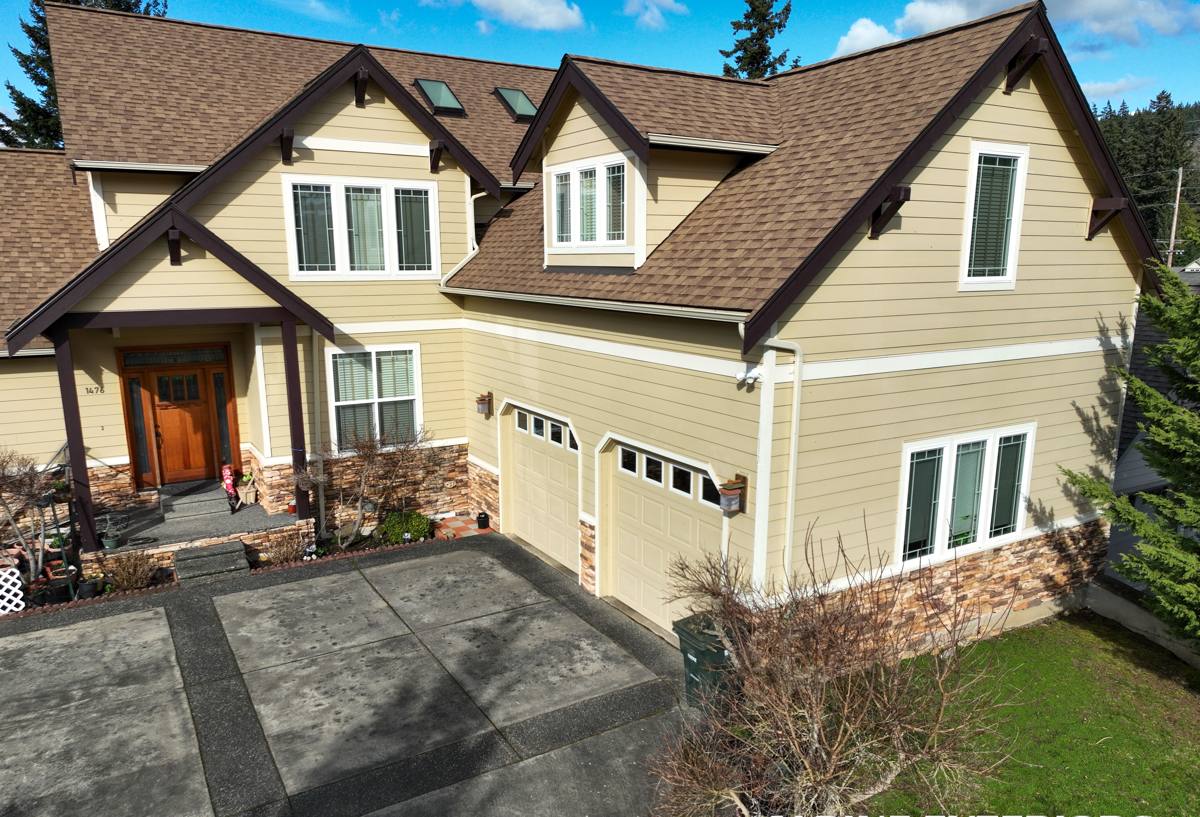
What's Actually Behind Most Siding Damage in Barkley
Salt Air and Corroding Fasteners
Homes close enough to Bellingham Bay to catch salt-laden air off the water see faster corrosion on exposed nail heads, trim fasteners, and lower-grade metal flashing than homes further inland. That corrosion is slow and easy to miss at first — a little rust streaking below a nail, a fastener that's lost its grip — but it's often the first thread to pull on when diagnosing why a section of siding has started to loosen or separate.
Driving Rain Finding Its Way Behind the Siding
Storms in this part of the Pacific Northwest tend to arrive with real wind behind them, which pushes rain into laps, seams, and joints that wouldn't take on nearly as much water in a calmer climate. A lot of the repair calls we get aren't actually caused by rain hitting the face of the siding — they're caused by rain that got behind it, through a gap in flashing, an open seam, or a caulk joint that failed years before anyone noticed. By the time it shows up as a visible stain or soft spot on the surface, the moisture has usually been working on the sheathing underneath for a while.
A Moss Season That Doesn't Really End
Between tree cover, cool temperatures, and steady humidity, moss and algae have a long growing window on north-facing and shaded walls across Bellingham — for a lot of properties, close to year-round. Moss isn't just a cosmetic problem. It holds moisture directly against the siding surface far longer than open air would, and that sustained dampness is what eventually turns a green-tinted wall into a soft, failing one.
Signs Your Barkley Home's Siding Needs Repair, Not Just a Wash
Some problems are obvious. Others hide behind paint or trim until they've had years to get worse. Worth checking for:
- Panels that feel soft, spongy, or give slightly when pressed, especially near the bottom courses or below windows
- Cracked, chipped, or split boards, particularly after a windstorm or a falling branch
- Gaps opening up at seams, corner boards, or where siding meets trim
- Paint that's bubbling, peeling, or failing in one specific area rather than evenly across the wall
- Rust streaks running down from nail heads or metal flashing
- Moss or dark staining that keeps coming back within weeks of being cleaned off
- A musty smell or discoloration on an interior wall that backs up to a suspect section of exterior siding
Any one of these can be a small, contained repair if it's caught early. Left alone through another wet season, most of them get more expensive rather than staying the same.
Repair or Replace? A Practical Framework
Not every damaged section needs a full re-side, and not every problem is fixable with a patch. The honest answer usually comes down to how contained the damage is and what's happening behind it.
| Situation | Usually points to repair | Usually points to replacement |
|---|---|---|
| Damage extent | One panel, a small cluster, or a single wall section | Soft spots or staining spread across multiple walls |
| Cause | Impact damage, a failed caulk joint, a single flashing gap | Long-term moisture intrusion with sheathing rot underneath |
| Condition of the surrounding siding | Rest of the wall is otherwise sound | Surrounding siding is near the end of its service life anyway |
| Material match | Matching profile and color are available or unnoticeable once patched | Existing material is discontinued, badly faded, or a poor match |
We won't recommend re-siding a whole wall to fix a problem that's really contained to a few square feet, and we won't patch over damage that's clearly a symptom of something bigger happening behind the surface. That call gets made after an actual inspection, not before one.
What a Correct Siding Repair Actually Involves
A repair that only covers the visible damage without addressing what caused it tends to fail again, usually faster the second time. A repair done right includes:
- Removing enough surrounding material to see the actual extent of the damage, not just the part visible from the ground
- Checking the sheathing and weather barrier behind the damaged section for rot or trapped moisture before closing anything back up
- Correcting the underlying cause — reflashing a gap, resealing a joint, re-securing loose fasteners — instead of just swapping the board and leaving the same entry point for water
- Matching the replacement material's profile, and on James Hardie siding, using Hardie's own matched ColorPlus touch-up product rather than field-mixed paint that won't hold up or match over time
- Re-checking clearance at grade and hardscape on the repaired section, since incorrect clearance is a common reason the same spot fails again
Skipping any of these steps is how a repair turns into a callback a year or two later.
How We Approach a Repair Call in Barkley
We start with an actual look at the property, not a phone estimate. That means walking the affected area, checking whether the damage is isolated or part of a broader pattern, and if there's any real question about what's happening behind the siding, opening it up enough to see rather than guessing. From there we give a straightforward read on whether a targeted repair makes sense or whether the section — or the whole wall — has reached the point where replacement is the more honest recommendation. Once we're doing the work, we match material and finish as closely as the situation allows, correct the cause of the damage rather than just its symptom, and build the repaired section to the same clearance and flashing standards we'd use on a full installation.
Repairing Existing Siding vs. What We Recommend Going Forward
Not every Barkley home we repair siding on is already wearing James Hardie fiber cement, and we're not going to tell a homeowner their vinyl or wood siding is unrepairable just because it isn't the product we install new. We'll repair what's there when a repair is the right call. Where a homeowner is facing a section that's failed enough times that repair no longer makes sense, or is planning a fuller exterior update down the line, our recommendation is James Hardie — non-combustible, engineered in climate-specific HZ formulations for regions with this kind of sustained moisture exposure, finished with a factory-applied ColorPlus coat rather than field paint, and backed by a strong transferable warranty. That's a recommendation for new work, not a judgment on what's already on the house.
Why a Crew That Already Works Barkley Matters for Repair Work
Diagnosing siding damage correctly depends on knowing what tends to actually cause it in this specific setting — which wall orientations take the worst of the wind-driven rain, where moss typically establishes first based on shade and tree cover, and how quickly a small gap in flashing turns into a soft spot given how consistently damp the ground and air stay here. A crew that repairs siding in Barkley regularly has seen enough of these patterns to know where to look beyond the obviously damaged board, instead of patching what's visible and missing what's spreading underneath it. That familiarity is also what makes a repair estimate accurate the first time, rather than growing once the wall is opened up.
If your Barkley home has a section of siding that's cracked, soft, stained, or just not holding paint the way it should, we're happy to take a look and give you an honest read on what it actually needs. Use the form below to request a free, no-pressure estimate.