 Bellingham Siding
 Siding in Puget: A Neighborhood That Wears Its Weather
Puget sits in one of the wetter, breezier pockets of Bellingham, and homes here show it. Between the salt-laden air moving off the water, the driving rain that comes sideways during a winter storm, and the long stretch of gray months when nothing ever quite dries out, exterior materials in this part of Whatcom County work harder than they do almost anywhere else in the state. Siding that would hold up fine in a drier inland climate can start failing here years ahead of schedule if it wasn't built — or installed — for this specific environment.
We work on homes throughout Puget and the surrounding Bellingham area, and the patterns repeat: paint failing early on the weather-facing walls, moss creeping up from the foundation line, soft spots around window trim and butt joints where water has been getting behind the material for longer than anyone realized. None of that is a surprise once you understand what this climate actually does to a house over ten or twenty years.
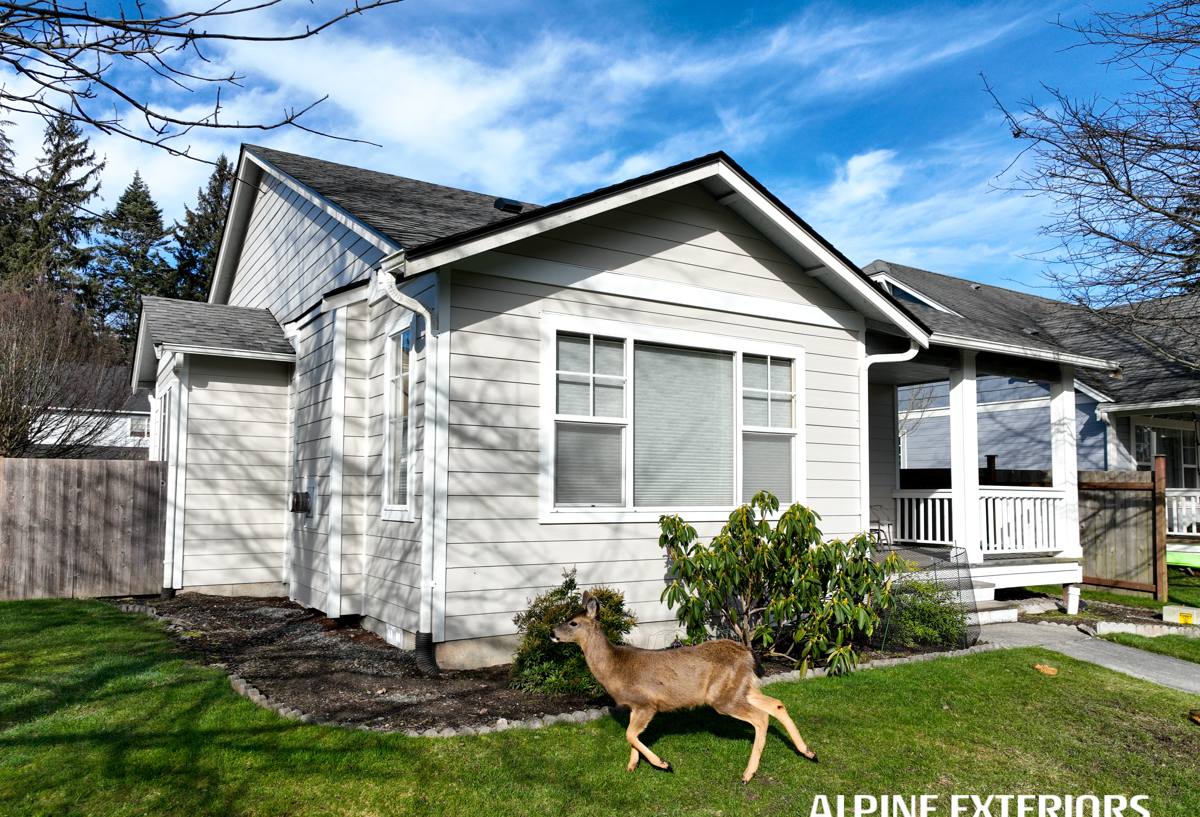
What the Local Climate Does to Siding Over Time
Salt Air and Corrosion
Proximity to Bellingham Bay and the broader Puget Sound means airborne salt is a real factor for exterior materials, fasteners, and finishes. Salt air accelerates corrosion on exposed metal fasteners and trim, and it breaks down lower-grade paint and coatings faster than a standard exterior paint job is rated for. Materials and finish systems that aren't formulated with coastal exposure in mind tend to chalk, fade, or lose adhesion noticeably sooner near the water.
Driving Rain and Moisture Intrusion
Bellingham doesn't just get a lot of rain — a good share of it arrives horizontally during winter storms, driven by wind off the Sound. That kind of wind-driven rain finds every gap in flashing, every under-caulked joint, and every seam where siding wasn't lapped correctly. Once water gets behind the cladding, it doesn't evaporate quickly in a climate this humid, and that's when you start seeing rot in sheathing and trim, not just cosmetic damage on the surface.
Moss, Algae, and the Long Shade Season
Puget's tree cover and the region's long stretch of overcast, damp weather make moss and algae growth a near-constant maintenance issue. On siding materials that absorb moisture, that growth doesn't stay on the surface — it holds water against the material and keeps that section of wall damp for weeks at a time. Even on materials that resist water absorption, moss and algae still need to be washed off periodically to keep them from staining or shading the surface underneath.
Why We Install Only James Hardie Fiber Cement Siding
We made a deliberate decision as a company to install James Hardie fiber cement exclusively — not vinyl, not LP SmartSide, not primed spruce or cedar, and not other fiber cement brands. That's not a marketing position; it's a practical one built around what actually survives a climate like this without turning into a maintenance headache for the homeowner.
Fiber cement is non-combustible, which matters increasingly in the Pacific Northwest as wildfire risk gets factored into building decisions even in wetter coastal counties. James Hardie's HardieZone system also engineers its products specifically for regional climate exposure — homes in Whatcom County fall into the HZ5 zone, which accounts for the moisture load and temperature swings typical of Western Washington. That's a meaningfully different product than what's sold in drier or hotter parts of the country under the same general "fiber cement" label.
The factory-applied ColorPlus finish is the other piece of the equation. It's baked on and cured under controlled conditions before the boards ever leave the plant, which gives it far better resistance to fading, chalking, and peeling than a field-applied paint job — a real advantage on walls that take direct salt spray and driving rain for months at a stretch. It also comes with a stronger, transferable warranty structure than most site-painted or vinyl alternatives, which matters if you sell the house before you'd otherwise think about residing it.
What a Siding Project Looks Like on a Puget Home
Every project starts with an actual inspection of the existing wall assembly, not just a look at the siding surface. On homes in this area, we're specifically checking for trapped moisture, soft sheathing around windows and doors, and any spots where past flashing work was incomplete — all common on older homes that have been through a few decades of Bellingham winters.
Water Management Comes First
Correct installation in a climate like this starts underneath the siding, not on top of it. That means proper house wrap or weather-resistive barrier, correctly lapped and taped flashing at every window and door, and drainage planes that let any moisture that does get in find its way back out instead of sitting against the sheathing. Fiber cement siding is only as good as the water management system behind it — this is the step that actually prevents the rot problems we see on older homes.
Installation to Manufacturer Spec
James Hardie siding has specific requirements around fastening, clearances, caulking, and joint treatment, and those specs exist for a reason — deviating from them is one of the more common ways a fiber cement job underperforms and voids warranty coverage. We install to those specs as a baseline, not an upsell, including proper ground clearance and gaps at roof lines to keep the bottom edge of the siding from sitting in standing moisture.
What Drives the Cost of a Siding Project Here
| Factor | Why It Matters in Puget |
|---|---|
| Home size and wall complexity | More corners, dormers, and trim details mean more cutting, flashing, and labor time |
| Existing wall condition | Rot repair or sheathing replacement found during tear-off adds cost but is not optional to skip |
| Siding profile and accessories | Lap width, trim boards, and shakes/panels for accent areas price differently |
| Color and finish | Factory ColorPlus finishes vary by line; some premium colors and textures cost more than standard options |
| Access and site conditions | Trees, slopes, and tight lot lines common in this area can affect staging and labor time |
We don't quote off square footage alone — the wall inspection is what actually determines the number, since hidden rot repair is the single biggest variable on older homes in this part of Bellingham.
Beyond Siding: Roofing, Windows, and Decks
Siding doesn't work in isolation, and in a climate this wet, the exterior envelope has to be looked at as a whole system. We also handle roofing, window replacement, and deck construction, which matters on a lot of Puget homes because siding problems and roofing or window flashing problems often share a root cause — water finding a path in at a transition point. Replacing siding without addressing a failing roof valley or a poorly flashed window nearby just moves the moisture problem instead of solving it.
Handling all four trades under one crew also means fewer handoffs and finger-pointing between contractors when something touches more than one system, which is common on older homes that haven't had exterior work done in a while.
Signs Your Puget Home May Need New Siding
- Paint that's peeling, bubbling, or chalking heavily, especially on the sides that face the water or prevailing wind
- Soft or spongy spots when you press on the siding near the bottom edge or around windows
- Persistent moss or dark staining that comes back quickly after cleaning
- Visible gaps, warping, or separation at seams and butt joints
- A musty smell or visible staining on interior walls that share an exterior wall with problem siding
- Siding that's original to a home built more than 20-25 years ago and has never been replaced
Why a Local Crew Matters
A lot of what separates a siding job that lasts from one that fails early comes down to details that only make sense if you understand the local climate — how much clearance to leave at grade in a wet climate, which orientations take the worst of the wind-driven rain, and how much moss and algae exposure a given wall is going to see based on tree cover and sun exposure. A crew that works in Bellingham and Whatcom County year-round sees these patterns repeatedly and builds them into how the work gets done, rather than applying a generic install process that was written for a drier region.
If you're weighing a siding replacement, or you're just not sure whether what you're seeing is cosmetic or a sign of something more serious underneath, we're happy to take a look. We offer free, no-pressure estimates for homeowners in Puget and throughout the Bellingham area — there's no obligation, and it's worth knowing exactly what condition your current siding is really in before deciding what's next.