 Bellingham Siding
 Siding Built for Birchwood's Corner of Bellingham
Birchwood sits close enough to the water and the wooded lots of north Bellingham that its homes take on a specific mix of weather stress: salt-tinged air moving in off Bellingham Bay, long stretches of driving rain through the fall and winter, and a moss season that seems to start earlier and last longer every year. None of that is unusual for Whatcom County, but it adds up differently depending on how a house is built, which direction it faces, and what's on the walls. A siding material that holds up fine in a drier inland climate can start showing real problems here within a decade.
We're a local crew, not a call center dispatching subcontractors from out of the area. When we look at a Birchwood home, we're looking at the same tree cover, roofline exposure, and moisture patterns we deal with across our other jobs in Bellingham. That local repetition matters more than it sounds like it should — it's the difference between guessing at a fix and knowing exactly which wall of a house is going to take the worst of the weather.
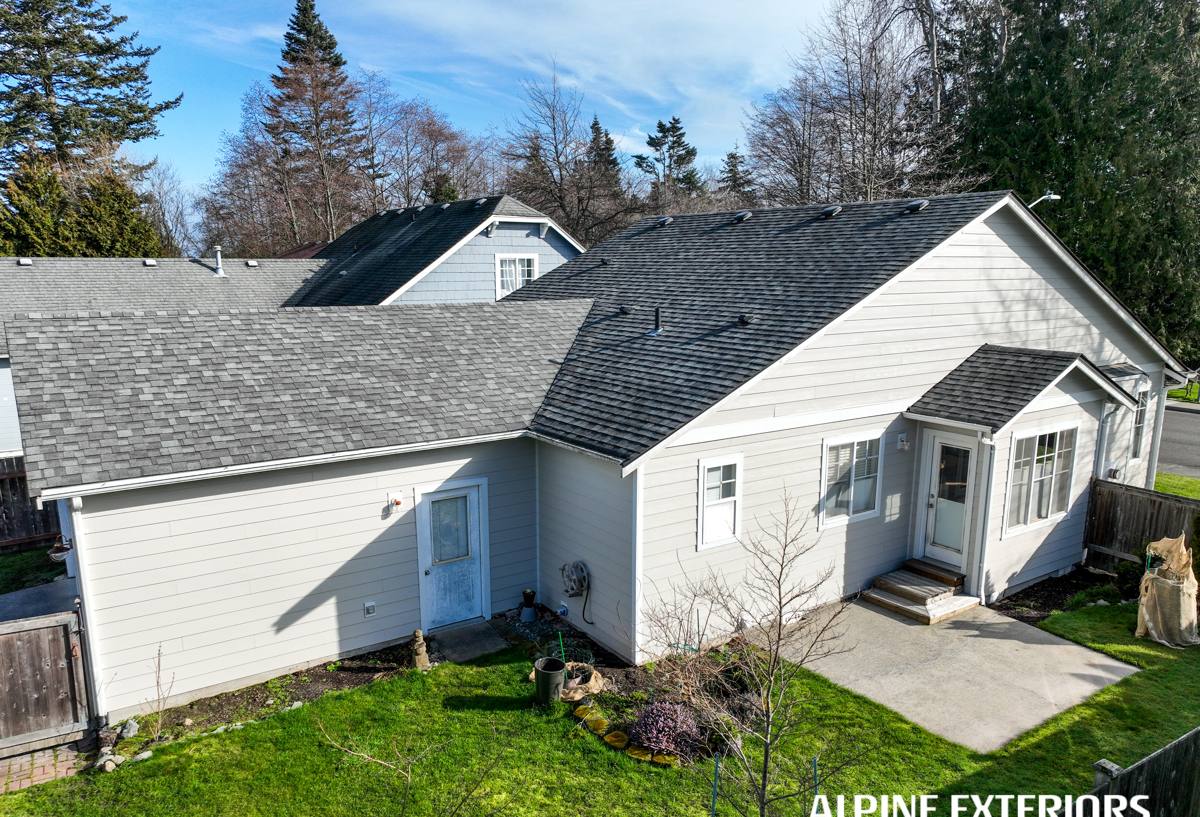
What the Climate Actually Does to a House Here
Moisture That Doesn't Let Up
Whatcom County doesn't get the heaviest rainfall totals in the state, but it gets a lot of low-intensity, long-duration rain — the kind that sits against a wall for days at a time rather than blowing through in a single storm. Siding, trim, and the water-resistive barrier behind them are what stand between that moisture and the framing. Anywhere caulk has failed, a butt joint has opened up, or paint has worn thin, water finds a way in slowly and quietly.
Moss, Algae, and Shade
Lots with mature trees or north-facing walls hold moisture longer and grow moss and algae faster. On some siding types that's mostly cosmetic. On others, especially wood-based products, sustained dampness against the material itself is a real durability problem, not just an appearance issue.
Salt Air and Coastal Exposure
Proximity to the bay means a low but steady exposure to salt-laden air, which accelerates corrosion on fasteners and hardware and can be tougher on certain paint and coating systems over time. It's rarely dramatic, but it's constant, and constant is what wears materials down over 20–30 years.
Our Position: We Install James Hardie Fiber Cement, and Nothing Else
We made a decision a while back to stop installing vinyl siding, LP SmartSide, Cemplank, Allura, and primed or unfinished wood species like spruce or cedar as full siding systems. We still work on homes that have them, and we don't think every one of those products is a bad product — but for what this climate does to a house over decades, we don't think they're the right long-term answer, and we didn't want to keep selling something we'd hedge on.
James Hardie fiber cement is what we install instead. It's not a magic material — it still needs to be installed correctly, caulked correctly, and painted or maintained on the schedule it's designed for. But it's non-combustible, it's engineered specifically for climates like this one (Hardie's HZ5 product line is built for the Pacific Northwest's wet, moderate-temperature conditions), and its factory-applied ColorPlus finish holds color and resists the kind of moisture and UV breakdown that field-applied paint struggles with.
Why We Stepped Away from the Alternatives
- Vinyl siding: Inexpensive and low-maintenance, but it expands and contracts significantly with temperature swings, can crack in impacts, and its seams and lap joints give moisture a path behind the cladding if not detailed carefully. It also can't be painted a different color without voiding warranty coverage on most product lines.
- LP SmartSide, Cemplank, Allura: Reasonable engineered or fiber cement products in their own right. Our reservations are less about catastrophic failure and more about the installation sensitivity and warranty structure compared to what we get with Hardie in our specific supply and training relationship — we standardized on one system so every crew member installs it the same way, every time.
- Primed spruce or cedar: Beautiful, and if maintained on a strict repainting and sealing schedule it can last. In a climate with this much sustained moisture and moss pressure, that maintenance schedule is unforgiving — miss a few years and you're often looking at rot repair, not just a repaint.
What Hardie Siding Involves in Birchwood
The Product Lines We Use Most
| Product | Best Use | Why It Fits Here |
|---|---|---|
| HardiePlank lap siding | Most Birchwood homes, traditional and modern | Widest color range, proven long-term performance in wet coastal climates |
| HardiePanel vertical siding | Accent walls, modern builds, gable ends | Clean lines, fewer horizontal joints for water to work into |
| HardieTrim boards | Corners, window and door trim, fascia | Matches expansion behavior of the field siding, reduces gap and caulk failure |
| HardieShingle | Accent sections, older or craftsman-style homes | Shingle look without the maintenance burden of cedar shingle |
Installation Details That Actually Matter
- Correct flashing and water-resistive barrier behind every seam and penetration, not just at windows
- Proper starter strip and clearance off grade, decks, and roof lines so water sheds away from the wall
- Manufacturer-spec fastening — the right nail pattern and depth, which affects both warranty coverage and long-term panel performance
- Caulk and paint touch-up at cut edges done to spec, since a cut factory edge is the one place moisture can get into the material itself
- Ventilation gap detailing on rain-screen applications where the wall assembly calls for it
Hardie's product warranty is strong, but it's also conditional on installation following their published specifications. A crew that's installed hundreds of squares of it in this exact climate is going to catch details a first-time or occasional installer might miss.
Roofing, Windows, and Decks: The Rest of the Envelope
Siding doesn't work in isolation. A roof that's shedding water onto a wall, a window that's not flashed correctly, or a deck ledger that's trapping moisture against the house will undermine even a perfect siding job. We handle roofing, window replacement, and deck work alongside siding for exactly that reason — when we're on a Birchwood property, we're looking at the whole exterior system, not just the walls.
Where These Systems Intersect
- Roofing: Poor drip edge or ice-and-water shield detailing at eaves and valleys sends extra water down exterior walls right where siding is most vulnerable.
- Windows: Old or improperly flashed window openings are one of the most common sources of hidden water intrusion behind siding, regardless of the siding material.
- Decks: Ledger boards and stair stringers attached directly to the house need proper flashing or the wall behind them stays damp far longer than the rest of the exterior.
Why a Local Crew Matters More Than It Sounds Like It Should
Bellingham and the surrounding Whatcom County neighborhoods don't all face identical conditions. A home a few blocks from the water deals with different exposure than one tucked back under tree cover. A crew that only works this area, year-round, ends up with a working knowledge of which details matter most on which kind of lot — where to be stricter about flashing, where moss pressure is worse, where salt exposure actually shows up in fastener corrosion over time. That's not something a traveling crew or a one-time regional contractor accumulates. It comes from doing the work here, repeatedly, and having to stand behind it afterward.
What Homeowners Should Check Before Hiring Anyone
- Washington State contractor license number, current and in good standing
- Proof of liability insurance and workers' compensation coverage
- Manufacturer certification or documented training on the specific siding product being installed
- A written scope of work covering flashing, house wrap, fastening schedule, and trim details — not just "install siding"
- References or completed work you can actually see, not just photos
- Clear warranty terms in writing: what's covered, for how long, and whether it's transferable if you sell the home
Cost Factors Homeowners in Birchwood Should Weigh
| Factor | Why It Moves the Price |
|---|---|
| Existing siding removal | Tear-off and disposal of old material adds labor, especially if hidden rot is found underneath |
| Wall complexity | Dormers, multiple gables, and cut-up wall planes take more trim work and labor hours |
| Moisture damage repair | Rotted sheathing or framing found during tear-off needs to be repaired before new siding goes on |
| Product line and finish | ColorPlus factory finishes cost more upfront than field-painted options but reduce repainting costs later |
| Trim and accent detail | Vertical panel accents, shingle sections, or custom trim profiles add labor and material |
If you're weighing a siding project on a Birchwood home, we're happy to take a look and walk you through what we'd actually recommend for your specific walls, sun exposure, and tree cover — no pressure, no generic pitch. Reach out for a free estimate using the form below.