 Bellingham Siding
 Building Decks for Birch Bay's Waterfront Conditions
Birch Bay sits right on the water, and that changes what a deck has to survive. A deck built the same way you'd build one ten miles inland in Bellingham won't hold up the same way out here. Salt-laden air off the bay accelerates corrosion on anything metal, wind-driven rain finds its way into joints and connections that would stay dry elsewhere, and the mix of shade, moisture, and mild winters gives moss a long season to work into every horizontal surface. None of that means a deck at Birch Bay can't last — it means it has to be built with those specific conditions in mind from the footings up.
We work throughout Whatcom County, and Birch Bay projects get treated differently than a typical inland build. The framing hardware, the fastener grade, the drainage detailing, and even the decking material recommendation all shift once a property sits close enough to the water to catch regular salt spray.
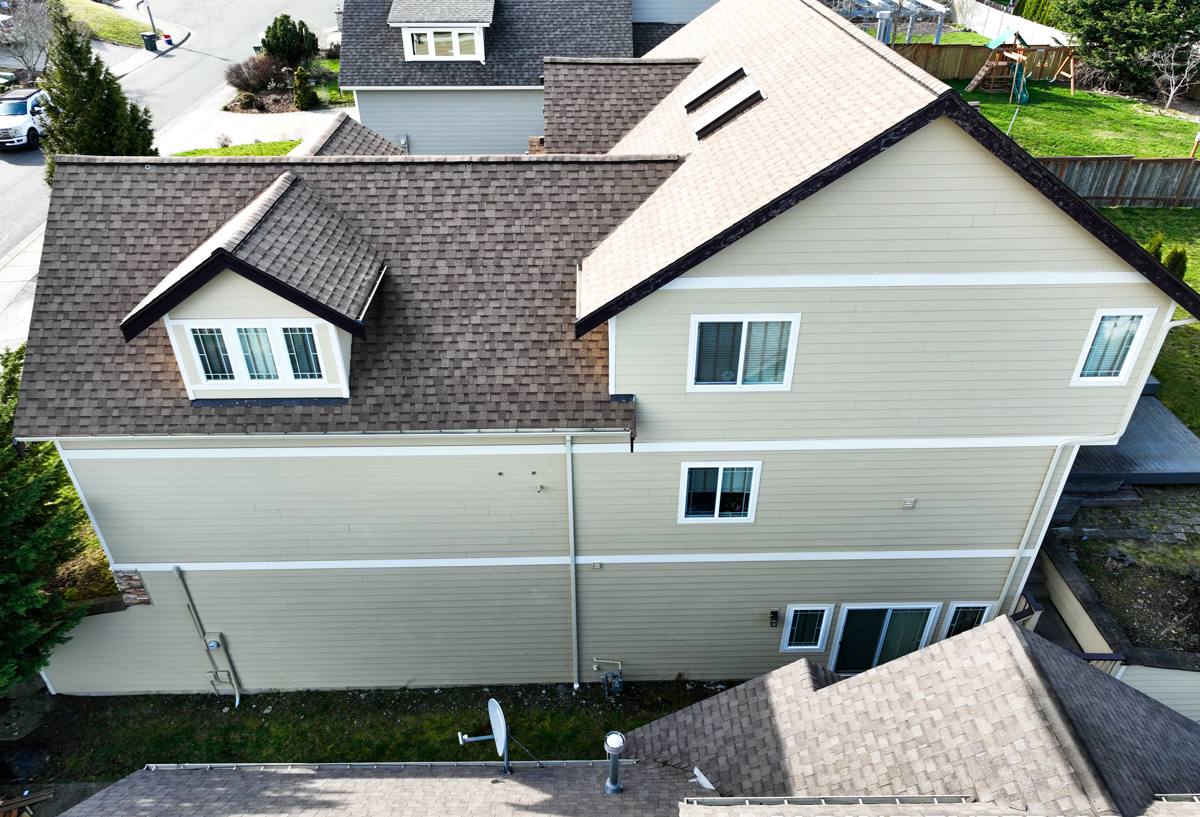
What Salt Air and Coastal Rain Actually Do to a Deck
It helps to understand the failure pattern before talking about how we prevent it. Coastal exposure doesn't rot a deck overnight — it works slowly, in a few predictable ways:
- Corrosion of fasteners and connectors: standard galvanized screws, joist hangers, and bolts corrode faster near salt water. Once a fastener starts rusting, it loses holding strength long before it looks obviously bad.
- Moisture trapped in joints: driving rain pushes water sideways into ledger connections, stair stringers, and railing posts — areas that stay dry on a typical inland deck but get soaked repeatedly here.
- Moss and algae on horizontal surfaces: shaded decking boards and the tops of railings stay damp longer through Whatcom County's wet season, and moss takes hold in that dampness, making surfaces slick and holding moisture against the wood or composite cap.
- UV and salt combined fading: water reflects sunlight back up onto the underside of railings and fascia, so finishes and composite caps can fade or chalk faster than the same product would inland.
Each of these is manageable — but only if it's planned for during the build, not patched after the fact.
Choosing the Right Decking Material for a Bay-Adjacent Home
There's no single "best" decking material for every home — it depends on your budget, how close you are to the water, how much sun and shade the deck gets, and how much upkeep you want to do. Here's how the common options compare for a Birch Bay setting specifically:
| Material | Upfront Cost | Salt/Moisture Resistance | Maintenance | Typical Lifespan |
|---|---|---|---|---|
| Pressure-treated wood | Lowest | Good if sealed and re-sealed regularly | Annual cleaning and re-sealing | 10–15 years with upkeep |
| Cedar | Moderate | Naturally moisture-resistant, but softer surface | Regular cleaning, periodic finish | 15–20 years with upkeep |
| Composite decking | Higher | Excellent — won't rot, minimal water absorption | Periodic washing to keep moss/algae off | 25–30 years |
| PVC decking | Highest | Excellent — fully synthetic, no wood fiber to hold moisture | Lowest — occasional washing | 25–30+ years |
For homes that catch direct salt spray or sit within the first block or two of the water, we typically steer homeowners toward composite or PVC decking. It's not that wood "fails" near the bay — it's that the maintenance burden to keep wood performing well in this exposure is real, and a lot of homeowners underestimate it until year three or four. If you want the look and feel of real wood and are willing to stay on top of sealing, we'll build that just as carefully — it's your call, and we'll walk you through the honest trade-offs either way.
What a Correctly Built Deck Needs Below the Surface
Footings and Framing
Everything visible on a deck depends on what's underneath it. Footings need to be sized and set below frost depth and on stable soil — Birch Bay's proximity to the water means some lots have sandier or wetter soil conditions than you'd find further inland, which affects footing design. Framing lumber should be rated for ground contact where it's close to grade, and every structural connection point is where we pay the most attention to hardware grade.
Fasteners and Hardware
This is one of the biggest differences between a coastal build and an inland one. Standard galvanized fasteners are fine in most of Bellingham, but within regular reach of salt spray, we move up to stainless steel or a higher-grade coated fastener for structural connections — joist hangers, ledger bolts, post bases. It costs more up front. It's also the difference between hardware that's still sound in fifteen years and hardware that's visibly corroding in five.
Ledger Attachment and Flashing
Where the deck attaches to the house is the single most common failure point on any deck, coastal or not — and driving rain makes it worse here. Proper flashing that sheds water away from the ledger board and the house's siding or sheathing behind it is non-negotiable. We don't rely on caulk alone to keep water out of that connection; caulk fails, flashing doesn't.
Drainage Under the Deck
Water needs somewhere to go. Gaps between boards, proper slope away from the house, and clear space under low decks all matter more when the surrounding air is already carrying extra moisture for a good part of the year.
Railings, Stairs, and Wind Exposure
Waterfront and near-waterfront lots often see more wind than a sheltered inland yard, and railing posts take the brunt of that load. We build railing connections to hold up under wind, not just to meet minimum code — a railing that racks or loosens over time is both a safety issue and a sign the whole structure is taking on stress it wasn't built for. Stair stringers and treads get the same fastener and flashing attention as the rest of the frame, since stairs are often the wettest, most shaded part of a deck and the first place moss shows up.
Our Process for a Birch Bay Deck Build
We keep the process straightforward, and it starts with actually looking at your property before recommending anything.
- Site visit and assessment: we look at sun and shade patterns, proximity to the water, existing drainage, and the condition of anything we're replacing.
- Material and design conversation: we walk through decking, railing, and hardware options honestly, including cost and maintenance trade-offs, so you're choosing with full information.
- Permitting: deck projects in Whatcom County typically require a building permit depending on size and height — we handle that process as part of the job.
- Build: footings, framing, flashing, decking, and railing, in that order, with coastal-grade hardware used throughout where the site calls for it.
- Final walkthrough: we go over the finished deck with you, including what maintenance it actually needs going forward.
Keeping a Birch Bay Deck Sound Over Time
A well-built deck still needs some seasonal attention in this climate. Here's what we recommend homeowners stay on top of:
- Sweep or rinse debris off the decking surface regularly, especially in shaded areas where moss takes hold
- Check railing posts and stair connections once a year for any looseness
- Re-seal wood decking on the schedule the product calls for — don't stretch it out, since salt air shortens the window before bare wood starts absorbing moisture
- Rinse composite or PVC decking with mild soap and water a couple times a year to keep algae and salt residue from building up
- Keep gutters and downspouts near the deck clear so runoff isn't dumping extra water onto or under the structure
- Watch for any soft spots, rust streaks near fasteners, or gaps opening up at the ledger board
Why a Local Crew That Already Works Birch Bay Matters
A contractor who mainly builds decks in drier, more sheltered parts of Whatcom County can still do competent framing — but they may not default to coastal-grade hardware, or think through flashing and drainage the same way, simply because it's not what they build every week. We work throughout the Bellingham area, including Birch Bay and the other waterfront and near-waterfront neighborhoods, so the fastener grade, the flashing detail, and the material recommendations here aren't an upgrade we mention as an afterthought — they're the starting point for how we bid and build the job.
That local familiarity also means we're realistic with you about what a deck at Birch Bay needs versus what it doesn't. Not every project needs the most expensive fastener grade or decking material — it depends on how exposed your specific lot is. We'll tell you honestly where the money matters and where it doesn't.
Get an Honest Estimate for Your Birch Bay Deck
If you're planning a new deck or need to replace one that's showing its age from Birch Bay's salt air and rain, we're happy to take a look and give you a straightforward assessment — no pressure, no upsell. Use the form below to request a free estimate, and we'll walk the site with you and talk through what your home actually needs.