 Bellingham Siding
 Birch Bay's Waterfront Climate Is Rough on Roofs
Birch Bay sits right on the water, and that location comes with a roofing problem most inland Whatcom County homes don't deal with in the same way: salt-laden air moving off the bay, wind-driven rain that hits roofs sideways instead of straight down, and a long, damp moss season that runs most of the year. Any one of these would shorten a roof's life. Together, they're why so many roofs in this stretch of the county age faster than their paperwork says they should.
Asphalt shingles lose their granules to that wind exposure faster than they would a few miles inland. Wood shakes hold moisture and grow moss almost year-round in the shade of coastal trees. Even good roofs fail early here when they were installed using specs written for a drier, calmer climate. Metal roofing done correctly for this specific environment is one of the few systems that's actually built to take what Birch Bay throws at it — but "metal roofing" covers a wide range of products and installation approaches, and not all of them are suited to a saltwater exposure.
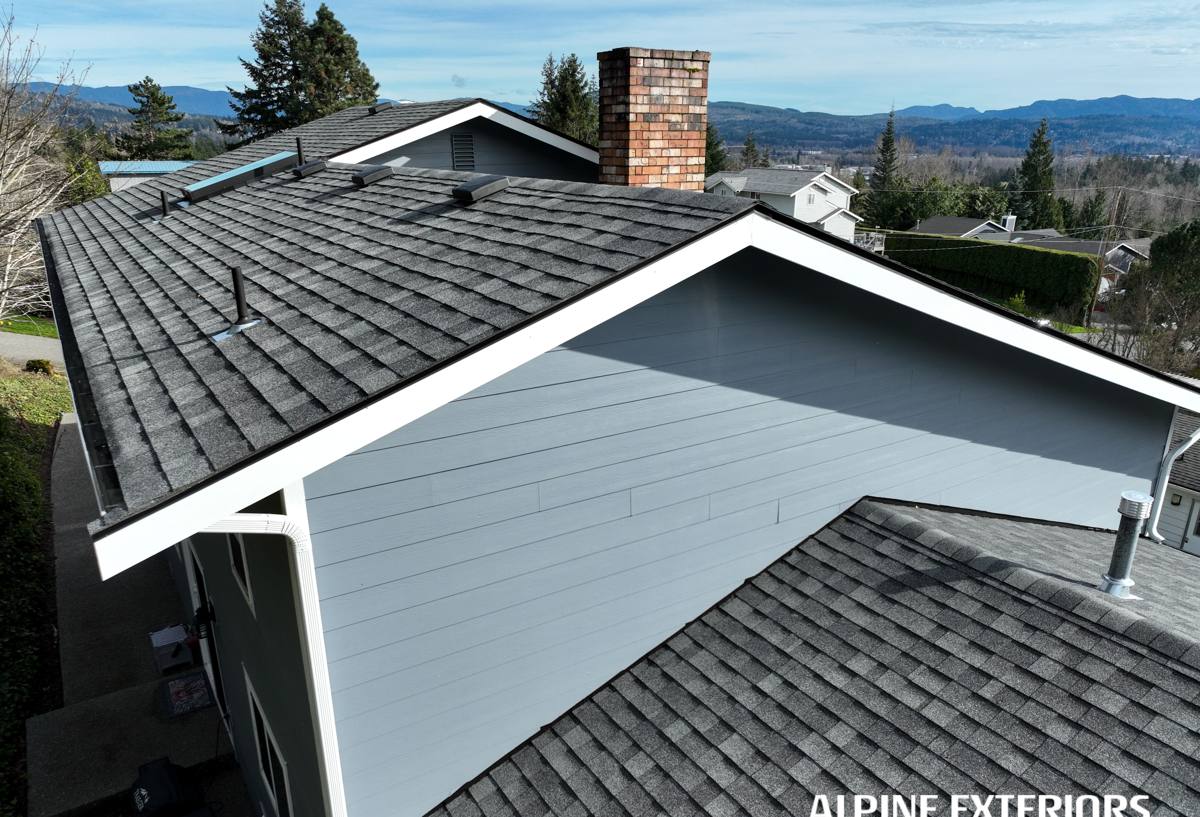
Why Metal Roofing Makes Sense for a Bay-Front Property
A properly specified and installed metal roof handles the three things that punish roofs in Birch Bay better than most alternatives:
- Salt air — the right substrate and finish resist the corrosion that salt-laden humidity accelerates on unprotected metal.
- Driving rain — interlocking or properly lapped panel seams shed water that's being pushed sideways by wind, not just water falling straight down.
- Moss — a smooth, hard panel surface gives moss spores far less to grip than shingles or shakes, so growth is slower and easier to keep off.
None of that is automatic just because the material is metal. A steel or aluminum roof installed with the wrong fasteners, the wrong flashing metal, or without attention to how it vents will still corrode, still leak in a windstorm, and still collect moss in the valleys. The material gives you a head start; the installation is what decides whether that head start holds up over the next twenty or thirty years on the water.
Choosing a Metal Roofing System for a Coastal Property
There are a few common metal roofing profiles used on homes in this area, and each has real trade-offs worth understanding before you pick one for a bay-front or near-water property.
| Panel Type | Coastal Suitability | Moss Resistance | Typical Lifespan |
|---|---|---|---|
| Standing seam (concealed fastener) | Best — no exposed screws to corrode or back out in wind | Excellent, smooth vertical panels shed debris | 40–60 years |
| Exposed-fastener (corrugated/ag panel) | Good, but fastener gaskets need periodic inspection near salt air | Good on the panel field, ribs can trap some debris | 25–40 years |
| Stone-coated steel (shake/tile profile) | Good, coating protects the substrate but detail work at laps matters | Good, though textured surface holds slightly more moss than smooth panel | 30–50 years |
For homes with direct water exposure or heavy wind, we generally steer people toward standing seam, since it has no exposed fasteners for salt air to work on over time. Exposed-fastener panels are a reasonable, more budget-friendly option on outbuildings, garages, or homes with more sheltered exposure, as long as the fastener gaskets get checked periodically. Stone-coated steel is a good middle ground when a homeowner wants a shake or tile look without the maintenance burden of the real thing.
The Installation Details That Actually Matter This Close to the Water
Fasteners, Flashing, and Metal Compatibility
One of the most common mistakes we see on coastal metal roofs isn't the panel — it's what's holding it together. Mixing dissimilar metals (say, aluminum panels with copper flashing, or the wrong fastener alloy) sets up galvanic corrosion, where one metal accelerates the breakdown of the other wherever they touch. Near the water, that reaction happens faster than it would inland. Every fastener, flashing piece, and trim component on a Birch Bay roof needs to be compatible with the panel metal — not just whatever was on the truck that day.
Underlayment for Wind-Driven Rain
Straight-down rain is easy for almost any roof to shed. Wind-driven rain coming off the bay at an angle is a different problem — it can work its way under panel laps and through fastener penetrations if the underlayment and detailing aren't built for it. A synthetic underlayment across the full roof, with self-adhering ice-and-water membrane at eaves, valleys, and any wall or chimney transitions, gives the roof a second line of defense if wind ever pushes water past the panel seams.
Ventilation and Condensation
Metal doesn't breathe the way some other roofing materials do, so proper intake and exhaust venting matters for controlling condensation on the underside of the deck — especially in a climate where the air itself carries a lot of moisture most of the year. A roof that looks great from the ground but was closed up without adequate venting can develop hidden moisture problems in the attic long before anything shows up on the surface.
Moss Season and Long-Term Upkeep
Whatcom County's damp stretch runs long, and Birch Bay's tree cover and coastal humidity keep conditions favorable for moss for much of the year. Metal roofing's smooth surface is a real advantage here — moss has a much harder time establishing on steel or aluminum than on shingles or shakes — but it isn't moss-proof. Debris still collects in valleys, behind any snow guards, and on north-facing slopes shaded by trees, and moss can eventually take hold anywhere organic material sits long enough to hold moisture.
Keeping gutters and valleys clear, trimming back overhanging branches where practical, and doing a simple visual check once or twice a year keeps a metal roof performing the way it's supposed to. This is genuinely low maintenance compared to shingle or shake roofing in the same environment — it's just not zero maintenance, and homeowners who go in expecting "install it and forget it forever" are usually the ones surprised a decade later.
How We Approach a Metal Roofing Project in Birch Bay
- Inspection and assessment — we look at the existing roof, deck condition, ventilation, and the property's specific wind and water exposure before recommending a system.
- Tear-off, not overlay — on a coastal property we install over a clean, inspected deck rather than layering metal over old roofing, so hidden deck damage or trapped moisture doesn't get sealed in.
- Deck repair — any soft, rotted, or water-damaged sheathing gets replaced before anything goes down over it.
- Underlayment installation — full synthetic underlayment plus ice-and-water membrane at the vulnerable transitions described above.
- Panel and flashing installation — panels, valleys, and flashing installed with fasteners and trim matched to the panel metal to avoid galvanic corrosion.
- Ventilation check — intake and exhaust venting confirmed or corrected so the roof system can manage moisture from underneath.
- Final walk-through and cleanup — site cleared of debris and fasteners, and the completed roof reviewed with the homeowner.
What a Correct Metal Roof Installation Should Include
If you're comparing quotes or checking a completed job, these are the things that separate a coastal-grade metal roof installation from a generic one:
- Panel material and fastener/flashing metal specified together, not mismatched
- Full underlayment coverage, with ice-and-water membrane at eaves, valleys, and wall transitions
- Existing deck inspected and repaired before panels go down, not installed over unknown conditions
- Intake and exhaust ventilation addressed, not just the visible roof surface
- Closures at ridge and eave that block wind-driven rain and pests without cutting off airflow
- A clear plan for valleys and any north-facing or shaded slopes where moss and debris collect
- Written specifics on panel gauge, finish, and warranty terms — not just "metal roof" on the estimate
Why Hiring a Crew That Already Works in Birch Bay Matters
A roofing crew that mostly works drier, more sheltered inland jobs isn't automatically going to get the coastal details right on a Birch Bay property. Knowing which slopes take the brunt of the wind off the water, how fast salt air ages the wrong fastener choice, and where moss actually collects on a given lot comes from having done the work in this exact environment repeatedly — not from a general specification sheet. That experience shows up in the small decisions: which flashing metal gets paired with which panel, how much underlayment goes down at a given valley, whether a slope needs extra attention because of its exposure to the water.
It also matters after the installation. A crew that regularly works this community is easier to reach if a windstorm causes damage, and already understands the permitting and inspection expectations for Whatcom County work. That local familiarity is part of what you're paying for, alongside the materials and labor.
If you're weighing metal roofing for a home in Birch Bay, we're glad to take a look and talk through what makes sense for your property's specific exposure and budget. Use the form below to request a free, no-pressure estimate.