 Bellingham Siding
 Composite Decking Built for What Birchwood Weather Actually Does
Birchwood sits close enough to the water and the lowland moisture that a deck here works harder than one built forty miles inland. Salt-tinged air off the Sound, driving rain that comes in sideways more often than straight down, and a moss season that can stretch from October through May all put steady pressure on outdoor structures. Composite decking handles that pressure better than most alternatives, but only if it's specified and installed with this specific climate in mind. A generic install, the kind that would hold up fine in a dry inland town, will show its weaknesses here within a few seasons.
This page covers what a Birchwood composite deck actually needs, what a correct installation involves, and how our process is shaped by where this deck is actually going to sit.
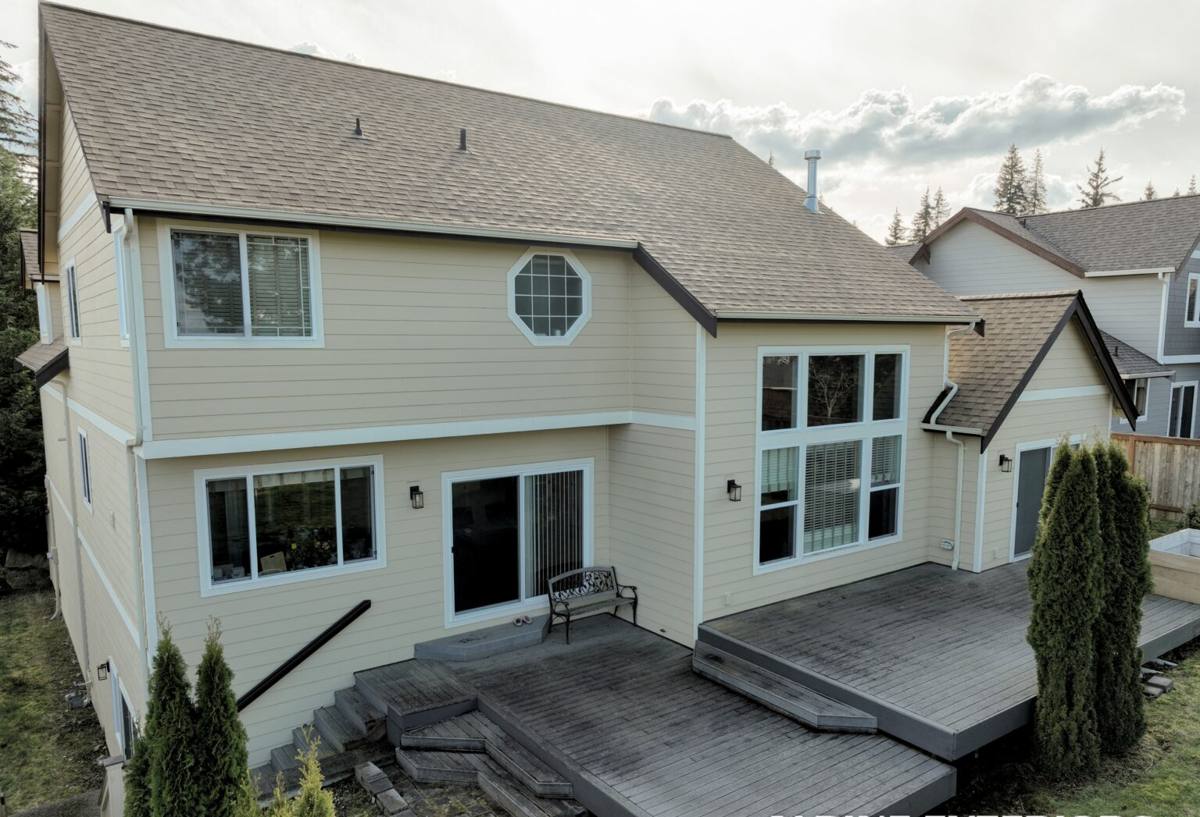
What Bellingham and Whatcom County Climate Does to a Deck
Salt Air and Hardware Corrosion
Even a few miles from saltwater, airborne salt settles on exposed metal and accelerates corrosion. Fasteners, brackets, and hidden connectors that aren't rated for coastal exposure can start rusting from the inside out long before the decking itself shows any wear. Once a fastener corrodes, it loses grip strength, and a board that looks fine on the surface can be barely held down underneath.
Driving Rain and Hidden Moisture Paths
Whatcom County rain rarely falls straight down. Wind-driven rain finds its way under rail caps, behind ledger boards, and into any gap that wasn't properly flashed or sealed. Composite boards themselves don't rot, but the framing, fasteners, and ledger connection underneath them absolutely can if water is allowed to collect and sit rather than drain and dry.
Moss, Algae, and Surface Buildup
Long stretches of damp, shaded, mild weather are exactly what moss and algae need to establish themselves. On a deck, that buildup isn't just cosmetic — a mossy surface holds moisture against the board longer, gets slick underfoot, and on wood decking, feeds rot at the surface. Composite doesn't feed organic growth the way wood does, but moss and algae can still take hold on the surface film if a deck sits shaded and un-swept through the wet months.
Why Composite Makes Sense for a Birchwood Deck
Wood decking isn't a bad product, but in this climate it asks a lot of the homeowner: yearly cleaning, periodic sealing or staining, and close attention to any spot where water collects. Composite shifts that maintenance burden down considerably, though it isn't zero-maintenance and shouldn't be sold that way. Here's how the two compare for a deck that sits through Whatcom County's wet season year after year:
| Factor | Wood Decking | Composite Decking |
|---|---|---|
| Moisture absorption | Absorbs and swells, especially at end grain | Resists absorption; core is engineered for wet exposure |
| Surface maintenance | Annual cleaning plus sealing or staining | Periodic washing; no sealing or staining needed |
| Moss and algae resistance | Feeds growth once surface is worn or unsealed | Resists growth on capped boards; still benefits from washing |
| Splintering and cupping | Common over time with wet-dry cycling | Not a factor with a properly installed composite board |
| Upfront cost | Lower material cost | Higher material cost, lower lifetime upkeep cost |
| Framing sensitivity | Matters, but wood is more forgiving of minor gaps | Framing and flashing details matter more, since the board won't show early failure |
That last row is the one homeowners hear about least, and it's the one we think about most. Composite boards are good at hiding problems underneath them, which is exactly why the structure below the boards has to be built right the first time.
What a Correct Composite Deck Build Involves
Framing and Ledger Flashing
The ledger board — where the deck attaches to the house — is the single most common point of failure on any deck in a wet climate, wood or composite. Proper flashing, correctly lapped with the house's existing weather-resistive barrier, keeps driving rain from working its way behind the siding at the deck attachment point. We treat this connection as critical, not optional, on every Birchwood deck we build.
Joist Protection
Composite decking sheds water off the top surface, but the framing underneath is still ordinary wood unless it's built from a treated or composite substructure. Joist tape over the top of each joist keeps standing water from soaking into the wood through fastener holes and cut ends, which is where rot in a deck frame almost always starts.
Drainage and Airflow Underneath
A deck built tight to the ground with no airflow underneath stays damp far longer after a Whatcom County rain event than one with proper clearance. We grade and vent the space below the deck so moisture has somewhere to go, rather than sitting under the boards where it keeps the frame wet between storms.
Fastener Selection
Given the salt air exposure in this area, we use fasteners and hidden clip systems rated for coastal or corrosive environments, not general-purpose hardware. It costs a little more up front and makes a real difference ten years out.
Choosing the Right Composite Board for This Site
Not all composite decking is built the same way, and the differences matter more in a wet, mossy climate than they do in a dry one.
Capped vs. Uncapped Composite
Capped composite boards have a protective shell wrapped around a wood-plastic composite core, which resists moisture absorption, staining, and surface fading far better than uncapped boards. In a climate with this much sustained dampness, we generally steer homeowners toward capped composite — the extra upfront cost is easy to justify against a shorter usable lifespan for uncapped product exposed to constant moisture.
Board Texture and Color
A heavily textured, wood-grain surface looks great, but deep grain patterns can hold moisture and moss spores longer than a smoother, lightly textured board. Darker colors also show algae bloom less obviously than very light colors, which matters on shaded lots where full sun never gets a chance to dry and bleach the surface.
Board Profile and Ventilation Gaps
Grooved-edge boards with hidden fastener systems need consistent gapping to let water drain between boards rather than pooling on top. We set spacing based on the manufacturer's wet-climate guidance, not a generic spacing rule, since composite expands and contracts with temperature and moisture differently than wood.
What Drives the Cost of a Composite Deck Project Here
Every deck is different, but a few factors move the price more than homeowners expect, especially once climate-driven build requirements are factored in.
| Cost Factor | Why It Matters in This Climate |
|---|---|
| Deck size and shape | More linear feet of ledger and railing means more flashing and fastener work, not just more boards |
| Board tier (capped vs. uncapped) | Capped composite costs more per board but holds up better against sustained moisture |
| Framing condition | Existing decks with rot or corroded hardware need more substructure repair before new decking goes down |
| Height and stair complexity | Elevated decks need more attention to under-deck drainage and airflow to avoid trapped moisture |
| Railing system | Composite or metal railing resists the elements better than painted wood rail but adds cost |
| Permitting and inspection | Structural decks over a certain height typically require permits, which adds time but protects you long-term |
We give a firm, itemized estimate after the on-site assessment rather than a ballpark number over the phone, since the condition of the existing structure changes the scope more than the size of the deck alone.
Our Process, Start to Finish
- On-site assessment: We look at drainage, sun exposure, existing ledger condition, and how the site sheds water before we talk about board selection.
- Design and material selection: We walk through board options, colors, and railing systems based on your home's exposure and your maintenance preferences.
- Permitting: We handle the permit application and inspection scheduling required for the jurisdiction your property falls under.
- Demo and framing: Old decking is removed, framing is inspected and repaired or replaced as needed, and ledger flashing is corrected if it isn't already done right.
- Substructure protection: Joist tape, coastal-rated fasteners, and proper drainage grading go in before a single composite board is installed.
- Decking and railing installation: Boards and railing go in with manufacturer-specified gapping and fastening for this climate.
- Final walkthrough: We review care and cleaning expectations with you before we consider the job finished.
Maintenance and Common Problems on Older Birchwood Decks
What Regular Maintenance Should Look Like
Composite decking is lower-maintenance than wood, not maintenance-free. In a climate that grows moss on driveways and roofs, a deck needs a little attention too.
- Sweep leaves and debris off the deck regularly through fall, especially in shaded areas, so they don't hold moisture against the boards.
- Wash the deck surface once or twice a year with a soft-bristle brush and mild soap and water to prevent algae and moss from establishing themselves.
- Keep gutters and downspouts near the deck clear so overflow isn't dumping extra water onto the deck surface or framing.
- Check railing posts and stair connections annually for any looseness, which can signal a fastener or framing issue underneath.
- Trim back overhanging vegetation where practical to let more light and air reach shaded sections of the deck.
Problems We Commonly Find on Older Decks
When we're called out to replace an aging deck in this area, a handful of issues show up again and again, and they're worth watching for whether you're replacing a deck now or maintaining a newer one later.
- Ledger boards attached with no flashing, or flashing that was never properly lapped with the house wrap.
- Standard fasteners that have corroded and lost holding strength well before the decking itself failed.
- Decking installed tight to the house or ground with no room for water to drain or air to circulate.
- Moss and algae buildup left untreated long enough that it's degraded the surface finish or made the deck slick.
- Railing posts bolted through decking rather than anchored to the framing below, leading to movement over time.
None of these problems are unique to Birchwood, but they show up here more often and sooner than they would in a drier climate, simply because the moisture exposure is more constant.
Why It Matters That We Already Work in Birchwood
A crew that mostly works on the dry side of the state, or even just a different part of Whatcom County, doesn't always think in terms of coastal fastener grades, wet-climate board gapping, or ledger flashing built for driving rain. We build decks in this specific area regularly, which means we're not guessing at how a given board, fastener, or framing detail will hold up here — we've already seen how it performs through a Bellingham winter.
We're also familiar with the permitting expectations that apply to decks in this part of the county, which keeps a project moving instead of stalling on paperwork nobody anticipated.
If you're weighing composite decking for your Birchwood property, we're happy to walk the site, talk through board and color options, and give you a straightforward, no-pressure estimate. Use the form below to get started.