 Bellingham Siding
 Building a Deck for Birchwood's Climate
A deck is one of the few structures on a Birchwood property with no roof, siding, or gutter system standing between it and the weather. It sits out year-round and takes the full brunt of whatever Whatcom County's marine climate delivers — salt-tinged air drifting in off the water, rain that gets driven sideways more often than it falls straight down, and a moss season that runs long on any surface that stays shaded and damp. Framing lumber, fasteners, and decking that would hold up fine on a covered porch can start showing problems within a few seasons once they're left fully exposed like this.
None of that means a deck in Birchwood is a bad idea or a maintenance headache waiting to happen. It means the build has to account for those specific conditions from the framing up, not just at the visible decking surface. This page walks through what Birchwood's climate actually does to a deck, what a correctly built one involves, and how we run a deck project in this part of Bellingham from first visit to final walkthrough.
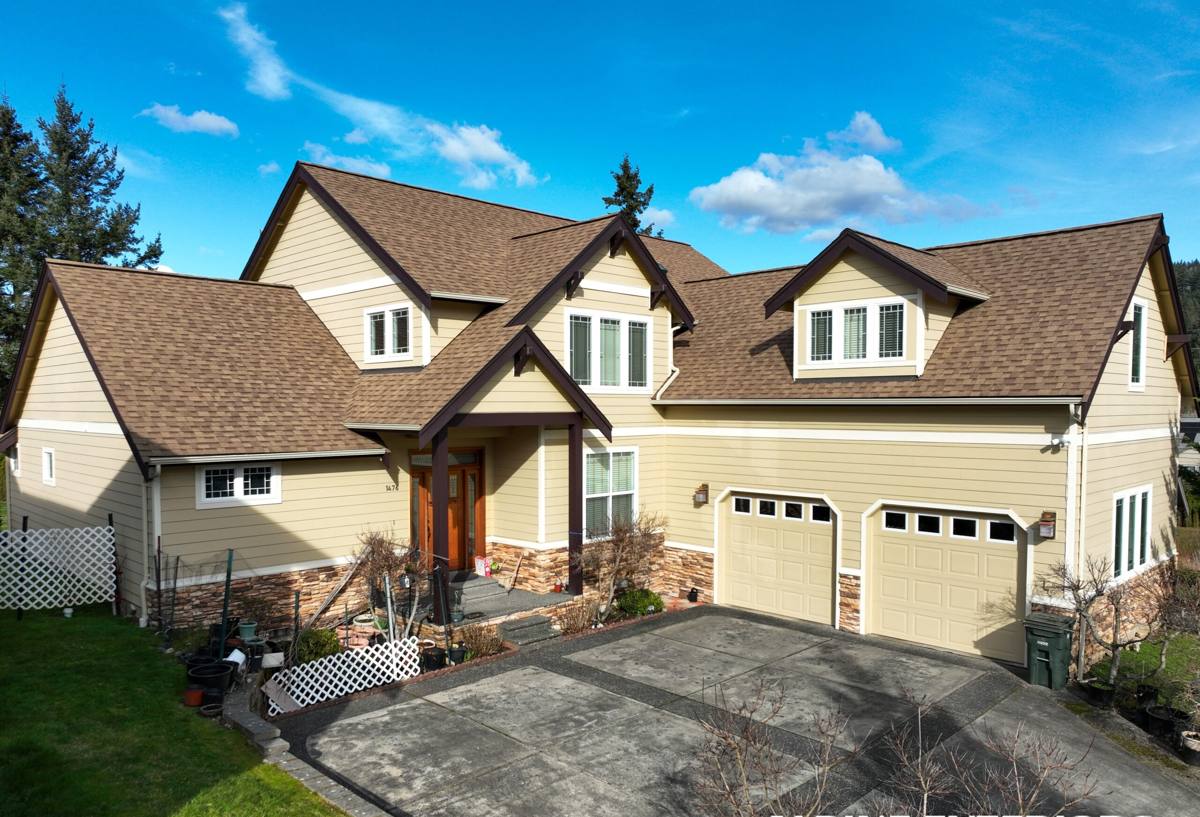
What Local Weather Actually Does to a Deck
Salt Air and Corrosion
Marine air carries salt further inland than most homeowners expect, and a deck has no wall or roofline to shield it the way the rest of the house does. Salt speeds up corrosion in exposed metal — fasteners, post brackets, joist hangers, railing hardware — and a corroding fastener loses holding strength well before it looks obviously bad from the surface. On a structure people walk and stand on, that's a safety detail, not just a cosmetic one.
Driving Rain and Wind
Rain in this part of Whatcom County rarely just falls and runs off. Wind pushes it sideways and forces it up into ledger connections, under railings, and between deck boards that aren't gapped correctly for drainage. A deck design that would shed water fine on a calm day can still trap moisture at those same points the moment wind gets involved, and in Birchwood, wind-driven rain is a regular part of the wet season rather than an occasional event.
A Long Moss Season
Mild temperatures and near-constant moisture give moss a long growing window here, and a horizontal deck surface is one of the first places it takes hold — it holds standing water longer than a vertical wall ever does. Shaded decks and north-facing surfaces are usually first to show it, and any decking material with real surface porosity gives moss something to grip onto and spread.
Choosing the Right Decking Material
Material choice matters more here than it would in a drier climate, because the gap between a well-suited product and a poorly-suited one shows up faster once salt air, standing moisture, and moss pressure are all working on the same surface at once. Most Birchwood homeowners are choosing between wood, capped composite, and cellular PVC.
Wood
Pressure-treated lumber and cedar remain popular for their look and lower upfront cost, but both need regular sealing or staining to hold up against sustained moisture, and both are more vulnerable to fastener corrosion issues over time in salt-influenced air. Left unmaintained even a season or two, wood is usually the first decking material in this climate to show graying, soft spots, and moss buildup.
Capped Composite
Capped composite boards have a solid plastic shell wrapped around a wood-fiber composite core, which resists moisture absorption, staining, and fading far better than wood or uncapped composite. In a climate with this much sustained dampness, that cap layer is doing real structural work, not just adding a marketing claim — it's the difference between a board that needs occasional washing and one that needs ongoing sealing to stay ahead of the weather.
Cellular PVC
PVC decking contains no wood fiber at all, so there's nothing inside the board to absorb moisture the way even a capped composite can at cut edges or fastener holes. It typically costs more than composite and can flex slightly more under heavy point loads, but for a deck that sits in heavy shade or gets sustained moisture exposure, some homeowners decide the added resistance is worth the extra cost.
| Material | Handling Salt Air & Moisture | Moss Resistance | Upkeep |
|---|---|---|---|
| Cellular PVC | Excellent — no wood fiber to absorb moisture | Strong, smooth non-porous surface | Occasional washing |
| Capped composite | Strong — cap layer resists moisture and staining | Good on most product lines | Occasional washing |
| Uncapped composite | Moderate — some moisture absorption at exposed fiber | Fair; more prone to buildup over time | Periodic cleaning |
| Cedar | Moderate — natural resistance, but needs sealing | Fair when sealed and maintained | Regular oiling or sealing |
| Pressure-treated wood | Weak against sustained moisture exposure over time | Poor without regular treatment | Regular sealing or staining |
What a Correctly Built Deck Involves Here
The visible decking surface gets most of the attention when homeowners picture a new deck, but in Birchwood's climate, the framing, fasteners, and drainage details underneath are what actually determine how long it lasts. A build done right for this area includes:
- Framing lumber rated for sustained moisture exposure, sized correctly for the actual span and load rather than a generic layout
- Stainless steel or coastal-grade corrosion-resistant fasteners throughout, not standard hardware that starts corroding within a few seasons of full weather exposure
- Hidden fastener systems on the decking surface where the product supports it, reducing exposed metal and giving a cleaner walking surface
- Correct board gapping for drainage and material movement, so wind-driven rain and standing moisture can actually drain and dry between boards
- Proper ledger board flashing where the deck ties into the house, since that connection point is one of the most common places moisture gets in on a poorly built deck
- Joist spacing matched to the specific decking product's span rating, not a one-size-fits-all framing pattern
- Railing and post attachment sized for the site's actual wind exposure, especially on elevated decks or more open lots
- Grading and airflow underneath the deck so moisture doesn't sit against the framing between storms
Skip any one of those and the deck usually still looks fine on day one. The problems tend to show up a few winters later — a soft joist, a loosening railing post, or fastener corrosion staining the boards around it.
Design Considerations for a Birchwood Property
Beyond material and structure, a handful of site-specific questions are worth working through before anything gets built. How much shade the site gets through the day affects which decking colors and moss-resistance priorities make sense, since a heavily shaded deck needs a different approach than one that gets sun most of the afternoon. Wind exposure affects how open a railing design can be versus how much a partial screen or glass panel would help. Grade and drainage around the house affect stair placement and whether the substructure needs extra attention to keep water from pooling underneath. None of these are one-size-fits-all decisions, which is part of why a deck designed for a specific lot performs differently over time than a stock layout dropped onto any site.
Cost Factors Worth Understanding
Two bids for what looks like the same deck can come in far apart, and the difference is usually real scope rather than one contractor padding the number. Knowing what actually drives cost makes it easier to compare estimates that look nothing alike on paper.
| Factor | What It Affects |
|---|---|
| Decking material (wood vs. composite vs. PVC) | Upfront cost, long-term maintenance, and moisture resistance |
| Fastener and hardware grade | How well the structure resists corrosion from sustained salt exposure |
| Framing size and complexity | Multi-level decks, stairs, and larger spans add material and labor |
| Ledger flashing and attachment method | Long-term protection at the single most leak-prone connection point |
| Railing style | Cable, glass, and custom railing systems cost more than standard baluster designs |
| Site access and grade | Sloped or hard-to-reach lots add labor time for excavation and staging |
A written estimate that itemizes these pieces separately tells you far more than a single lump-sum number. It's worth asking any contractor to walk through what's actually included, line by line, before comparing two prices side by side.
How Our Process Works
We keep the process straightforward, because a structure attached to your home deserves clear communication at every stage, not surprises after the fact.
- Site visit: We look at the actual site — existing structure condition if it's a replacement, drainage and grade, sun and wind exposure through the day, and how the space is likely to get used.
- Written estimate: You get a clear, itemized bid covering framing, fasteners, decking material, railing, and any permitting needed, not a single vague line item.
- Permitting: Deck permitting in and around Bellingham generally follows standard setback, structural, and elevation requirements, and we handle that as part of the job.
- Framing and structure: Substructure goes in first, sized and fastened for the site's actual exposure, with ledger flashing and drainage built in from the start.
- Decking, railing, and finish work: The surface material, railing system, and any stairs or trim go on to manufacturer specification.
- Final walkthrough: We review the finished deck with you and cover what your specific material actually needs going forward, which for most modern decking is minimal, but not nothing.
What Your Deck Still Needs From You
Even a well-built deck in the right material needs some routine attention in this climate to reach its full lifespan.
- Rinse or wash the deck surface periodically to clear salt residue, pollen, and organic buildup before it works into the surface or cap layer
- Keep the gaps between boards clear of leaves and debris so water and airflow can move through the way the design intends
- Check railing posts and hardware once a year for early corrosion or loosening, especially heading into the wet season
- Trim back overhanging branches or plants that hold moisture against the deck or block sun and airflow across the surface
- Address any soft framing or standing water underneath right away — that's a structural issue, not a cosmetic one, and it doesn't improve on its own
Why Hiring a Crew That Already Works Birchwood Matters
A crew that mostly builds decks in drier, more sheltered areas can still put one together competently, but a Birchwood job has variables that don't come up as often elsewhere — corrosion-grade fastener requirements from sustained salt exposure, wind loads tied to more open sites, and moss pressure that runs longer here than it does further inland. Working this area regularly means we're not guessing at those requirements on your project. We've seen which decking lines actually hold up against this specific combination of salt air, driving rain, and moss, and which fastener grades and framing details are worth the extra attention rather than an upsell.
That familiarity also matters after the job wraps up. A workmanship warranty is only as good as the company standing behind it years later, and a contractor with an established, ongoing presence in the area is one you can actually reach if a question comes up down the road.
A Practical Checklist Before You Choose a Deck Builder
- Do they specify fastener grade and framing material for coastal, moisture-heavy conditions, not just "pressure-treated lumber"?
- Does the estimate list decking product, railing system, and flashing method separately, not bundled into one number?
- Do they handle permitting as part of the job rather than leaving it for you to sort out?
- Do they carry current WA contractor licensing, liability insurance, and workers' compensation?
- Can they point to recent, real deck work in or near Birchwood?
- Does the bid clearly separate manufacturer material warranty from the contractor's own workmanship warranty?
If you'd like an honest, no-pressure look at what a new or replacement deck would take on your Birchwood property, we're glad to come take a look and walk you through the options plainly. Use the form below to request a free estimate.