 Bellingham Siding
 Deck Repair Built for Blaine's Coastal Conditions
Blaine sits right at the edge of Semiahmoo Bay and the Strait of Georgia, which means decks here take a different kind of beating than decks even a few miles inland in Whatcom County. Salt-laden air corrodes fasteners and hardware faster than dry inland air ever would. Driving rain off the water finds every gap in flashing and every open joint in decking boards. And the long, damp moss season that stretches through fall, winter, and much of spring keeps deck surfaces wet for days at a time, feeding rot in wood that never gets a real chance to dry out. A deck repair done without accounting for these three factors — salt, wind-driven rain, and moss — tends to fail again within a season or two. A repair done with them in mind can add many years of safe, solid use.
We work on decks throughout Blaine and the surrounding Whatcom County coastline regularly, so we're not guessing at what local weather does to a structure — we're repairing the same failure patterns over and over and know what actually holds up here.
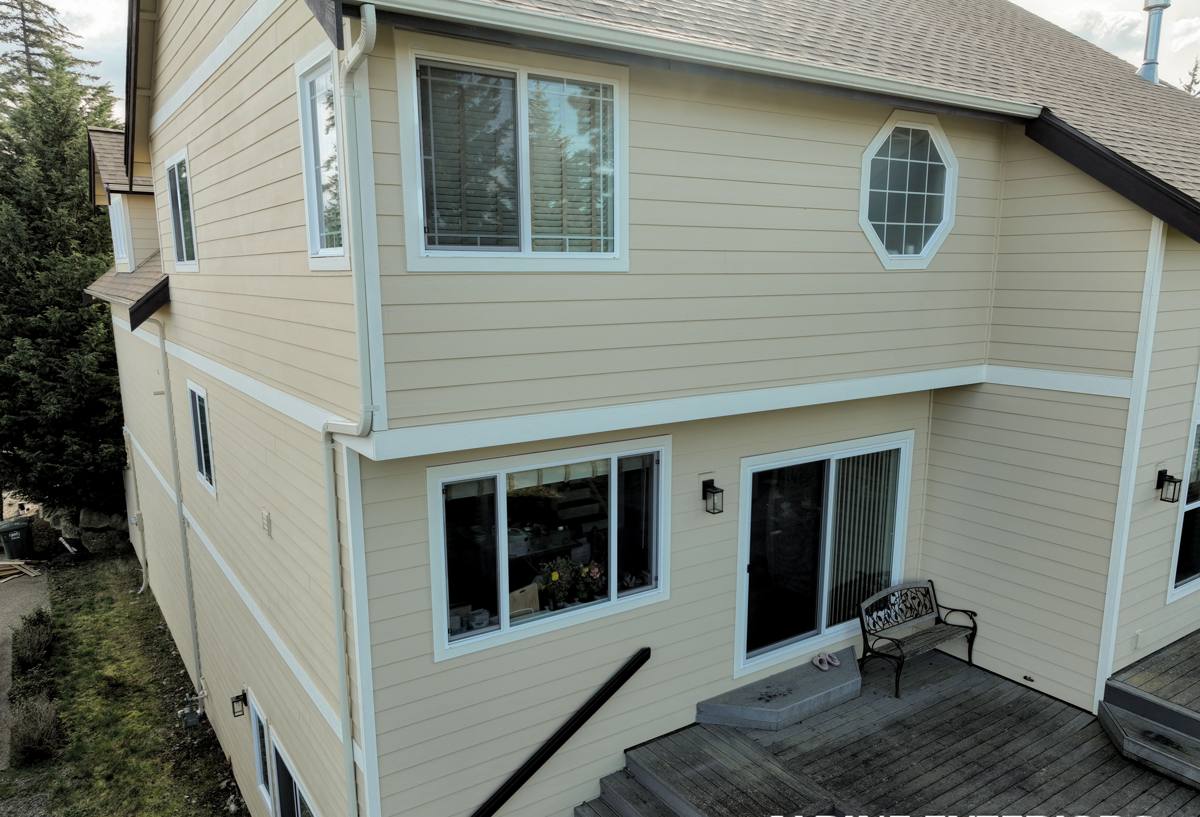
What Blaine's Climate Actually Does to a Deck
Salt Air and Corrosion
Homes close to the water see accelerated corrosion on any exposed metal — joist hangers, structural screws, bolts, and even some lower-grade fasteners that were rated for general outdoor use but not coastal exposure. Corroding hardware is often the real cause of a "wobbly" deck, not the wood itself. Once a fastener's grip weakens, the boards or framing around it start to move, which opens gaps for water and speeds up rot in the wood nearby.
Driving Rain and Water Intrusion
Wind-driven rain off the Strait doesn't just fall straight down — it gets pushed sideways and up under boards, behind ledger boards, and into any seam that isn't properly flashed or sealed. This is different from a calm rain in a sheltered yard. Repairs that don't address flashing at the house connection, or gaps between boards and posts, often leak again in the very next storm even if the visible damage looks fixed.
Moss and Prolonged Moisture
Moss doesn't just look bad — it holds moisture against the deck surface long after the rain has stopped. Wood that would otherwise dry out in a day or two under moss stays damp for a week or more, which is exactly the environment rot fungus needs. Moss buildup on stairs and walking surfaces is also a real slip hazard, especially where it grows on sloped or heavily shaded sections.
Signs a Blaine Deck Needs Repair
- Soft, spongy, or springy spots when you walk across the decking
- Visible gaps or separation where the deck attaches to the house (ledger board area)
- Rust streaks around screws, bolts, or joist hangers
- Railings or posts that flex or wiggle when leaned on
- Persistent moss or algae that keeps returning within weeks of cleaning
- Discoloration or dark staining on the underside of boards, visible from below the deck
- Stairs that feel uneven or have visible movement at the stringers
- Fasteners that are backing out or have visibly corroded heads
Any one of these on its own might be minor. Several together usually mean water has been getting into the structure for a while, not just the surface.
What a Correct Repair Actually Involves
A quick fix — sistering in a board here, tightening a rail there — can look like a repair without solving the underlying problem. A correct repair starts with finding out why the damage happened, then fixing that cause, not just the symptom.
Assessment First
Before any repair work starts, we check the framing underneath the visible decking, not just the surface. This includes the ledger board connection to the house, the condition of joists and beams, post bases where they meet concrete footings or the ground, and all structural hardware. Surface boards can look fine while the framing underneath has already lost integrity — and the reverse is also true, where cosmetic damage on top hides framing that's actually still sound.
Matching the Repair to the Cause
If corroded fasteners caused the movement, replacing boards without upgrading to coastal-rated, corrosion-resistant hardware just resets the clock on the same failure. If poor flashing at the house connection let water in, patching the boards without correcting the flashing means the same leak path is still open. We repair to the cause, not just the visible symptom, because that's the only way a repair actually lasts in this environment.
Structural Versus Cosmetic Work
Some deck issues are purely cosmetic — weathered boards, faded finish, surface mildew — and can be handled with cleaning, sanding, and refinishing. Others are structural — compromised framing, failing ledger connections, rotted posts — and require replacing load-bearing components correctly, including proper fastening and flashing. Part of an honest assessment is telling you clearly which category your deck falls into, and not treating a structural problem as if it were cosmetic just because that's the cheaper fix.
Materials and Hardware for Coastal Whatcom County
Material choice matters more near the water than it does further inland. We favor fasteners and structural hardware rated for coastal or marine-grade exposure over standard exterior-rated hardware, because standard hardware corrodes noticeably faster in Blaine's salt air. This isn't about any one brand being "bad" — it's about matching hardware corrosion resistance to the actual exposure conditions of the site. A fastener that performs fine on a deck fifteen miles inland can underperform on a deck facing open water.
The same logic applies to flashing and any wood-to-wood or wood-to-masonry connection point: these are the places water intrusion starts, so they're the places where we don't cut corners, even if the visible repair would look identical either way.
Repair Versus Full Rebuild: How We Decide
| Factor | Points Toward Repair | Points Toward Rebuild |
|---|---|---|
| Framing condition | Solid, dry, no rot found on inspection | Rot or soft spots in multiple joists or the ledger |
| Age of structure | Under 10-15 years, built to code | Older deck, unknown or outdated construction |
| Extent of damage | Isolated to a few boards or one section | Spread across most of the deck surface or structure |
| Hardware condition | Minor surface corrosion only | Widespread rust, backing-out fasteners, failed connections |
| Cost comparison | Repair cost is a fraction of rebuild cost | Repair cost approaches or exceeds a rebuild |
There's no substitute for an in-person look — a deck that seems fine on the surface can have hidden framing issues, and a deck that looks rough can sometimes be repaired more affordably than expected. We'll give you a straight answer either way, including telling you when a rebuild is genuinely the better value over a repeated cycle of patch repairs.
Our Process for Blaine Deck Repairs
1. On-Site Inspection
We walk the full deck, check the underside where accessible, and test framing, posts, and connections for movement or softness — not just look at the surface.
2. Honest Findings and Options
You get a clear explanation of what we found, what's causing it, and the realistic repair options, including a rebuild recommendation if that's genuinely the more sensible path.
3. Repair Scoped to the Cause
Work is scoped to fix the actual source of the problem — corroded hardware gets upgraded, poor flashing gets corrected, compromised framing gets properly replaced, not just covered over.
4. Clean, Code-Aware Execution
Structural repairs are done to hold up under real coastal conditions, with attention to proper fastening, flashing, and drainage so water doesn't just find a new way in.
5. Walkthrough Before We Leave
We go over the finished work with you so you understand what was done and what to watch for going forward, including basic moss and moisture upkeep specific to your deck's exposure.
Maintenance That Extends the Life of a Repair
- Clear moss and organic debris from decking, stairs, and gaps between boards at least once or twice during the wet season
- Keep gutters and downspouts clear so runoff isn't draining directly onto or under the deck
- Check visible hardware periodically for early rust or corrosion, especially on decks facing open water
- Avoid pressure-washing at settings that force water into board seams or under flashing
- Address small issues — a loose board, a hairline gap at the ledger — before the next wet season, not after
Why a Local Crew Matters for This Kind of Work
Deck repair isn't one-size-fits-all across Washington. A crew that mostly works drier, inland conditions may not default to coastal-rated hardware or think to check flashing details the way a crew that works Blaine's shoreline routinely does. We're a Bellingham-based operation that works Whatcom County's coastal communities regularly, so accounting for salt exposure, driving rain, and moss season isn't a special consideration for us — it's just how we build every repair, because it's what the properties we work on need.
Being local also means we're not guessing at what's typical for this area's building conditions or making a one-time trip out to look at your deck — we're familiar with the patterns of damage that show up on homes near the water in Blaine because we see them across multiple properties, season after season.
Get an Honest Look at Your Deck
If your deck is showing soft spots, rust, movement, or recurring moss, it's worth getting an honest, no-pressure assessment before small issues turn into a full rebuild. Fill out the form below for a free estimate, and we'll give you a clear, straightforward picture of what your deck actually needs.