 Bellingham Siding
 Why Blaine Roofs Take a Different Kind of Beating
Blaine sits at the northern edge of Whatcom County, right on Boundary Bay, closer to open water and the Strait of Georgia than almost anywhere else on the Washington coast. That location is part of what makes it a beautiful place to own a home, and it's also why roofs here wear differently than roofs twenty miles inland. Salt-laden marine air, driving rain that comes in sideways off the water, and a moss season that can run from October through May all put a different kind of stress on shingles, flashing, and fasteners than a roof in a sheltered inland neighborhood ever sees.
None of that means Blaine roofs fail faster across the board. It means storm damage here tends to show up in specific, predictable places, and a repair that doesn't account for wind direction, salt exposure, and moisture retention is a repair that's likely to need doing again.
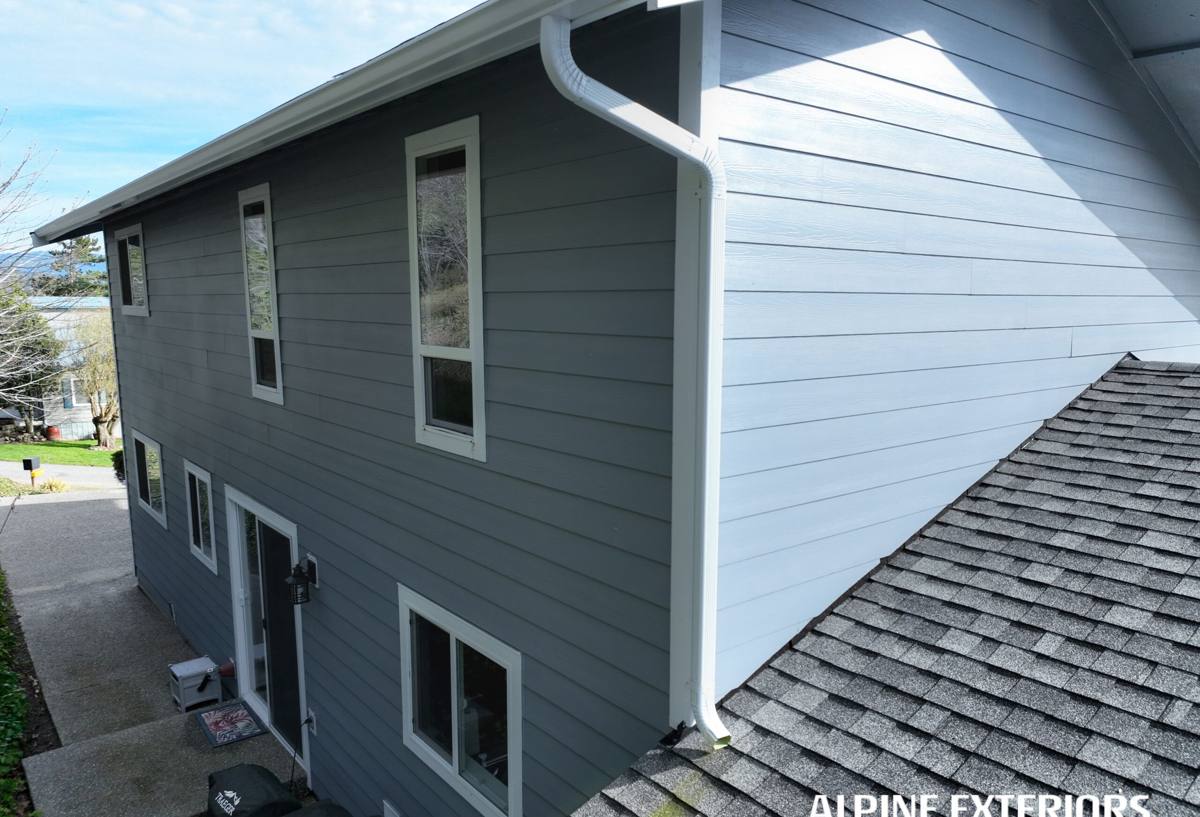
Wind Off the Bay: Outflow Storms and Driving Rain
Most of Whatcom County gets its rough weather from Pacific frontal systems moving in off the ocean. Blaine and the rest of the county's northern edge get that too, but they also sit in the path of Fraser Valley outflow events — cold, dense air that builds up over interior British Columbia and funnels down the Fraser Valley before spilling out across Boundary Bay and Drayton Harbor. These outflow winds can arrive with little warning, blow steadily for a day or more, and hit roofs from a direction that a lot of standard roofing detail work isn't built to handle well over time.
Shingles and flashing are designed to shed water moving downhill under gravity. Wind-driven rain doesn't cooperate — it gets pushed up under shingle tabs, into flashing laps, and along ridge caps that are otherwise sound. Combine that with sustained gusts strong enough to lift shingle edges or tear at ridge and hip caps, and you get damage that isn't always obvious from the ground, especially after the storm has passed and the roof looks intact at a glance.
What Storm Damage Actually Looks Like on a Blaine Roof
After a wind or rain event, the damage we're typically called out for falls into a fairly consistent list:
- Lifted, creased, or torn shingle tabs, especially along roof edges and ridges where wind uplift is strongest
- Flashing pulled loose or bent at chimneys, wall intersections, and roof-to-wall transitions
- Granule loss and patches of exposed felt or underlayment from wind abrasion
- Punctures or tears from wind-blown branches, fence sections, or loose yard debris
- Gutters and downspouts pulled away from fascia or separated at seams
- Soft, rotted decking at valleys and eaves where trapped moss and debris have held moisture against the roof for months
Salt Air's Slower, Separate Toll
Wind and rain do the sudden damage. Salt air does a quieter one. Exposed metal — nail heads, drip edge, flashing, gutter hangers — corrodes faster this close to the water than it does further inland. A fastener that's lost integrity to corrosion is a weak point the next windstorm will find first, even if it looks fine sitting still. Part of doing this work properly in Blaine is treating salt exposure as its own factor, not an afterthought, and using corrosion-resistant fasteners and flashing as a baseline rather than an upgrade.
What a Correct Storm Repair Actually Involves
Full-Roof Inspection, Not Just the Obvious Spot
Wind damage rarely stays where you can see it from the driveway. A missing shingle on the front slope is often a sign to check the back and side slopes too, along with every flashing point and the ridge line. A repair that only patches the visible spot without checking the rest of the roof is a repair that leaves the next leak sitting there waiting.
Matching Materials and Tie-In Detail
A patch that doesn't match the surrounding shingle in color, profile, or age stands out and, more importantly, can perform differently under wind load than the material around it. Good tie-in work means matching materials as closely as possible, correctly overlapping new flashing with existing courses, and installing underlayment at the repair perimeter the same way it would be done on a full replacement — not skipped because it's "just a repair."
Ventilation and Moisture Check
Moss growth and slow rot at valleys and eaves sometimes point to more than surface exposure — they can be a sign that attic ventilation isn't moving moisture out the way it should. A storm repair is a natural point to check for that, since we're already up there, and it's far cheaper to correct airflow now than to keep repairing the same soft spot every few years.
What Drives the Cost of a Storm Repair
Storm repair costs in Blaine vary a fair amount depending on scope and what the wind and water actually got into. Here's roughly how that breaks down:
| Repair Scope | What's Typically Involved | What Affects the Cost |
|---|---|---|
| Localized wind damage | A handful of shingles, a section of ridge cap, one or two flashing points | Roof pitch, accessibility, and whether matching shingle is readily available |
| Flashing and metal replacement | Chimney, valley, or wall flashing pulled loose or corroded | Metal gauge and coating, complexity of the roof-to-wall detail |
| Moss and rot repair | Deck replacement at valleys or eaves, cleaning, underlayment tie-in | Extent of rot found once old material is pulled back |
| Full slope replacement | Widespread damage across one or more slopes after a major event | Total square footage, tear-off and disposal, decking condition underneath |
We won't know which category a given repair falls into until we've actually been on the roof — anyone quoting a firm number over the phone from a description alone is guessing.
Our Process From Call to Close-Out
- Phone or photo triage — a quick conversation about what happened and what you're seeing, so we know what to bring
- On-site inspection covering the full roof, not just the reported problem area, with a written scope of what we find
- Photo documentation of the damage, useful if you're filing an insurance claim
- Repair work using matched materials and proper flashing and underlayment detail at every tie-in point
- Site cleanup and haul-away of old material and storm debris
- A follow-up check after the next significant rain to confirm the repair is holding
Insurance and Storm Claims: What We Can and Can't Do
We can document damage thoroughly with photos and a written estimate that supports a claim, and we're glad to walk you through what we found on the roof in plain terms. What we can't do is make the claims decision for you — that's between you and your insurer, and the adjuster's assessment is the one that matters for coverage. If you've had storm damage, it's worth photographing what you can see from the ground and calling your insurer promptly, before debris gets cleaned up or moves. And if a crew you don't recognize shows up at your door right after a storm offering to inspect your roof for free, it's reasonable to slow down and get a second opinion before signing anything — that's just common sense after any regional storm, not a knock on any specific outfit.
Why a Crew That Already Works Blaine Matters
A roofer who works Blaine and the rest of northern Whatcom County regularly has already seen how outflow winds hit different parts of the area, which roof orientations take the worst of the driving rain, and how moss and moisture behave on the older housing stock common here. That familiarity shows up in small ways that matter: knowing which flashing details tend to fail first in this exposure, having relationships with local suppliers to match shingle and metal quickly instead of waiting on special orders, and being able to respond faster after a regional storm event because we're already routed through the area rather than driving up from somewhere else. It also means we're not guessing at what "normal" wear looks like here versus what a storm actually caused — we see enough Blaine roofs to know the difference.
Homeowner Checklist After a Storm
- Walk the yard and check for shingle granules, torn shingle pieces, or metal flashing on the ground
- Look at the roofline from the ground with binoculars rather than climbing up yourself after a wind event
- Check ceilings and attic spaces for new water stains, even faint ones
- Note the date and rough timing of the storm for your records, in case you need it for insurance
- Clear gutters and downspouts once the immediate weather passes so any repair work drains properly
- Get a full inspection before the next major storm season rather than waiting for another leak to show up
If a recent storm has you wondering whether your roof took damage, or you've noticed a leak, missing shingles, or loose flashing, we're happy to come take a straightforward look. The estimate is free, there's no pressure attached to it, and you'll get a clear answer about what we're seeing and what it would take to fix it right — just fill out the form below to get started.