 Bellingham Siding
 Windows Built for Cordata's Particular Kind of Wet
Cordata sits in the part of Bellingham where Whatcom County's marine climate shows up in full force — long stretches of low-intensity rain, wind that carries moisture sideways into wall assemblies, and enough salt-tinged air off the Sound to accelerate corrosion on anything metal that isn't properly finished. None of that is dramatic on any single day. It's the accumulation that wears windows down: swollen sashes that won't latch cleanly by February, condensation fogging up double-pane units that lost their seal years ago, and trim boards gone soft where water has been sitting against them since fall. If you've owned a home in this neighborhood for more than a decade, you've probably already noticed one or two of these things starting.
Energy-efficient windows done right aren't just about a lower heating bill, though that's real. In this climate, the bigger win is a window that keeps water out of the wall cavity, resists the moss and mildew that colonize anything shaded and damp, and holds its seal through repeated wet-dry-wet cycles instead of failing after eight or ten years. That's a different design problem than what a window has to solve in a drier climate, and it changes what "good" looks like for a Cordata home specifically.
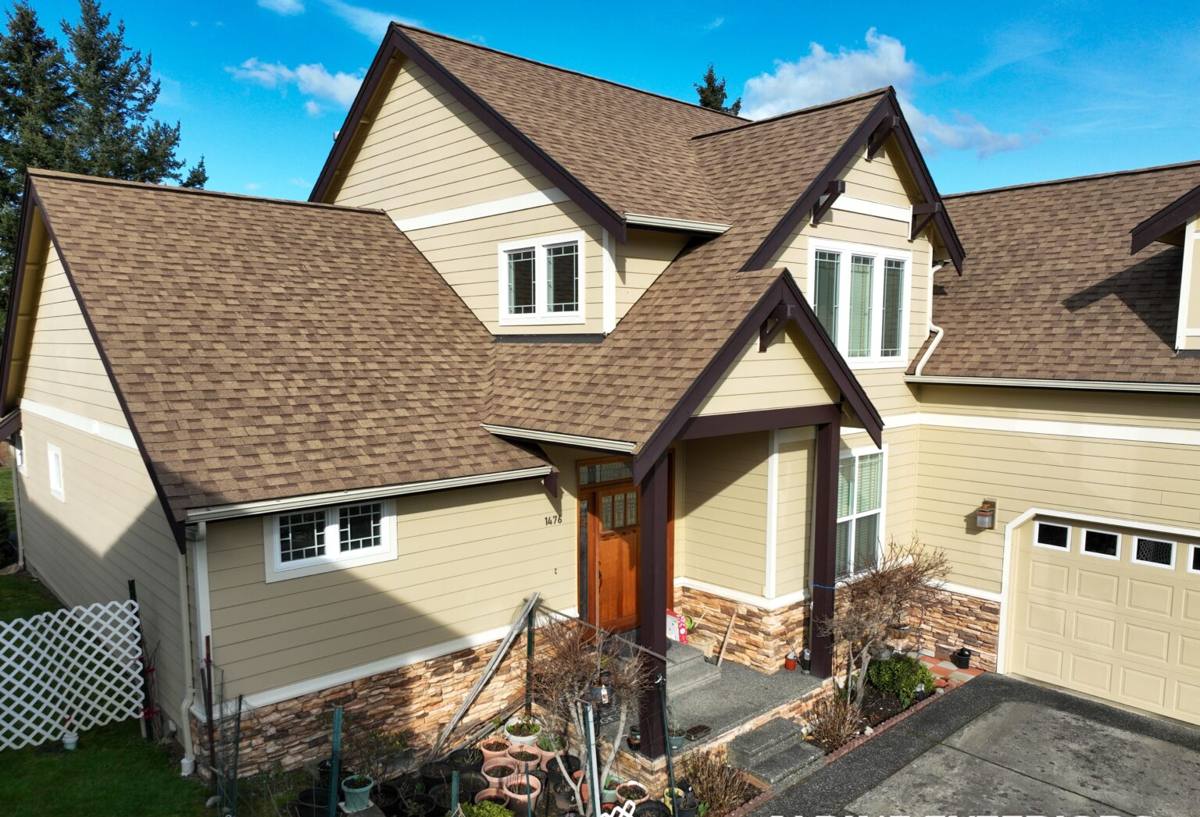
How This Climate Actually Attacks a Window
Driving rain and wind-driven moisture
Bellingham doesn't get the heaviest rainfall totals in the state, but it gets a lot of low-pressure systems with sustained wind, which pushes rain sideways into window flanges and trim joints rather than letting it run straight down and off. A window that isn't flashed correctly, or that relies on caulk alone to stop water at the frame, will eventually let moisture behind the siding — and by the time you see a stain on the interior sill, the sheathing behind it has usually been wet for a while.
Salt air and metal fatigue
Proximity to Bellingham Bay and the Salish Sea means airborne salt is part of the environment, even well inland. It's not enough to strip paint overnight, but over years it pits unprotected aluminum, corrodes cheap hardware, and speeds up the breakdown of low-grade weatherstripping. Window components that aren't rated for coastal exposure age faster here than the same product would in an inland climate.
Moss, mildew, and shaded exposures
Whatcom County's moss season runs long — realistically much of the year on north- and east-facing walls that don't get much direct sun. Moss and algae hold moisture against wood trim and can work into any gap in the seal around a window frame. Left alone, that constant dampness rots trim from the outside in, often before a homeowner notices anything wrong from indoors.
Temperature swings and condensation
Cordata gets cold, damp winters and mild summers — not extreme heat, but enough of a temperature differential indoors versus out that older, poorly insulated windows fog up or sweat on cold mornings. Persistent condensation on glass or between panes is usually the clearest sign a window's seal or gas fill has failed.
Signs a Cordata Home's Windows Are Falling Behind
- Visible fog or moisture between the panes of a double- or triple-glazed unit — the seal has failed and the insulating gas is gone
- Sashes that stick, drag, or won't latch fully, especially after a wet stretch of weather
- Cold drafts you can feel with a hand near the frame on a windy day
- Soft, discolored, or moss-covered trim and sills around the window opening
- Noticeably higher heating bills compared to similarly sized homes nearby
- Condensation forming on the inside of the glass most mornings in winter
- Visible daylight or a whistling sound at the frame during wind events
Any one of these is worth a look. Several together usually means the windows are past the point where caulk and weatherstripping will buy much more time.
What "Energy-Efficient" Means in Practical Terms Here
Manufacturers rate windows using a handful of numbers, and in this climate two of them matter more than the others:
- U-factor — how well the window resists heat loss. Lower is better for a climate with a long heating season like ours. Most quality replacement windows sold in this region land in a range that comfortably meets Washington's energy code, but there's still real variation between a builder-grade unit and a well-built one.
- SHGC (Solar Heat Gain Coefficient) — how much solar heat passes through the glass. Bellingham doesn't get intense summer sun, so this matters less here than it would somewhere hot, but it still affects comfort on south-facing walls in July and August.
- Air leakage rating — how tight the frame and sash seal against drafts. This one has an outsized effect on comfort in a windy, wet climate, because a drafty window doesn't just lose heat, it lets moist outside air work its way in around the frame.
A window can carry a good energy rating on paper and still perform poorly here if it isn't installed with the right flashing and sealing details for wind-driven rain. The product spec and the installation are two separate problems, and both have to be right.
Frame Materials — How They Hold Up in This Climate
| Material | Moisture & Salt-Air Behavior | Maintenance | Typical Fit for Cordata Homes |
|---|---|---|---|
| Vinyl | Won't rot or corrode; performs well in wet, coastal-adjacent air | Low — occasional cleaning | Solid, cost-effective default for most homes |
| Fiberglass | Very stable through wet-dry cycling; resists warping better than vinyl in large sizes | Low | Good for larger openings or homes wanting a premium, longer-life frame |
| Wood-clad | Interior wood needs protection from any moisture intrusion at the seal | Higher — exterior cladding helps, but detailing must be precise | Best when the homeowner wants a wood interior look and understands the upkeep tradeoff |
| Bare aluminum | Prone to corrosion and thermal transfer in salt-influenced coastal air | Moderate to high | Not something we recommend for this area outside of specific commercial or architectural applications |
We steer most Cordata homeowners toward vinyl or fiberglass, not because wood-clad windows are bad products, but because the maintenance burden of keeping a wood-clad seal perfect year after year in this rainfall pattern is a real and ongoing cost that a lot of homeowners underestimate going in.
Our Installation Process
1. On-site assessment
We look at each window opening individually, not just the glass. That means checking the condition of the framing, sill, and flashing underneath the old window, since that's where hidden rot most often shows up in this climate.
2. Removal and structural check
Old windows come out carefully so we can inspect the rough opening. If there's water damage to the sheathing or framing, we address it before anything new goes in — installing a new window over damaged framing just locks the problem behind fresh trim.
3. Flashing and weather barrier detailing
This is the step that matters most for long-term performance here. Proper sill pan flashing, correctly lapped window flashing tape, and integration with the home's existing weather-resistive barrier are what actually keep wind-driven rain out of the wall — more than the window product itself.
4. Setting, shimming, and sealing
The window is set level and plumb, shimmed correctly so it doesn't bind, and sealed with materials rated for exterior, wet-climate exposure — not general-purpose caulk that will crack and open a gap within a season or two.
5. Interior and exterior finish
Trim is finished and sealed on both sides, with attention to any surfaces likely to stay shaded and damp, since those are the spots most prone to future moss growth and rot if not properly protected at installation.
Cost Factors to Expect
| Factor | How It Affects Price |
|---|---|
| Window count and size | More openings and larger units mean more material and labor |
| Frame material | Vinyl is generally the most affordable; fiberglass and wood-clad cost more upfront |
| Glass package | Double-pane with low-E coating and argon fill costs more than basic double-pane, but performs meaningfully better in this climate |
| Condition of the existing opening | Rot repair or reframing adds cost but is not optional if the structure underneath is compromised |
| Access and home layout | Second-story or hard-to-reach windows can add labor time |
We give homeowners honest, itemized numbers rather than a single lump figure, so it's clear what's driving the cost and where there's room to adjust scope if budget is a factor.
Why It Matters to Hire a Crew That Already Works in Cordata
Window installation looks similar on paper everywhere, but the details that actually matter — how deep to set flashing given local rain patterns, which sealants hold up through a Whatcom County winter, how to handle a wall that's already showing early moss staining — come from having done this work repeatedly in this exact area. A crew that mostly installs in drier climates can put in a technically fine window and still get the water management wrong for what Bellingham throws at a house over a wet season.
We also know what typical construction looks like across Cordata's mix of older and newer homes, which means fewer surprises once an old window comes out and the opening is exposed.
Keeping New Windows Performing Long-Term
- Rinse frames and sills periodically to clear salt residue and organic buildup before it stains or pits the surface
- Check and clear weep holes on vinyl frames so water can drain out rather than pool
- Keep gutters and nearby foliage trimmed back so water and shade don't concentrate around window trim
- Inspect exterior caulking annually and touch up any cracked or separated sections before wet season sets in
- Watch for early moss or algae on shaded trim and clean it off before it takes hold
- Operate sashes through their full range a few times a year so hardware doesn't seize up from disuse
None of this is heavy maintenance — it's the kind of light, seasonal attention that keeps a well-installed window performing for its full expected lifespan instead of needing early rework.
If your Cordata home has windows showing any of the wear signs above, or you're just ready to stop losing heat through old glass, we're happy to take a look and walk you through honest options for your specific home. Use the form below to request a free, no-pressure estimate.