 Bellingham Siding
 What Edgemoor's Climate Does to Siding
Edgemoor sits close enough to Bellingham Bay that homes here deal with a different mix of weather stress than siding a few miles inland. Salt-laden air off the water accelerates corrosion on fasteners, trim, and any siding material that isn't built to resist it. Add Whatcom County's long wet season — months of driving rain pushed sideways by wind off the water — and you get siding that stays damp longer than it does in drier parts of the state. Many Edgemoor lots also carry mature tree canopy, which is part of what makes the neighborhood attractive, but shade and windbreak from big conifers and hardwoods also mean siding surfaces dry out slower after a storm and collect more organic debris in gutters, trim, and butt joints.
That combination — salt exposure, sustained rain, and shade-driven slow-drying — is exactly the environment where moss, algae, and mildew take hold on siding that can't shed moisture well. It's also where cheap installation shortcuts show up fastest: a poorly lapped joint or a missing piece of flashing that would take years to cause a problem in a drier climate can start letting water in in a single wet season here.
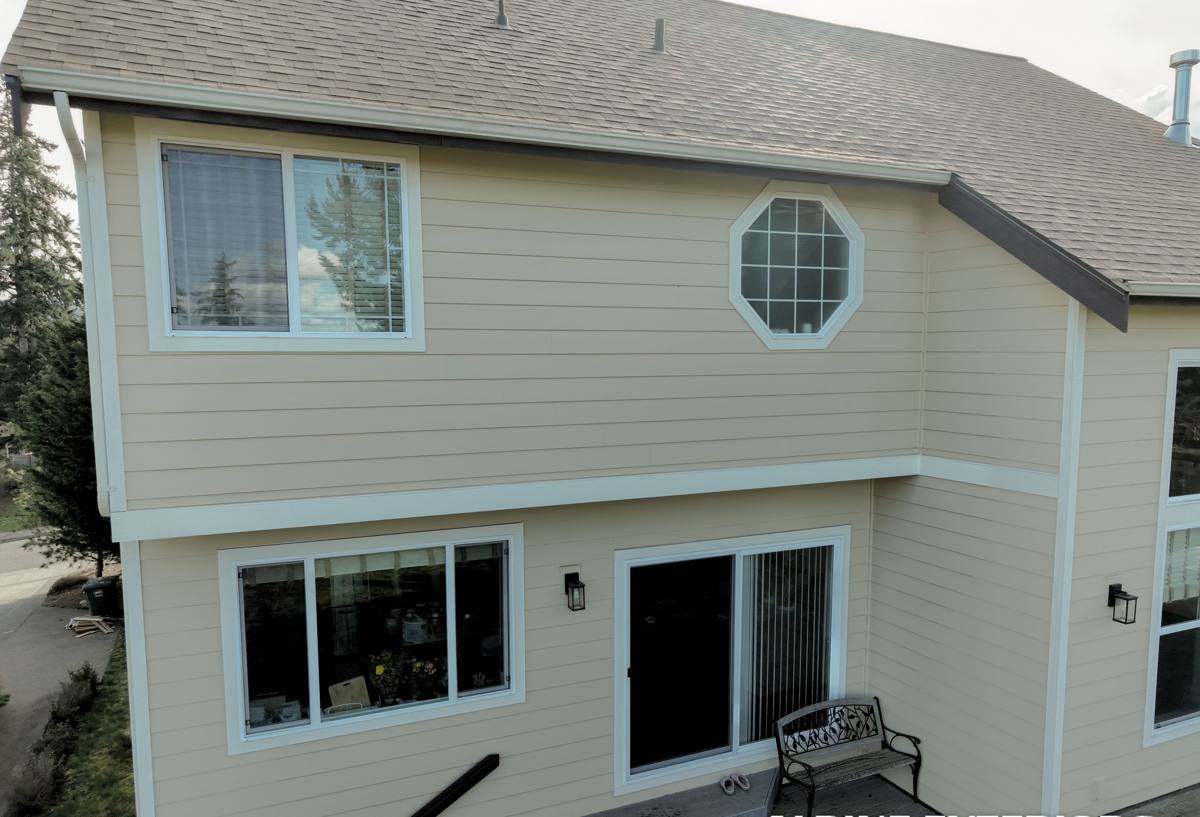
Why We Install Only James Hardie Fiber Cement
We don't install vinyl, LP SmartSide, Cemplank, Allura, primed spruce, or cedar. Each of those products has a place in the market, but none of them holds up to Edgemoor's specific mix of salt air, sustained moisture, and moss pressure the way James Hardie fiber cement does when it's installed correctly. Wood-based siding — cedar, primed spruce, and OSB-based products like LP SmartSide — depends on an intact paint or sealant layer to keep water out of the substrate. Once that layer is compromised by UV, moisture cycling, or a fastener puncture, the underlying wood fiber is vulnerable to rot, and a shaded, damp lot like the ones common in Edgemoor is exactly where that failure mode accelerates. Vinyl sheds water reasonably well but softens, warps, and can crack in temperature swings, and it doesn't offer the same fire performance or long-term color retention.
James Hardie fiber cement is a mix of cement, sand, and cellulose fiber, engineered specifically to resist moisture absorption, hold paint or factory finish far longer than wood, and resist fire — it's non-combustible, which matters given how many Edgemoor homes sit near dense tree cover. James Hardie also builds region-specific formulations: HZ5 for climates like ours that see freeze-thaw cycling, versus HZ10 for warmer, non-freezing regions. Installed here, that means the product itself is engineered for the moisture and temperature swings Whatcom County actually produces, not a generic national spec.
What a Correct Installation Actually Involves
James Hardie siding is only as good as the installation behind it. The product is durable, but nearly every real-world siding failure we're called out to inspect traces back to installation details, not the material itself. A correct install on an Edgemoor home means paying close attention to the details that matter most in a wet, salt-exposed environment.
Flashing and Moisture Management
Every window, door, and roof-to-wall transition needs proper flashing integrated with a weather-resistant barrier behind the siding — not caulk used as a substitute for flashing. Kick-out flashing at roof-wall intersections is non-negotiable on a site with the rain volume Edgemoor gets; skipping it is one of the most common causes of hidden water damage behind otherwise good siding. Butt joints between plank ends need to be properly lapped or backed with flashing tape, not just caulked and hoped for.
Fastening, Clearances, and Caulking
James Hardie specifies exact fastener types, spacing, and placement, and following that spec is what keeps the plank from cracking, working loose, or wicking moisture at the nail line. Siding also needs proper clearance from grade, roof lines, and decks — generally a minimum gap that keeps splashback and standing water off the bottom edge of the material. In a shaded, moss-prone yard, that clearance also helps siding dry out faster after rain instead of sitting damp against soil or mulch.
Sealing and Joint Treatment
Every cut end of a Hardie plank exposes raw material that needs to be sealed before installation, and joints need the right sealant applied correctly — not overfilled, not skipped. This is a small detail that's easy to rush and is one of the first places we look when diagnosing a failing install on an older home.
ColorPlus Factory Finish vs. Field-Painted Siding
James Hardie's ColorPlus finish is baked on at the factory under controlled conditions, which gives it better UV resistance, better color retention, and a stronger bond than field-applied paint. On a lot with heavy tree shade and salt air — both common in Edgemoor — that matters more than it might elsewhere, because both conditions are hard on conventional paint. Shade slows drying and promotes mildew growth on painted surfaces, and salt air degrades standard exterior paint faster than it degrades a factory-cured finish. ColorPlus siding still needs to be kept clean and shouldn't be pressure-washed aggressively, but it doesn't need repainting on the schedule a field-painted product does.
Primed Hardie board (uncolored) is available and sometimes appropriate for specific trim details, but for full siding installs in a climate like ours, ColorPlus is almost always the better long-term choice, and it's what we recommend for the majority of Edgemoor projects.
Cost Factors on an Edgemoor Project
Every home is different, and we don't quote pricing without seeing the house, but these are the variables that most often move the number on a real Edgemoor estimate:
| Factor | Why It Matters Here |
|---|---|
| Existing siding removal | Tear-off and disposal of old wood or vinyl siding adds labor, especially if there's hidden rot to address underneath |
| Moisture or rot repair | Homes with a history of failed siding or missing flashing often need sheathing repair before new siding goes on |
| Home size and wall complexity | Multiple gables, dormers, or a large footprint mean more cutting, flashing, and labor hours |
| Trim and accent detail | Board-and-batten accents, trim boards, and shingle-style accent panels cost more than plain lap siding |
| Access and lot conditions | Mature trees, sloped or tight lots, and limited staging space — common on Edgemoor's wooded properties — can add setup time |
| Product line and finish | HardiePlank lap siding, HardieShingle, and HardiePanel carry different material costs; ColorPlus finish colors vary in price by tier |
Our Process for Edgemoor Homes
- On-site assessment. We walk the exterior, check for existing moisture damage, evaluate flashing and drainage around windows and rooflines, and note anything specific to the lot — tree cover, grade, drainage paths.
- Product and color selection. We help you choose the right Hardie line and ColorPlus color for the home's style and the site's sun/shade exposure.
- Prep and repair. Any damaged sheathing or framing found during tear-off gets repaired before new siding goes up — we don't cover over a problem.
- Weather barrier and flashing installation. This is the step that determines whether the siding performs for decades or fails early; we don't shortcut it.
- Siding installation to manufacturer spec. Correct fastening, clearances, joint treatment, and trim detail, following James Hardie's published installation requirements.
- Final walkthrough. We review the finished work with you before calling the job done.
Maintenance Homeowners Should Expect
James Hardie siding is low-maintenance compared to wood, but "low-maintenance" doesn't mean "no maintenance," especially in a climate that grows moss well. A short seasonal routine keeps it performing the way it's designed to:
- Rinse siding with a garden hose once or twice a year to clear pollen, salt residue, and organic buildup — avoid high-pressure washing directly at joints and seams
- Keep gutters clear so water isn't overflowing and running down the siding face
- Trim back tree limbs and shrubs that keep siding shaded and damp for extended periods
- Inspect caulking at joints, window trim, and penetrations annually and re-caulk if it's cracked or pulling away
- Address any moss or algae growth early with a gentle cleaning rather than letting it establish
- Watch for any soft spots, staining, or gaps at flashing points and call it in before it becomes a bigger repair
Why a Crew That Already Works Edgemoor Matters
Edgemoor isn't a generic subdivision — it's an established, wooded neighborhood close to the water, and that combination creates specific installation challenges: tighter access on some lots, more attention needed around mature trees and drainage patterns, and a climate exposure profile that's a notch more demanding than siding a home further from the bay. A crew that's worked in the neighborhood already understands how the local moss season behaves, where driving rain tends to find weak points on homes with this kind of tree cover, and how to sequence a job around a wooded lot without unnecessary disruption to landscaping. That local familiarity translates into fewer surprises during the job and a better shot at a first-time-right installation, which matters most with a material like Hardie that's built to last decades if it's put on correctly.
If you're weighing a siding project on an Edgemoor home, we're happy to walk the property, look at what's there now, and talk through what James Hardie would involve for your specific house — no pressure, no obligation. Reach out using the form below to schedule a free estimate.