 Bellingham Siding
 Why Ferndale's Climate Is Hard on Windows
Ferndale sits close enough to the water that homes here deal with a mix of weather most inland siding and window crews never have to think about. Salt-tinged air off the Sound corrodes aluminum hardware and cheap fasteners faster than people expect. Driving rain off southwest storms hits window walls at an angle, not just straight down, which means any weak point in flashing or sealant eventually finds water a way in. And Whatcom County's long, damp stretch of fall through spring keeps moss and algae active on north- and west-facing walls for months at a time, which holds moisture right up against window trim and sills.
None of this means Ferndale homes need exotic solutions. It means the basics — flashing, drainage, and material choice — have to be done correctly the first time, because this climate does not forgive shortcuts the way a drier region might.
How to Tell Your Windows Are Losing the Fight
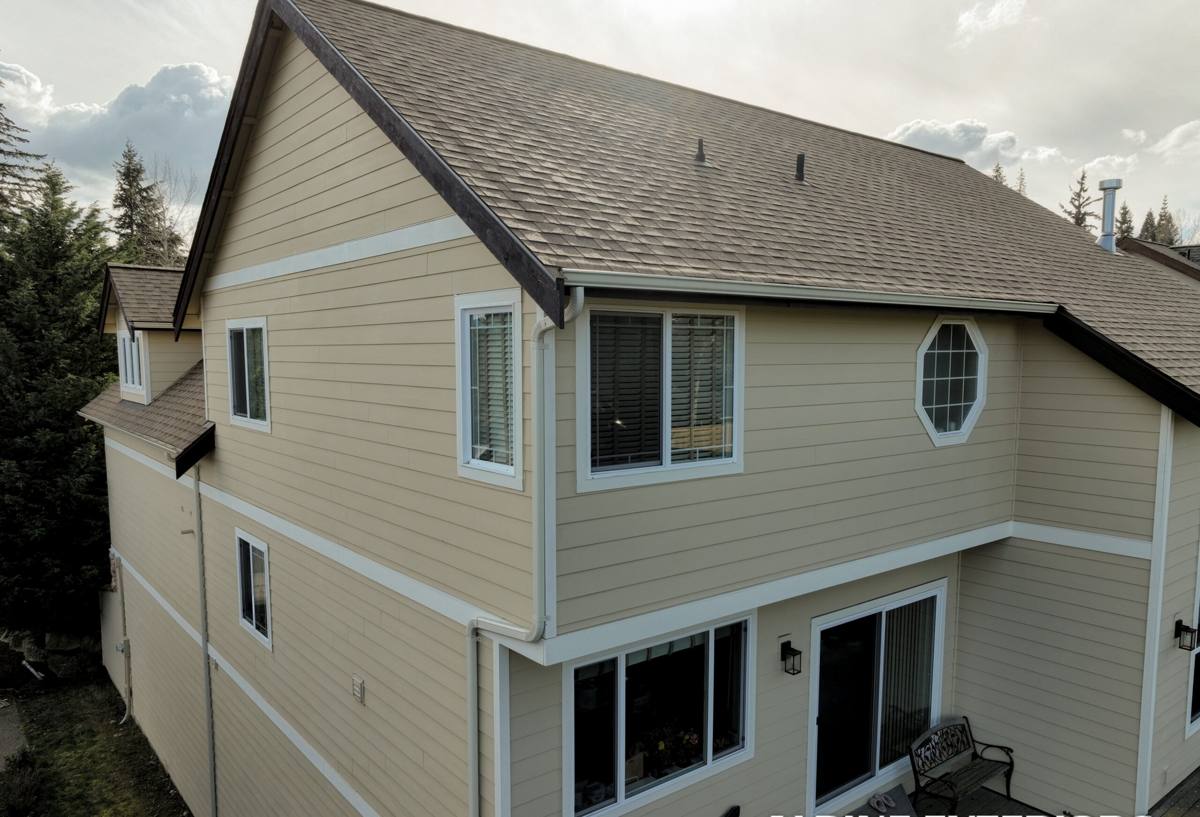
Window failure in this climate is usually slow and easy to miss until it isn't. A few things we hear from Ferndale homeowners before they call us:
- Fogging or a milky haze between the panes of double-pane glass — the seal has failed and the gas fill is gone
- Soft, spongy, or discolored wood at the sill or bottom corners of the frame
- Windows that are hard to open or close, especially older wood or aluminum-frame units that have swelled or corroded
- A cold draft you can feel near the frame even with the window latched shut
- Dark staining or a musty smell in the wall or trim just below or beside a window
- Visible gaps between the window frame and the siding or trim around it
Any one of these on its own might just mean the window is old. Two or three together, especially on a wall that takes the brunt of our weather, usually means water has already been getting behind the frame for a while.
What Correct Window Installation Actually Involves
It's Mostly About Water, Not the Window
Homeowners naturally focus on the window itself — brand, style, glass package. But in a wet marine climate, the window is often the easy part. What actually determines whether an installation holds up for twenty-plus years is the flashing and drainage detail around it: how water that gets past the exterior cladding is directed back out instead of into the wall cavity.
A correct installation sequences the layers so gravity always wins. That means a sloped sill pan under the window opening, self-adhered flashing tape integrated with the house wrap in the right shingle-lap order (so upper layers overlap lower ones, never the reverse), and a drainage path at the bottom of the opening so any water that does get in has somewhere to go besides your wall framing.
What We Check Before We Ever Set a New Window
Every opening gets inspected once the old window is out, not just measured before it comes out. We're looking at the sheathing and framing for soft spots, staining, or rot — problems that are invisible with the old window in place and that a quick "swap it out" installation will simply seal back up and hide for another decade.
Frame and Glass Options That Hold Up Here
There's no single "best" window material — the right choice depends on the wall, the budget, and how exposed that side of the house is to wind-driven rain. Here's how the common options compare for a climate like Whatcom County's:
| Material | How It Handles This Climate | Maintenance |
|---|---|---|
| Vinyl | Good moisture resistance, won't corrode from salt air, performs well on most exposures | Low — occasional cleaning |
| Fiberglass | Very stable in temperature and moisture swings, holds paint well if you want a custom color | Low |
| Wood-clad | Warm appearance, needs correct cladding and flashing detail to keep the interior wood dry | Moderate — watch cladding seams over time |
| Aluminum (bare) | Prone to corrosion and condensation in salt-air, high-moisture conditions | Higher — hardware and finish wear faster here |
We don't push aluminum-frame replacements on Ferndale homes, not because the product is inherently bad everywhere, but because bare aluminum conducts cold and reacts to salt air in ways that shorten its useful life in this specific environment. Vinyl and fiberglass are our default recommendations for most retrofit projects; wood-clad comes up mainly when a homeowner wants to match existing trim detail or a historic look and understands the added upkeep.
On glass, dual-pane with a low-E coating and argon gas fill is standard for this region — it's not overkill, it's appropriate for a climate with mild but persistent cold, damp stretches. Warm-edge spacers (instead of older aluminum spacers) also help reduce condensation at the glass edge, which matters when indoor humidity is higher during our wetter months.
Our Installation Process, Start to Finish
- On-site assessment — we look at each opening, the exposure of that wall, existing trim and siding condition, and take real measurements rather than working off a rough estimate
- Old window removal — done carefully to protect surrounding siding and trim wherever it's being reused
- Opening inspection — checking sheathing and framing for hidden moisture damage before anything new goes in
- Repair as needed — any rotted or compromised framing gets addressed before the new window goes in, not covered over
- Flashing and sill pan installation — built in the correct shingle-lap sequence so water sheds outward
- Setting and shimming the window — leveled and squared so the sash operates correctly and seals evenly for the life of the unit
- Insulation and air sealing — the gap between the frame and the rough opening gets filled properly, not overpacked or left hollow
- Exterior trim and sealant — finished to blend with existing siding and shed water away from the seams
- Interior finish and cleanup — trim, touch-up, and a walk-through so you know how the new windows operate
Replacement Windows vs. New Construction Windows
These two are installed differently, and mixing them up leads to problems. Replacement (or "retrofit") windows are built to fit into an existing frame that stays in place, which is usually the right call when the surrounding wall and siding are in good shape and you just want new glass and hardware. New construction windows have a nailing flange and are meant to be integrated directly with the house wrap and flashing during a full opening rebuild — the right choice when siding is already coming off, framing needs repair, or you're changing the window size.
Using a retrofit window where a full new-construction install is actually needed (or vice versa) is one of the more common corner-cutting mistakes we see in this trade. We'll tell you plainly which approach your project actually calls for, even if it's more work than the alternative.
What Influences the Cost of a Window Installation
Every project is different, but the main cost drivers are consistent. Rough, general ranges below are meant to help you think through the decision, not serve as a quote — your on-site assessment will always be more accurate than any table.
| Factor | Why It Matters |
|---|---|
| Number and size of openings | More or larger windows means more material and labor time |
| Frame material chosen | Vinyl is typically the most budget-friendly; fiberglass and wood-clad cost more upfront |
| Retrofit vs. new construction | New construction installs take longer since siding and flashing are involved |
| Condition of existing framing | Hidden rot or water damage found during removal adds repair time |
| Wall exposure and access | Second-story or hard-to-access openings take more time and equipment |
| Glass package | Upgraded low-E coatings, gas fills, or grid patterns add cost |
The most expensive outcome is always the one where a cheap installation fails in five years and the wall behind it has to be opened up anyway. A correctly flashed window with a mid-range frame will almost always outlast a premium window installed with shortcuts.
Why a Crew That Already Works Ferndale Matters
Window installation is one of those jobs where local experience shows up in details a homeowner might never notice until something goes wrong. A crew that regularly works Whatcom County homes already knows which wall exposures in this area tend to take the worst of the wind-driven rain, what kind of moisture damage shows up first in the older housing stock common around here, and how to sequence flashing so it works with the siding types typically found on Ferndale homes rather than fighting against them.
It also means straightforward logistics — someone who can get to your site without a long drive, who can be back quickly if a question comes up after the install, and who isn't learning the local weather patterns on your project.
Keeping New Windows Performing for the Long Haul
A correct installation does most of the work, but a little seasonal attention keeps windows performing the way they should in this climate:
- Clear moss, leaves, and debris from window sills and nearby gutters before the wet season sets in
- Check exterior caulking and sealant lines once a year for cracking or gaps, especially on walls that face prevailing storms
- Wipe down tracks and hardware periodically — salt air residue can build up and stiffen moving parts
- Watch for condensation between panes, which signals a failed seal rather than something you can fix with cleaning
- Keep an eye on interior sills and trim for any soft spots or discoloration after a heavy storm season
If you're noticing drafts, fogged glass, or water staining around your windows, or you're planning ahead for a remodel, we're happy to take a look and give you an honest read on what your home actually needs. Reach out for a free, no-pressure estimate — we'll walk the openings with you and explain exactly what we find.