 Bellingham Siding
 Building Decks for Happy Valley's Particular Climate
Happy Valley sits on the hillside south of downtown Bellingham, close enough to Bellingham Bay that homes here deal with a mix of marine air, shade from mature trees, and the steady wet weather that defines a Whatcom County winter. That combination is harder on an outdoor deck than most homeowners realize. Salt-tinged air off the bay accelerates corrosion on fasteners and metal connectors. Driving rain, often coming sideways in a windstorm, finds its way into any gap in flashing or decking that wasn't detailed correctly the first time. And the tree canopy that makes this neighborhood so pleasant also means shaded decks stay damp for days after a storm, which is exactly what moss and algae need to take hold.
None of this means a deck in Happy Valley can't last decades. It means the build has to account for these conditions from the footings up, not just at the surface finish. A deck that would hold up fine in a dry inland climate can start failing in five or six years here if it was built to a generic spec instead of a Pacific Northwest one.
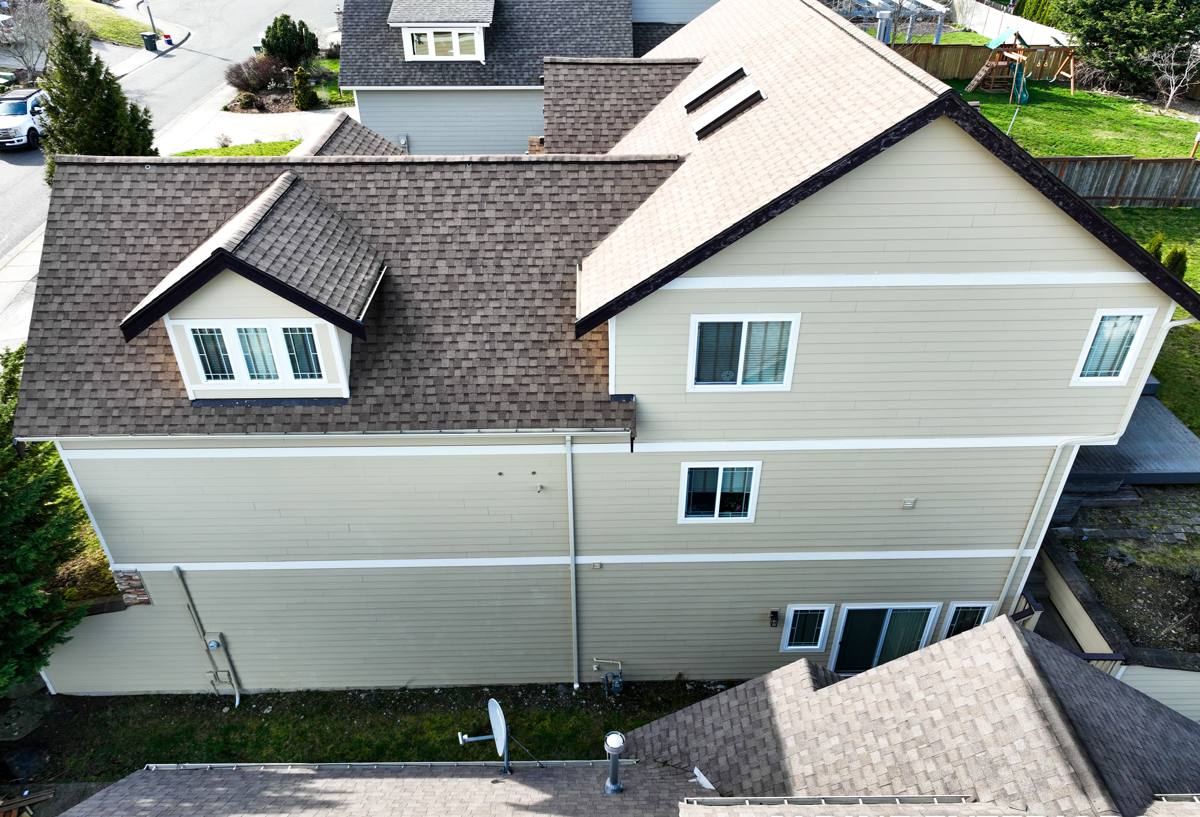
What a Deck Built for This Area Actually Requires
Fasteners and Hardware
Standard galvanized hardware corrodes faster near the bay than most people expect. We use stainless steel or heavy-duty coated fasteners rated for coastal exposure on structural connections — joist hangers, ledger bolts, post bases — because these are the parts that are expensive and disruptive to fix once the decking is down. Cutting corners here is the single most common cause of premature deck failure we see when we're called out to assess an older structure.
Ledger Attachment and Flashing
Where a deck attaches to the house, the ledger board and its flashing are the most failure-prone detail on the entire structure. Water that gets behind an improperly flashed ledger doesn't just rot the ledger — it can migrate into the house framing and sheathing, which turns a deck problem into a much bigger repair. Correct ledger flashing, with proper counter-flashing and a drainage gap between the ledger and the siding, is non-negotiable on every deck we attach to a house in this climate.
Spacing for Drainage and Airflow
Decking boards need consistent gaps that let water drain through rather than pool on the surface, and framing needs enough airflow underneath to dry out between rain events. In shaded Happy Valley yards, a deck built too tight to the ground or without adequate under-deck ventilation stays wet longer and grows moss faster, regardless of what decking material sits on top.
Choosing the Right Decking Material for a Shaded, Wet Lot
There's no single "best" decking material — the right choice depends on how much sun and shade the deck gets, how much maintenance the homeowner wants to do, and budget. Here's how the common options actually perform under Happy Valley conditions:
| Material | Moisture & Moss Behavior | Maintenance | Typical Lifespan |
|---|---|---|---|
| Pressure-treated wood | Absorbs water; needs to fully dry between rains or moss and mildew take hold fast in shade | Annual cleaning and re-sealing recommended | 15–20 years with upkeep |
| Cedar | Naturally rot-resistant but still porous; shaded areas need regular cleaning to prevent staining | Periodic cleaning and oil/stain every 1–3 years | 20–25 years with upkeep |
| Composite decking | Doesn't rot, but textured surfaces can still hold moss/algae film in deep shade | Occasional washing; no staining or sealing | 25–30+ years, manufacturer-warrantied |
| PVC decking | Fully non-porous; best resistance to moss and moisture staining in shaded yards | Lowest maintenance; occasional washing | 30+ years, manufacturer-warrantied |
For decks under heavy tree cover — common on the hillside lots in this neighborhood — we generally steer homeowners toward composite or PVC if budget allows, simply because they hold up better against the moss cycle without the annual maintenance wood requires. That said, plenty of homeowners prefer the look and feel of real wood and are willing to keep up with cleaning and sealing — that's a legitimate choice too, as long as the maintenance actually happens on schedule.
What's Underneath Matters More Than What's on Top
The framing and foundation of a deck do the real work, and they're also what's hardest to inspect once the deck is finished — which is why they're the most important part to get right the first time.
- Footings: Sized and set to local frost depth and soil conditions, not a one-size-fits-all minimum. Hillside lots in this area can have variable soil, and undersized or shallow footings are a common source of a deck that starts to shift or sag within a few years.
- Post bases: Set above grade with proper standoff hardware so posts don't sit in standing water or wet mulch, which is one of the fastest ways to rot a structural post from the bottom up.
- Joists and beams: Sized for the actual span and load, including snow load where applicable, not just whatever lumber happens to be on the truck.
- Under-deck grading: The ground beneath the deck should shed water away from the house and posts, not pool underneath where it stays wet for weeks at a time.
Drainage, Flashing, and the Moss Problem Specifically
Moss on a deck is a symptom, not the root problem — it's telling you the surface is staying wet longer than it should. A well-drained, well-ventilated deck with the right gap spacing will still get some moss in a heavily shaded Happy Valley yard, because the climate here is what it is. But it should be a light surface film that a seasonal wash handles, not a slick, established growth that requires scraping and pressure-washing every year.
When we assess an older deck for repair or replacement, moss buildup patterns actually tell us a lot: heavy moss concentrated in one corner usually points to a drainage or grading issue at that spot, while even moss across the whole surface is more often just a function of tree cover and orientation. Fixing the underlying drainage issue is almost always cheaper than repeatedly replacing rotted boards in the same spot.
Rain Screens and Gaps
Consistent board spacing isn't just cosmetic — it's the difference between a deck that drains and dries between storms and one that traps water against the joists. We set spacing based on the specific decking material's expansion behavior, since wood, composite, and PVC all move slightly differently with moisture and temperature.
Our Process, Start to Finish
- On-site assessment: We look at the existing structure (if there is one), the yard's sun and shade pattern, drainage, and how the deck ties into the house before recommending anything.
- Design and material selection: We walk through decking material options, layout, railing style, and any built-in features against your budget and how much maintenance you actually want to do long-term.
- Permitting: Deck permits are typically required through the City of Bellingham or Whatcom County depending on your property's jurisdiction, especially for decks above a certain height or attached to the house. We handle the permit application and inspections as part of the job.
- Demolition (if replacing): Old decking and framing removed, with an honest look at what's underneath — sometimes a deck that looks fine on the surface has framing issues that change the scope.
- Framing and structural work: Footings, posts, beams, joists, and ledger flashing installed to hold up under this climate's moisture load, not just to pass a minimum code check.
- Decking, railing, and finish work: Surface material installed with proper spacing, fasteners, and any staining or sealing the material requires.
- Final walkthrough: We go over the finished deck with you, including what maintenance schedule makes sense for the material you chose.
Permits and Local Code in Whatcom County
Most new decks and many deck replacements in Bellingham require a building permit, particularly when the deck is attached to the house, elevated above a certain height, or involves structural changes. Requirements can differ slightly depending on whether a property falls under City of Bellingham or unincorporated Whatcom County jurisdiction. Skipping the permit process might save time upfront, but it creates real problems later — unpermitted structural work can complicate a home sale, and it means nobody with code expertise ever checked the footings and framing that are now buried under your decking. We pull the appropriate permits and schedule inspections as a standard part of the job rather than treating it as optional.
Maintenance That Actually Fits This Climate
Every deck, regardless of material, does better with some seasonal attention here. What that attention looks like depends on what you built:
- Clear leaves and debris off the surface and out of gaps before fall rains set in — trapped organic matter is what feeds moss growth.
- Rinse or lightly scrub the surface once or twice a year, more often in heavily shaded spots.
- For wood decking, plan on re-staining or sealing on the schedule the product calls for — usually every one to three years — rather than waiting until it visibly needs it.
- Check under-deck ventilation isn't blocked by stored items, plants, or debris that trap moisture against the framing.
- Inspect railing posts and structural connections annually for any looseness, which can indicate a moisture issue starting underneath.
- Keep gutters and downspouts near the deck clear so runoff isn't dumping extra water onto or under the structure.
Why It Matters to Hire a Crew That Already Works This Neighborhood
Happy Valley's mix of hillside lots, mature tree cover, and proximity to the bay isn't the same building environment as a flat, sunny lot elsewhere in the county. A crew that already works in this specific neighborhood has a working sense of which lots tend to hold moisture, where drainage tends to be a problem, and what detailing actually holds up here versus what looks fine on paper. That local pattern recognition shows up in fewer surprises during the build and a deck that's suited to your actual yard, not a generic template. It also means callbacks and warranty work are handled by a crew that's genuinely nearby, not someone who has to travel across the county to look at a problem.
If you're planning a new deck or need to replace one that's showing its age, we're happy to come take a look and give you a straightforward, no-pressure estimate — just fill out the form below.