 Bellingham Siding
 Lynden's Climate and What It Does to Siding
Lynden sits inland from Bellingham Bay, tucked against the Nooksack River valley near the Canadian border, but it still lives under the same marine weather pattern that soaks all of Whatcom County. The salt-tinged air off the Sound moves inland on the prevailing westerlies, and while Lynden feels it less than a waterfront neighborhood, the humidity and driving rain that come with it are just as relentless here as anywhere else in the county. Add the valley's tree cover, low winter sun angle, and long stretches of overcast, damp weather, and you get a climate that keeps exterior surfaces wet for days at a time.
That combination — moisture that doesn't evaporate quickly and shaded, north-facing walls that barely see sun from October through March — is exactly what drives moss and algae growth on siding. It's also what causes wood-based and wood-adjacent siding products to swell, delaminate, and rot from the inside out when installation details are even slightly off. A siding job in Lynden isn't just about appearance. It's about picking a material and an installation method that can shrug off months of standing dampness without failing.
Why We Only Install James Hardie Fiber Cement
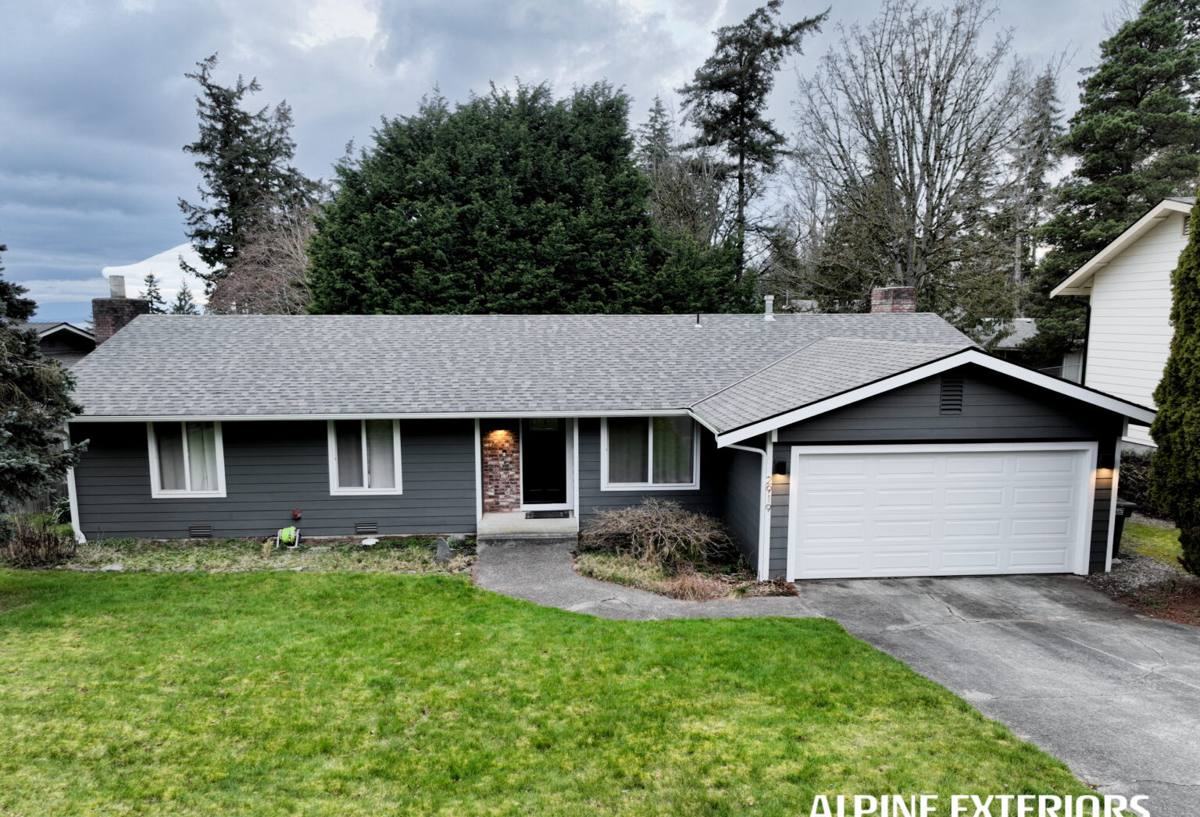
We install James Hardie fiber cement siding exclusively, and we don't apologize for that. Vinyl, LP SmartSide, primed spruce, cedar, and other fiber cement brands all have their place in the market, and each one has homeowners who are happy with it. But after years of working on homes throughout Whatcom County, we've made fiber cement — specifically Hardie — our standard, and we think Lynden homeowners deserve an honest explanation of why.
Vinyl siding is affordable and low-maintenance in mild, dry climates, but it expands and contracts significantly with temperature swings, and in a region with this much sustained moisture, water finds its way behind panels more easily than most homeowners expect. Wood-based composite products like LP SmartSide use engineered wood strand technology that performs well when detailing is perfect, but any gap in caulking or flashing lets moisture into the wood fibers, and that's a slow, hidden failure that's expensive to catch early. Cedar and primed spruce are beautiful but demand a maintenance schedule — recoating, caulking, inspecting — that most homeowners underestimate, especially in a climate where moss and mildew take hold fast.
James Hardie fiber cement is made from cement, sand, and cellulose fibers. It doesn't rot, it isn't attractive to insects, and it's non-combustible. The factory-applied ColorPlus finish is baked on under controlled conditions rather than field-painted, which means better adhesion and a longer color life than site-applied paint typically achieves — especially relevant here, where UV exposure is inconsistent but moisture exposure is constant. When it's installed correctly, it's a siding system built for exactly the conditions Lynden throws at it.
The HZ5 Climate-Engineered Product Line
James Hardie manufactures its siding in different formulations for different climate zones, called HZ5 and HZ10. Western Washington, including Whatcom County and Lynden, falls into the HZ5 zone — engineered for regions with significant moisture exposure, freeze-thaw cycling, and high humidity rather than the drier, hotter conditions HZ10 products are built for. The HZ5 formulation is designed to resist moisture-related damage and maintain dimensional stability through the kind of wet winters and damp shoulder seasons that define our part of the state.
This matters because installing the wrong climate-zone product, or installing the right product with the wrong details, undermines the whole point of choosing fiber cement in the first place. We install HZ5 product exclusively for this reason — it's not a marketing distinction, it's a material-science one.
Hardie Product Lines We Install
- HardiePlank lap siding — the most common choice for Lynden homes, available in several exposure widths and textures
- HardiePanel vertical siding — often used for accent areas, gables, or a board-and-batten look
- HardieShingle — for homes wanting a shingle-style aesthetic without the maintenance of real wood shingles
- HardieTrim — matching trim boards for a consistent, factory-finished look at corners, windows, and fascia
What a Correct Installation Actually Involves
The material is only half the equation. Fiber cement siding fails prematurely almost exclusively because of installation mistakes, not product defects — and in a climate as wet as Lynden's, those mistakes show up faster than they would in a drier region. A correct installation includes:
- A properly lapped water-resistive barrier (weather-resistant house wrap) installed over the sheathing before any siding goes up
- Correctly installed flashing at every window, door, and roofline penetration, so water is directed out and away from the wall assembly rather than trapped behind it
- Proper fastener placement and spacing, following Hardie's published installation specifications rather than generic siding practices
- Correct minimum clearances between the bottom of the siding and grade, decks, patios, and roof lines, so splash-back and standing water don't sit against the material
- Factory-mitered or properly caulked joints at butt seams, using sealants rated for exterior fiber cement applications
- Ventilation gaps maintained where required, so moisture that does get behind the cladding has a way to dry out
Skip any one of these and you can end up with a product rated for decades of Pacific Northwest weather failing in a fraction of that time — not because the siding itself was wrong, but because water got somewhere it was never supposed to be.
Our Installation Process for Lynden Homes
1. On-Site Assessment
We start with a walk-around of the home to evaluate the existing siding, sheathing condition, trim, and any moisture damage that isn't visible from the street. This is also when we look at drainage around the foundation, roof overhangs, and shaded wall areas that are more prone to moss and mildew.
2. Tear-Off and Sheathing Inspection
Old siding comes off down to the sheathing. This step matters more than most homeowners realize — it's the only point in the project where we can actually see whether water has been getting into the wall assembly. Any soft, delaminated, or rotted sheathing gets replaced before anything new goes up; covering damaged sheathing with new siding just hides the problem.
3. Water-Resistive Barrier and Flashing
A new house wrap goes on, properly lapped and taped, followed by flashing at every window, door, and transition point. This is the layer that actually keeps water out of the wall long-term — the siding itself is the second line of defense, not the first.
4. Siding Installation
HardiePlank, panel, or shingle product goes up per Hardie's fastening and clearance specifications, with attention to consistent reveal lines, tight but not overdriven fasteners, and properly sealed joints.
5. Trim, Caulking, and Final Detailing
HardieTrim and matching accessories finish out corners, window and door surrounds, and fascia. All penetrations and joints get sealed with an exterior-rated sealant compatible with the ColorPlus finish.
6. Final Walkthrough
We walk the completed job with the homeowner, checking reveal consistency, caulking, and overall finish before calling it done.
What We Commonly Find on Lynden Tear-Offs
Because we work throughout Whatcom County, we see recurring patterns on older homes when the old siding comes off. Vinyl siding often hides moisture damage at window flashing for years before it's visible from outside. Wood and composite siding on north-facing and shaded walls frequently shows moss growth that's worked its way into caulked joints and fastener heads, holding moisture against the substrate. Homes with insufficient clearance between siding and grade or decking show rot right at that bottom course, sometimes climbing several feet up the wall before anyone notices from the outside. None of this is unique to Lynden, but the valley's shade cover and sustained dampness accelerate the timeline compared to drier parts of the state.
Cost Factors for Siding Installation in Lynden
Every home is different, and we don't publish blanket pricing because square footage, tear-off condition, and trim complexity all move the number. But these are the factors that most affect the cost of a project:
| Factor | Why It Matters |
|---|---|
| Home size and wall area | More square footage means more material and labor hours |
| Existing siding type | Vinyl tear-off is usually faster than removing old wood or stucco |
| Sheathing condition | Rot or moisture damage found underneath adds repair costs before new siding can go on |
| Product line and profile | HardieShingle and custom reveals take more labor than standard lap siding |
| Trim and detail complexity | Homes with lots of windows, gables, and corners require more precise, time-consuming work |
| Site access | Steep lots, tight setbacks, or limited staging area can affect labor time |
The only way to get an accurate number for your home is a walk-through, which is why we offer a free, no-pressure estimate rather than quoting off a phone call.
Choosing a Siding Contractor Who Knows This Area
Not every contractor who installs siding has real experience with Hardie fiber cement specifically, and not every contractor working in Whatcom County understands how Lynden's damp, shaded conditions differ from a drier inland climate. Before hiring anyone for a siding project, it's worth confirming:
- They are a factory-trained or certified Hardie installer, not just a general contractor who occasionally installs fiber cement
- They can explain their flashing and water-resistive barrier details specifically, not just describe the siding product
- They carry proper licensing and insurance for exterior work in Washington State
- They inspect and address sheathing condition during tear-off rather than siding directly over existing damage
- They provide a written scope of work, not just a verbal estimate
- They can speak to how their installation approach accounts for regional moisture and moss conditions specifically
A crew that regularly works in Whatcom County has already seen how the local climate exposes shortcuts on other people's jobs — and that experience shows up in the details they don't skip on yours.
Maintenance After Installation
One of the real advantages of James Hardie siding over wood or composite alternatives is how little ongoing maintenance it needs. There's no repainting cycle on the same schedule as wood, since the ColorPlus finish is factory-applied and warranted separately from the substrate. That said, a periodic rinse to clear moss spores and organic debris — especially on shaded, north-facing walls — helps keep the finish looking its best through Lynden's long damp season. Keeping gutters clear and vegetation trimmed back from exterior walls also reduces the moisture load the siding has to shed.
If your Lynden home needs new siding or you're dealing with moisture damage from an aging installation, we're happy to take a look and walk you through what correct, climate-appropriate siding looks like for your home. Use the form below to request a free, no-pressure estimate.