 Bellingham Siding
 Ferndale Homes Face a Specific Kind of Weather Punishment
Ferndale sits close enough to the Salish Sea and the Nooksack lowlands that homes here deal with a combination most siding products were never designed for: salt-laden air moving in off the water, long stretches of driving rain, and a moss season that can run from fall through spring. Any one of those on its own is manageable. Together, year after year, they find every weak point in a siding system — the seams, the fastener lines, the bottom edge near grade, the north-facing wall that never quite dries out.
We work Ferndale regularly as part of our Bellingham-area service area, and the failure patterns we see are consistent: swollen panel edges on wood-based products, soft spots where moss held moisture against a wall for months, and paint that gave out years before the manufacturer's warranty did. None of that is a mystery once you understand what the climate is actually doing to the material.
What Salt Air, Rain, and Moss Actually Do to Siding
Salt Air
Homes closer to the water take a steady, low-grade dose of airborne salt. It accelerates corrosion on fasteners and metal trim, and it can degrade certain paint and coating systems faster than the same product would wear inland. Siding that isn't factory-finished with a coating built for this kind of exposure tends to chalk, fade, or lose adhesion earlier than expected.
Driving Rain
Whatcom County doesn't just get rain — it gets wind-driven rain that hits siding at an angle instead of running straight down. That means water finds its way behind loose laps, into poorly sealed butt joints, and up under trim that wasn't flashed correctly. A siding system's actual water-management details (not just the material) determine whether that moisture stays outside the wall or works its way in.
Moss and Prolonged Dampness
Shaded, north-facing, and tree-covered walls in Ferndale hold onto moisture far longer than a south-facing wall in full sun. Moss and algae growth aren't just cosmetic — where they take hold on a moisture-sensitive material, they keep the surface damp for extended periods, which is exactly the condition that causes swelling, delamination, and rot in wood-based and lower-grade composite products.
Why We Only Install James Hardie Fiber Cement
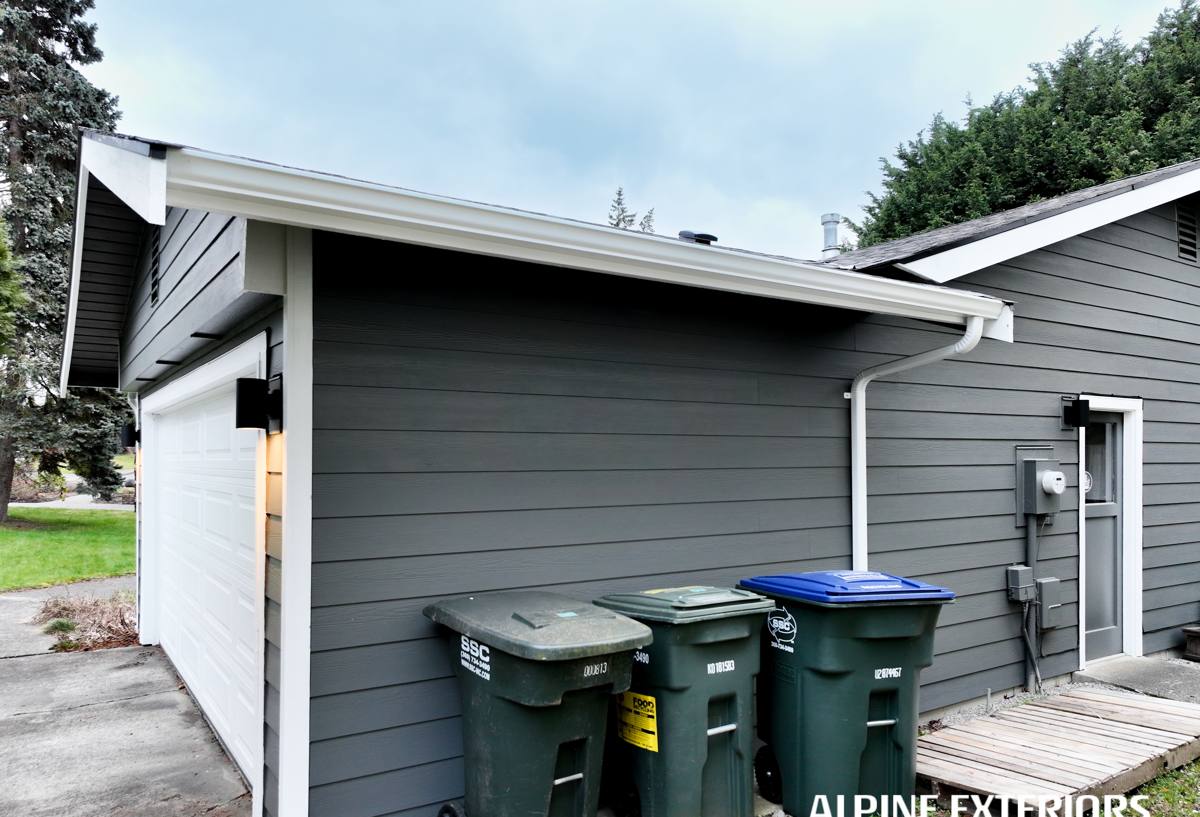
We made a deliberate decision to install one siding system on every home we side: James Hardie fiber cement. We don't install vinyl, LP SmartSide, Cemplank, Allura, primed spruce, or cedar, and that's not a marketing preference — it's a professional standard built around what actually holds up in Whatcom County's conditions.
Fiber cement is not wood-based, so it doesn't swell, rot, or feed the kind of fungal growth that moss and prolonged dampness promote. It's also non-combustible, which matters increasingly for insurance and building code considerations in this region. James Hardie's ColorPlus factory finish is baked on under controlled conditions and backed by its own finish warranty — a meaningfully different proposition than field-applied paint that has to cure and perform in our actual weather rather than a factory line.
Hardie also engineers regional product lines (HardiePlank and HardiePanel in HZ5 and HZ10 formulations) specifically for climate zones like ours, accounting for moisture exposure levels that differ by region. That engineering, combined with a strong transferable warranty, is why we stopped installing anything else. We'd rather turn down a job than install a product we don't believe will hold up on a Ferndale exterior for the next 30 years.
Siding Options Compared for This Climate
| Material | Moisture Behavior Here | Salt Air Durability | Maintenance Burden |
|---|---|---|---|
| James Hardie fiber cement | Not wood-based; doesn't swell or rot from prolonged dampness | ColorPlus finish engineered to resist fading/chalking | Low — occasional wash, no repainting on ColorPlus |
| Vinyl | Water can get behind panels at seams; doesn't rot but can trap moisture against sheathing | Can become brittle and discolor over time | Low, but limited repair options if damaged |
| LP SmartSide / wood-based composite | Engineered to resist moisture better than raw wood, but still wood-based and edge-sensitive | Coating performance varies; edges are the failure point | Moderate — edge sealing and touch-up matter |
| Cedar / primed spruce | Absorbs moisture readily; prone to swelling and rot in shaded, damp areas | Salt air accelerates weathering and finish breakdown | High — regular refinishing and moisture monitoring required |
What a Correct Siding Installation Involves
The siding material is only part of the equation. Most siding failures we're called out to inspect in this area trace back to installation details, not the product itself. A correct installation for a Ferndale home includes:
- A drainable weather-resistive barrier installed with proper laps, sealed at penetrations
- Correct starter strip and clearance from grade, decks, and roof lines so water and moss-prone debris don't sit against the bottom edge
- Proper fastener type, spacing, and depth per James Hardie's installation specifications — this is what the warranty is actually conditioned on
- Flashing at every window, door, and horizontal trim intersection, not just caulk
- Correct panel and joint gapping to allow for expansion without opening gaps that let wind-driven rain in
- Ventilation behind the cladding where the wall assembly calls for it, especially on shaded or tree-covered elevations
Skip any one of these and you can end up with a premium material performing like a cheap one. This is also why James Hardie's warranty coverage depends on installation by the manufacturer's specifications — it's not a formality, it's the difference between a wall that sheds water for decades and one that traps it.
Our Process for Ferndale Projects
1. On-Site Assessment
We walk the exterior, check the current siding and any water damage or moss buildup, look at grading and drainage around the foundation, and identify shaded or exposed elevations that need special attention.
2. Product and Line Selection
We help you choose the right Hardie product line, profile, and ColorPlus color for the home, factoring in sun exposure and how each elevation weathers differently in this climate.
3. Tear-Off and Substrate Check
Old siding comes off and we inspect the sheathing underneath for any hidden moisture damage before anything new goes up — this is often where problems from a previous installation surface.
4. Weather Barrier and Flashing
We install the water-resistive barrier and flash every penetration and horizontal transition before a single piece of siding goes on. This step is invisible once the job is done, and it's the step that matters most for driving-rain performance.
5. Installation to Manufacturer Spec
Panels, fasteners, and joints go in per James Hardie's published specifications, maintaining the clearances and gapping that keep the warranty valid and the wall performing correctly.
6. Final Walkthrough
We review the finished exterior with you, covering care basics and what to watch for seasonally.
Cost Factors for a Ferndale Project
| Factor | Why It Matters Here |
|---|---|
| Home size and elevation count | More wall area and more complex rooflines mean more flashing detail work |
| Substrate condition | Hidden moisture or rot from a prior installation adds repair scope |
| Product line and profile | HZ5 vs. HZ10 and plank vs. panel choices affect material cost |
| Access and site conditions | Tree cover, tight lot lines, and slope affect labor time |
| Trim and detail work | Window/door count and existing trim condition change scope |
Every home is different, so exact numbers only come from an on-site look — but these are the variables that actually move the estimate, not guesswork.
Signs a Ferndale Home Needs New Siding Soon
- Persistent moss or algae staining that returns shortly after cleaning
- Soft, spongy, or visibly swollen areas, especially on shaded or north-facing walls
- Paint that's peeling, bubbling, or chalking well before it should
- Visible gaps at joints or corners after wind and rain events
- Rusting fasteners or trim bleeding through the surface
- Rising energy bills that suggest the wall assembly is no longer doing its job
Why a Crew That Already Works Ferndale Matters
Siding crews that work Whatcom County regularly already know which elevations in this area take the worst weather, how far siding needs to sit off grade given local rain patterns, and where moss tends to establish first on a given lot orientation. That local pattern-recognition shows up in the small decisions — flashing details, clearance choices, which color performs best on a sun-exposed south wall versus a shaded north one — that determine whether a siding job looks right for five years or holds up correctly for thirty.
We're a Bellingham-based crew, and Ferndale is part of our regular service area — not a one-off trip. That matters when it comes to warranty follow-up, honoring the work we did, and being reachable if a question comes up years down the road.
If you're considering new siding for a Ferndale home, we're glad to come take a look and give you a straightforward, no-pressure estimate — no guesswork, no upsell, just an honest read on what your home needs.