 Bellingham Siding
 Fiber Cement Siding Built for Silver Beach's Climate
Silver Beach is one of Bellingham's older, more established residential pockets — mature tree canopy, homes tucked close to the shoreline and the hillside above it, and a housing stock that spans everything from mid-century ramblers to newer infill construction. What almost every home in the neighborhood shares is exposure to the same set of conditions that make siding decisions in Whatcom County different from siding decisions in drier parts of the country: persistent moisture, salt-tinged marine air, heavy shade in a lot of yards, and a moss season that in a bad year barely takes a break. Siding here isn't just a cosmetic layer. It's the first line of defense against a climate that works on a house year-round.
We install James Hardie fiber cement siding, and only James Hardie. This page walks through what Silver Beach homes specifically need from their siding, what a correctly done fiber cement job actually involves, and how our process works from first look to final walkthrough.
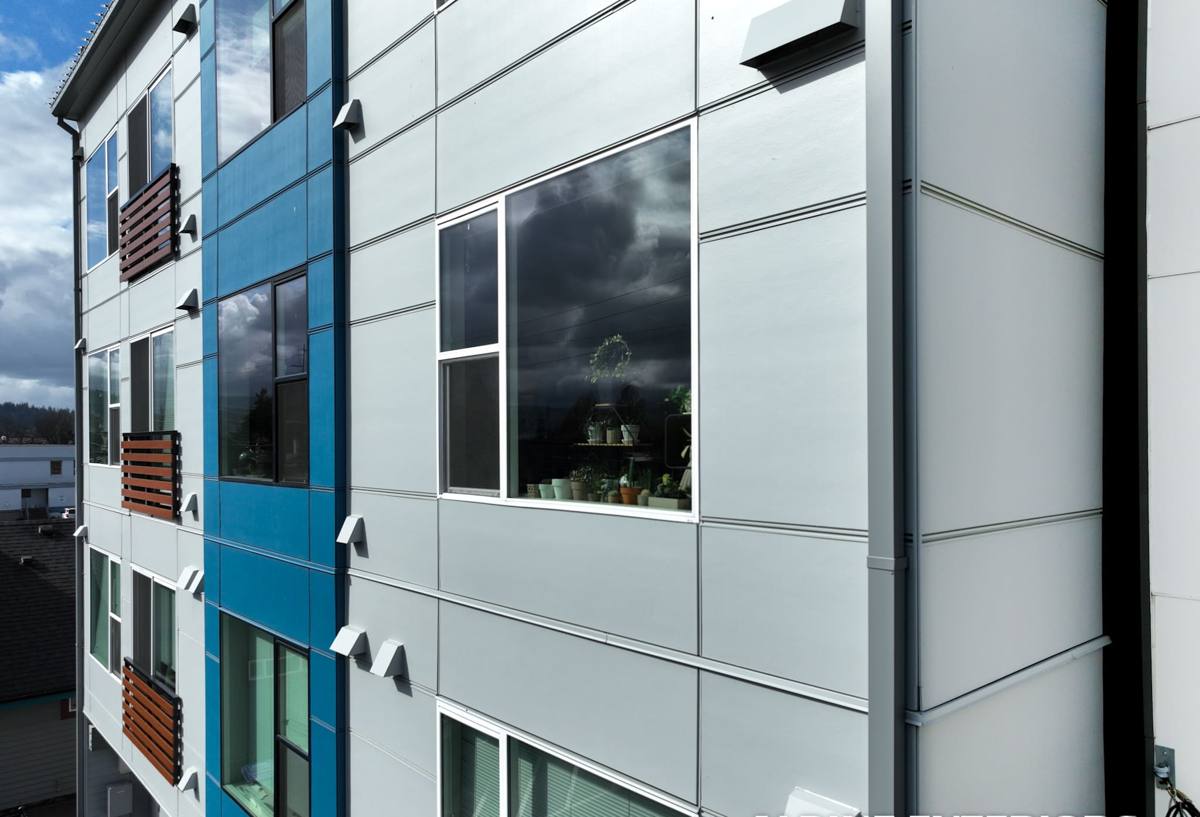
Why Silver Beach Homes Are Hard on Siding
A few things stack up in this neighborhood that don't show up the same way somewhere drier or more exposed to direct sun:
- Shade and moisture retention: Mature trees are part of what makes Silver Beach desirable, but heavy canopy means siding stays damp longer after rain, morning dew, or fog burns off elsewhere. Slow-drying surfaces are exactly where moss, algae, and mildew take hold.
- Marine and lake-adjacent humidity: Bellingham sits in a marine climate zone, and homes near the water — whether that's Bellingham Bay air moving through the corridor or the humidity coming off Lake Whatcom — see more sustained moisture in the air than inland homes a few miles away.
- Driving winter rain: Whatcom County's winter storms don't just fall straight down; wind-driven rain gets pushed sideways into wall assemblies, which is where flashing details and water-resistive barriers either do their job or don't.
- Freeze-thaw cycling: Even a modest cold snap, repeated over a wet siding surface, expands and contracts moisture trapped behind or within a poorly installed cladding system. Over years, that's what turns a small gap into a rot problem.
None of this is unique to Silver Beach — it's the reality across most of Whatcom County. But shaded, tree-lined lots like the ones common in this neighborhood tend to feel it faster and worse than open, sun-exposed sites.
What Correct Fiber Cement Installation Actually Requires
Fiber cement siding has an excellent track record in the Pacific Northwest, but that track record depends entirely on installation quality. A product rated to handle decades of PNW weather can still fail in five years if it's put on wrong. Here's what we hold as non-negotiable on every job.
Water Management Before the First Plank Goes Up
Correct flashing at windows, doors, and roof-to-wall intersections matters more than the siding material itself. We install a code-compliant water-resistive barrier, proper flashing tape and pan flashing at every penetration, and correct lapping so water sheds down and out rather than behind the assembly. On a shaded, moisture-heavy lot like most of Silver Beach, this step is where long-term performance is actually decided.
Clearances and Gaps
James Hardie specifies minimum clearances from grade, roofing, decks, and other flatwork, plus gaps at trim and joints for caulking. Skipping these clearances is one of the most common causes of moisture wicking into the bottom of a plank — and it's invisible from the ground once the job is finished, which is exactly why it gets skipped by crews in a hurry.
Fastening to Spec
Fiber cement needs to be fastened into structural framing at the manufacturer's specified spacing and depth, with corrosion-resistant fasteners. Over-driven or under-driven nails, fasteners that miss framing, or the wrong fastener type all shorten the life of an installation regardless of how good the siding itself is.
Caulking and Joint Treatment
Butt joints, trim intersections, and penetrations need the right sealant, applied correctly — not as an afterthought to hide a gap, but as an intentional part of the water management plan.
James Hardie: The Only Product We Install
We get asked fairly often why we don't offer alternatives — LP SmartSide, vinyl, or other fiber cement brands like Cemplank or Allura. The honest answer is that we standardized on James Hardie because, installed correctly, it holds up to exactly the conditions Silver Beach throws at a house:
- Non-combustible material — fiber cement doesn't feed a fire the way wood-based or vinyl products can.
- Engineered for this climate — Hardie's HZ5 product line is engineered specifically for the moisture and moderate freeze-thaw conditions of the Pacific Northwest, as opposed to a one-size-fits-all product.
- ColorPlus factory finish — a baked-on finish applied under controlled conditions, which holds color and resists the fading, chalking, and moss-friendly surface degradation that field-painted or lower-grade finishes are more prone to over time.
- Real transferable warranty — backed by a manufacturer with decades in the fiber cement business, not a startup warranty that may not be around when you need it.
We're not going to tell you competing products are junk — some of them are reasonable materials with their own trade-offs. What we will say is that we've made a professional decision to install one product system we can stand behind completely, install to spec every time, and warranty with confidence. That's Hardie.
Our Process, Start to Finish
1. On-Site Assessment
We walk the exterior with you, looking at existing siding condition, trim, moisture staining, moss buildup patterns, and anything shade or slope-related that's specific to your lot. Silver Beach lots vary a lot in grade and tree cover, so this step is never a template — it's specific to your house.
2. Tear-Off and Substrate Check
Removing the old siding is also when hidden problems — soft sheathing, prior water intrusion, failed old flashing — get found and addressed before anything new goes up. Covering over an existing moisture problem is how a siding job turns into a callback two winters later.
3. Water Barrier and Flashing Install
This is the step most homeowners never see and most low-bid crews rush. We don't.
4. Hardie Installation to Manufacturer Spec
Correct fastening, clearances, and joint treatment, following James Hardie's published installation requirements — which is also what keeps the manufacturer's warranty valid.
5. Trim, Caulking, and Final Detail Work
The finish details are where a job either looks sharp for twenty years or starts looking tired in five.
6. Walkthrough and Cleanup
We review the finished work with you directly and leave the site clean.
Living With Fiber Cement in a Moss-Prone Neighborhood
Even correctly installed Hardie siding benefits from basic homeowner attention in a shaded, moisture-heavy neighborhood like Silver Beach. None of this is difficult, but skipping it lets moisture problems get a head start.
- Rinse siding periodically, especially north-facing and shaded walls where moss and algae take hold first.
- Keep gutters clear so water isn't overflowing directly onto wall sections below.
- Trim back vegetation and branches that keep siding sections shaded and damp longer than the rest of the house.
- Check caulking at trim and penetrations every year or two, and have any cracked or missing sealant redone before winter rains arrive.
- Watch for soft spots, staining, or bubbling paint near grade level, deck ledgers, or roof intersections — early signs of a flashing or clearance issue.
What Affects Project Cost in Silver Beach
Every home is different, but these are the factors that most commonly move a Silver Beach fiber cement project up or down in scope and price:
| Factor | Why It Matters |
|---|---|
| Home size and story count | More wall area and higher wall sections mean more material and more labor, including staging or lift access on taller homes. |
| Condition of existing siding and sheathing | Hidden moisture damage found during tear-off — more likely on shaded, older Silver Beach homes — adds repair scope before new siding goes up. |
| Site access and slope | Many Silver Beach lots have grade changes, retaining walls, or tight side yards that affect how easily crews and material can move around the house. |
| Trim and architectural detail | Homes with more window and door trim, corner detail, or architectural features take more time to flash and finish correctly. |
| Hardie product line and finish | HZ5 lapboard, panel, and trim combinations, plus ColorPlus color selection, affect material cost. |
| Tear-off and disposal | Removing and hauling old siding, especially multiple layers, adds labor and disposal cost beyond a bare install. |
Why Local Experience in Silver Beach Matters
A crew that already understands Whatcom County's marine climate, has flashed plenty of homes against wind-driven rain, and knows how shaded, tree-heavy lots behave differently than open ones isn't guessing on your project. They're applying what's already worked, house after house, in conditions just like yours. That matters more with fiber cement than with almost any other siding material, because the material's long-term performance is so dependent on installation quality rather than the product alone.
If you're weighing a siding project for a Silver Beach home, we're happy to take a look and give you a straightforward, no-pressure estimate — what your home actually needs, what it would involve, and what it would cost. There's no obligation to move forward. Just fill out the form below to get started.