 Bellingham Siding
 Why Silver Beach Windows Wear Differently Than Windows Inland
Silver Beach sits close enough to the water that homes here take a different kind of weather beating than houses a few miles inland in Bellingham. Salt-laden air corrodes hardware and finishes faster. Wind-driven rain off Bellingham Bay pushes water sideways into gaps that would stay dry on a calmer site. And the long, damp moss season that Whatcom County is known for keeps humidity sitting against exterior surfaces for months at a time. None of that means Silver Beach windows fail faster because the materials are bad — it means the installation details matter more here than they do in a drier, more sheltered part of the county.
When we're called out to a Silver Beach home, we're usually not looking at glass that failed on its own. We're looking at a window unit that was never properly flashed or sealed to begin with, and years of salt air and driving rain finally found the weak point. Good window replacement in this neighborhood is less about picking the fanciest window and more about getting the boring parts — flashing, sealant, sill pan, insulation — right the first time.
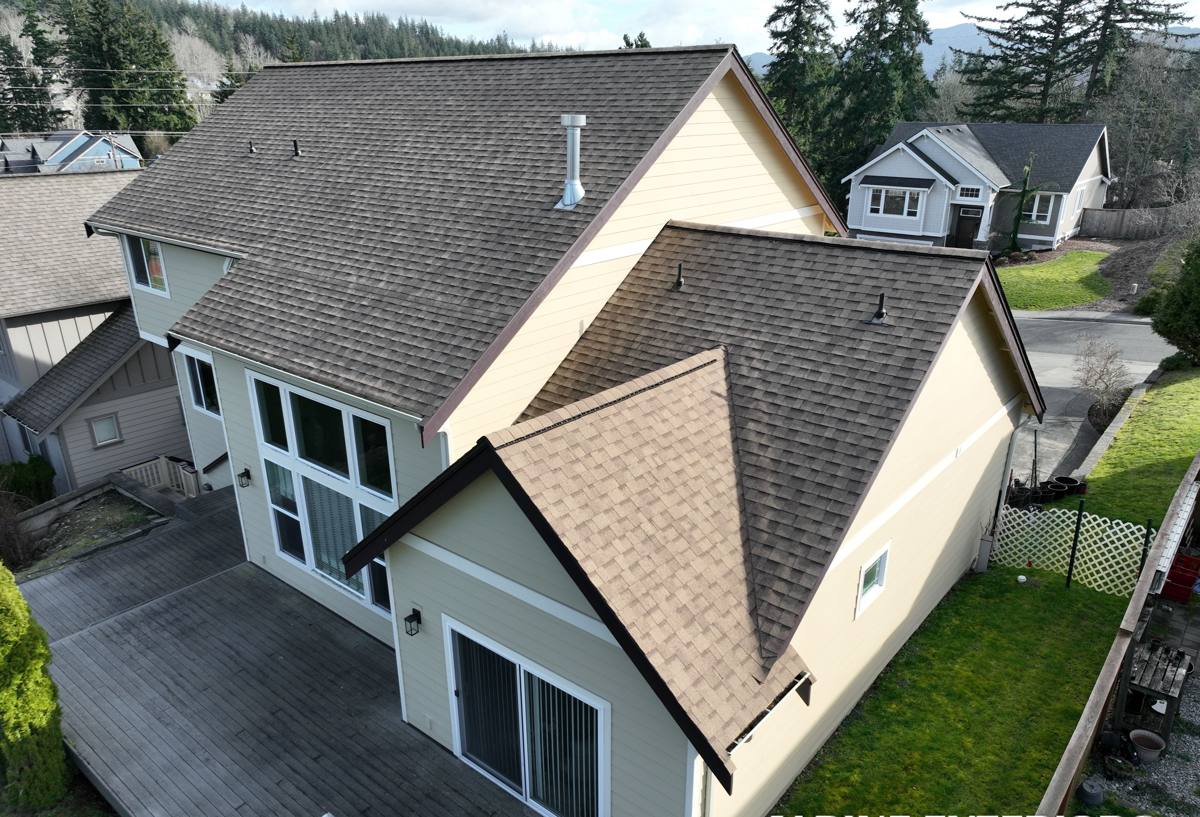
Signs Your Silver Beach Home's Windows Are Due
Coastal wear shows up gradually, then all at once. Homeowners usually notice one of these first:
- Fogging or a permanent haze between panes — the seal on the insulated glass unit has failed and moisture has gotten inside
- Corroded or pitted hardware, latches that stick, or hinges that have rusted through the finish
- Soft or discolored wood trim around the window frame, a sign moisture is getting behind the casing
- Drafts you can feel with your hand near the frame on a windy day
- Visible gaps between the window frame and siding, or caulk that's cracked and pulled away
- Difficulty opening or closing the sash, which often means the frame has swollen or shifted
- Noticeably higher heating bills once the wet season sets in
Any one of these on its own isn't an emergency. But on a Silver Beach home, a failed seal or a gap in the caulk line tends to let moisture in faster than it would on a more sheltered property, so it's worth having a contractor take a real look rather than waiting.
What a Correct Window Replacement Job Actually Involves
Swapping the sash or the visible frame is the easy part. The work that actually determines whether a window lasts happens underneath and around it, and it's the same work whether the home is on the water or not — it just carries more consequences here if it's skipped.
Removing the Old Window the Right Way
We pull the old unit out carefully rather than prying it loose, so we don't tear the surrounding siding, trim, or house wrap more than necessary. This is also the point where we get our first real look at what's been happening behind the old window — whether the sheathing is sound, whether there's old water staining, and whether previous flashing was installed correctly.
Inspecting and Repairing the Rough Opening
If there's soft sheathing, rotted framing, or signs of long-term moisture intrusion, that gets addressed before a new window goes in. Installing a new window into a compromised opening just hides a problem instead of fixing it, and on a coastal property that problem doesn't stay hidden for long.
Sill Pan and Flashing
This is the single most important step for a home exposed to driving rain. A properly sloped sill pan directs any water that gets past the window to the outside instead of letting it pool at the sill. Flashing tape integrates with the house wrap in the correct shingle-lap order — top piece over the side pieces, side pieces over the bottom — so water always sheds outward and down, never inward.
Setting, Shimming, and Sealing the Window
The new window gets shimmed level and plumb, fastened per the manufacturer's schedule, and insulated around the frame with a low-expansion foam that won't bow the frame out of square. Exterior sealant goes down as a continuous bead, not spot-caulked, because gaps in the sealant line are exactly where wind-driven rain finds a way in.
Interior and Exterior Finish Work
Trim goes back on clean, and any siding disturbed during the swap gets properly re-flashed and reinstalled — not just caulked over. A window replacement that leaves the surrounding siding worse off than before it started isn't a job worth doing.
Choosing Materials and Glass for This Climate
There's no single "best" window for every home, but some choices hold up better than others in a marine climate with heavy annual rainfall and salt exposure. Here's how the common frame materials compare for a property like yours:
| Frame Material | How It Handles Salt Air & Moisture | Maintenance | Typical Fit |
|---|---|---|---|
| Vinyl | Won't corrode or rot; performs well near the water | Low — occasional cleaning | Most homes, best value |
| Fiberglass | Very stable, resists warping and doesn't corrode | Low | Homes wanting a slimmer frame profile or paintable finish |
| Aluminum | Can corrode over time in salt air unless it's a marine-grade finish | Moderate | Less common for residential coastal use |
| Wood / Wood-Clad | Attractive but vulnerable if any exterior cladding or seal is breached | Higher — needs regular inspection and upkeep | Homeowners prioritizing a specific historic or interior look |
We're not against wood-clad windows outright, but we're upfront about the trade-off: the exterior cladding has to stay perfectly sealed for the life of the window, and in a climate with this much sustained rain, that's a maintenance commitment more than a one-time decision. For most Silver Beach homes, vinyl or fiberglass gives you the corrosion resistance and low upkeep that make sense for a coastal property, without sacrificing energy performance.
Glass Packages Worth Considering
Double-pane, low-E glass is the baseline we'd recommend for anyone in this area — it cuts heat loss and reduces condensation risk on cold, damp mornings. Triple-pane adds another layer of insulation and sound dampening, which some homeowners value given how much of the year windows stay shut against the rain, but it's a real cost increase and the return depends on your home's exposure and how long you plan to stay in it. We'll walk through both options honestly rather than upselling the more expensive package by default.
Our Window Replacement Process
- On-site assessment. We look at every window being replaced, check the condition of the surrounding framing and siding, and talk through what's driving the replacement — drafts, failed seals, appearance, or a full remodel.
- Written estimate. You get a clear scope of work and pricing before anything is ordered, including what's included in tear-out, disposal, and finish work.
- Material selection. We help you compare frame material and glass packages against your budget and how exposed your home is to wind and rain.
- Scheduling around the weather. Window replacement is weather-dependent work. We plan installs to minimize the time your home has an open wall, and we don't start a swap if the forecast doesn't cooperate.
- Installation. Old window out, opening inspected and repaired as needed, sill pan and flashing installed correctly, new window set and sealed.
- Final walkthrough. We check operation, look at the sealant lines and finish work with you, and answer any questions before we consider the job done.
Cost Factors to Understand
Window replacement pricing varies by home, and we'd rather explain what drives the number than throw out a figure that doesn't apply to your project. Broadly, expect these factors to move the estimate:
| Factor | Why It Matters |
|---|---|
| Number and size of windows | More units and larger openings mean more material and labor |
| Frame material | Vinyl is typically the most budget-friendly; fiberglass and wood-clad cost more |
| Glass package | Triple-pane and specialty coatings add cost over standard double-pane low-E |
| Condition of the rough opening | Rot or water damage found during tear-out adds repair work before install |
| Retrofit vs. full-frame replacement | Full-frame replacement costs more but is often the right call when the old frame or flashing is compromised |
| Access and site conditions | Second-story windows or difficult access can add labor time |
We'll never know exact numbers until we've seen the windows in person, but this gives you a realistic sense of what moves the price up or down before you get an estimate.
A Checklist Before You Hire
Whether you call us or someone else, these are worth confirming before signing a contract for window work on a coastal property:
- Ask specifically how they handle sill pans and flashing — not just "we install windows," but how water is directed away from the opening
- Confirm whether the quote is retrofit (insert into existing frame) or full-frame replacement, and why they're recommending one over the other
- Get the written warranty terms for both the window manufacturer and the installation labor — these are usually separate
- Ask what happens if they find rot or damage once the old window is out
- Confirm they're licensed and insured to work in Washington, and ask to see proof
- Ask how they handle unexpected weather during a scheduled install
Why Local Experience in Silver Beach Matters
A contractor who mostly works inland can still do competent window installs, but they may not think twice about a detail that matters more on a property exposed to salt air and consistent wind-driven rain — like upgrading fastener hardware to resist corrosion, or being more conservative about sealant choice and application in a spot that stays damp longer than average. Crews who regularly work Bellingham's waterfront-adjacent neighborhoods have simply run into more of these situations and adjust for them as a matter of habit, not as an afterthought.
There's also a practical scheduling advantage. Whatcom County's wet season runs long, and window replacement needs a dry window to be done right — you don't want tear-out happening the day before a storm rolls in off the bay. A crew familiar with local weather patterns plans around that instead of gambling on it.
Caring for Your New Windows
New windows still need some attention in this climate, though far less than an aging or failing set. Rinse salt residue off exterior frames and glass periodically, especially after storms. Check exterior caulk lines once a year for cracking or separation, since that's the first line of defense against wind-driven rain. Keep weep holes on the exterior sill clear of debris so any water that does reach them can drain out as designed. None of this is heavy maintenance — it's the kind of five-minute check that keeps a properly installed window performing for decades.
If your Silver Beach home has windows showing any of the wear signs above, or you're simply ready to stop fighting drafts and fogged glass through another wet season, we're happy to take a look. Reach out for a free, no-pressure estimate using the form below.