 Bellingham Siding
 South Hill's Climate Puts Real Stress on Siding
South Hill sits above Bellingham Bay, and that elevation cuts both ways. The views are part of what makes the neighborhood desirable, but the same exposure that gives you a sightline to the water also means more direct contact with salt-laden air, wind-driven rain, and the kind of low winter sun angle that keeps north- and east-facing walls damp for days at a time. Add in Whatcom County's long, wet moss season — roughly October through April most years — and you have a set of conditions that will find every weak point in a siding system, usually within the first few winters.
None of this means South Hill is a bad place to own a home. It means the siding on that home has to be chosen and installed with the local climate in mind, not treated as an interchangeable commodity. That's the entire reason this page exists: to walk through what James Hardie siding needs to do here, what a correct installation actually involves, and why the crew behind the work matters as much as the product itself.
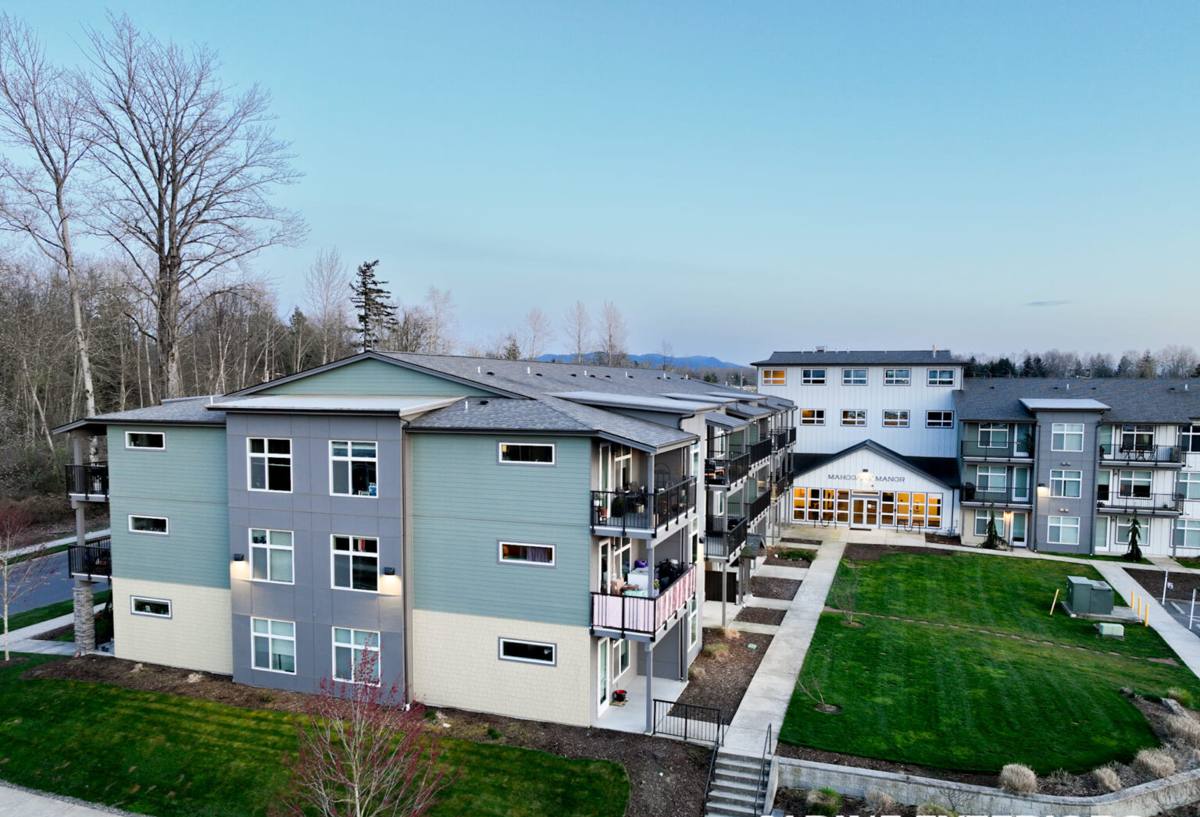
What Salt Air, Driving Rain, and Moss Actually Do to a Wall
Salt Air
Airborne salt from the bay accelerates corrosion on fasteners, flashing, and trim — and it's relentless on anything that isn't rated to handle it. Over years, undersized or wrong-metal fasteners can loosen or streak, and that's often the first visible sign that a siding system wasn't specified correctly for a coastal-adjacent property.
Driving Rain
Wind off the water doesn't just fall as rain — it drives sideways into lap joints, butt seams, and anywhere trim meets siding. A system that relies on caulk alone to keep water out will eventually fail, because caulk is a maintenance item, not a permanent seal. What actually keeps water out over the long run is correct lap coverage, proper flashing at every horizontal transition, and a drainage gap that lets any water that does get behind the cladding find its way back out.
Moss and Sustained Moisture
Whatcom County's moss season isn't just a cosmetic nuisance. Moss and algae hold moisture against a wall surface far longer than bare siding would dry on its own, which matters most on shaded elevations, under overhangs, and anywhere tree cover blocks sun and airflow. Extended moisture contact is what turns a coating or substrate issue into a rot problem, and it's why the trim and water-management details matter every bit as much as the field of the siding.
Why We Install Only James Hardie
We don't install vinyl, LP SmartSide, Cemplank, Allura, primed spruce, or cedar. That's a deliberate standard, not a lack of options. Each of those products has legitimate uses, but every one of them asks a homeowner to accept a trade-off — moisture sensitivity, a shorter realistic service life, more frequent refinishing, or an installation process with a lot of room for error — that we don't think makes sense on a coastal-exposed property like the ones common on South Hill.
James Hardie fiber cement is non-combustible, dimensionally stable when it gets wet (it doesn't swell and buckle the way wood-based products can), and it comes with a factory-applied ColorPlus finish that's baked on rather than field-painted. That finish matters directly here: it resists the fading and moisture intrusion at the coating layer that painted wood and some engineered wood products struggle with in a wet marine climate.
The Product Lines That Make Sense for This Neighborhood
James Hardie engineers its siding by climate zone, and the Pacific Northwest falls into what Hardie calls its HZ5 zone — formulated for regions with sustained damp weather and freeze-thaw cycles, as opposed to the HZ10 formulation built for hot, humid Southern climates. Installing the correct zone-rated product isn't optional; it's the difference between a system engineered for exactly this weather and one that isn't.
| Product | Best Use on South Hill Homes | Why It Fits |
|---|---|---|
| HardiePlank lap siding | Primary wall cladding | Traditional lap profile sheds driving rain when installed with correct overlap and flashing |
| HardiePanel vertical siding | Accent walls, gable ends, modern facades | Clean lines for craftsman and contemporary South Hill homes alike |
| HardieShingle | Gable accents, dormers | Matches the shingle-style detailing common on older Bellingham homes without the moisture upkeep of real cedar shingle |
| HardieTrim | Corners, window and door casing, fascia | Non-combustible, stable trim that won't cup or rot at the joints where water intrusion usually starts |
What a Correct Installation Involves
Fiber cement siding is only as good as the installation behind it. The material can handle Bellingham's weather; a rushed or generic install often can't. On every South Hill project we treat the following as non-negotiable, not upsells:
- Moisture and substrate inspection before a single new board goes up — old siding comes off, and any rot, soft sheathing, or hidden damage gets addressed rather than covered over.
- A drainage gap (rain screen) behind the siding so any water that gets past the cladding has somewhere to go instead of sitting against the wall.
- Correct flashing at every window head, door head, deck ledger, and roof-to-wall intersection, including kick-out flashing anywhere a roofline meets a sidewall — one of the most common sources of hidden rot in older homes.
- Manufacturer-spec fastener placement and type — corrosion-resistant fasteners, set at the correct depth and pattern, sized for the salt-air exposure common at this elevation.
- Proper lap coverage and joint treatment, using factory-finished joints and Hardie-approved sealants rather than relying on caulk to do a flashing detail's job.
- Final punch-list walkthrough covering caulking lines, touch-up paint at cut edges, and confirming trim and J-channel are sealed correctly.
Our Process on a South Hill Property
We start with an on-site walk of the exterior, checking for existing moisture damage, assessing sun and shade exposure on each elevation, and noting anything specific to the lot — retaining walls, tree cover, tight side-yard access, or hillside staging constraints that are common on South Hill's sloped lots. From there we scope tear-off versus overlay (we don't recommend siding over old siding — it traps moisture and hides problems), confirm HZ5 product selection and color, and lay out a schedule that accounts for the wetter months when work needs to pause for weather rather than push through it.
During installation we sequence water-management details first — housewrap, flashing, drainage gap — before any visible siding goes up, because those are the layers you can't fix after the fact without tearing back into finished work.
Cost Factors Homeowners Should Understand
Every home is different, but the cost of a James Hardie project on South Hill is driven by a consistent set of factors:
| Factor | Why It Affects Cost |
|---|---|
| Extent of substrate repair | Rotted sheathing or framing found during tear-off has to be replaced before new siding goes on |
| Home height and access | Multi-story and hillside homes often need additional staging or fall-protection setup |
| Trim and detail complexity | Gables, dormers, and mixed-material facades take more cutting and flashing work than a simple rectangular wall |
| Product selection | Plank profile, ColorPlus color, and panel versus lap siding choices carry different material costs |
| Existing moisture damage | Homes with a history of standing moss or shaded, damp walls sometimes carry hidden repair costs discovered mid-project |
Living With Moss Season Once the Siding Is On
Even correctly installed James Hardie siding benefits from basic seasonal upkeep in a climate like this one. A simple annual routine goes a long way:
- Rinse siding with a garden hose or low-pressure wash before moss and algae get a foothold, especially on shaded north and east walls.
- Keep gutters clear so overflow doesn't run down the face of the siding during heavy fall and winter rain.
- Trim back tree limbs and shrubs that shade a wall and slow drying after storms.
- Check caulking at trim joints and penetrations (vents, hose bibs, light fixtures) once a year and touch up as needed.
- Watch for any dark staining or soft-feeling trim, which usually signals water is getting behind the surface rather than just sitting on top of it.
Why the Crew Matters as Much as the Product
James Hardie sells the same product nationwide, but installation quality is entirely local. A crew that already works South Hill's hillside lots, older housing stock, and coastal exposure has already seen where things go wrong on homes like yours — which roof-wall intersections tend to leak, which elevations hold moss longest, which lots need extra care with staging and material protection during Whatcom County's wetter months. That familiarity shows up in fewer callbacks and a system that's actually built for the wall it's on, not just installed to a generic spec sheet.
If you're weighing a siding replacement on South Hill — or just want a second opinion on whether your current siding is holding up the way it should — we're happy to walk the property with you and give you a straight, no-pressure assessment. Use the form below to request a free estimate.