 Bellingham Siding
 Roofing on South Hill: A Different Set of Problems
South Hill sits above much of Bellingham, with mature tree cover, steep lots, and a mix of older character homes and newer builds tucked into the hillside. That combination creates a specific set of roofing conditions: overhanging trees that shed needles and leaves into valleys and gutters, shaded north-facing slopes that stay damp for days after a storm, and enough elevation and exposure to catch wind-driven rain off Bellingham Bay. None of this is unusual for Whatcom County, but it does mean a roof on South Hill ages differently than a roof on an open, sunny lot across town.
When we replace a roof on South Hill, we're not just matching what's already up there. We're looking at how that specific roof plane, pitch, and tree exposure will perform over the next 25 to 50 years in a climate that stays wet more months than it's dry.
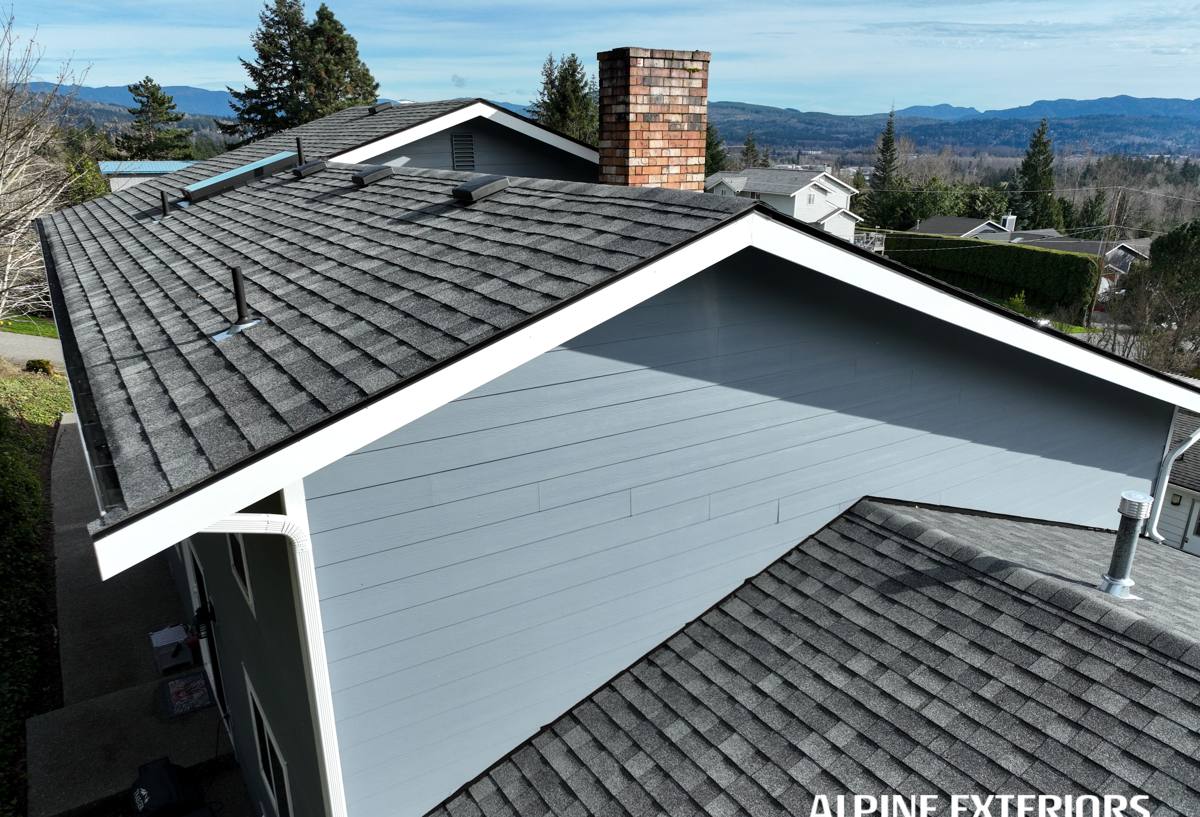
What Bellingham's Climate Does to a Roof
Three things drive roof failure here faster than almost anywhere else in the state: salt-laden marine air, near-constant driving rain through fall and winter, and a moss season that can run from October through May. Each one attacks a roof differently.
Salt Air and Metal Fasteners
Homes closer to the water, and South Hill has plenty of them given the elevation and views, see accelerated corrosion on exposed metal: nail heads, flashing, gutter hangers, and vent caps. Roofing systems that rely on unprotected or poorly coated fasteners tend to show rust streaks and early flashing failure well before the shingles themselves wear out.
Driving Rain and Wind-Blown Water
Bellingham doesn't just get rain, it gets rain pushed sideways by wind coming off the bay. That matters at every horizontal joint on a roof: ridge caps, step flashing against siding, valleys, and skylight curbs. A roof that would hold up fine in a calmer climate can leak here if those details aren't built for wind-driven water working its way uphill under shingles.
Moss, Shade, and Slow-Drying Surfaces
South Hill's tree canopy is a mixed blessing. It's part of what makes the neighborhood pleasant, but shaded, north-facing roof sections stay damp long after the rest of the roof has dried out. That moisture feeds moss and algae growth, and moss doesn't just sit on top of shingles, it works into the granule surface, lifts shingle edges, and holds water against the roof deck. Left unaddressed, it shortens the life of an otherwise sound roof by years.
Signs a South Hill Roof Needs Replacing, Not Patching
Not every roof problem calls for a full tear-off. But there's a point where repeated repairs stop making financial sense. We look for:
- Granule loss heavy enough that shingles look bald or blotchy in patches
- Moss established at the shingle butt joints, not just on the surface, especially on shaded slopes
- Soft or spongy spots underfoot, which usually mean the deck itself has taken on moisture
- Daylight visible through the attic at eave lines or around vents
- Curling, cupping, or cracked shingles concentrated on south- or west-facing slopes from years of sun and rain cycling
- Rusted or lifting flashing at chimneys, valleys, and sidewalls
- A roof that's 20+ years old with two or more prior repair visits in the last five years
If a roof is showing two or three of these at once, patching usually just delays the same conversation for another year or two, often at a higher total cost than replacing it now.
What a Correct Roof Installation Includes
A roof is only as good as the parts nobody sees once it's finished. On South Hill in particular, the underlayment, flashing, and ventilation details matter as much as the shingle brand on the surface.
Tear-Off and Deck Inspection
We remove the existing roofing down to the deck rather than layering over it. That lets us actually see the plywood or plank sheathing underneath, replace any sections that have softened from long-term moisture, and confirm the deck is sound before anything new goes down. Roofing over a compromised deck just hides the problem.
Ice and Water Protection at Vulnerable Areas
Valleys, eaves, and any low-slope transitions get a self-adhering waterproof membrane underneath the primary underlayment. Given how much driving rain this region sees, we treat this as standard practice on South Hill roofs, not an upgrade.
Synthetic Underlayment Across the Field
A high-quality synthetic underlayment across the whole roof gives a second line of defense if wind ever drives water past the shingles themselves, which happens more often here than homeowners expect.
Flashing Built for Wind-Driven Water
Step flashing at sidewalls, counter-flashing at chimneys, and properly lapped valley metal are installed so that water is always shedding downhill over the next piece, never trapped or forced sideways under wind pressure.
Ventilation That Matches the Attic
Balanced intake and exhaust ventilation keeps the attic dry and temperature-stable, which reduces condensation on the underside of the deck, a real issue in our humid, low-sun-exposure winters, and helps shingles last their full rated life.
Choosing Materials for a Shaded, Wet Roof
Material choice on South Hill should account for shade, moss exposure, and moisture, not just appearance. We talk homeowners through the real trade-offs rather than pushing one product for every house.
| Material | Moss Resistance | Typical Lifespan Here | Best Fit |
|---|---|---|---|
| Standard asphalt shingles | Low without algae-resistant granules | 15-20 years in shaded areas | Budget-conscious, sunnier lots |
| Algae-resistant (AR) asphalt shingles | Good, copper/zinc granules slow regrowth | 20-25 years | Most South Hill homes under tree cover |
| Architectural/dimensional shingles | Good with AR granules, better water shedding profile | 25-30 years | Homes wanting durability and curb appeal |
| Standing seam metal | Excellent, sheds moss and debris naturally | 40-50+ years | Steep pitches, long-term owners, marine exposure |
We're honest about one thing: metal roofing carries a higher upfront cost, and it's a more exacting install, seams, fastener spacing, and expansion allowances all have to be right. For homeowners planning to stay long-term on a shaded South Hill lot, the reduced moss maintenance and longevity often justify it. For others, a well-built algae-resistant architectural shingle roof is the more practical choice, and we'll say so.
Our Process for a South Hill Roof Replacement
- On-site inspection. We walk the roof and attic, check the deck condition, note tree exposure and shaded slopes, and photograph problem areas.
- Written estimate with material options. You get a clear breakdown of scope, materials, and pricing, no vague allowances buried in fine print.
- Scheduling around Bellingham weather. We plan tear-off in dry weather windows and can stage the job to keep the deck protected if rain moves in mid-project.
- Tear-off and deck repair. Old roofing comes off, the deck is inspected, and any soft or damaged sheathing is replaced before anything new is installed.
- Underlayment, flashing, and shingle or metal installation. Built in the order and detail described above, with particular attention to valleys and wall transitions.
- Ventilation check and cleanup. We confirm intake and exhaust venting is balanced, then do a full site cleanup including magnetic nail sweep.
- Final walkthrough. We review the finished roof with you before calling the job done.
Before You Hire: A South Hill Roofing Checklist
Whoever you hire, these are the things worth confirming before a crew starts tearing into your roof:
- Are they licensed and insured to work in Washington State, and will they show you proof without being asked twice?
- Do they inspect and account for deck condition as part of the estimate, or just quote off a drive-by look?
- Do they include ice-and-water membrane at valleys and eaves as standard, given how much this region sees driving rain?
- Will they specify algae-resistant materials for shaded slopes, or default to the cheapest standard shingle?
- Do they check attic ventilation as part of the job, not as an upsell afterward?
- Can they explain, in plain terms, how they'll flash around your specific chimney, skylights, or wall transitions?
- Do they have experience on steep, tree-covered lots like the ones common on South Hill?
Why Local Experience on South Hill Matters
A roofing crew that's worked South Hill's steep driveways, tight tree-lined lots, and shaded northern exposures knows what to look for before the tear-off even starts. They know which slopes tend to hold moisture longest, how to stage material and debris on a hillside lot without tearing up landscaping, and how Whatcom County's rain patterns should shape scheduling. That experience shows up in fewer surprises mid-project and a roof that's actually built for the conditions it will face, not a generic install dropped onto a challenging site.
We've worked on homes throughout Bellingham and Whatcom County long enough to know that a roof here isn't just a shingle choice, it's a system that has to handle salt air, sideways rain, and months of shade and moss pressure without complaint. That's the standard we build to on every South Hill roof.
Get a Straightforward Roof Estimate
If your South Hill roof is showing its age, or you'd just like an honest read on how many years it has left, we're happy to take a look. Use the form below to request a free, no-pressure estimate, and we'll walk the roof, explain what we find, and give you real options for moving forward.