 Bellingham Siding
 Siding Replacement in South Hill: A Neighborhood With Its Own Set of Problems
South Hill sits above downtown Bellingham with a mix of older homes and newer builds, many of them catching wind and weather off Bellingham Bay that lower, more sheltered parts of the city never see. That elevation and exposure is exactly why siding here fails in different ways, and at different rates, than siding on a home tucked into a valley or protected by tree cover. If you're starting to notice your siding looks tired, or a contractor has already told you it's past patching, this page walks through what siding replacement actually involves in this neighborhood, what correct work looks like, and why the crew you hire matters as much as the material they install.
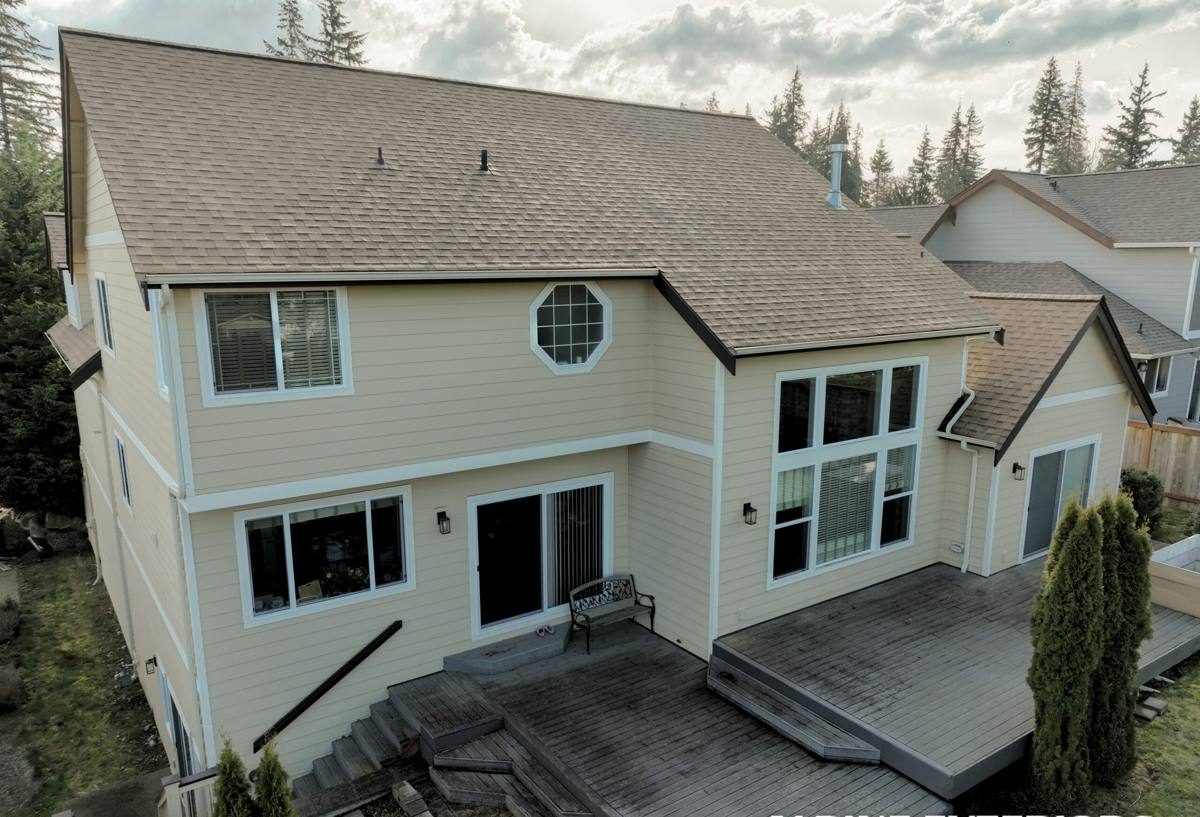
What Whatcom County's Climate Does to Siding Over Time
Bellingham's marine climate is the whole story here. Homes in and around South Hill deal with three things constantly: salt-laden air moving in off the bay, driving rain that gets pushed sideways into wall assemblies during winter storms, and a moss season that can run eight or nine months out of the year in shaded or north-facing exposures. None of these are dramatic on their own. Together, over ten or fifteen years, they're what quietly ruins siding.
Salt Air
Salt-laden moisture accelerates corrosion on fasteners, flashing, and any exposed metal trim. It also settles into porous or wood-based siding surfaces, holding moisture against the material longer than plain rainwater would.
Driving Rain
Wind-driven rain doesn't just fall straight down — it gets forced sideways and upward under laps, around trim, and into seams that were never designed to handle water moving in that direction. Elevated, exposed lots like much of South Hill take this harder than sheltered ones.
Moss and Sustained Moisture
A long moss season means anything that traps moisture against a wall — moss, lichen, trapped debris in laps and channels — stays wet for extended stretches. Wood-based products swell, delaminate, or rot under that kind of sustained dampness. Even products marketed as weather-resistant can fail early if they were never engineered for this specific combination of salt, wind, and moss.
Signs a South Hill Home Needs Siding Replacement, Not a Repair
Not every siding problem means a full tear-off. But there's a point where patching becomes more expensive, over time, than doing the job right once. Watch for:
- Soft or spongy spots when you press on the siding, especially near the bottom courses or under windows
- Paint that won't hold — you repaint every two to three years and it still looks chalky or peeling
- Persistent moss or dark streaking that comes back within a season of cleaning
- Visible gaps, warping, or buckling panels, particularly on the side of the house that takes the most wind
- Rot or staining around window and door trim, which usually means water has been getting behind the siding for a while
- Rising energy bills with no other explanation — failing siding and its underlying wrap often go hand in hand with poor insulation performance
If you're seeing two or more of these, it's worth having someone look at the whole wall assembly, not just the visible surface.
What a Correct Siding Replacement Actually Involves
The siding itself is maybe half the job. What happens underneath it is what determines whether the house is dry and sound in another fifteen years. A proper replacement on a home in this climate includes:
Full Tear-Off and Inspection
Old siding comes off, not over. That's the only way to find rot in sheathing, framing, or window flashing before it's covered back up. Skipping this step is how hidden moisture damage keeps spreading for another decade.
Repair of Damaged Sheathing and Framing
Any soft or rotted sheathing gets cut out and replaced. Framing members that have taken water damage get addressed before anything new goes back on the wall.
A Correctly Detailed Weather-Resistive Barrier
A quality house wrap, properly lapped and taped, is what actually keeps wind-driven rain from reaching the sheathing. In a climate like this, corners were not meant to be cut here.
Proper Flashing at Every Penetration
Windows, doors, hose bibs, vents, and deck ledgers all need flashing that directs water out and away from the wall, not just caulk over a gap. This is one of the most commonly rushed steps on lower-quality installs, and it's the first place driving rain finds its way in.
Correct Fastening and Clearances
Manufacturer-specified nailing patterns, proper clearance from grade and roof lines, and correct gapping at butt joints all matter more in a wet, wind-exposed climate than in a mild one. Get these wrong and you're replacing siding again well before its expected lifespan.
Why We Install Only James Hardie Fiber Cement
We don't install vinyl, LP SmartSide, or wood-based lap siding, and on a hillside neighborhood exposed to salt air and sustained moisture, that's a deliberate call, not a sales preference. Vinyl can warp and become brittle under UV and wind stress, and it does nothing structurally to resist moisture — it just sheds it, assuming everything behind it is detailed perfectly. Wood-based and engineered-wood products are the ones most vulnerable to the exact conditions South Hill produces: sustained dampness, moss, and salt-influenced rot at seams and cut edges.
James Hardie fiber cement is non-combustible, dimensionally stable in wet-dry cycling, and factory-finished with ColorPlus coating that's baked on rather than field-applied, which matters directly for salt air exposure and long-term fade and chalking resistance. Hardie's HZ5 product line is engineered specifically for climates with heavy moisture and freeze-thaw exposure — the Pacific Northwest is exactly the kind of environment that line was built for. It's also backed by a strong, transferable manufacturer warranty, which carries real weight if you sell the house down the road. We standardized on it because, installed correctly, it's the product that actually holds up to what this neighborhood's weather does to a wall over twenty-plus years.
Our Process for South Hill Siding Replacement Projects
- On-site assessment — we walk the exterior, check trim, flashing, and any soft spots, and talk through what we're seeing before recommending a full replacement.
- Written estimate and product selection — profile, color, and trim choices from the Hardie lineup, with a clear scope of what's included.
- Tear-off and sheathing inspection — old siding and wrap come off, and we document any rot or damage found before repair.
- Repair and re-wrap — damaged sheathing is replaced, and a new weather-resistive barrier is installed and properly detailed at every seam and penetration.
- Flashing and trim installation — windows, doors, and penetrations get flashed correctly before siding goes up around them.
- Hardie installation to manufacturer spec — correct fastening, clearances, and joint treatment throughout.
- Final walkthrough — we go over the finished exterior with you before calling the job done.
What Actually Drives the Cost of a Siding Replacement Here
Every South Hill home is a little different, but the same handful of factors move the price up or down on almost every job:
| Factor | Why It Matters in This Neighborhood |
|---|---|
| House size and wall complexity | More square footage, more corners, and more roof lines mean more material and more labor-intensive flashing details |
| Condition of existing sheathing | Hidden moisture damage found during tear-off adds repair scope that can't be fully known until the old siding is off |
| Site access and slope | Elevated, sloped lots common on the hill can require additional staging, scaffolding, or equipment access planning |
| Trim and architectural detail | Homes with more windows, decorative trim, or multiple siding profiles take more time to detail correctly |
| Exposure orientation | Walls facing prevailing wind and rain off the bay often need extra attention to flashing and drainage detailing |
| Product line and finish selection | HZ5 panels, trim boards, and factory finish options all vary in cost from base siding to full-exterior packages |
Any honest estimate should walk you through which of these apply to your specific house, not just hand you a flat number.
Questions Worth Asking Before You Hire
- Will you do a full tear-off, and will I see what's underneath before it's covered back up?
- What weather-resistive barrier do you use, and how do you detail seams and penetrations?
- Are you a James Hardie certified or preferred installer, and can you show manufacturer-spec fastening and clearances?
- What happens if you find rotted sheathing — is that a change order, or is it built into the estimate process?
- Do you carry active liability insurance and workers' comp coverage in Washington State?
- Can I get the scope of work, product selections, and warranty terms in writing before work starts?
Why Hiring a Crew That Already Works in South Hill Matters
A contractor who's worked this specific part of Bellingham already knows how the wind moves across a hillside lot, which orientations take the worst of the driving rain, and how aggressively moss builds back on a shaded north wall in this climate. That's not something you can fully account for with a generic siding install written for a milder region. It shows up in small decisions — where extra flashing attention goes, how a job is sequenced around Whatcom County's wet season, how a wall is detailed on the side that catches the weather — and those small decisions are the difference between siding that looks right for two years and siding that performs for two decades.
If your South Hill home is showing signs of wear, or you just want an honest read on whether repair or replacement makes sense, we're happy to take a look. Fill out the form below for a free, no-pressure estimate.