 Bellingham Siding
 Decks in Sudden Valley Take a Different Kind of Beating
Sudden Valley sits along Lake Whatcom, tucked into tree cover and exposed to the damp, marine-influenced air that moves through Whatcom County most of the year. That combination is tough on decks. You get long stretches of low sun angle where moisture sits on boards instead of drying off, tree canopy that drops needles and organic debris into every gap and seam, and a moss season that can run from fall clear through spring. Add the driving rain that comes sideways off the lake during winter storms, and you have conditions that push water into places a deck was never built to handle.
None of that means a deck in Sudden Valley is destined to fail early. It means the deck has to be built and repaired with those conditions in mind — proper drainage, the right fasteners, and materials or coatings that can shed water instead of holding it. When we get called out to a deck in this neighborhood, we're not treating it like a generic repair. We're looking at how the site drains, how much shade and moss pressure it gets, and where water has been sitting long enough to do damage.
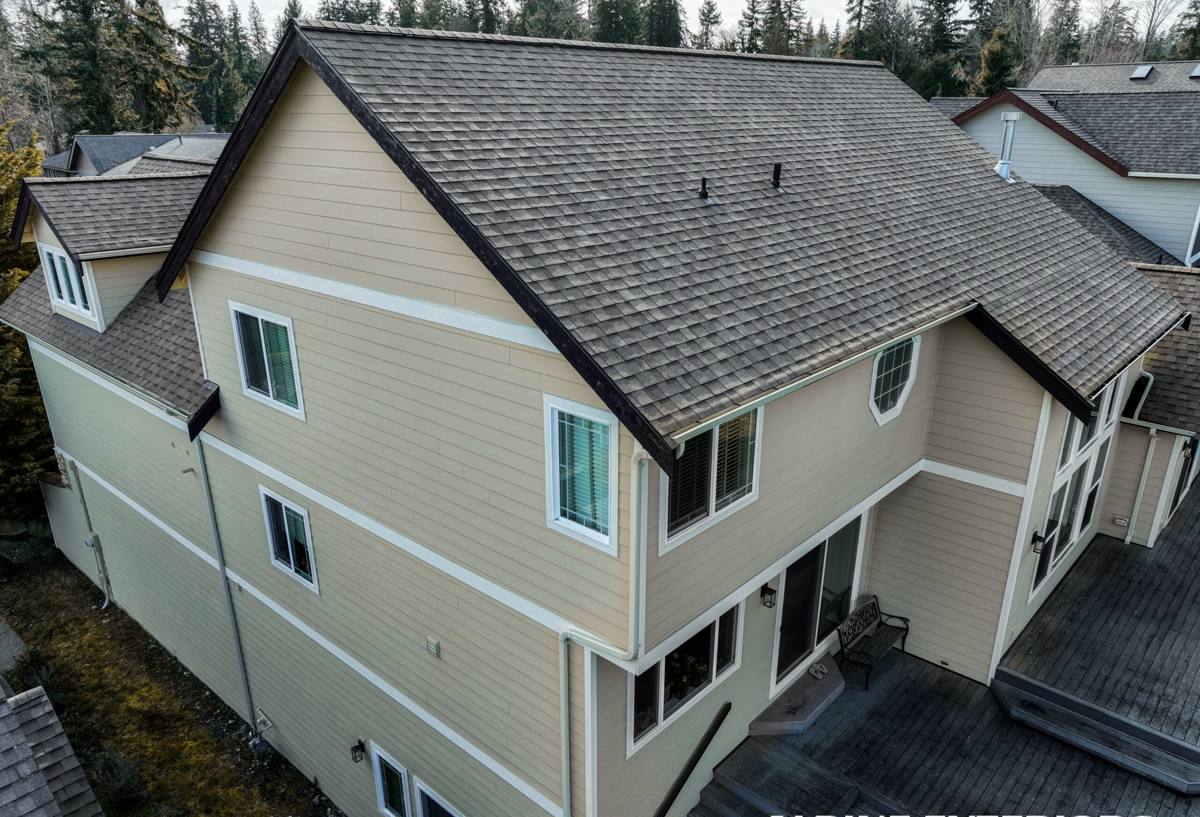
What We Actually Find on Sudden Valley Decks
Moss and Organic Buildup
Moss holds moisture against wood and composite decking alike. On horizontal surfaces — deck boards, stair treads, the tops of railings — a thin moss layer can keep a surface damp for days after the rain stops. On wood, that accelerates rot. On composite or capped boards, it's usually cosmetic, but moss in the gaps between boards can trap debris and restrict drainage, which causes its own problems underneath.
Ledger Board and Structural Connections
The ledger board — where the deck attaches to the house — is the single most important structural point on most decks, and it's also the point most likely to be hiding water damage. Flashing that was installed poorly, or wasn't installed at all, lets water track down behind the ledger and into the framing. In a climate with this much sustained moisture, a bad ledger connection doesn't announce itself with a leak inside the house — it just slowly rots the wood behind the siding and around the deck's main structural attachment.
Fasteners and Hidden Hardware
Older decks in this area were often built with standard galvanized fasteners that weren't rated for today's more corrosive treated lumber, or that simply weren't built to hold up to decades of damp Pacific Northwest weather. We regularly find corroded joist hangers, rusted-through screws, and bolts that have lost most of their holding strength — problems you can't see from the surface but that directly affect how safe the structure is.
Railings, Stairs, and Guard Posts
Railing posts and stair stringers take direct weather exposure on both the top and the end grain, which is the most absorbent part of any piece of wood. These are frequently the first parts of a deck to show soft spots or wobble, especially where a post meets the deck frame at ground level or where a horizontal rail cap has been collecting standing water.
What a Correct Repair Actually Involves
A lot of deck "repairs" amount to replacing a few obviously bad boards and calling it done. That approach misses the point if the framing underneath, the ledger connection, or the drainage path is still compromised — the new boards just fail again in a few seasons. Our process starts with an inspection from the ground up, not just the walking surface.
- Check the ledger board and flashing for water intrusion behind the siding
- Inspect joists, beams, and posts for soft spots, checking, and rot, not just the decking
- Test railing posts and guard rail connections for movement or give
- Evaluate all fasteners and hardware for corrosion, not just visible rust
- Check under-deck drainage and grading so water isn't pooling against the structure
- Assess moss and algae growth on horizontal surfaces and stairs
- Confirm footings and post bases are sound and not sitting in standing water
Once we know what's actually going on, we repair in that order: structure first, then the surface. Replacing decking on top of a compromised frame is a cosmetic fix that doesn't solve the underlying problem, and it's not something we'll present as a real repair.
Repair vs. Replacement — How We Make That Call
Not every deck with problems needs to be torn out. But there's a point where patching individual boards costs more over time than addressing the structure properly. Here's how we generally think through that decision:
| Situation | Typical Approach | Why |
|---|---|---|
| Isolated board rot, sound frame | Board replacement | Framing is healthy; only the wear surface failed |
| Rot at ledger connection | Ledger and flashing repair | This is a safety-critical connection point — patching around it isn't an option |
| Widespread joist or beam rot | Partial or full structural rebuild | Once framing is compromised in multiple places, new decking on top won't hold long-term |
| Loose or wobbly railings | Post and hardware repair | Railings are a safety feature; movement usually means the connection has already failed |
| Heavy moss, sound structure | Cleaning, drainage correction, protective coating | Addressing moisture at the surface prevents it from becoming a structural issue |
We'll walk you through which category your deck falls into and why, in plain terms, before any work starts.
Materials and Fasteners We Use in This Climate
Given how much moisture Whatcom County decks deal with over a typical winter, we're selective about what goes into a repair. Stainless steel or high-grade coated fasteners are standard on our repairs, not an upsell — cheaper galvanized hardware corrodes faster in this kind of sustained damp exposure, and a repair is only as good as the fasteners holding it together. For decking material, we'll talk through the honest trade-offs: real wood offers a traditional look but needs regular maintenance and refinishing to keep moisture out, while composite and capped composite boards cost more upfront but shed water better and resist the moss staining that's common on wood in shaded, lakeside lots. Neither is automatically "better" — it depends on how much upkeep you want to take on and what look you're after. We'll give you our honest read for your specific deck rather than pushing one product line.
Our Process for Sudden Valley Deck Repairs
1. On-Site Assessment
We walk the full deck — surface, underside, railings, and the ledger connection — and identify exactly what's driving the problem, not just what's visible from the top.
2. Clear Scope and Explanation
You get a straightforward explanation of what's wrong, what we recommend fixing now versus what can wait, and why. No pressure to do more than the deck actually needs.
3. Structural Repairs First
Framing, ledger, and hardware issues get addressed before any cosmetic surface work, because that's the order that actually protects the investment.
4. Surface and Drainage Work
Board replacement, moss treatment, and drainage corrections happen once the structure underneath is confirmed sound.
5. Walkthrough
We go over what was done and what to watch for going forward, especially anything specific to your deck's sun exposure, shade, or drainage pattern.
Why Local Experience on This Type of Deck Matters
Sudden Valley's lakeside setting, tree cover, and Whatcom County's rain patterns create a fairly specific set of deck problems, and a crew that mainly works drier or more exposed sites can miss what's actually going wrong here. Knowing where moss tends to build fastest, how flashing needs to be detailed for this much sustained rain, and which fastener grades actually hold up over years of damp exposure comes from working on decks in this kind of environment repeatedly, not from a general repair checklist. We'd rather diagnose a deck correctly the first time than have a homeowner pay twice for the same fix.
Maintenance That Extends the Life of a Repair
A well-executed repair still needs some upkeep to hold up against this climate. A few habits go a long way:
- Sweep leaves, needles, and debris off the deck surface regularly, especially in fall
- Address moss on stairs and walking surfaces before it becomes slick or established
- Keep gutters and downspouts clear so runoff isn't draining directly onto or under the deck
- Check railings and stair connections periodically for any looseness
- Reseal or refinish wood decking on the schedule the product actually requires, not just when it looks faded
If you're noticing soft boards, a wobbly railing, moss that won't go away, or you just want an honest read on how much life is left in your deck, we're happy to take a look. Request a free, no-pressure estimate using the form below and we'll get back to you with a straightforward assessment.