 Bellingham Siding
 Why Sudden Valley Roofs Wear Differently Than Roofs Elsewhere in Whatcom County
Sudden Valley sits in a wooded, lake-adjacent setting on the south shore of Lake Whatcom, and that setting shapes how a roof ages here. Heavy tree canopy keeps large sections of many roofs in shade for most of the day, which slows drying after every rain and gives moss and moss-related algae a head start that roofs in more open, sun-exposed parts of Bellingham don't deal with as badly. Add in the driving, wind-pushed rain that rolls through this part of Whatcom County off Puget Sound, and you get a roof that's constantly fighting moisture from two directions: standing dampness under the tree line and wind-forced water at every edge, valley, and penetration.
None of this means a roof here is doomed to fail early. It means the roof has to be installed correctly for these specific conditions, not just installed to a generic code minimum. A roof that would hold up fine in a dry, open subdivision can underperform in a shaded Sudden Valley lot if the ventilation, underlayment, and moss-resistant details weren't planned for the site.
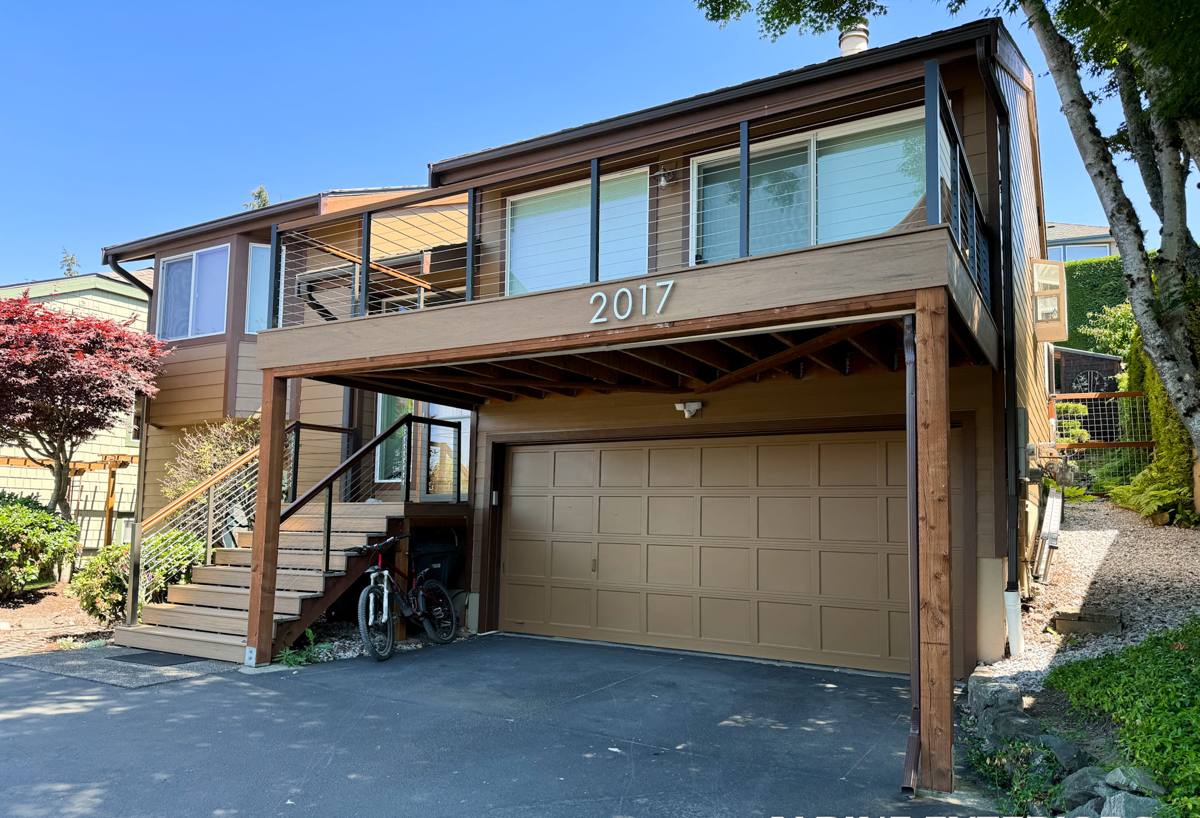
Signs a Sudden Valley Roof Needs Replacement, Not Another Repair
Homeowners in this area often ask whether a problem area can just be patched. Sometimes it can. But a few signs usually mean the roof has reached the point where repair is a short-term fix on a system that's failing overall.
What we look for during an inspection
- Granule loss heavy enough that you can see bare, shiny patches on asphalt shingles, especially on the shaded slopes
- Moss that has worked its way under shingle tabs rather than just sitting on the surface
- Soft or spongy decking felt underfoot, which usually means water has already gotten past the shingles
- Daylight visible through the roof deck from inside the attic
- Repeated leaks in the same spot after prior repairs
- Shingles that are curling, cupping, or losing their seal in multiple areas rather than just one isolated section
If only one of these shows up in a small area, a repair is often the right call. If several show up together, or if the roof is already past its expected service life, a full replacement is usually the more honest recommendation, and it's the one we'll give you even if a repair would be the easier sale.
What a Correct New Roof Installation Actually Involves
A new roof is more than shingles nailed to plywood. Every layer underneath the visible surface does a job, and skipping or shortcutting any of them is where most premature failures start, particularly in a wet, shaded environment like Sudden Valley.
Tear-off and deck inspection
We remove the old roofing down to the deck rather than layering over it. This is the only way to actually see the condition of the plywood or OSB sheathing underneath. In a shaded, moisture-heavy lot, it's common to find sections of decking that have softened from long-term moisture exposure, and those sections need to be replaced before anything new goes down.
Underlayment and moisture protection
We use synthetic underlayment across the field of the roof and self-adhered ice-and-water membrane at the eaves, valleys, and any roof-to-wall transitions, which are the areas most prone to wind-driven rain intrusion. This is a step where cutting corners doesn't show up as a problem for a year or two, which is exactly why it matters to get right the first time.
Flashing and penetrations
Chimneys, vents, skylights, and wall intersections are where the majority of roof leaks actually originate, not the open shingle field. New step flashing, counterflashing, and pipe boots are installed at every one of these points rather than reused from the old roof.
Ventilation
Proper intake and exhaust ventilation keeps the attic space at a similar temperature and moisture level to the outside air. On shaded, tree-covered lots this is especially important, because a poorly ventilated attic traps moisture that has nowhere to go, which accelerates decking rot and can encourage moss growth from the underside as well as the surface.
Choosing a Roofing Material for This Climate
There's no single "best" roofing material for every home in Sudden Valley — the right choice depends on how shaded the lot is, the roof's pitch, and what you want to spend on upkeep over the life of the roof. Here's an honest comparison of the main options we install.
| Material | Moss & Moisture Resistance | Typical Lifespan | Maintenance Needs | Best Fit For |
|---|---|---|---|---|
| Architectural asphalt shingle | Good with algae-resistant granules; still needs periodic cleaning under heavy shade | 25–30 years | Moderate — occasional moss removal on shaded slopes | Most homes; best overall value |
| Standing seam metal | Excellent — smooth surface sheds moisture and resists moss better than any other option | 40–50+ years | Low | Heavily shaded lots or owners planning to stay long-term |
| Synthetic/composite shingle | Very good — engineered to resist moisture absorption | 30–50 years | Low to moderate | Homeowners wanting a wood-shake look with less upkeep |
| Cedar shake | Requires ongoing treatment to resist moss and rot in wet, shaded conditions | 20–30 years with upkeep | High — regular cleaning and treatment | Owners committed to the traditional look and its maintenance schedule |
We're happy to install any of these based on what fits your home and budget. Where we'll push back is on skipping moss-resistant granules or algae-resistant treatments on shaded roofs just to save a small amount up front — that's a maintenance headache we'd rather you avoid than sell you into.
Ventilation and Moss Control Are Not Optional Extras Here
On a lot with full sun exposure, ventilation mistakes take longer to show up as a problem. On a shaded Sudden Valley lot, they show up faster, because the roof surface and attic space both stay damp longer after every rain. We size intake and exhaust venting to the specific roof, not a one-size-fits-all attic fan, and we look at whether nearby tree limbs are keeping sections of the roof in near-constant shade — sometimes a modest trim recommendation does more for roof longevity than any product upgrade.
Moss itself isn't just cosmetic. As it grows, it holds moisture against the shingle surface and can work under tabs and edges, lifting them slightly and giving wind-driven rain a path underneath. Zinc or copper control strips at the ridge, paired with algae-resistant shingles, are a practical way to slow moss regrowth after installation without relying on aggressive pressure-washing, which can strip granules and shorten shingle life.
Our Installation Process
- On-site inspection and estimate — we walk the roof and attic, check the decking, and talk through what your home actually needs versus a generic package.
- Material selection — we go over options with honest trade-offs on cost, lifespan, and maintenance for your specific lot and shade level.
- Scheduling around weather — Whatcom County's wet stretches mean we plan tear-off days around dry windows and keep the deck protected if conditions shift mid-job.
- Tear-off and deck repair — old roofing removed, decking inspected, any soft or damaged sections replaced.
- Underlayment, flashing, and ventilation installed — the layers that determine how the roof performs over the next 20–30 years.
- New roofing material installed to manufacturer specifications, which is what keeps material warranties valid.
- Final walkthrough — we review the finished roof with you, including gutters, ventilation, and any moss-prevention details installed.
What Affects the Cost of a Roof Replacement in Sudden Valley
We don't quote a number without seeing the roof, but the main variables that move the price up or down are consistent from job to job.
| Cost Factor | Why It Matters |
|---|---|
| Roof size and number of planes | More square footage and more valleys/hips mean more material and labor |
| Decking condition | Rotted or soft plywood found during tear-off adds replacement cost that can't always be predicted beforehand |
| Material choice | Asphalt, synthetic, metal, and cedar all sit at different price points, shown in the comparison above |
| Access and site conditions | Steep pitches, tree cover requiring careful staging, and limited driveway access can add time |
| Ventilation and flashing upgrades | Bringing an older roof's ventilation up to a proper standard adds some cost but pays off in roof lifespan |
As a rough range, most full asphalt shingle replacements on typical single-family homes in this area land in the moderate five-figure range, with metal and premium materials running higher. Your actual number depends on the roof itself, which is why we look before we quote.
Why Local Experience in Sudden Valley Specifically Matters
Sudden Valley is a private community, and that has practical effects on a roofing job that a crew unfamiliar with the area might not plan for — gate access, community guidelines on contractor parking and staging, and navigating driveways on wooded, sometimes sloped lots. A crew that has already worked in the community knows to confirm access ahead of the job rather than showing up and losing time figuring it out.
Beyond logistics, familiarity with how homes in this specific setting age — which slopes hold moss longest, which roof styles trap moisture at valleys, how tree cover affects a given lot — means fewer surprises during tear-off and a roof design that accounts for the actual conditions rather than a textbook assumption. That's the difference between a roof that's simply installed and one that's installed correctly for where it sits.
After Your New Roof Is Installed: A Simple Maintenance Checklist
A correctly installed roof still benefits from basic upkeep, especially under Whatcom County's long wet and moss-prone season.
- Clear gutters and downspouts at least twice a year, more often if you have heavy tree cover
- Trim back branches that overhang or touch the roof surface
- Check for moss buildup each fall and address it early rather than letting it establish
- Have the attic checked periodically for proper ventilation and any signs of moisture
- Schedule a professional inspection every few years, or after any major windstorm
If you're weighing repair versus replacement, or just want a straight answer on what your roof actually needs, we're glad to take a look. Estimates are free, there's no pressure attached, and you'll get a clear recommendation based on your roof and your budget — use the form below to get started.