 Bellingham Siding
 Building Decks That Hold Up in Sunnyland's Climate
Sunnyland sits close enough to Bellingham Bay that salt-laden air is a real factor in how outdoor structures age, and it shares the same wet, gray, moss-friendly weather pattern as the rest of Whatcom County. A deck built here isn't dealing with one problem — it's dealing with three at once: driving rain that gets pushed sideways by wind off the water, a marine air layer that speeds up corrosion on anything metal, and a moss season that can stretch from October well into May on shaded lots. None of that means a deck can't last decades in this neighborhood. It means the details that get skipped in a dry climate — flashing, fastener grade, drainage, airflow under the frame — are the details that actually determine whether a Sunnyland deck is still solid in fifteen years or starting to fail in five.
We build and repair decks throughout Bellingham, and the jobs that go wrong here almost never fail because of bad decking boards. They fail underneath, where moisture sits against wood that can't dry out between storms. A custom deck built for this specific setting starts with that reality, not with a catalog of decking colors.
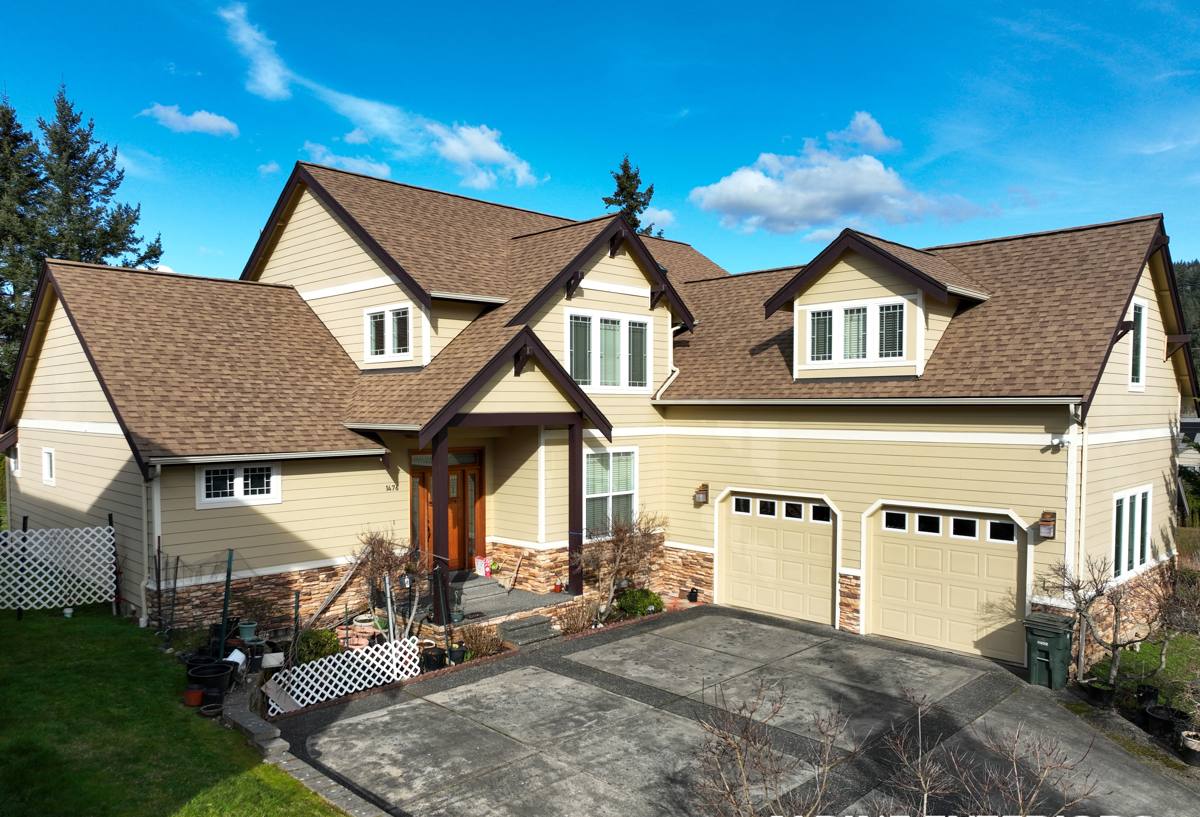
What a Deck in This Part of Bellingham Needs to Hold Up
Shade, tree cover, and slow drying
Many Sunnyland lots have mature trees and neighboring homes close enough to cast shade across part of the yard for much of the day. That's pleasant in summer and a maintenance factor the rest of the year. A deck surface that doesn't get direct sun for hours at a stretch stays damp longer after rain, which is exactly the condition moss and algae need. Layout and board spacing matter more on a shaded lot than on an open one.
Grade and drainage around the structure
Bellingham's terrain isn't flat, and a lot of Sunnyland homes have some slope to the yard. Where a deck sits relative to that slope determines whether rainwater runs away from the footings or pools against them. We check grade and existing drainage before we design anything — a deck that looks fine on paper can end up with standing water under one corner if the site work is ignored.
Hardware that can actually take marine air
Standard fasteners corrode faster this close to salt water, especially where treated lumber is involved — the chemicals in modern treated wood are more corrosive to certain metals than older treatments were. Using mismatched or under-rated hardware is one of the most common shortcuts we see on decks that are only a few years old and already showing rust streaks and loosening connections.
Choosing Decking Material for This Climate
There's no single "best" decking material — there's a best material for a given budget, sun exposure, and maintenance appetite. Here's how the common options compare for a wet, moss-prone, salt-air environment like Sunnyland:
| Material | Moisture & Moss Resistance | Maintenance | Typical Lifespan |
|---|---|---|---|
| Cedar | Naturally rot-resistant but surface grays and can host moss in shade | Annual cleaning, periodic sealing | 15-20 years with upkeep |
| Pressure-treated pine/fir | Resists rot with proper sealing; prone to surface moss without cleaning | Regular cleaning and resealing | 15-25 years with upkeep |
| Capped composite | Strong moisture and moss resistance; won't rot or splinter | Occasional washing, no sealing needed | 25-30+ years |
| PVC decking | Fully synthetic, best moisture and moss resistance of the group | Occasional washing | 30+ years |
Wood costs less up front and looks the part on an older Bellingham home, but it's the option that punishes neglect fastest in this climate — a shaded wood deck that doesn't get cleaned and resealed on schedule will show moss and soft spots well before its expected lifespan. Composite and PVC cost more initially but shed water and resist moss growth on the surface, which matters more here than in a drier region. We'll walk through the honest trade-offs for your specific lot rather than pushing one material by default.
Framing and Substructure: Where Decks Actually Fail
The visible decking gets all the attention, but the framing underneath is what determines whether a deck is safe and long-lived. This is the part of the build that separates a deck that lasts from one that doesn't, and it's largely invisible once the project is done.
- Footings set below frost depth and on undisturbed or properly compacted soil — footing failure from soil movement is one of the most common causes of a deck going out of level.
- Ledger board flashing where the deck attaches to the house — this connection is the single most common source of hidden rot on attached decks, because water gets behind the ledger and has nowhere to go.
- Joist tape or equivalent protection on top of framing lumber — it keeps standing water from sitting in the screw holes and end grain where rot starts.
- Corrosion-rated fasteners and connectors matched to the type of treated lumber used — mismatched metals accelerate corrosion, especially in salt air.
- Airflow underneath the deck — proper joist spacing and ground clearance let the structure dry out between rain events instead of staying damp for weeks at a time.
Railings, Stairs, and Building Code
Any deck with a walking surface roughly 30 inches or more above grade needs a code-compliant guardrail, and stairs need to meet consistent rise-and-run requirements for safety. In general, guardrails need to be a minimum height with baluster spacing narrow enough that a small child can't pass through it, and stair railings need to be graspable, not just decorative. Exact requirements are set by the adopted building code and can vary slightly by permit jurisdiction, so we confirm the current specifics with the local permitting office rather than relying on memory from the last project.
Most custom deck projects in Bellingham and unincorporated Whatcom County require a building permit, particularly for anything attached to the house or built above a certain height. Skipping that step can create real problems later — unpermitted decks can complicate a home sale or an insurance claim. We handle the permit process as part of the job so it isn't left on the homeowner's plate.
How Our Deck-Building Process Works
- On-site consultation — we walk the property, check grade and drainage, note sun exposure and tree cover, and talk through how you actually plan to use the space.
- Design and material selection — we lay out size, footprint, and material based on your budget and the site conditions, not a generic template.
- Permitting — we prepare and submit what's needed with the city or county before any digging starts.
- Site prep and footings — excavation, footing placement below frost depth, and inspection before framing begins.
- Framing — ledger flashing, joists, joist protection, and corrosion-rated hardware sized correctly for the load.
- Decking, railing, and stairs — installed to the design, with attention to fastener spacing and drainage gaps between boards.
- Final walkthrough — we go over the finished deck with you, cover basic maintenance, and clean the site before we leave.
Living With a Deck Through a Long Moss Season
Even a well-built deck needs some seasonal attention in this climate. None of it is complicated, but skipping it is how moss and mildew get a foothold.
- Clear leaves and needles off the deck surface regularly through fall — trapped debris holds moisture against the boards.
- Make sure gutters and downspouts route roof water away from the deck footprint, not onto it.
- Sweep or rinse the surface periodically through the wet months rather than waiting until spring.
- Check and reseal wood decking on the manufacturer's recommended schedule, typically every one to two years.
- Trim back overhanging branches where practical to let more light and air reach shaded sections.
- Walk the structure once a year and check for loose fasteners, soft framing, or gaps in flashing.
What Affects the Cost of a Custom Deck
Costs vary widely based on the specifics of the project, but the main drivers are consistent from job to job:
- Size and footprint — square footage is the biggest single factor.
- Material choice — wood, composite, and PVC sit at different price points, as shown above.
- Height and stairs — a deck built well above grade needs more framing, footings, and railing than a low ground-level deck.
- Railing style — cable, glass, and custom rail designs cost more than standard baluster railing.
- Site access and slope — a difficult-to-reach backyard or steep grade adds labor time.
- Engineering or permit complexity — larger or taller decks sometimes require additional structural review.
We give straightforward, itemized estimates so you can see where the money is going and adjust scope if needed, rather than a single lump number that hides the trade-offs.
Why Hire a Crew That Already Works in Sunnyland
A contractor who's built decks throughout Bellingham and Whatcom County already knows how this climate treats a structure over time — which framing details actually matter here, which fastener grades hold up against the salt air off the bay, and how much shade and drainage on a given lot will affect long-term maintenance. That local knowledge shows up in decisions you don't see on the surface: footing depth, flashing detail, hardware spec, and board spacing that account for a genuinely wet, moss-prone environment rather than a generic national build standard. It also means we already know the local permitting process, which keeps the project moving instead of stalling on paperwork.
If you're weighing a new custom deck or need an honest opinion on repairing versus rebuilding an existing one, we're happy to take a look and give you a straightforward, no-pressure estimate — use the form below to get started.