 Bellingham Siding
 Deck Repair Built for Sunnyland's Conditions
Sunnyland is one of Bellingham's older, established neighborhoods, and that means a lot of the decks here have been through decades of Whatcom County weather. Between the salt-laden air coming off Bellingham Bay, the region's long stretch of driving rain, and a moss season that can run from October well into May, decks in this part of town take a beating that homeowners further inland simply don't deal with. We repair decks specifically with that combination of stressors in mind, not a generic checklist built for a drier climate.
A deck that looks fine from the porch can still be hiding soft framing, corroded fasteners, or moss working its way into seams that were never sealed correctly the first time. Our job is to find those problems early, fix them correctly, and leave you with a deck that will actually hold up through the next several wet seasons.
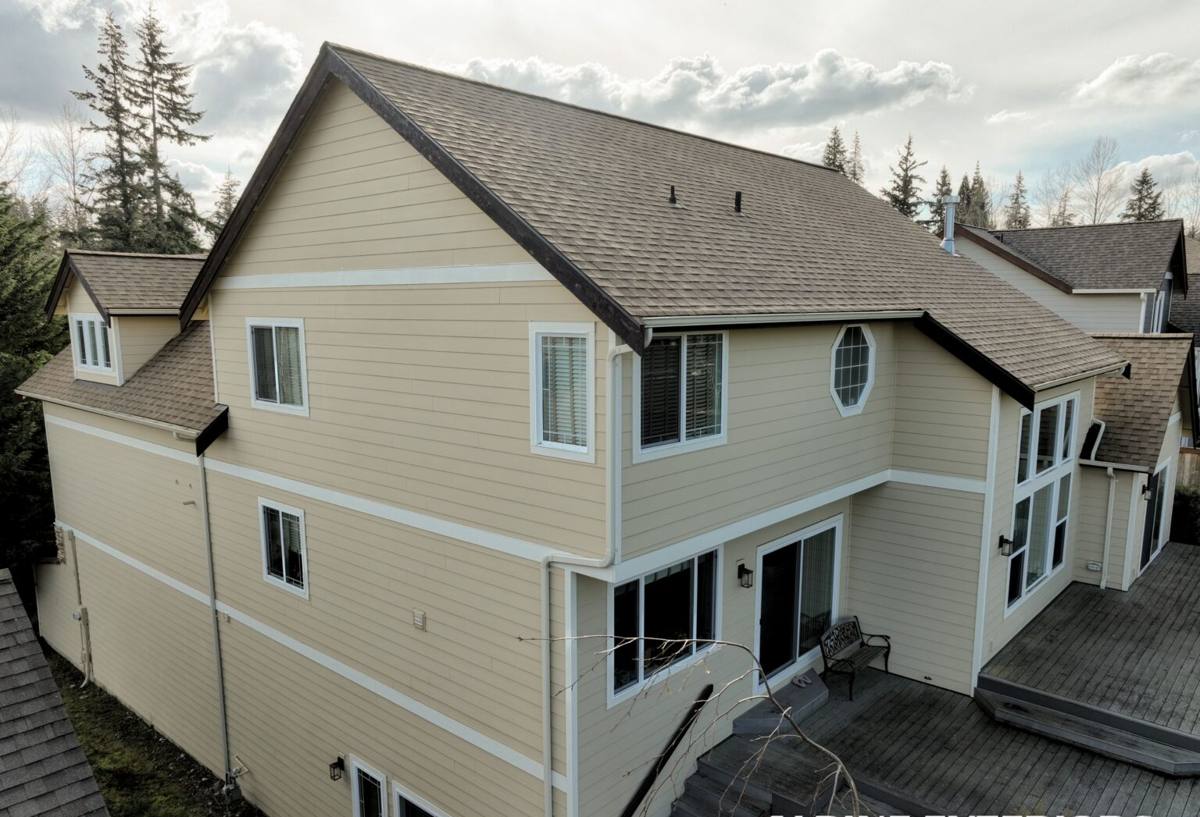
Why Sunnyland Decks Wear Differently
Several things about this neighborhood and its climate combine to age a deck faster than most homeowners expect:
- Salt air exposure: Even a few miles from Bellingham Bay, airborne salt accelerates corrosion on fasteners, joist hangers, and any exposed metal hardware — often long before the visible wood shows damage.
- Driving rain: Wind-driven rain off the Sound doesn't just fall straight down; it gets pushed sideways into ledger boards, stair stringers, and the undersides of railings, areas that a lot of original deck builds didn't flash or seal well.
- Extended moss season: Moss doesn't just look bad on decking boards — it holds moisture against the wood surface for months at a time, which is exactly the environment rot needs to take hold.
- Mature tree cover: Many lots in this part of Bellingham have significant tree canopy, which keeps decks shaded and slower to dry out after every rain event, and adds a steady supply of organic debris that feeds moss and mildew.
None of these factors are unique to Sunnyland on their own, but the combination — coastal moisture, tree shade, and a genuinely long wet season — is what separates deck repair here from deck repair in a drier, more open part of Whatcom County.
What a Correct Deck Repair Actually Involves
It Starts Below the Surface
The decking boards you walk on are the last thing we look at, not the first. Most of the deck failures we find start in the structure underneath: ledger board attachment, joist condition, post bases, and the fasteners holding it all together. A repair that only replaces a few visibly rotten boards without checking what's underneath them is a repair that will need to be redone.
A Proper Inspection Covers
- Ledger board attachment to the house, including flashing behind it
- Joists and beams for soft spots, checking, or rot, especially near the rim and at connection points
- Post bases and footings for movement, rot, or standing water contact
- Railing posts and connections, since these take the most structural stress and the most safety risk if compromised
- Fastener condition — corroded or undersized hardware is one of the most common hidden failures we find
- Stair stringers and treads, which see concentrated wear and constant water exposure
- Surface drainage — whether water is actually shedding off the deck or pooling against the house
Once we know what's actually going on structurally, we can tell you honestly whether you're looking at a targeted repair or something more involved — and we won't recommend a full rebuild if a repair will genuinely hold up.
Common Deck Problems We See in Sunnyland
Moss and Surface Staining on Decking
This is the most visible issue and often the easiest to address if it's caught before it's caused rot underneath. Moss growth on horizontal surfaces holds moisture against the board and, over time, breaks down the wood fibers or the protective coating on composite decking. Left unaddressed through a full wet season, surface moss problems turn into board replacement problems.
Corroded Fasteners and Hardware
Salt-influenced air speeds up corrosion on standard fasteners and joist hangers. We regularly find decks where the wood itself is in decent shape but the hardware holding it together has weakened significantly — this is a structural safety issue, not a cosmetic one, and it's not something you can see without pulling back decking boards.
Ledger Board and Flashing Failures
The ledger board — where the deck attaches to the house — is one of the most common failure points on any deck, and driving rain makes it worse. If flashing behind the ledger was installed incorrectly or has failed, water gets driven behind the board on every wind-driven storm, leading to rot that's hidden until it's advanced.
Soft or Spongy Decking Boards
A board that flexes or feels soft underfoot has already absorbed more moisture than wood can handle long-term. This is usually localized, but it's worth checking whether it's an isolated board issue or a sign of poor drainage affecting a wider section of the deck.
Railing and Stair Looseness
Loose railings and stair stringers are a safety issue first and a repair issue second. These components see constant load and constant water exposure, and connection failures here don't announce themselves until someone leans on the railing.
Repair vs. Replace: How We Decide
Not every deck problem calls for a full rebuild, and not every deck can be responsibly patched. The table below is a general guide to how we think through that decision — the actual call always depends on what we find during inspection.
| Condition Found | Typical Approach | Why |
|---|---|---|
| Isolated moss/staining, structure sound | Clean, treat, spot-repair boards | Surface issue caught before it reached the framing |
| Several soft boards, framing intact | Targeted board replacement | Structure is still sound; no need to touch what isn't failing |
| Corroded hardware, wood otherwise good | Hardware replacement with corrosion-resistant fasteners | Addresses the actual failure point without unnecessary demolition |
| Ledger or flashing failure | Ledger repair/reflash, localized rebuild | Fixes the entry point for water, not just the symptom |
| Widespread rot across joists/posts | Full or partial rebuild | Patching compromised structural framing isn't a lasting fix |
We'll always show you what we found and explain the reasoning before recommending either path — you shouldn't have to take our word for it without seeing the problem yourself.
Our Deck Repair Process
1. On-Site Inspection
We walk the full deck, check the structure from underneath where accessible, and identify every issue — not just the one you called about.
2. Honest Scope and Estimate
You get a clear breakdown of what needs repair now, what's worth monitoring, and roughly what each option costs. No pressure to upgrade the whole deck if a repair will do the job.
3. Correct-Order Repairs
We fix structural and moisture-entry issues first, then move to surface and cosmetic work. Replacing boards before addressing what's underneath just means redoing the work later.
4. Materials Matched to the Climate
Fasteners, hardware, and flashing are chosen for coastal moisture and corrosion resistance, not just whatever's cheapest — this is where a lot of shortcut repairs fail early in Whatcom County conditions.
5. Walkthrough and Maintenance Guidance
Before we leave, we walk the finished repair with you and point out anything worth keeping an eye on, including simple moss-prevention habits for the season ahead.
Why Local Experience Matters for This Job
Deck repair looks like a straightforward trade until you're dealing with a house that sits under tree cover a few blocks from the water, with a deck that's absorbed twenty-plus wet seasons of driving rain and salt air. A crew that mostly works drier inland areas can miss the specific failure patterns that show up in a neighborhood like Sunnyland — corrosion hidden under intact-looking boards, flashing that was never adequate for this much wind-driven rain, or moss damage mistaken for cosmetic staining.
Working in Bellingham and across Whatcom County regularly means we see the same handful of failure patterns repeat on decks in this kind of setting, which makes diagnosis faster and repairs more accurate the first time.
Simple Maintenance That Extends a Repaired Deck's Life
- Sweep leaves and debris off the deck surface regularly through fall, especially under tree cover
- Rinse or brush off moss growth before it has a chance to establish through the wet months
- Keep gutters and downspouts clear so roof runoff isn't dumping extra water onto or near the deck
- Check railings and stair connections periodically for any looseness
- Reseal or refinish wood decking on a regular schedule appropriate to the product — don't wait until it's visibly failing
- Make sure furniture and planters aren't trapping moisture against the decking surface
A well-executed repair combined with basic seasonal upkeep is what actually gets you the most years out of a deck in this climate — neither one alone does the job as well.
If you're seeing moss buildup, soft boards, or a deck that just doesn't feel as solid as it used to, we're happy to take a look. Fill out the form below for a free, no-pressure estimate on your Sunnyland deck repair.