 Bellingham Siding
 Siding That Actually Holds Up in Sunnyland
Sunnyland is one of Bellingham's older, established neighborhoods, and that means a lot of the homes here were sided decades ago with whatever material was standard at the time. Some of that original siding has held up reasonably well. A lot of it hasn't. Between the salt air drifting in off Bellingham Bay, the long stretches of driving rain that define a Whatcom County winter, and the deep shade from mature trees that keeps moss and mildew going strong for months at a time, siding in this neighborhood works harder than siding almost anywhere else in the region.
When we install siding in Sunnyland, we're not just matching a color or covering up an old wall. We're building an exterior system that's supposed to keep water out for decades in a climate that never really dries out. That takes the right material, the right prep work, and installation details that get skipped more often than homeowners realize.
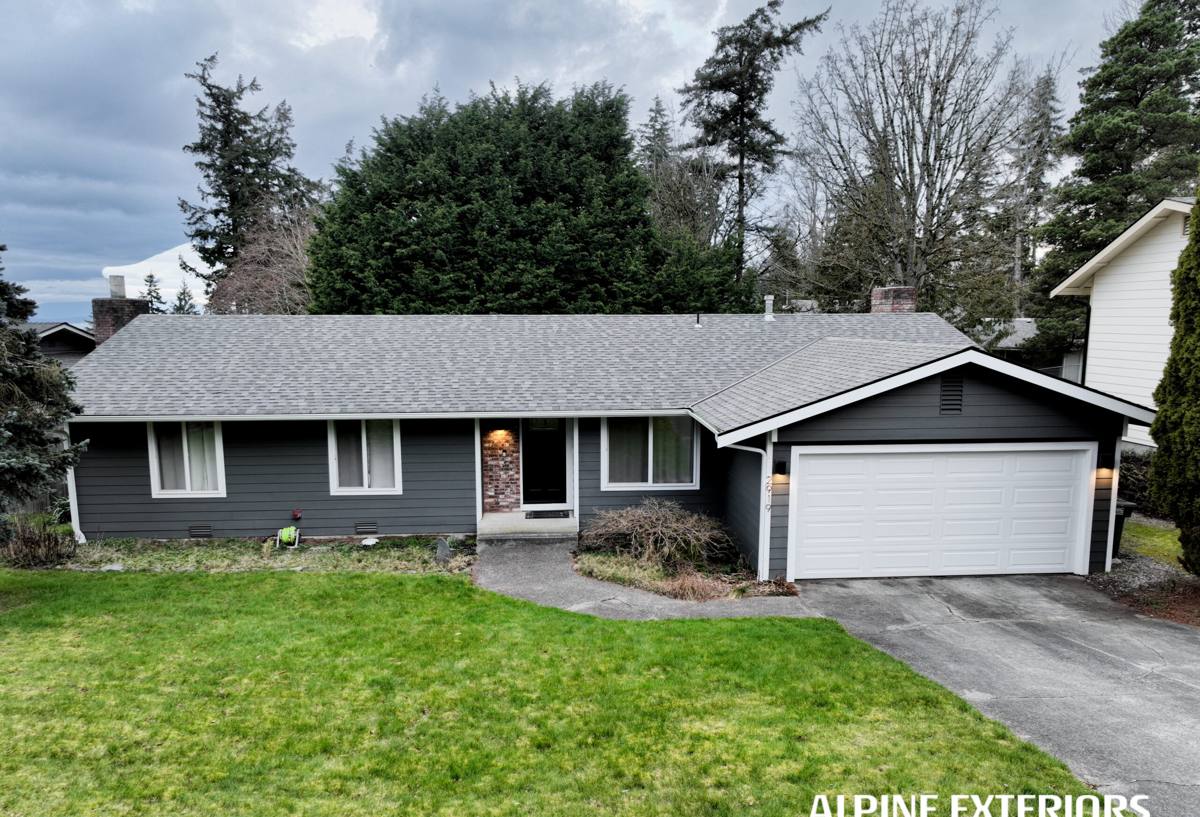
What Sunnyland's Climate Actually Does to Siding
Salt Air
Proximity to the bay means airborne salt settles on exterior surfaces even a few miles inland. Salt is corrosive to fasteners and hardware, and it accelerates the breakdown of paint films and lower-grade composite materials. Siding systems that rely on painted surfaces to keep moisture out need that paint film intact — and salt air shortens the life of that film.
Driving Rain
Bellingham doesn't get the heaviest rainfall totals in the state, but it gets a lot of wind-driven rain, which behaves very differently than a straight-down shower. Wind-driven rain gets forced sideways and upward into laps, seams, and butt joints that a system designed only for vertical rain was never tested against. This is where installation detail — not just the siding product itself — decides whether a wall stays dry.
Moss Season
Shaded lots, mature landscaping, and a wet season that can stretch from October well into spring create ideal conditions for moss and mildew growth on north-facing and shaded walls. Moss holds moisture against the siding surface far longer than an open, sun-exposed wall would ever experience, which is exactly the kind of prolonged dampness that rots wood-based products and delaminates lower-quality composites.
The Reality of Sunnyland's Housing Stock
Because Sunnyland has a mix of home ages — from older bungalow-era construction to mid-century additions to more recent remodels — the siding condition varies a lot from block to block, and sometimes from wall to wall on the same house. It's common for us to find:
- Original wood siding with decades of paint buildup masking soft spots and rot underneath
- Later additions sided in a different, often lower-grade material than the original structure
- Water damage concentrated on north and west-facing walls that stay shaded and wind-exposed
- Trim, window flashing, and house wrap that were never upgraded when the siding was last replaced
None of that is a knock on the neighborhood — it's just what happens to any coastal Pacific Northwest housing stock over 40, 60, or 80 years. It does mean a proper installation almost always involves more than a straight tear-off and re-side. The wall assembly underneath matters as much as what goes on top of it.
Why We Install Only James Hardie Fiber Cement
We standardized on James Hardie fiber cement siding for every home we side, including in Sunnyland, and we don't install vinyl, LP SmartSide, or other composite or wood-based systems. That's not a marketing position — it's a response to what we've seen this climate do to lesser materials over time. Fiber cement is non-combustible, doesn't absorb water the way wood-based products do, and holds its shape and paint adhesion through repeated wet-dry cycles far better than vinyl or engineered wood.
James Hardie's HZ5 product line is engineered specifically for climates like ours — colder, wetter, and with more freeze-thaw cycling than the HZ10 line built for the Southeast. The factory-applied ColorPlus finish also matters here more than in drier climates: because it's baked on and backed by its own finish warranty, it holds color and resists the fading and chalking that field-painted or lower-grade finishes struggle with under years of coastal UV and moisture exposure.
How Hardie Compares to What It's Replacing
| Factor | James Hardie Fiber Cement | Vinyl / Composite Alternatives |
|---|---|---|
| Moisture behavior | Doesn't swell, rot, or delaminate from prolonged dampness | Wood-based products can absorb moisture and break down; vinyl can warp |
| Salt air resistance | Cement composition unaffected by salt exposure | Fasteners and seams more prone to corrosion and fatigue |
| Moss/mildew resilience | Non-organic material doesn't feed fungal growth | Wood-based cores are more vulnerable to sustained dampness |
| Fire resistance | Non-combustible | Vinyl and some composites are combustible |
| Finish longevity | Factory ColorPlus finish, separate finish warranty | Field paint or laminate finishes wear faster under coastal sun/rain |
What Correct Installation Actually Involves
The siding product is maybe half the equation. The other half is the assembly behind it — the parts you never see once the job is done, but that determine whether the wall stays dry for the next 30 years or the next 5.
- Full removal of old siding and inspection of the sheathing for rot, soft spots, or prior water intrusion
- Repair or replacement of any damaged sheathing before anything new goes on
- A continuous, correctly lapped weather-resistive barrier (house wrap) installed shingle-style so water sheds outward, not inward
- Properly flashed windows, doors, and penetrations — this is the single most common failure point we find on older re-sides
- Correct fastener spacing, type, and placement per James Hardie's published installation instructions
- Manufacturer-specified clearances at the foundation, roofline, and any grade or deck contact points
- Properly caulked and painted cut edges, since fiber cement's factory finish only protects the face and factory-primed edges — field cuts need to be sealed
Skipping any one of these doesn't necessarily show up right away. It shows up in year three or year eight, as a soft spot behind a window or a stain creeping up from the bottom course — usually on the shaded, weather-exposed wall that Sunnyland's older homes tend to have in abundance.
Our Process for a Sunnyland Siding Project
- On-site assessment: We walk the exterior, check the condition of the existing siding and sheathing where accessible, and look specifically at moss patterns, drainage paths, and shaded elevations that tend to hold moisture longest.
- Written scope and estimate: You get a clear breakdown of what's being replaced, what Hardie product and profile is recommended, and why — no vague allowances.
- Tear-off and sheathing inspection: Old siding comes off, and we address whatever the sheathing tells us before moving forward.
- Weather barrier and flashing: This is the step that actually keeps driving rain out, and we don't shortcut it.
- Hardie installation to spec: Fastening, spacing, and clearances per manufacturer requirements, not "close enough."
- Final walk-through: We review the finished work with you before calling the job done.
Living With Moss and a Long Wet Season
Even the right siding needs some basic upkeep in this climate. Fiber cement dramatically reduces the risk that moss and mildew cause structural harm, but growth can still appear on the surface of any exterior material in a shaded, damp yard. A yearly rinse-down of shaded walls, keeping gutters clear so water isn't sheeting down the siding face, and trimming back vegetation that keeps a wall in permanent shade all go a long way. None of this is siding-specific advice unique to us — it's just what a coastal Whatcom County home benefits from regardless of what's on the walls.
Why a Crew That Already Works Sunnyland Matters
A contractor who works this neighborhood regularly already knows the pattern: which elevations take the worst weather, what the housing stock from different eras tends to hide behind old siding, and how to sequence a tear-off so a house isn't left exposed during an unpredictable rain window. That familiarity shortens the surprises during a project and helps set realistic expectations from the estimate stage rather than discovering problems mid-tear-off with no plan for them.
It also means the crew showing up already understands why we only install James Hardie in this climate, instead of treating it as an upsell — the reasoning is built into how the whole job gets planned and sequenced, from the weather barrier up.
If your Sunnyland home's siding is showing its age — or you just want an honest read on how much life is left in what's on the walls now — we're happy to take a look and put together a free, no-pressure estimate.