 Bellingham Siding
 Why Sudden Valley Roofs Wear Differently Than Roofs Elsewhere in Whatcom County
Sudden Valley sits in a heavily wooded, lakeside setting, and that setting shapes almost every roofing problem we see out here. Mature tree canopy keeps large sections of many roofs shaded for most of the day, even in summer. That shade holds moisture on the shingle surface long after a storm has passed, and it's exactly the kind of environment moss, algae, and moss spores need to take hold. Combine that with Bellingham's long, wet fall-through-spring stretch and the marine air drifting in off the bay, and you've got a roof that's rarely fully dry for months at a time.
None of this means a roof in Sudden Valley is doomed to fail early. It means the roof has to be built and installed with those conditions in mind from day one — the right shingle, the right ventilation, and the right attention to the spots where water and debris naturally collect. A roof installed the same way you'd install one in a dry, open subdivision often struggles here, not because the shingles are bad, but because the setup didn't account for shade, needle and leaf litter, and the extra weeks of dampness that tree-covered lots hold onto.
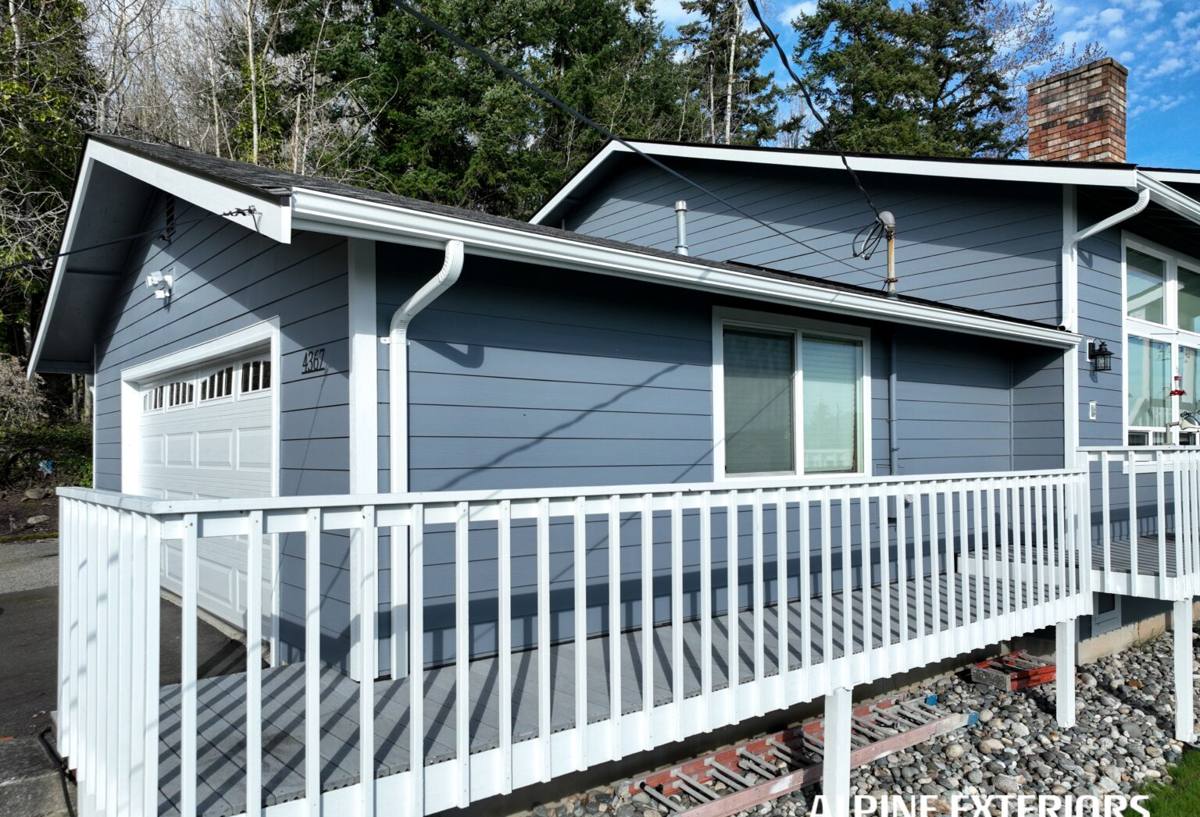
What a Roof in This Climate Actually Needs
Moss and Algae Resistance
Standard shingles will grow moss and algae streaking in a shaded, moist environment eventually — it's a matter of when, not if. Shingles with algae-resistant granules (usually copper- or zinc-infused) slow that growth significantly and are worth the modest upfront cost on a lot with real tree cover.
Ventilation That Actually Moves Air
A roof deck that can't breathe traps moisture underneath the shingles, not just on top of them. In a shaded, damp climate like this one, proper intake and exhaust ventilation is one of the single biggest factors in how long a roof lasts — it dries out the deck between rain events instead of letting it stay saturated.
Debris Management by Design
Valleys, gutters, and roof-to-wall transitions collect needles, leaves, and moss fragments constantly on a wooded lot. A roof detailed with clean valley flashing and adequate slope in those collection points sheds debris instead of holding it, which matters more here than on an open, sun-exposed roof.
Signs Your Sudden Valley Roof Needs a Closer Look
- Dark streaking or green-black patches, especially on north-facing or shaded slopes
- Moss growth along the shingle edges or in the valleys, even if it looks minor
- Granules collecting in gutters or at the base of downspouts
- Shingles that look curled, cupped, or lifted at the edges
- Soft or spongy spots when walked on, or sagging visible from the ground
- Daylight visible through the roof deck from inside the attic
- Water stains on interior ceilings or in the attic, especially near valleys or chimneys
- Persistent damp or musty smell in upper rooms or the attic space
Any one of these on its own isn't necessarily an emergency, but moss and staining left alone tend to hold moisture against the shingle surface and shorten its remaining life. Catching these early is almost always cheaper than waiting for a leak.
Choosing the Right Shingle for a Shaded, Wet Lot
Not every asphalt shingle product is a good fit for a heavily treed, lakeside property. Here's how the common tiers compare for this specific climate:
| Shingle Type | How It Handles Shade & Moss | Typical Lifespan Here | Best Fit |
|---|---|---|---|
| Standard 3-tab | No algae resistance; moss and staining show up faster in shaded areas | Shorter end of the range in heavy shade | Budget-driven projects on lots with more sun exposure |
| Architectural / dimensional | Often available with algae-resistant granules; thicker profile sheds debris a bit better | Mid-to-long range with proper ventilation | Most Sudden Valley homes — the practical standard |
| Premium/designer laminate | Best algae resistance and warranty coverage; more resistant to wind-driven rain at the edges | Longer end of the range | Homes with heavy tree cover or owners planning to stay long-term |
We don't push a single brand or tier on every homeowner — the right choice depends on how much shade your specific roof sits under, your budget, and how long you plan to stay in the home. What we won't do is install a bare-minimum product on a heavily shaded lot and let you find out the hard way that it wasn't built for the conditions.
A Note on "Cheap" Shingles in This Climate
The lowest-cost shingle option isn't necessarily a bad product, but on a shaded, moss-prone lot it often means a shorter usable life before algae resistance wears thin and moss gets a foothold. We'll always give you the honest tradeoff — upfront cost versus how many years of low-maintenance performance you're likely to get — rather than steering you toward whatever's easiest to install.
What a Correct Installation Involves
A shingle roof is only as good as what's underneath it and how the details are handled. On homes in this climate, a correct job includes:
- Full tear-off and deck inspection — repairing or replacing any soft, delaminated, or water-damaged sheathing before anything new goes on
- Ice-and-water shield in valleys, eaves, and around penetrations, where wind-driven rain and debris buildup are most likely to force water backward under the shingles
- Synthetic underlayment across the full deck for a secondary water barrier
- New flashing at chimneys, skylights, and roof-to-wall transitions rather than reusing old, worn flashing
- Balanced intake and exhaust ventilation sized to the actual attic, not a one-size-fits-all vent count
- Shingle installation to manufacturer nailing and exposure specs, which matters more than most homeowners realize for wind and rain resistance
- Final cleanup, including a magnetic sweep for stray nails and gutter check
Skipping or rushing any one of these steps is usually where premature leaks and short-lived roofs come from — not from the shingle itself failing, but from a detail underneath it that wasn't done right.
Our Process for Sudden Valley Projects
We start with an on-site inspection, not a drive-by estimate. We get on the roof, check the deck condition where accessible, look at existing ventilation, and note how much tree cover and shade each slope deals with. That inspection is what the estimate is actually based on.
From there, we walk you through shingle options at a couple of price and durability tiers, explain what we found on your specific roof, and give you a written estimate with no pressure to decide on the spot. If you move forward, we schedule the work, handle any required permitting, and protect your landscaping and driveway during tear-off and install. When the job's done, we walk the roof and the property with you before we consider it finished.
What Drives the Cost of a Sudden Valley Re-Roof
| Factor | Why It Matters Here |
|---|---|
| Roof size and pitch | Steeper roofs take longer to work safely and use more material per square |
| Deck condition | Wooded, damp lots see more deck rot from long-term moisture exposure, which adds repair cost if found during tear-off |
| Shingle tier chosen | Algae-resistant and premium laminate products cost more upfront but hold up longer under shade and moisture |
| Ventilation upgrades | Older homes often need added intake or exhaust vents to meet what a damp climate actually requires |
| Access and site conditions | Long driveways, tree clearance, and tight lot access common in this neighborhood can affect equipment staging and labor time |
| Layers being removed | Tear-off of multiple existing layers takes longer and costs more than a single-layer removal |
We won't quote a number without seeing the roof — anyone who does is guessing. What we can tell you is that the biggest cost swings usually come from deck condition and access, not from the shingle brand itself.
Why It Matters to Hire a Crew That Already Works This Neighborhood
Sudden Valley isn't a typical flat, open subdivision. Winding, sometimes narrow roads, mature tree cover close to rooflines, and properties that fall under a community association all shape how a roofing job actually gets done here. A crew that's worked in the area already knows how to stage equipment and dumpsters on tighter lots, how to protect landscaping under tree canopy, and what to expect from local permitting and any association requirements that may apply to your property.
That familiarity isn't just convenience — it affects the quality of the work. A crew guessing at site logistics for the first time is more likely to rush details or damage property getting equipment in and out. A crew that's done this before knows the terrain and plans for it.
If you're weighing a repair against a full replacement, or just want an honest read on how much life is left in your current roof, we're glad to take a look. Reach out for a free, no-pressure estimate — we'll tell you what we actually see up there, not just what's easiest to sell.