 Bellingham Siding
 Why Decks in Barkley Wear Faster Than the Brochure Says
A deck in Whatcom County doesn't fail the way a deck in a dry climate fails. Out here, the damage is slow, wet, and easy to miss until it isn't. Bellingham sits in a marine climate zone, which means Barkley homes deal with salt-tinged air carried inland on the wind, months of driving rain that finds every gap in a railing joint, and a moss season that can stretch from fall through spring. None of that is dramatic on its own. Together, over several years, it's what turns a solid deck into one with soft spots, rusted hardware, and boards that never quite dry out between storms.
What that actually does to the structure
Moisture doesn't just sit on top of a deck — it works its way into end grain, fastener holes, and any spot where two pieces of wood meet and trap water. Salt air accelerates corrosion on fasteners and metal connectors, which is often the real reason a deck starts to feel "loose" or "bouncy" long before the boards themselves look bad. Moss and algae hold moisture against the surface and, on stairs and ramps, create a slip hazard that has nothing to do with how old the deck is.
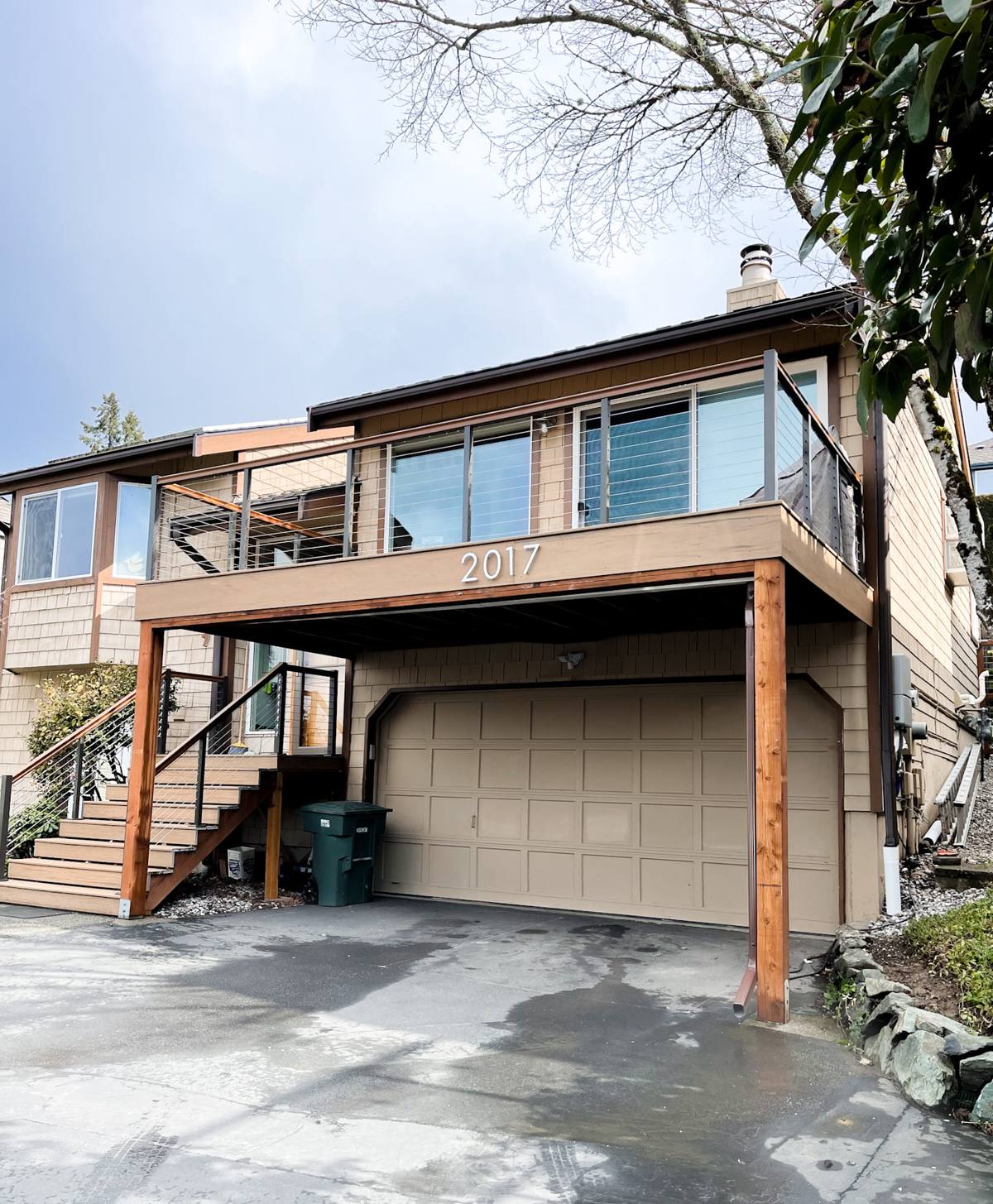
Signs a Barkley Deck Needs Repair
Most homeowners call us after noticing one of these. If you're seeing more than one at once, it's worth a look before the next wet season.
- Boards that feel spongy, springy, or noticeably different underfoot than the rest of the deck
- Visible gaps opening up between deck boards or at the ledger board where the deck meets the house
- Rust streaks running down from screws, nails, or metal joist hangers
- Railings or posts that wiggle when pushed — even slightly
- Persistent green or black staining that comes back within weeks of cleaning
- Stairs that feel uneven or slick even when it hasn't rained recently
- A musty smell coming from underneath the deck near the house foundation
What a Correct Deck Repair Actually Involves
"Deck repair" covers a wide range of work, and the right scope depends entirely on what's actually failing. A proper assessment looks below the surface, not just at the boards you can see.
Framing and structure
The joists, beams, and posts underneath are what actually hold the deck up. Rot here is the most serious issue we find, because it's invisible from the top and directly affects safety. Any repair worth doing starts by checking this structure first — replacing or sistering damaged framing members before anything else is touched.
The ledger board connection
Where the deck attaches to the house is one of the most common failure points in this climate, because it's a horizontal seam that collects runoff. Flashing that's missing, cracked, or improperly lapped lets water track directly into the house rim joist. We treat this connection as a structural item, not a cosmetic one.
Fasteners and hardware
Old nails, mismatched screws, or non-coated hardware are a common source of the rust staining and loosening homeowners notice. Replacing these with corrosion-resistant fasteners rated for outdoor and treated-lumber use is a small line item that prevents a much bigger repair down the road.
Decking surface and railings
Once the structure and connections are solid, we address the surface — replacing individual damaged boards where possible rather than the whole deck, and tightening or rebuilding railings and stair stringers to current safety expectations.
Repair or Replace? How We Make That Call Honestly
Not every deck problem means starting over, and not every deck is worth patching. We walk this decision with you rather than defaulting to the bigger job.
| Factor | Usually Repair | Usually Replace |
|---|---|---|
| Framing condition | Solid, dry, sound when probed | Soft, rotted, or fails a probe test in multiple spots |
| Age of deck | Under 12-15 years, built to a reasonable standard | Original construction is decades old or undersized for current code |
| Extent of damage | Isolated boards, one railing section, a few fasteners | Damage spread across most of the deck's surface or structure |
| Ledger/flashing condition | Intact or easily corrected | Missing entirely or has allowed sustained water intrusion |
| Cost relative to new build | Repair is a fraction of replacement cost | Repair costs start approaching a full rebuild |
As a rough guide, straightforward board and railing repairs are a modest expense; structural framing work costs more depending on how much needs to be opened up; and a full rebuild is its own separate project. We'll give you real numbers after we've actually looked at the deck — not before.
Our Deck Repair Process
We keep this simple and transparent, because homeowners deserve to know what's happening under their feet before we start cutting into anything.
- On-site inspection. We check the surface, probe the framing, examine the ledger and flashing, and inspect railings and stairs for movement.
- Written scope and estimate. You get a clear breakdown of what's failing, what we recommend, and why — including what we'd leave alone if it's still sound.
- Structural repairs first. Any compromised framing, posts, or ledger connections are addressed before surface work begins.
- Surface and railing work. Damaged boards, stair treads, and railings are replaced or rebuilt to match the rest of the deck where possible.
- Hardware upgrade. Fasteners and connectors are brought up to a corrosion-resistant standard suited to our climate.
- Final walkthrough. We check the deck is solid, level where it should be, and draining properly — no standing water pockets left behind.
Materials: What We Use and Why
Pressure-treated lumber remains the standard for framing in this region because it's designed to resist the rot that our rainfall and humidity encourage. For decking surfaces, homeowners generally choose between treated or cedar wood and composite boards, and each comes with real trade-offs worth understanding rather than a one-size-fits-all recommendation.
Wood decking costs less upfront and is straightforward to repair board-by-board, but it needs regular cleaning and periodic sealing to keep moss and water from taking hold — especially given how long our wet season runs. Composite decking resists moisture and moss better and needs less seasonal maintenance, but it costs more initially, and not every composite product performs the same way in cold, damp conditions, so installation details and manufacturer warranty terms matter more than the marketing. We'll talk through what fits your budget, your maintenance appetite, and how the deck is used before recommending either direction.
Why Hiring a Crew That Already Works in Barkley Matters
Deck repair done by someone unfamiliar with Whatcom County conditions tends to treat every deck the same, using flashing details, fastener choices, and drying assumptions that work fine in a drier climate but fall short here. A crew that regularly works in and around Bellingham neighborhoods like Barkley already knows to check the ledger flashing first, expect moss buildup in shaded corners, and choose hardware that won't rust out in a few seasons. That local pattern recognition is often the difference between a repair that lasts and one that needs revisiting in two years.
It also means faster, more realistic scheduling — we're not guessing at drying windows between rain systems, we're working around them, because that's the normal rhythm of building and repairing outdoors in this part of Washington.
Keeping a Repaired Deck Healthy Through Moss Season
A good repair holds up longer with a small amount of seasonal upkeep. None of this requires professional help — it's just about staying ahead of the moisture cycle.
- Sweep leaves and debris off the deck regularly in fall, especially between boards where they trap moisture
- Rinse or gently scrub visible moss and algae before it spreads, particularly on shaded or north-facing sections
- Check railings and stair treads for movement once or twice a year, not just when something feels off
- Keep gutters and downspouts near the deck clear so runoff isn't draining directly onto or under it
- Reseal or refinish wood decking on the schedule recommended for the product you have, rather than waiting until it visibly needs it
- Watch the ledger board area after heavy storms for any new staining or gaps
If you're noticing any of the warning signs above, or you just want an honest opinion on whether your Barkley deck needs a repair or a bigger conversation, we're happy to come take a look. The estimate is free, there's no pressure, and you'll get a straight answer either way — just fill out the form below to get started.