 Bellingham Siding
 Siding Installation Built for Columbia's Climate
Columbia is one of Bellingham's older, established neighborhoods, and that shows in its housing stock — a mix of early-1900s homes, mid-century additions, and newer infill sitting under a heavy tree canopy just a short distance from Bellingham Bay. That combination creates a specific set of demands on exterior siding. Homes here deal with salt-tinged air moving in off the bay, driving rain that comes sideways during winter storms, and a moss season that can run eight months or longer thanks to the shade and moisture the neighborhood's mature trees create. Siding that isn't engineered for this environment shows it early — swelling at the bottom edges, moss creeping up from grade, paint that fails years before it should.
When we install siding in Columbia, we're not treating it like a generic Bellingham job. We're accounting for the tree cover on individual lots, how close a given home sits to prevailing weather off the water, and the drainage realities of older lots that weren't always graded with modern stormwater standards in mind.
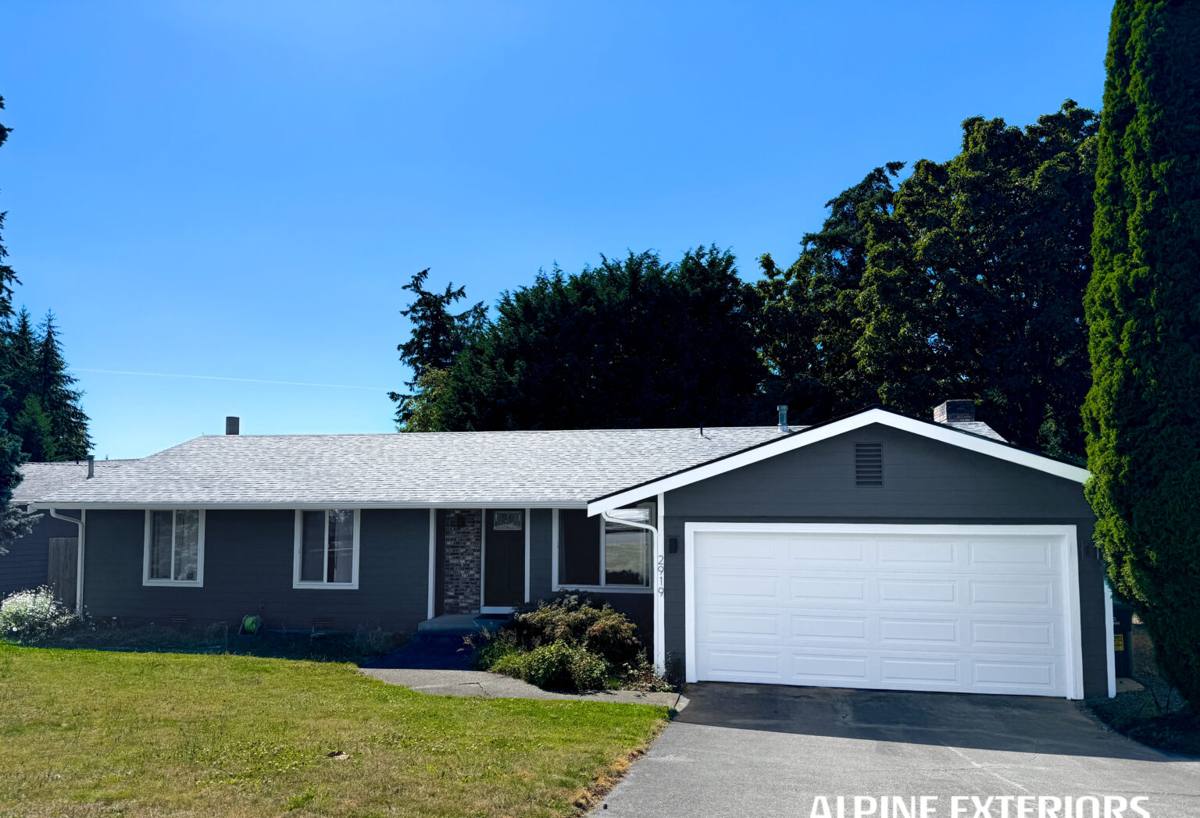
What Whatcom County Weather Does to the Wrong Siding
Whatcom County doesn't get extreme heat or hard freezes very often, but it makes up for that with sheer volume of moisture exposure. A siding product's real test here isn't a single storm — it's months of sustained dampness combined with salt air and low winter sun angles that leave shaded walls wet for days at a time.
- Salt air: Chloride-laden air off Bellingham Bay accelerates corrosion on fasteners and metal trim, and it degrades some paint films faster than inland exposure would.
- Driving rain: Wind-driven rain doesn't just wet a wall's surface — it pushes water into laps, seams, and butt joints, which is where most siding failures actually start.
- Moss and algae: Shaded, north-facing walls under tree canopy stay damp long after the rest of the house has dried out, giving moss and algae a foothold that stains and, over time, holds moisture against the siding surface.
Wood-based and wood-adjacent siding products are the most vulnerable to this combination — moisture intrusion at cut edges and fastener penetrations leads to swelling, delamination, and rot, especially in shaded spots that never fully dry between rain events.
Why We Install James Hardie Fiber Cement Only
We standardized on James Hardie fiber cement siding for every job we take on, including in Columbia, and we don't install vinyl, LP SmartSide, primed spruce, cedar, or other fiber cement brands. That's not a marketing position — it's a practical one, built on what actually holds up under Whatcom County's moisture load year after year.
Fiber cement is non-combustible, which matters more each year given regional wildfire smoke seasons and evolving building codes. It doesn't absorb water the way wood-based products do, so it isn't prone to the swelling and rot that shaded, damp walls in Columbia tend to cause in vulnerable materials. James Hardie's HZ5 product line is specifically engineered for the wetter, cooler climate zones the Pacific Northwest falls into, and the factory-applied ColorPlus finish is baked on under controlled conditions rather than painted on-site — which means better adhesion and color retention than field-applied paint can typically match, especially on walls that see heavy moisture cycling.
We also value that Hardie backs its products with a strong, transferable warranty. On a resale-driven market like Bellingham's, that matters to homeowners who may not be the ones living in the house for the full life of the siding.
What Correct Installation Actually Involves
Siding failures in this climate are rarely about the material choice alone — they're just as often about installation shortcuts. A correct James Hardie installation in a neighborhood like Columbia involves several details that are easy to skip and expensive to fix later:
Drainage plane and rainscreen
A proper weather-resistive barrier, correctly lapped and taped, sits behind the siding, and on many homes we build in a rainscreen gap so water that does get behind the cladding can drain and the wall can dry. This matters more on shaded Columbia walls that stay damp longer than sun-exposed ones.
Flashing at every penetration
Windows, doors, hose bibs, light fixtures, and vents all need properly integrated flashing, not just caulk. Caulk is a maintenance item, not a waterproofing system — relying on it alone is one of the most common ways siding jobs fail early.
Fastening to manufacturer spec
James Hardie has specific fastener type, spacing, and penetration requirements depending on the product line and substrate. Under- or over-driven fasteners, or the wrong fastener for coastal exposure, shorten the life of the installation regardless of how good the siding itself is.
Clearance and grade separation
Siding needs proper clearance from grade, roof lines, decks, and hardscaping so water doesn't wick up from below. Older Columbia lots sometimes have grading that's crept up over decades of landscaping — we address that as part of the install rather than siding directly over the problem.
Our Installation Process
- On-site assessment: We walk the exterior, check current siding and sheathing condition, note shaded/high-moisture zones specific to the lot's tree cover and orientation, and identify any moisture damage that needs repair before new siding goes on.
- Scope and product selection: We recommend the appropriate Hardie product line and profile for the home's exposure — homes closer to the bay or under heavy canopy may warrant different detailing than a more sheltered lot.
- Prep and repair: Any compromised sheathing, framing, or trim uncovered during tear-off gets repaired before new siding goes up — we don't cover over rot.
- Weather barrier and flashing installation: House wrap, flashing, and rainscreen components go in first, with careful attention to every penetration and transition.
- Siding installation: Panels or planks are installed to Hardie's fastening and clearance specifications, maintaining proper gaps at trim, corners, and butt joints.
- Final detailing and walkthrough: Caulking, touch-up, and trim work are finished, and we walk the completed job with the homeowner.
Signs Your Columbia Home May Need New Siding
- Moss or dark algae staining that keeps returning on shaded or north-facing walls
- Paint that's peeling, bubbling, or chalking well ahead of its expected repaint interval
- Soft or spongy spots when you press on siding near the bottom courses or below windows
- Visible warping, cupping, or gaps opening up at seams and butt joints
- Rust streaking from fasteners, especially on walls facing the bay
- Rising heating bills or drafts that suggest the wall assembly behind the siding is compromised
Comparing Siding Approaches for a Columbia Home
| Factor | James Hardie Fiber Cement | Wood-Based / Vinyl Alternatives |
|---|---|---|
| Moisture behavior in shaded, damp zones | Engineered to resist moisture absorption; HZ5 line built for wet climates | Prone to swelling, delamination, or rot in prolonged damp conditions |
| Fire resistance | Non-combustible material | Combustible (wood-based products); vinyl can deform under heat |
| Finish durability | Factory-baked ColorPlus finish | Field-applied paint typically needs more frequent maintenance |
| Salt air exposure | Holds up well with correctly specified fasteners and trim | More susceptible to accelerated wear near the bay |
| Warranty structure | Strong, transferable manufacturer warranty | Varies widely; often shorter or non-transferable |
What Affects the Cost of a Columbia Siding Installation
| Cost Factor | Why It Matters Here |
|---|---|
| Home size and wall complexity | More corners, gables, and dormers mean more cutting, flashing, and labor time |
| Extent of hidden damage | Older Columbia homes with long-term moisture exposure sometimes need sheathing or framing repair before siding goes on |
| Product line and profile | HZ5-rated products and certain plank widths or textures carry different material costs |
| Site access and tree cover | Mature landscaping common in this neighborhood can affect staging, scaffolding, and cleanup time |
| Trim and detail work | Older homes often have more custom trim to match or replace than newer construction |
We give an honest, itemized estimate after seeing the specific house — broad averages rarely mean much once tree cover, existing damage, and trim complexity are accounted for.
Why a Crew That Already Works in Columbia Matters
Siding installation isn't just a product decision — it's a set of judgment calls made on-site, and those calls are better informed by direct experience with the neighborhood. A crew that has already worked on homes in Columbia knows which walls in this part of Bellingham tend to hold moisture longest, how the tree canopy on a given block affects drying time, and how the salt air off the bay interacts with fastener and trim choices over the long run. That local pattern recognition shows up in the details — where extra flashing attention gets paid, which wall orientations get prioritized for ventilation, and how grading and clearance issues on older lots get handled.
It also means fewer surprises during permitting and inspection, since a crew working regularly in Bellingham and Whatcom County already understands the local requirements that apply to exterior work.
Get a Straightforward Estimate
If your Columbia home's siding is showing moss staining, peeling paint, or soft spots, or if you're just planning ahead, we're glad to take a look and give you a clear, no-pressure estimate for James Hardie fiber cement installation. Fill out the form below and we'll set up a time to walk the property with you.