 Bellingham Siding
 Why Birch Bay Homes Need a Different Approach to Board & Batten
Birch Bay sits right up against the Salish Sea, and that changes what siding has to survive. Homes a few miles inland in Bellingham deal with plenty of rain, but they don't get the salt-laden air that rolls off the water and settles on every exterior surface within reach of the shoreline. Add Whatcom County's driving winter rain, near-constant marine humidity, and the long stretch of gray months that let moss and algae get a foothold on anything shaded or slow to dry, and you have a climate that's genuinely tougher on exterior materials than most of Washington State.
Board and batten is a popular look in Birch Bay — the vertical lines read as coastal cottage, modern farmhouse, or classic Pacific Northwest cabin depending on the trim and color choices. But the look only holds up if the material underneath it is chosen and installed with this specific exposure in mind. A board and batten wall done wrong here doesn't just look tired in a few years — it can trap moisture behind the battens and cause real damage to the sheathing and framing before anyone notices.
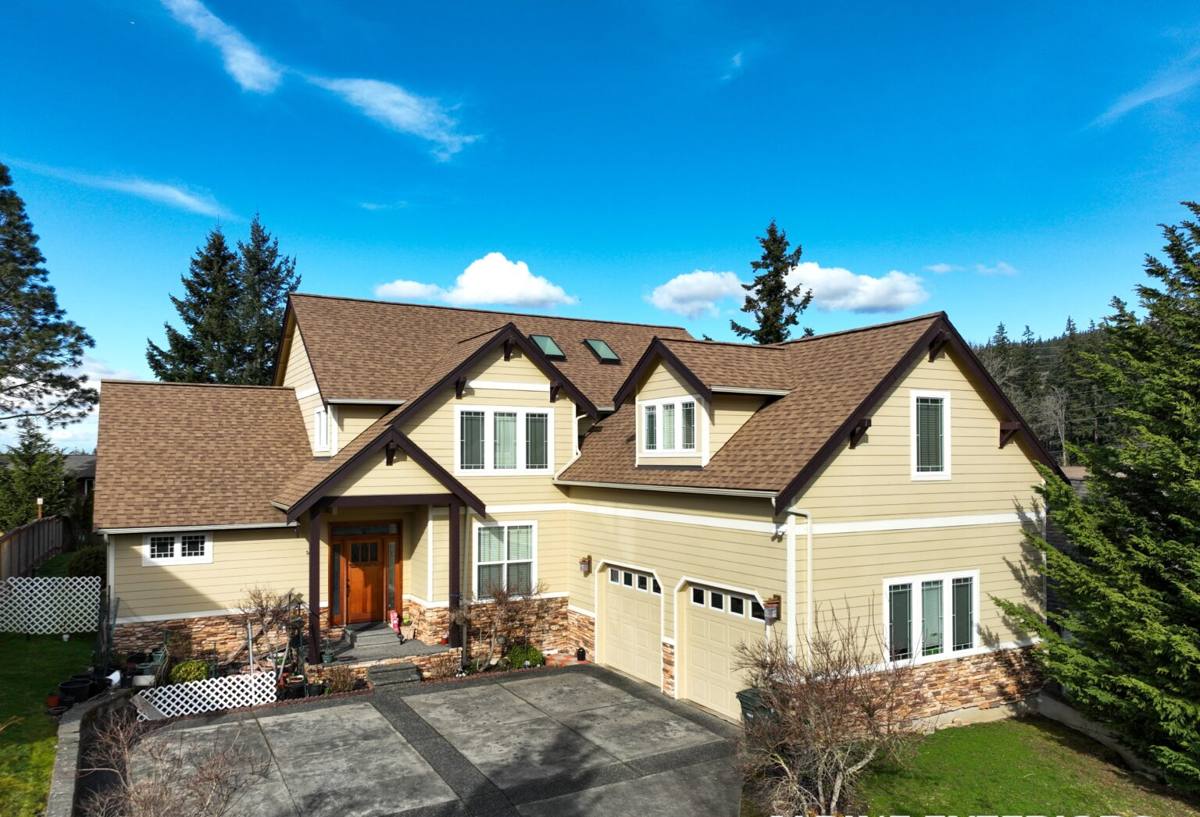
What Salt Air, Rain, and Moss Actually Do to Siding
Salt air
Airborne salt is corrosive to metal fasteners, flashing, and hardware, and it's abrasive to painted or coated surfaces over time. Materials that rely on a thin factory coating or a job-site paint job show wear faster in a salt environment — chalking, fading, and finish breakdown happen sooner than the same product would show a few miles inland.
Driving rain
Wind off the water pushes rain sideways, not straight down. That means water finds horizontal seams, batten edges, and any gap around trim or penetrations that a calmer climate might never test. Board and batten has more seams per square foot than lap siding, which makes correct flashing and joint treatment more important here, not less.
Moss and algae
Shaded walls, north-facing elevations, and anything near overhanging trees stay damp longer in this climate, and organic growth follows. Moss holds moisture against the siding surface, which accelerates whatever deterioration is already happening underneath.
None of this is unique to Birch Bay, but the combination — salt, wind-driven rain, and prolonged dampness — is more concentrated here than in most of Whatcom County, which is exactly why we treat it as its own case rather than a standard Bellingham install.
Why We Install Board & Batten in James Hardie Fiber Cement Only
Board and batten shows up in several materials — vinyl, engineered wood, real wood, and fiber cement — and each behaves differently in a coastal environment. We standardized on James Hardie fiber cement for every siding job we do, including board and batten, because it's the product we can install to spec and stand behind in this specific climate. It's non-combustible, it doesn't swell or rot the way wood-based products can when moisture gets behind a batten, and the factory-applied ColorPlus finish is baked on and warrantied against fading — which matters more here than in a drier climate, because sun and salt both work against a painted finish.
That said, honesty matters more than a sales pitch. Fiber cement is heavier and more labor-intensive to install correctly than vinyl, and it costs more up front than engineered wood alternatives. We think that trade-off is worth it for the life of the siding, but it's a real trade-off, and we'd rather tell you that directly than pretend there isn't one.
Material Comparison for a Coastal Application
| Material | Salt air resistance | Moisture behavior | Finish durability |
|---|---|---|---|
| Vinyl board & batten | Doesn't corrode, but can become brittle and fade faster under coastal sun/salt exposure | Not absorbent, but seams and J-channels can trap wind-driven rain | Color is through-body but tends to chalk over time |
| Engineered wood | Moderate; coatings need maintenance | Vulnerable to swelling/deterioration if moisture gets behind battens | Field-applied or factory finish, shorter repaint cycle |
| Real wood | Requires ongoing sealing/painting to resist salt and moisture | Most vulnerable to rot without diligent upkeep | Shortest maintenance cycle of the group |
| James Hardie fiber cement | Non-combustible, dimensionally stable, doesn't corrode | Doesn't swell or rot from moisture exposure | Factory ColorPlus finish, longer warrantied fade resistance |
What a Correct Board & Batten Install Involves
Board and batten looks simple from the curb, but the wall assembly behind it is what determines whether it lasts. In a climate like this one, we don't cut corners on any of the following:
- Rainscreen gap: a drainage space behind the siding lets any water that does get past the face dry out instead of sitting against the sheathing.
- Weather-resistive barrier and flashing: properly lapped house wrap, plus flashing at every window, door, and penetration, so wind-driven rain has nowhere to travel behind the panel.
- Fastener selection: corrosion-resistant fasteners installed per Hardie's spec, since standard fasteners degrade faster in salt air and can eventually stain or fail.
- Batten spacing and fastening: battens fastened into structural framing at the correct spacing, not just into the panel, so the assembly holds up under coastal wind loads.
- Joint and seam treatment: horizontal seams and panel joints detailed to shed water rather than collect it, since board and batten has more vertical seams than lap siding.
- Clearances: proper gap at grade, roofline, and any deck or patio surface so the siding never sits in standing water or snow.
Any one of these done wrong won't necessarily show up as a visible problem right away. It shows up two or three winters later, as moisture damage behind the wall that costs far more to fix than it would have to install correctly the first time.
Our Process for a Birch Bay Board & Batten Project
1. On-site assessment
We look at the home's exposure — how close it sits to the water, which walls face prevailing wind and rain, where shade and moss are already a problem — before we talk about materials or design.
2. Tear-off and inspection
Removing the old siding is when we find out what's actually happening underneath. Coastal homes in particular sometimes have hidden moisture damage from years of wind-driven rain finding its way behind old siding systems. We flag and address any sheathing or framing repair before a single new panel goes up — covering a problem is not an option.
3. Weather barrier and rainscreen installation
We install the drainage plane, flashing, and rainscreen furring before the Hardie panels and battens go on, matched to the wall's specific exposure.
4. Panel and batten installation
HardiePanel vertical siding installed to manufacturer spec, with battens fastened into framing at consistent spacing, and every seam, corner, and penetration detailed for this climate.
5. Finish and walkthrough
Trim, caulking where specified, and a final walkthrough so you understand what was done and why, before we consider the job finished.
Why a Local Whatcom County Crew Matters Here
A crew that already works Birch Bay and the surrounding Whatcom County coastline has seen what happens to siding here over several winters — not in a manual, but on actual homes. That matters for practical decisions a generic install won't account for: how much rainscreen gap to plan for on a wall that takes direct wind off the water, which elevations need extra attention for moss and shade, and how local permitting and any community guidelines in Birch Bay factor into an exterior project. It also means we're not guessing at fastener corrosion resistance or flashing details based on a drier climate's standard practice — we're building to what this specific coastline actually does to a house.
Maintenance in a Salt Air Environment
Even a correctly installed fiber cement board and batten system benefits from a bit of routine attention in this climate:
- Rinse salt residue off exterior walls periodically, especially on elevations facing the water.
- Keep gutters and downspouts clear so water isn't overflowing onto the siding face.
- Trim back vegetation that's shading a wall and keeping it damp, to slow moss and algae growth.
- Check caulked joints and trim periodically for gaps that could let wind-driven rain behind the siding.
None of this is heavy maintenance — it's the difference between siding that looks the same at year fifteen and siding that starts showing its age at year five.
Cost Factors for a Birch Bay Board & Batten Project
Every home is different, but the main cost drivers we see on coastal board and batten projects are the same handful of factors:
| Factor | Why it affects cost |
|---|---|
| Extent of tear-off and repair | Hidden moisture damage found during tear-off adds labor and material before new siding can go up |
| Wall complexity | Dormers, multiple gables, and lots of trim/window penetrations increase flashing and detail work |
| Rainscreen and barrier upgrades | Homes without an existing drainage plane need this built in, which adds a step but pays off in longevity |
| Batten spacing and pattern | Tighter batten spacing or a custom pattern takes more material and labor than a standard layout |
| Access and site conditions | Waterfront lots, retaining walls, and tight access can add setup time |
A Quick Checklist Before You Hire Anyone for This Job
- Ask whether they install a rainscreen/drainage gap behind the siding, not just a weather barrier.
- Ask what fastener type they use and whether it's rated for coastal/salt exposure.
- Ask how they handle hidden moisture damage found during tear-off, and whether that's disclosed and repaired before new siding goes on.
- Ask for the manufacturer's installation spec they follow, and whether their crew is trained on it.
- Ask whether they've worked on homes specifically in Birch Bay or similar waterfront areas of Whatcom County.
If you're weighing board and batten for a home in Birch Bay, we're happy to take a look and give you a straight answer on what your walls actually need. Reach out for a free, no-pressure estimate — the form below gets it started.