 Bellingham Siding
 Why Birch Bay Siding Has to Work Harder Than Siding Ten Miles Inland
Birch Bay sits right on the water, and that changes what a home's exterior has to deal with year-round. Salt-laden air moves off the bay and settles on siding, trim, and fasteners. Driving rain off Georgia Strait hits west- and north-facing walls at an angle, not straight down, which pushes water into laps, seams, and butt joints that would stay dry on a more sheltered lot. Add in Whatcom County's long, wet moss season — often eight months or more of the conditions moss and algae need to establish — and you have three separate stresses acting on the same wall assembly at the same time.
Most siding products are engineered for a generic climate, not this one. Wood-based products absorb moisture and swell, then dry and shrink, cycle after cycle. Vinyl can warp under sun-and-salt exposure and its seams give water a path behind the cladding. Any product with a factory finish that isn't formulated for coastal UV and moisture will chalk, fade, or peel faster near the bay than it would in a drier, more sheltered part of Whatcom County. Birch Bay siding isn't a cosmetic decision — it's a moisture-management decision first.
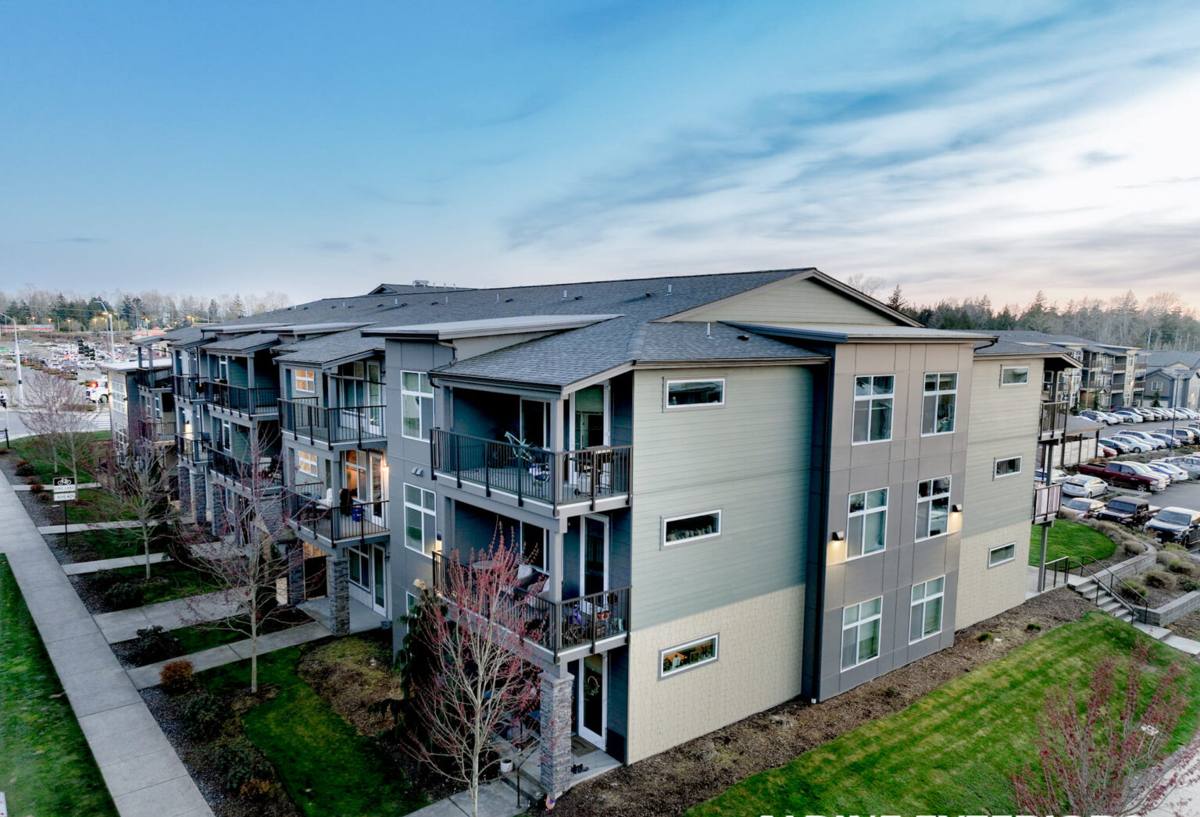
What Fiber Cement Brings to a Waterfront Lot
Fiber cement is a mix of Portland cement, sand, and cellulose fibers, cured into a dense, dimensionally stable board. It doesn't rot, it isn't a food source for insects, and it resists the swell-and-shrink cycle that damages wood siding in wet coastal climates. It's also non-combustible, which matters more each year as wildfire smoke and ember exposure become a regional concern even outside the fire zone itself.
None of that means fiber cement is maintenance-free or foolproof to install. It's a water-resistant product, not a waterproof one — it performs as designed only when the assembly behind it (weather-resistive barrier, flashing, drainage plane) is done correctly and when every cut edge and penetration is properly sealed or capped. In a salt-air, high-rain environment like Birch Bay, the installation details matter as much as the product itself.
How We Install Fiber Cement for Birch Bay Conditions
Starting With the Water Management Layer
Before a single piece of siding goes up, the wall needs a correctly lapped weather-resistive barrier, properly integrated window and door flashing, and a drainage gap where the wall assembly calls for one. On exposed Birch Bay elevations, this layer is what actually keeps water out of the wall cavity — the siding is the first line of defense, not the only one.
Clearances and Gaps
Fiber cement needs a minimum ground clearance and roof-to-siding clearance so that splashback and roof runoff don't sit against the bottom edge of a board. On bay-facing walls that see more driving rain, we treat these minimums as a floor, not a target — where a home's grading or roofline allows for more clearance, we take it.
Fastening and Cuts
Every cut edge exposes raw fiber cement, and every raw edge is a place water can wick in if it isn't sealed. Fasteners have to be set to the manufacturer's depth and pattern — overdriven nails crack the board's face, underdriven nails leave a gap that traps moisture. Butt joints get treated as a weak point by design and detailed accordingly, not just butted and caulked as an afterthought.
Caulking vs. Sealant, Used Correctly
Not every joint should be caulked, and using the wrong sealant — or caulking a joint that's supposed to be an open drainage path — traps water instead of shedding it. Getting this distinction right is a detail that separates a correctly installed fiber cement job from one that looks fine for a year or two and then starts showing problems at the seams.
The James Hardie Line We Use, and Why
We install James Hardie fiber cement exclusively. Hardie engineers its HZ5 product line specifically for climates with sustained moisture exposure, which describes the western Whatcom County coastline well. The ColorPlus factory finish is baked on in a controlled environment rather than field-sprayed, which gives it more consistent coverage and better resistance to fading and chalking under UV and salt exposure than a job-site paint application typically achieves.
We don't install LP SmartSide, vinyl, Cemplank, Allura, or bare cedar and primed spruce. That's a standard we hold across every job, not just waterfront properties — but it matters most here. Engineered wood products still rely on a wood core and can be more sensitive to sustained moisture at cut edges and joints. Vinyl's seams and thermal movement work against a home that already fights wind-driven rain. Other fiber cement brands may be reasonable products, but we've standardized on one manufacturer, one installation method, and one warranty structure so we can stand behind the whole system — not just the boards.
Comparing What Birch Bay's Climate Demands Against Common Siding Choices
| Factor | Salt air / coastal wind | Driving rain exposure | Long moss season |
|---|---|---|---|
| Fiber cement (James Hardie) | Dense, non-combustible, doesn't corrode | Performs as designed with correct flashing/gaps | Factory finish resists mildew growth better than field paint |
| Vinyl siding | Can become brittle over time near salt exposure | Seams offer water a path behind cladding | Surface can trap grime that feeds algae growth |
| Engineered wood (LP SmartSide) | Wood core sensitive to sustained moisture | Cut edges need diligent sealing to stay protected | Wood-based core more vulnerable if moss holds moisture at the surface |
| Cedar / primed spruce | Needs regular refinishing near salt spray | Absorbs and releases moisture with each rain cycle | Natural wood surface is a food source for moss and mildew |
Moss and Algae: Managing It Instead of Fighting It Forever
No siding product stops moss and algae from landing on a wall — Whatcom County's climate is going to grow something on any exterior surface eventually. What changes is how easily that growth takes hold and how easily it comes off. A dense, factory-finished fiber cement surface gives spores less to grip and holds up to a gentle wash better than a porous wood surface or a chalking paint film. Good roof and gutter design that keeps water moving away from siding, and landscaping that doesn't crowd walls in shade, both reduce how much moss pressure a wall sees in the first place — siding choice is one part of the picture, not the whole answer.
Our Process, Start to Finish
- Walkthrough and assessment: we look at existing siding condition, wall assembly, drainage, and roofline before quoting anything.
- Written estimate: product line, colors, and scope spelled out — no vague allowances.
- Tear-off and inspection: once old siding is off, we check sheathing and framing for hidden moisture damage before closing the wall back up.
- Weather-resistive barrier and flashing: installed and inspected before any siding goes up.
- Hardie installation to manufacturer spec: clearances, fastening, joint treatment, and trim detailing done to the standard the warranty requires.
- Final walkthrough: we go over the finished job with the homeowner before calling it done.
What to Ask Before Hiring a Siding Contractor Near the Water
- Do they install to the manufacturer's published specifications, or their own shortcut version?
- Will they show you the flashing and drainage plane details before siding goes on, not just the finished wall?
- Do they carry a manufacturer-backed warranty that transfers if you sell the home?
- Have they worked on bay-facing or waterfront properties in Whatcom County before, or is this their first?
- Can they explain why they use one product line instead of offering "whatever you want"?
A contractor who can't answer the flashing and drainage questions in detail isn't the one you want detailing the most exposed wall on a Birch Bay property.
Why Local Experience Matters More Here Than the Brochure Suggests
Installation manuals cover the general case. They don't tell you which side of a specific street sees the worst wind-driven rain, or how a particular roofline dumps water onto a lower wall during a Birch Bay storm off the Strait. That judgment comes from having done the work in this specific stretch of coastline before — seeing which details hold up after a few wet winters and which ones need extra attention the manual doesn't call out. A crew that treats a Birch Bay home the same as a job in a sheltered inland neighborhood is skipping steps the location actually requires.
Maintenance That Keeps Coastal Siding Performing
Fiber cement asks less of a homeowner than wood, but it's not zero-maintenance, especially this close to salt water. A yearly rinse to clear salt residue and organic buildup, a look at caulked joints and trim for cracking, and prompt attention to any gutter or drainage issue all extend the life of the job. None of this is heavy work — it's closer to the upkeep a homeowner already does elsewhere on the property, just applied consistently.
If you're planning a siding project on a Birch Bay home, we're glad to walk the property, look at what the current siding and wall assembly are dealing with, and put together a straightforward, no-pressure estimate. Use the form below to get started.