 Bellingham Siding
 Windows Built for Birchwood's Weather, Not Just the Showroom
Birchwood sits close enough to Bellingham Bay and the surrounding wetlands that homes here take a different kind of weathering than houses further inland in Whatcom County. Salt-tinged air, wind-driven rain off the water, and a moss season that can stretch from October well into May all work on window frames, seals, and glazing in ways that a generic "energy-efficient window" sales pitch doesn't account for. A window that performs fine in a dry climate can fail early here if the frame material, drainage detail, and sealant weren't chosen with this specific weather in mind.
When we talk about energy-efficient windows for Birchwood homes, we're not just talking about a lower U-factor on a spec sheet. We're talking about a window and installation that keeps water out during a sideways November rain, resists the slow corrosion that salt air causes on hardware and fasteners, and doesn't trap moisture behind the trim where moss and mildew get a foothold. Efficiency and durability are the same problem here — a window that leaks air is usually also a window that's letting in moisture, and moisture is what actually shortens a window's life in this climate.
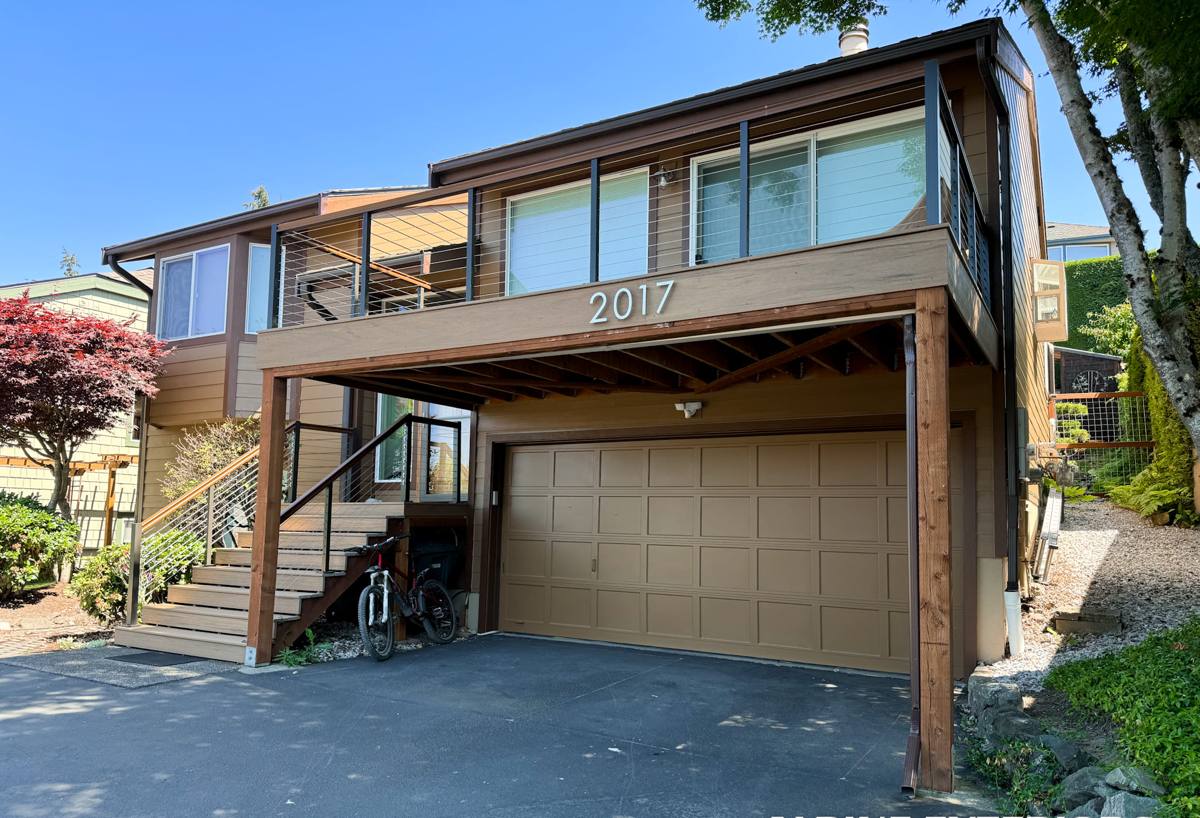
How to Tell Your Windows Are Underperforming
Most homeowners don't replace windows because of a single dramatic failure — it's a slow accumulation of small signs. Here's what we typically hear from Birchwood homeowners before they call us:
- Noticeable cold draft near the frame or sash, especially during winter storms
- Condensation or fogging between the panes of a double-pane unit — a sign the seal has failed
- Visible moisture staining, soft wood, or bubbling paint on interior or exterior trim
- Windows that are hard to open, close, or lock, often from swollen or warped frames
- Green or black growth building up in the corners of the frame or sill, faster than it should
- A noticeable jump in heating bills without any other change in the home
- Street or yard noise coming through more than it used to
Any one of these on its own might just mean a window needs caulking or a new sweep. Several of them together, especially on windows facing the prevailing weather, usually mean the unit itself has reached the end of its useful life.
What Actually Makes a Window Energy-Efficient
Glass and Coatings
Modern efficient windows use dual or triple-pane glass with a low-E (low-emissivity) coating and an inert gas fill, usually argon, between the panes. The coating reflects heat back into the room in winter and blocks solar heat gain in summer, while the gas fill slows heat transfer through the glass itself. For a marine climate like Bellingham's, where winter heat loss matters more than summer cooling load, we typically recommend a low-E coating tuned for heat retention rather than one optimized purely for solar control.
Frame Material
The frame does more than hold the glass — it's the biggest factor in how the window handles this region's rain and salt air over time. We'll cover frame options in detail below, but the short version is that frame material matters as much as glass package for long-term performance here.
Installation and Flashing
A high-performance window installed without correct flashing and air sealing will underperform a mid-grade window installed correctly. This is the part of the job that's invisible once the trim goes back on, and it's also the part most likely to be rushed by crews that don't work this climate regularly.
Comparing Frame Materials for a Salt-Air, High-Rain Climate
We get asked constantly which frame material is "best." The honest answer is that it depends on the specific window's exposure, the home's siding and trim style, and budget — but here's how the common options actually perform under Whatcom County conditions.
| Frame Material | Performance in Salt Air & Rain | Maintenance | Typical Lifespan |
|---|---|---|---|
| Vinyl | Good — won't rust or rot, holds up well to moisture | Low; occasional cleaning | 20-30 years |
| Fiberglass | Excellent — very stable, resists expansion/contraction from temperature swings | Low | 30-40+ years |
| Wood / Wood-Clad | Good if properly clad and maintained; bare wood is a poor fit for this climate | Higher; cladding and seals need periodic inspection | Varies widely with maintenance |
| Aluminum | Weaker; prone to condensation and corrosion in salt-influenced air unless thermally broken | Moderate | 20-30 years, shorter near the water |
For most Birchwood homes, we steer people toward vinyl or fiberglass for the bulk of their windows — not because wood or aluminum are bad products, but because our professional standard is to match the frame to the exposure. Bare or poorly maintained wood and un-broken aluminum both carry a maintenance burden and moisture risk that doesn't make sense for a home taking direct weather off the bay. If a homeowner wants the look of wood, a wood-clad or fiberglass unit with a wood-look interior gets that appearance without the exterior upkeep.
Beware of Undersized Efficiency Claims
Not every window advertised as "energy-efficient" meets ENERGY STAR criteria for the Northwest climate zone, and not every installer sizes the glazing package correctly for the compass direction the window faces. We size the glass and gas-fill package per elevation — a north-facing window and a west-facing window exposed to driving rain don't need identical specs.
Our Process for a Birchwood Window Project
- On-site assessment. We inspect existing frames, sills, and flashing — not just the glass — to see what's actually failing and why.
- Product selection. We walk through frame material, glass package, and grille or hardware options based on your home's exposure and your budget.
- Removal and inspection of the opening. Old windows come out carefully so we can check the rough opening for hidden water damage or rot before anything new goes in.
- Flashing and drainage detail. This is the step that determines whether the window stays dry for the next twenty years. We integrate flashing with the existing wall assembly rather than just caulking around the new unit.
- Installation and air sealing. The window is set plumb and square, shimmed correctly, and sealed with the right materials for the siding type — fiber cement, lap siding, or stucco all call for slightly different approaches.
- Interior and exterior trim. Trim is finished to match the home, with attention to keeping water moving away from the frame rather than pooling against it.
- Final walkthrough. We test operation, check seals, and confirm everything closes and locks the way it should before we call the job done.
What Drives the Cost of a Window Project
Every home is different, so we don't quote sight-unseen, but these are the main factors that move the price of a window replacement project up or down:
| Factor | Why It Matters |
|---|---|
| Number and size of windows | The most direct driver of total project cost |
| Frame material chosen | Fiberglass typically costs more upfront than vinyl but needs less long-term upkeep |
| Condition of the existing opening | Rot or water damage found during removal adds repair work before the new window goes in |
| Glass package | Triple-pane and specialty coatings cost more than a standard dual-pane low-E unit |
| Access and story height | Second-story or hard-to-access windows take more labor time |
| New construction vs. replacement | Retrofit installs into existing openings are generally more straightforward than full-frame replacements tied into siding work |
We'll always tell you honestly if a window's problem is really a siding, trim, or flashing problem instead — replacing the glass unit won't fix a leak that's coming from somewhere else on the wall.
Why It Matters to Hire a Crew That Already Works This Neighborhood
Birchwood's mix of home ages and styles means every project has its own quirks — older single-pane units that were never meant to hold up this long, additions with slightly different wall assemblies, or trim details that need to be matched carefully. A crew that regularly works Bellingham and greater Whatcom County has already seen how local siding types, roof overhangs, and prevailing wind direction affect where water actually gets pushed against a window. That local pattern recognition is what prevents a technically fine window from still leaking six months later because it was installed the way it would be in a drier climate.
It also means faster, more realistic scheduling. We know which weeks of the year are workable for exterior openings and which ones mean racing a storm system, and we plan Birchwood projects accordingly rather than treating every job the same regardless of season.
Keeping New Windows Performing Long-Term
Energy-efficient windows aren't fully maintenance-free, especially in a climate that grows moss on nearly everything. A little seasonal attention goes a long way:
- Clear debris and moss buildup from sills and weep holes so water can drain properly
- Check exterior caulking annually, especially on south- and west-facing units, and re-caulk if it's cracked or pulling away
- Wipe down hardware periodically to prevent salt-air corrosion on hinges, locks, and cranks
- Inspect interior sills after major storms for any sign of moisture intrusion
- Keep gutters and downspouts clear so roof runoff isn't being dumped directly onto window heads
- Operate windows through their full range periodically so seals and hardware don't seize up from disuse
These are small tasks, but skipping them is how a well-installed window ends up with an avoidable problem years down the road.
Get a Straightforward Look at Your Windows
If your Birchwood home has windows that are drafty, fogged, hard to operate, or just old enough that you're wondering whether repair or replacement makes more sense, we're happy to take a look and give you an honest read on what's actually going on — no pressure, no upsell. Fill out the form below to schedule a free estimate.