 Bellingham Siding
 Why Blaine Roofs Take a Beating
Blaine sits at the edge of Whatcom County where the land meets the Strait of Georgia, and that location shapes everything about how a roof ages there. Salt-laden air off the water corrodes exposed metal faster than it would twenty miles inland in Bellingham. Driving rain, often blown sideways during a fall or winter system, finds every weak flashing detail and pushes water where it was never meant to go. And the mild temperatures, shade, and near-constant dampness that make this part of the Pacific Northwest such a good place to live are the exact conditions moss and algae need to take hold on a roof deck and never really let go.
None of that means a roof in Blaine is doomed to fail early — it means the materials, flashing details, and workmanship have to be matched to the conditions it actually faces. A roof built the same way you'd build one in a dry inland climate will wear out here faster than it should, and the failure points are usually predictable if you know what to look for.
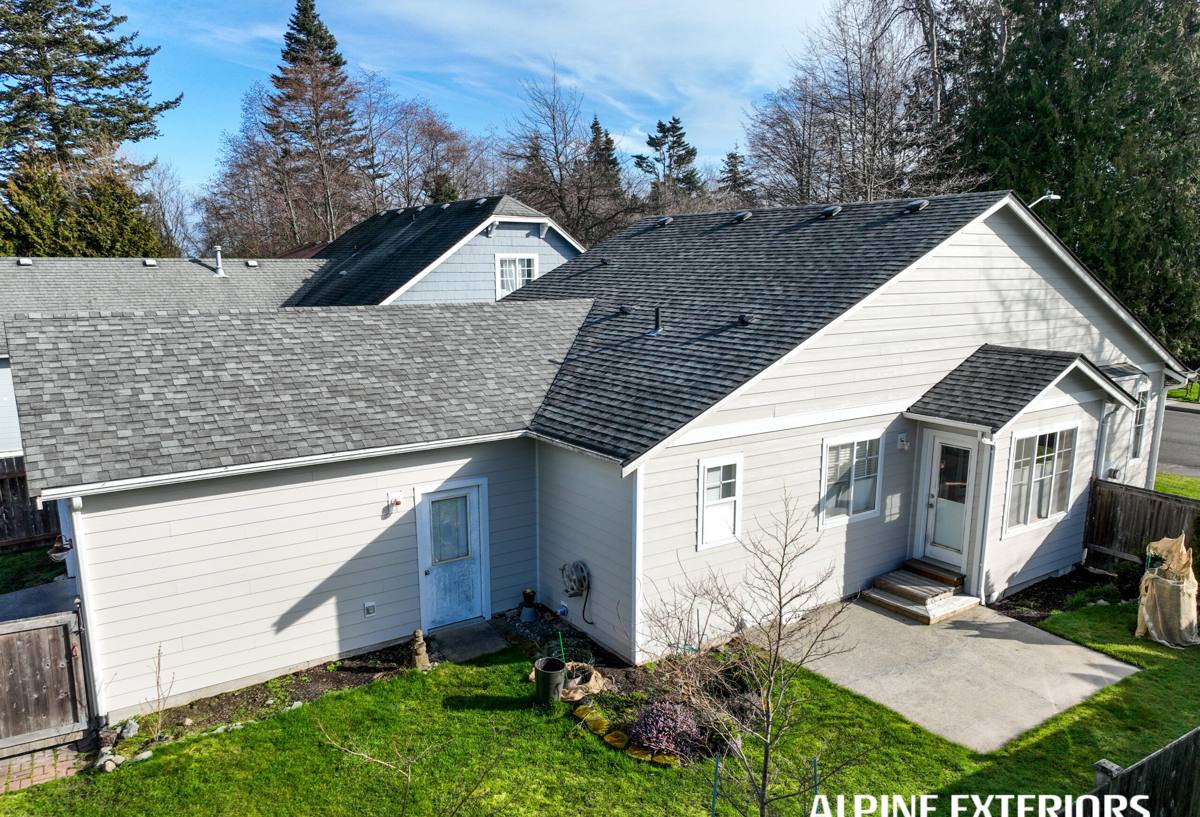
Signs a Blaine Roof Needs Replacing, Not Just Repairing
Repair makes sense when damage is isolated — a cracked pipe boot, a handful of shingles lifted by wind, a flashing leak at a single chimney. Replacement becomes the honest recommendation when the roofing system itself is near the end of its service life, or when the damage is spread across the whole field of the roof instead of one spot. Worth taking seriously:
- Granule loss heavy enough that shingles look patchy or bald, especially on south- and west-facing slopes
- Moss or algae staining that returns within a year or two of cleaning, no matter how often it's treated
- Shingles that are cupping, curling at the edges, or cracking underfoot when walked
- Soft spots in the decking you can feel from inside the attic, or sagging visible from the ground
- Daylight visible through the roof deck when you look up from inside the attic
- Multiple, unrelated leak points instead of a single isolated spot
- A roof already past 20-25 years old, especially with its original flashing and underlayment still in place
If you're only seeing one or two of these, a repair may still be the right call, and we'll tell you that plainly. Replacement is worth the investment when the roof as a whole system is compromised, not just because a few shingles look worn.
What a Correct Roof Replacement Actually Involves
A new roof is only as good as what goes on underneath the shingles. In a climate like this, the details most homeowners never see are exactly the ones that decide whether the roof lasts fifteen years or thirty.
Tear-Off and Deck Inspection
We remove the old roofing down to bare deck rather than layering new material over it. That's the only way to actually see the condition of the sheathing underneath — soft, delaminated, or rotted plywood has to be replaced before anything new goes down, or the new roof is being installed over a bad foundation that will telegraph problems through in a few years.
Underlayment and Water Protection
Synthetic underlayment has largely replaced traditional felt because it holds up better through repeated wet-dry cycles and resists tearing during installation on a windy day, which is common here. In valleys, around chimneys, and along eaves, we add self-adhering ice-and-water membrane — the extra layer that matters most exactly where driving rain and wind-blown water concentrate and pool.
Flashing and Penetrations
Flashing failures, not worn-out shingles, cause most of the leak calls we get. Chimneys, skylights, vent pipes, and roof-to-wall transitions all need new, properly lapped flashing as part of a real replacement — reusing old flashing pieces just carries the existing failure point into the new roof.
Ventilation
Balanced intake and exhaust ventilation keeps the attic close to outdoor temperature and humidity. Without it, warm indoor air condenses against the underside of the roof deck, which rots sheathing from the inside and feeds the same kind of moss and mildew growth this climate already encourages from the outside. Ventilation is cheap to get right during a replacement and expensive to fix afterward.
Fasteners and Corrosion Resistance
This close to the water, standard fasteners and flashing metals corrode faster than they would further inland. We use corrosion-resistant fasteners and flashing rated for coastal exposure rather than defaulting to whichever is cheapest — a rusted nail head or a corroded flashing seam is a slow leak waiting to happen, usually discovered only after it's already caused damage.
Choosing a Roofing Material for Blaine's Climate
There's no single "best" roofing material for every home — the right choice depends on budget, roof pitch and exposure, and how much upkeep you're willing to commit to. Here's how the common options actually compare for a coastal Whatcom County home:
| Material | Typical Lifespan Here | Moss/Algae Resistance | Maintenance Needed | Relative Upfront Cost |
|---|---|---|---|---|
| Algae-resistant asphalt composition shingle | 20-30 years | Good — copper/zinc granules slow regrowth | Periodic gentle cleaning, gutter upkeep | Lowest |
| Standard asphalt composition shingle | 15-25 years | Fair — staining and moss return faster | More frequent cleaning required | Low |
| Metal (standing seam or coated panel) | 40-50+ years | Excellent — little surface for moss to grip | Low; occasional fastener and seam check | Highest |
| Cedar shake | 20-30 years with upkeep | Poor without regular treatment | High — regular moss treatment and plank replacement | High |
We install and stand behind algae-resistant asphalt shingles and metal roofing as our primary recommendations for this area. Cedar shake can look great, but in a climate this wet it demands a level of ongoing maintenance — regular moss treatment, periodic plank replacement — that many homeowners underestimate when they choose it. That's an honest trade-off to weigh, not a knock on the material itself.
Cost Factors for a Blaine Roof Replacement
Every roof is priced on its own specifics, but the same handful of factors drive most of the variation we see on homes throughout Whatcom County:
| Factor | Why It Affects Price |
|---|---|
| Roof size and number of squares | More material and labor to install, straightforward scaling |
| Roof pitch and accessibility | Steeper or harder-to-access roofs slow the work and require more safety setup |
| Number of layers to remove | Tearing off two layers of old roofing costs more than tearing off one |
| Decking condition | Rotted or soft sheathing needs replacement before new roofing can go down |
| Material chosen | Asphalt, metal, and cedar carry very different material costs |
| Number of penetrations | Chimneys, skylights, and vents each need individual flashing work |
| Permit and disposal requirements | Local permit fees and debris hauling both add to the total |
We give you a written, itemized estimate before any work starts, so you know exactly what you're paying for and why — not a single lump number with no explanation behind it.
Our Process, Start to Finish
- Inspection and estimate: We walk the roof and attic, document the actual condition, and provide a written estimate with real options — not a guess made from the ground.
- Material selection: We help you weigh asphalt, metal, and other options against your budget and how exposed your roof is to weather and shade.
- Permitting: We handle the required permitting so the job is done to code, not around it.
- Tear-off and deck repair: Old roofing comes off, the deck gets inspected, and any damaged sheathing is replaced before anything new goes down.
- Underlayment, flashing, and installation: Ice-and-water membrane, synthetic underlayment, new flashing, and the roofing material go on in that order, to spec.
- Ventilation check: We confirm intake and exhaust ventilation are balanced before closing out the job.
- Cleanup and fastener sweep: Debris and stray nails are cleared from the yard, driveway, and landscaping.
- Final walkthrough and paperwork: We walk the finished roof with you and hand over warranty documentation before we consider the job done.
Why a Crew That Already Works Blaine Matters
A roofing crew that regularly works this stretch of Whatcom County already knows what coastal exposure does to a roof over time, has a feel for how local wind and rain patterns stress a roof deck, and understands the permitting process for the jurisdiction instead of learning it on your job. That familiarity shows up in small decisions — which flashing details to reinforce, where ventilation tends to fall short on homes built in a certain era, which fastener spec actually holds up this close to the water — that a crew unfamiliar with the area might not think to prioritize.
It also means we're not gone the moment the invoice clears. If a question comes up two years down the road, you're calling a crew still working in Blaine and out of Bellingham, not chasing down a company that only shows up for storm-damage work and then moves on to the next region.
Protecting Your Investment After Installation
A well-installed roof still benefits from basic upkeep, especially in a climate that grows moss year-round. A few habits go a long way toward getting the full lifespan out of the investment:
- Clean gutters at least twice a year so water isn't backing up under the roof edge
- Trim back tree limbs that shade the roof and keep it damp longer than it needs to be
- Have moss and algae treated gently, with products safe for the roofing material, rather than pressure-washed, which can strip granules and shorten shingle life
- Check that attic ventilation isn't blocked by insulation or stored belongings
- Have flashing around chimneys, skylights, and vents visually checked after major storms
- Schedule a roof inspection every few years even when nothing looks obviously wrong
Get a Free, No-Pressure Estimate
If you're weighing repair against replacement, or just want an honest read on where your roof actually stands, we're glad to take a look. Fill out the form below for a free estimate on your Blaine roof replacement — no pressure, no sales script, just a straight answer about what the roof actually needs.