 Bellingham Siding
 Why New-Construction Windows Deserve Extra Attention in Birchwood
Birchwood is one of the neighborhoods in Bellingham where new homes and infill construction keep going up, and window installation on a new build is a different job than swapping out old windows in an existing wall. On a new-construction project, the windows aren't just a fixture — they're part of the building envelope itself. How they're flashed, sealed, and tied into the house wrap and siding determines whether that wall stays dry for the next thirty or forty years, not just whether the window looks good on move-in day.
That distinction matters more in Whatcom County than in a lot of places, because our climate doesn't give a sloppy install much room for error. A window that's slightly out of plumb or under-flashed might not leak in year one. But between salt-laden air off the water, wind-driven rain, and the long stretch of damp, mossy weather we get most of the year, small gaps and shortcuts eventually show up as rot, stains, or mold — usually inside the wall where you can't see it until it's expensive.
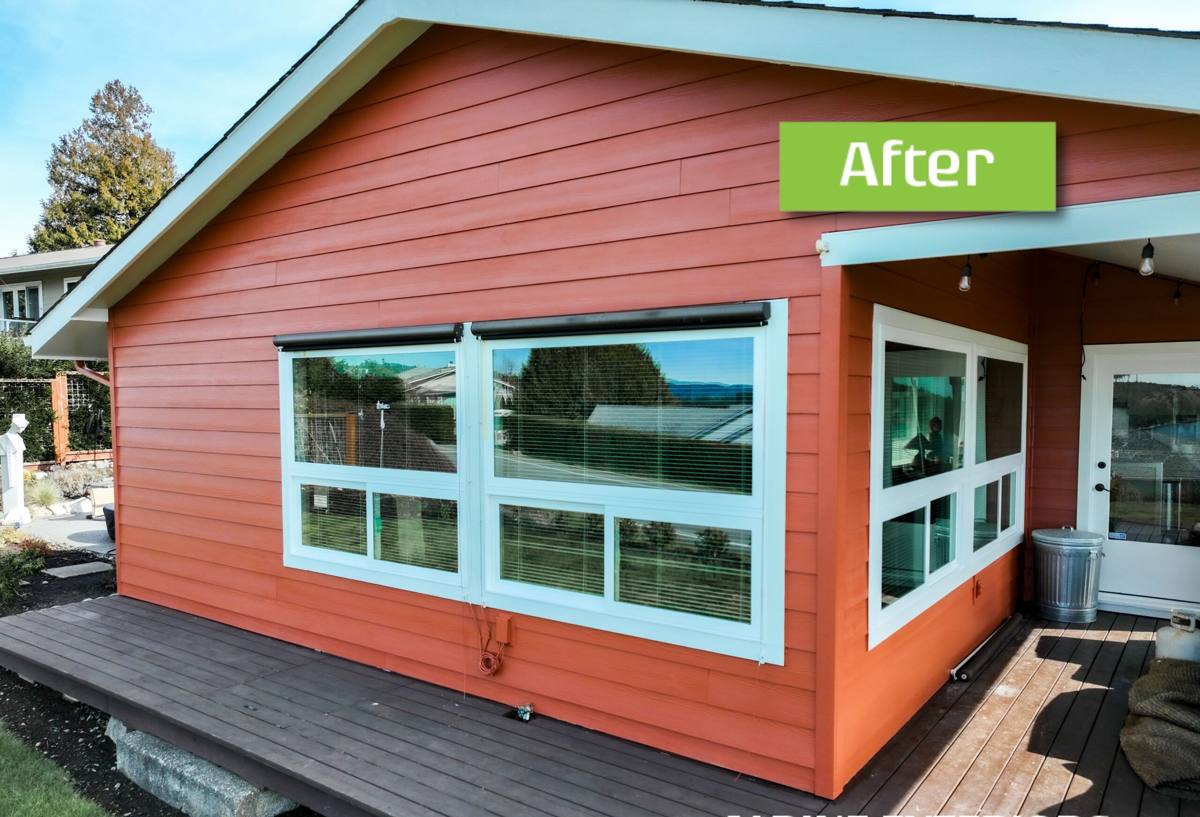
What Bellingham's Climate Asks of a New Window Install
Salt Air and Coastal Exposure
Bellingham sits close enough to saltwater that airborne salt is a real factor for exterior materials, including window hardware, fasteners, and metal flashing. Cheaper fasteners and untreated metal components corrode faster in this environment, and once a fastener fails, the seal around it fails too. We spec corrosion-resistant hardware and flashing on every install specifically because of this exposure, not as an upsell.
Driving Rain and Wind
Storms here don't just drop rain straight down — wind pushes it sideways and up under trim, sills, and poorly lapped flashing. A window that would be fine in a calmer climate can still take on water in Whatcom County if the flashing sequence isn't shingled correctly (each layer overlapping the one below it, so water is always directed outward and down, never trapped or funneled inward).
Moss Season and Prolonged Dampness
Our long moss season isn't just a roof and siding issue. Anywhere moisture sits — a sill that doesn't shed water, a gap where caulk has failed, a low spot in a drip cap — moss, algae, and mildew will eventually take hold, and that biological growth holds even more moisture against the building. Window details that shed water cleanly and dry out quickly matter as much as the window unit itself.
Choosing Window Products That Hold Up Long-Term
There's no single "best" window for every new-construction project — the right choice depends on the home's design, budget, and how exposed a given wall is to wind and rain. What we won't do is install a product or configuration we know is a poor match for this climate just because it's cheaper up front. Here's how the common frame materials compare for a Birchwood build:
| Frame Material | Moisture & Salt-Air Behavior | Maintenance | Best Fit |
|---|---|---|---|
| Vinyl | Won't corrode or rot; performs well if installed with proper flashing | Low — occasional cleaning | Budget-conscious builds, most elevations |
| Fiberglass | Excellent dimensional stability in wet, temperature-swinging conditions | Low | Exposed walls, larger openings, long-term owners |
| Wood-clad | Good if cladding and sealants are maintained; interior wood look | Moderate to high — sealant joints need periodic inspection | Design-driven projects where interior wood trim matters |
| Aluminum-clad | Strong but more prone to condensation and corrosion near salt air over time | Moderate | Contemporary designs, sheltered elevations |
We'll walk through these trade-offs with you rather than pushing one product line. What we do insist on, regardless of material, is proper flashing and sealant compatible with that specific window system — mismatched sealants and flashing tape are a common source of early failures we get called to fix.
Getting the Installation Right: Flashing, Sealing, and the Building Envelope
Flashing Sequence
Every rough opening gets sill flashing sloped to drain outward, jamb flashing that laps over the sill flashing, and head flashing that laps over the house wrap above the window — always shingle-style, always working with gravity. This sequence is the single biggest factor in whether a new-construction window stays dry, and it's also the step that's easiest to rush on a busy job site.
Sealants and Backer Rod
Exterior sealant is a backup to good flashing, not a substitute for it. We use sealants rated for the temperature range and UV exposure we actually get here, with backer rod set at the correct depth so the sealant can flex without tearing as the building moves seasonally.
Interior Air Sealing
A window that's sealed well on the outside but left gapped on the inside can still let moist interior air condense inside the wall cavity. We seal the interior side of the rough opening too, which also helps with energy performance and comfort — a nice side benefit of doing the job correctly.
Our New-Construction Window Process for Birchwood Builds
- Plan review: We look at window schedules, elevations, and rough opening sizes before framing is finalized, catching sizing or header issues early instead of on install day.
- Rough opening check: Openings are verified square, plumb, and correctly sized, with any framing corrections flagged to the builder before windows arrive.
- Flashing installation: Sill pan, jamb, and head flashing go in following the shingle-lap sequence, tied into the house wrap.
- Window set and fastening: Units are set level and plumb, shimmed correctly, and fastened per the manufacturer's requirements — this is what preserves the product warranty.
- Sealing, interior and exterior: Backer rod and sealant outside; air sealing inside.
- Final inspection: We check operation, seals, and flashing laps before siding closes the wall up, because this is the last point anyone can easily see what's underneath.
Common Mistakes We See on New Construction — and How We Avoid Them
- Flashing installed in the wrong order, directing water into the wall instead of away from it
- Fasteners driven through the flange without hitting solid framing, leaving the window loose over time
- Sealant used as a substitute for missing flashing rather than as a backup layer
- Rough openings that are out of square, forcing the window frame to rack and bind
- Mismatched sealant and flashing tape chemistries that fail to bond properly
- Sills without enough slope to shed water, creating a spot where moisture and moss can collect
- Skipping interior air sealing, which invites condensation inside the wall cavity
What Affects the Cost of New-Construction Windows
Costs vary by project, but a few factors consistently move the price on a Birchwood build:
| Factor | How It Affects Cost |
|---|---|
| Frame material | Vinyl is generally most economical; fiberglass and wood-clad cost more upfront |
| Window size and count | Larger openings and more units mean more labor and material |
| Wall exposure | Elevations facing prevailing wind and rain may warrant upgraded flashing details |
| Glass package | Higher-performance glazing costs more but improves comfort and efficiency |
| Site coordination | Working directly with a builder's schedule can reduce delays and re-mobilization costs |
We give a straightforward written estimate before work starts, broken out so you can see what you're paying for and where — no vague lump sums.
Why Hiring a Crew That Already Works Birchwood Matters
A crew that installs windows across Bellingham and Whatcom County regularly sees how different elevations and lot conditions in this area actually perform over a few wet seasons — not just how a job looks the day it's finished. That's the difference between installing to code and installing for how this specific climate behaves. We also know how to work alongside builders and general contractors on an active job site, coordinating flashing and sealing steps with framing, house wrap, and siding crews so nothing gets closed up before it's ready.
Local experience also means fewer surprises with permitting expectations and inspection timing in Whatcom County, and a crew that's still around next year if you ever have a warranty question.
Living With New Windows Through Moss Season and Beyond
Correctly installed new-construction windows need very little from you, but a few habits help them last:
- Keep weep holes and sill tracks clear of debris and moss so water can drain as designed
- Rinse pollen, salt residue, and organic buildup off frames and glass a couple of times a year
- Watch for cracked or shrinking exterior sealant after a few years and have it renewed before it fails
- Keep gutters and downspouts working properly, since overflow near a window is a common hidden source of leaks
If something ever does look off — a stain on interior trim, a window that's harder to operate, visible moss right at a sill — it's worth having it looked at early. Caught early, these are simple fixes. Left alone, they can become framing repairs.
If you're planning new construction or an addition in Birchwood and want windows installed right the first time, we're happy to walk the plans with you and provide a free, no-pressure estimate — just fill out the form below.