 Bellingham Siding
 Building Decks That Actually Hold Up in Blaine
Blaine sits right where the Salish Sea meets the Canadian border, and that location shapes everything about how an outdoor deck ages here. Between the salt-laden air rolling off Semiahmoo Bay and Drayton Harbor, the near-constant rain rolling through much of the year, and a moss season that can stretch from fall through spring, a deck in this part of Whatcom County works harder than one built inland. We've built and repaired decks up and down this stretch of coastline, and we've seen firsthand what happens when a deck is built to a generic spec instead of a coastal one: fasteners bleed rust within a couple seasons, ledger boards trap moisture against the house, and boards that looked fine at installation start cupping and graying within a year or two.
A custom deck built for Blaine isn't just about picking a nice railing style or a stain color. It's about material selection, fastening hardware, drainage detailing, and structural connections that are all chosen with this specific coastal climate in mind. That's the difference between a deck that needs real attention every few years and one that just gets used.
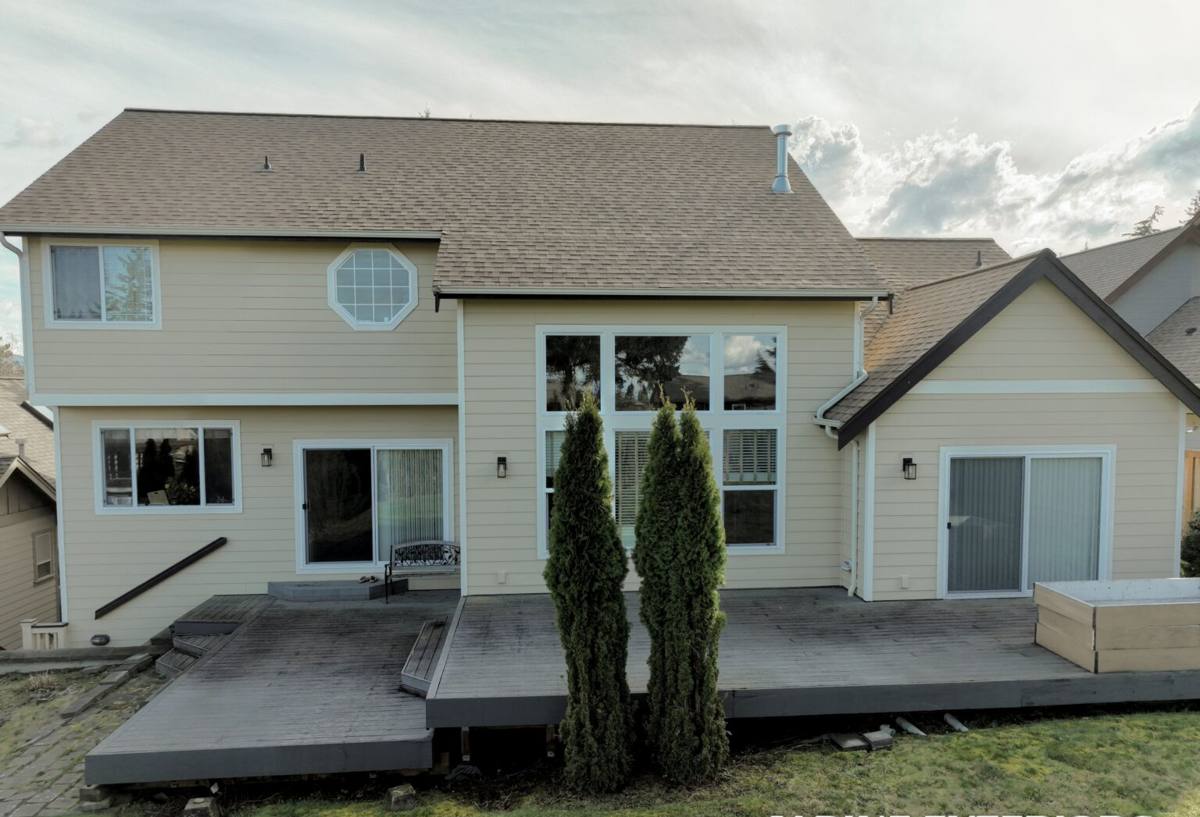
What Blaine's Climate Actually Does to a Deck
Salt Air and Corrosion
Proximity to saltwater means airborne salt settles on every exposed surface, including the metal you can't see once the deck is built. Standard galvanized fasteners and connectors are not enough this close to the water — they corrode faster than most homeowners expect, and once a fastener starts rusting, it can streak the surrounding wood and eventually weaken the connection it's supposed to be holding.
Driving Rain and Standing Water
Wind-driven rain off the bay doesn't fall straight down — it gets pushed sideways into ledger connections, under railing posts, and into any joint that isn't properly flashed or sloped. Decks that don't account for this end up with water sitting where it shouldn't, which is where rot and mold get their start.
Moss, Algae, and Shade
Whatcom County's long wet season, combined with tree cover common on many Blaine lots, creates ideal conditions for moss and algae growth on horizontal surfaces. Beyond looking bad, a mossy deck surface holds moisture against the boards and becomes genuinely slick and unsafe underfoot.
Temperature Swings and Wood Movement
Even though Blaine doesn't see extreme heat, the seasonal swing between damp winters and drier summer stretches causes wood to expand and contract. Boards installed without the right spacing or fastening method will cup, crown, or split over time.
Material Choices That Make Sense for This Area
There's no single "best" decking material for every project — it depends on budget, maintenance tolerance, and how the deck will be used. What matters is choosing honestly, with the coastal conditions factored in rather than ignored.
| Material | How It Handles Blaine's Climate | Maintenance Reality |
|---|---|---|
| Pressure-treated fir/pine | Affordable and structurally sound, but needs sealing on a regular schedule to resist moisture and moss buildup | Annual or biannual cleaning and re-sealing |
| Cedar | Naturally resists rot and insects, ages to a soft gray if left unfinished, popular for its look with this region's homes | Periodic cleaning; staining optional but extends life and color |
| Composite decking | Resists moisture absorption and doesn't need staining, though it still needs periodic washing to keep salt film and moss from building up on the surface | Occasional cleaning; no sealing required |
| PVC/capped composite | Best moisture resistance of the group, holds up well to salt exposure and repeated wet-dry cycles | Lowest maintenance; higher upfront cost |
For hardware, we treat stainless steel or marine-grade coated fasteners as the standard for any deck within a few miles of the water, not an upcharge. Standard galvanized hardware simply doesn't hold up the same way this close to Semiahmoo Bay, and replacing corroded fasteners later costs more than specifying the right ones up front.
What a Correctly Built Deck Includes
Structural Framing
Ledger boards need proper flashing where they meet the house, with a gap or drainage plane that keeps water from being trapped against the siding — this is one of the most common failure points we find on older decks in wet climates. Joists and beams should be sized for the actual load and span, not just built to the minimum the framing lumber allows.
Drainage and Slope
A deck surface should have a slight slope away from the house so water sheds instead of pooling. Any low spots or flat sections are where moss gets its first foothold and where boards start to hold moisture longest.
Fastening and Hardware
Hidden fastener systems, stainless or coated screws, and corrosion-resistant joist hangers all matter more here than in a drier inland climate. This is a place where cutting corners on hardware shows up as visible rust streaks within a season or two.
Railings and Guards
Whether you go with wood, metal, or composite railing, the posts and connections need the same corrosion-resistant treatment as the deck frame, since railings take direct weather exposure on all sides.
Permits and Code
Decks above a certain height or attached to the home typically require a permit through the local jurisdiction, along with guard height and baluster spacing requirements. We handle this as part of the project so you're not left navigating it on your own.
Our Process for a Blaine Deck Project
- On-site assessment — we look at your lot's sun exposure, tree cover, drainage patterns, and how close you are to the water, since all of that affects material and hardware decisions.
- Design and material selection — we walk through the honest tradeoffs between wood and composite options for your budget and maintenance preference.
- Permitting — we handle the paperwork with the relevant jurisdiction so the project meets code from the start.
- Site prep and framing — proper ledger flashing, corrosion-resistant hardware, and correctly sloped framing go in before a single deck board is laid.
- Decking, railing, and finish work — installed with fastening methods matched to the material, whether that's hidden fasteners for composite or properly spaced and sealed boards for wood.
- Walkthrough and maintenance guidance — we explain what upkeep your specific materials will actually need, so there are no surprises in year two or three.
Maintenance Realities for This Climate
No deck in Whatcom County is truly maintenance-free, even composite and PVC products marketed that way. The difference is how much and how often. Here's a practical checklist for keeping a Blaine deck in good shape year-round:
- Sweep and rinse the surface regularly during wet months to prevent moss and algae from taking hold
- Check and clear gaps between boards so debris doesn't trap moisture against the structure
- Inspect fasteners and hardware annually for early signs of corrosion, especially on wood decks
- Re-seal or re-stain wood decking on the schedule appropriate to the product — don't wait until it's visibly gray and dry
- Keep gutters and downspouts near the deck clear so overflow isn't adding extra water exposure
- Trim back overhanging branches that keep the deck surface shaded and slow to dry
Why a Crew That Already Works Blaine Matters
A deck built to a generic national spec sheet is not the same as one built by a crew that already understands what Semiahmoo Bay's salt air and Whatcom County's rain patterns do to fasteners, framing, and finishes over time. We've made the material and hardware calls on real projects in this exact area, which means we're not guessing about what holds up and what doesn't — we've watched it happen. That local knowledge shows up in small decisions throughout a project: which fastener grade to spec, how much slope to build into the surface, where flashing needs extra attention, and which materials are worth the extra upfront cost given how this coastline treats a deck.
It also means we're not far away if something needs a look after the fact. A local crew has a stake in how the work performs over the years, not just how it looks on installation day.
Getting Started
Every property is a little different — sun exposure, tree cover, distance from the water, and how the deck will actually be used all factor into the right design and material choice. If you're planning a new deck or replacing one that's showing its age, we're happy to come take a look and talk through honest options for your specific lot. Reach out for a free, no-pressure estimate using the form below.