 Bellingham Siding
 Siding Installation Built for Blaine's Coastal Climate
Blaine sits right on the water at the northern edge of Whatcom County, and that location shapes everything about how a home's exterior ages. Salt-laden air off the Strait of Georgia and Semiahmoo Bay, driving rain that comes in sideways during winter storms, and a moss season that can stretch from October through May all put real, cumulative stress on siding. A product or installation that would hold up fine in a drier inland climate can fail early here. That's the lens we bring to every siding installation job in Blaine: not just "what looks good," but "what actually survives this specific environment for decades."
We install James Hardie fiber cement siding exclusively. That's a deliberate standard, not a sales pitch, and we'll explain why throughout this page. For a coastal Whatcom County property, the case for a non-combustible, engineered, factory-finished siding system is stronger than almost anywhere else we work.
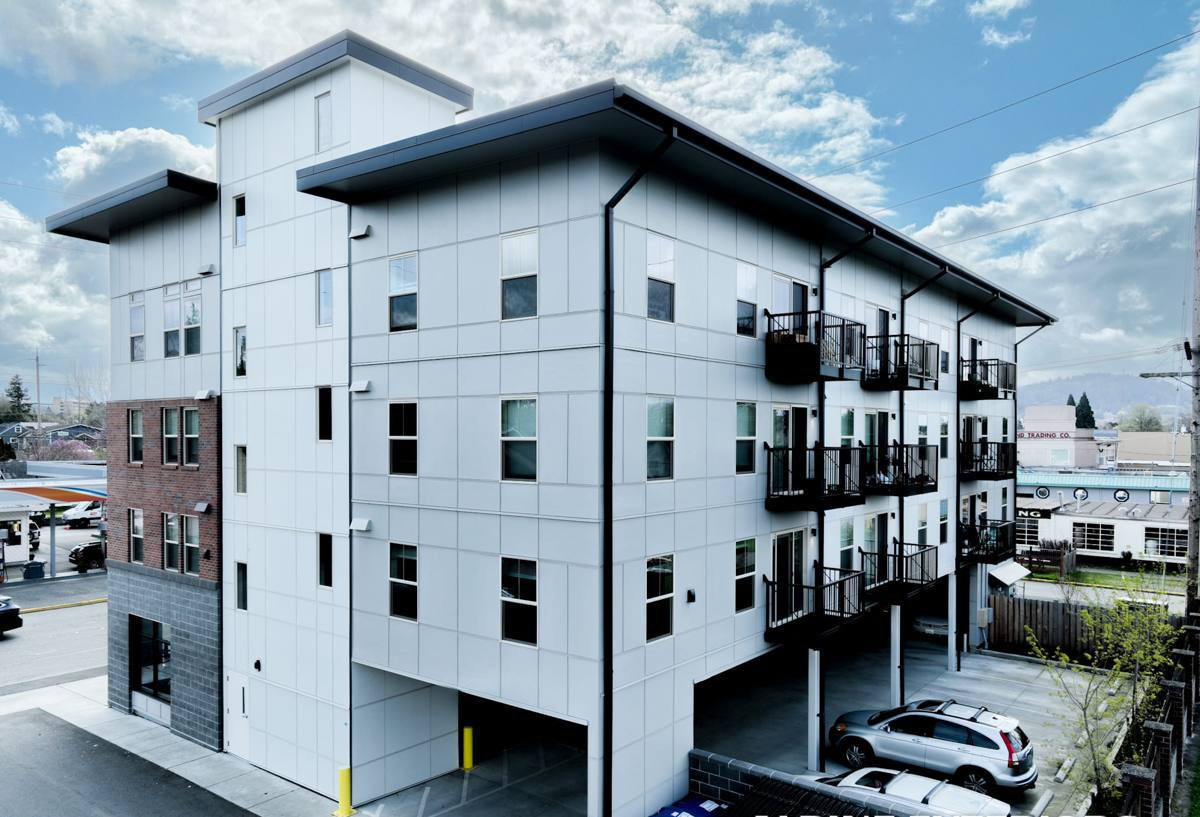
What Blaine's Environment Does to Siding Over Time
Salt Air and Corrosion
Homes within a mile or two of the water deal with airborne salt that settles on every exterior surface. Salt is hygroscopic — it pulls moisture out of the air and holds it against whatever it lands on. Over years, that constant low-grade dampness accelerates wood rot, corrodes cheap fasteners, and breaks down paint film faster than the same product would degrade even twenty miles inland. Siding materials and installation hardware both need to be chosen with that in mind.
Driving Rain
Blaine gets wind-driven rain off the Strait, not just straight-down rain. That matters because it pushes water sideways into laps, seams, and penetrations that a "normal" rainscreen assumption doesn't always account for. Flashing details, lap overlap, and caulking choices that would be adequate in a sheltered inland lot can let water in here. The building envelope behind the siding — house wrap, flashing, drainage plane — has to be installed with that wind-driven exposure in mind, not just the siding itself.
Moss and Sustained Dampness
Whatcom County's long wet season means north-facing walls, shaded elevations, and anywhere airflow is restricted can stay damp for months at a stretch. Moss and algae take hold on surfaces that hold moisture, and once established they keep the substrate underneath wetter than it would otherwise be. Wood-based sidings are especially vulnerable — moss growth accelerates rot in a way that's hard to reverse without stripping the wall back down.
Why We Standardized on James Hardie for This Climate
James Hardie fiber cement is engineered specifically for climate durability. It's non-combustible, doesn't support rot the way wood-based products do, and Hardie's HZ5 product line is formulated for cold, wet, freeze-thaw climates like ours — as opposed to the HZ10 line built for hot, humid regions. That climate-specific engineering is one of the reasons we don't treat "siding" as a one-size-fits-all product category.
The factory-applied ColorPlus finish matters just as much in a salt-air environment as the substrate does. Field-applied paint is more porous and more vulnerable to salt-accelerated breakdown than a baked-on factory finish engineered for UV and moisture resistance. That finish is also backed by its own warranty against fading and peeling, separate from the product warranty on the board itself — a combination that's hard to replicate with site-painted materials.
What We Don't Install, and Why
We get asked about LP SmartSide, vinyl, Cemplank, Allura, primed spruce, and cedar fairly often, and we're upfront about why we've moved away from all of them for our own installs:
- Vinyl can warp and become brittle with UV and temperature cycling, and its seams and butt joints give wind-driven rain more opportunities to find a way behind the cladding.
- Wood-based composite sidings (LP SmartSide) perform reasonably in moderate climates but rely on edge sealing and maintenance discipline to resist moisture — a tough ask in a climate with this much sustained dampness and moss pressure.
- Primed spruce and cedar are natural wood products, and natural wood in a salt-air, high-moisture coastal climate needs more frequent recoating and inspection than most homeowners are prepared to keep up with, especially on hard-to-reach elevations.
- Other fiber cement brands (Cemplank, Allura) are legitimate products, but we've standardized our crews, flashing details, and warranty process around one manufacturer's system so every job gets the same level of installer familiarity and factory support.
None of these are "bad" products in every application. They're just trade-offs we've decided aren't worth carrying for homes in this specific climate, when a better-engineered option exists.
What a Correct Siding Installation Actually Involves
The siding board itself is only part of the system. A correct install in a wind-driven-rain, high-moisture climate depends on everything behind and around the board:
The Water-Resistive Barrier and Drainage Plane
A properly lapped, correctly taped house wrap or building paper is the first line of defense — it has to shed water that gets past the siding, not just block it outright. On many older Blaine homes we open up, this layer is either missing, degraded, or installed with laps running the wrong direction.
Flashing at Every Penetration
Windows, doors, deck ledgers, hose bibs, and vents are the most common points where water gets behind siding. Each one needs proper head flashing and step flashing, not just caulk. Caulk is a maintenance item, not a waterproofing strategy — it should be a backup, never the primary defense.
Rainscreen Gap
A furring strip or engineered rainscreen product creates a small air gap behind the siding, letting any moisture that gets through drain and dry out instead of sitting against the wall assembly. In a climate with this much sustained dampness, that gap is what keeps minor water intrusion from turning into rot.
Fastening and Lap Exposure
James Hardie specifies fastener type, spacing, and lap exposure for a reason — get it wrong and you either void the warranty or create a wall that looks fine for a year or two and then starts failing at the seams. We follow Hardie's published installation instructions exactly, including their climate-specific guidance for coastal and cold-weather zones.
Caulking and Sealant Details
Where sealant is appropriate — trim joints, inside corners, certain penetrations — the product matters. A sealant rated for exterior UV and moisture exposure, applied to clean, dry, properly primed surfaces, lasts years longer than a bargain caulk applied over dust.
Our Process for a Blaine Siding Installation
- On-site assessment. We walk the home, check the existing wall assembly where accessible, and note problem areas — north-facing walls, shaded sections, anywhere moss or staining shows up.
- Tear-off and inspection. Once old siding comes off, we inspect the sheathing and water-resistive barrier underneath. Hidden rot or moisture damage gets addressed before anything new goes up — covering a problem is worse than finding it.
- Water-resistive barrier and flashing. We install or repair the drainage plane and flash every penetration before the siding itself goes on.
- Rainscreen installation. Furring strips go up to create the drainage gap behind the new siding.
- Hardie installation to spec. Boards, panels, or trim go up following James Hardie's fastening, lap, and clearance requirements — including ground clearance and gutter/roofline clearances that matter for long-term moisture control.
- Final detailing. Caulking, touch-up, and a walkthrough so you know what maintenance (if any) is actually needed going forward.
Cost Factors for a Blaine Siding Installation
Every home is different, but the factors that move the price on a siding installation are fairly consistent. We provide a firm number after a walkthrough, not a phone estimate, because tear-off condition and wall complexity vary a lot house to house.
| Factor | Why It Affects Cost |
|---|---|
| Tear-off and disposal | Old siding condition and layer count affect labor and disposal volume |
| Sheathing/substrate repair | Rot or water damage found during tear-off needs to be fixed before re-siding |
| Home size and wall complexity | Dormers, multiple gables, and cut-up wall planes add labor and trim work |
| Siding profile (lap, shingle, panel) | Material cost and install labor both vary by profile choice |
| Trim and accessory scope | Corner boards, fascia, soffit, and window trim add to material and labor |
| Access and site conditions | Steep lots, limited access, or height requirements affect equipment and time |
Maintenance Expectations After Installation
One of the practical benefits of a correctly installed Hardie system in this climate is how little upkeep it demands compared to wood or vinyl. That said, no siding is fully maintenance-free in a coastal, moss-prone environment. A short annual checklist keeps a new installation performing the way it should:
- Rinse siding periodically to remove salt residue and organic buildup, especially on walls facing the water or shaded, damp elevations
- Keep gutters clear so overflow doesn't run down the wall face
- Trim back vegetation and tree cover that keeps a wall section shaded and damp longer than the rest of the house
- Inspect caulk joints at trim and penetrations every year or two and touch up as needed
- Watch for moss or algae staining on north-facing and shaded walls, and address it before it spreads
Why Hiring a Crew That Already Works Blaine Matters
Installation quality is the single biggest factor in how siding performs over time — more than the brand of board on the wall. A crew that regularly works Whatcom County's coastal towns already knows which details get skipped on a "standard" install and cause problems here specifically: under-flashed window heads, missing rainscreen gaps, wrong fastener spacing near the water. That local pattern recognition is hard to substitute with a generic installation crew working from a national playbook, even a competent one.
It also means we're not guessing at code requirements, wind exposure ratings, or how a particular elevation of a particular street tends to take weather. We've seen how these details play out on real Blaine homes, not just in a manufacturer's install manual.
Signs Your Current Siding May Be Failing
If you're not sure whether it's time to replace siding versus repair it, a few signs are worth taking seriously, especially on a home exposed to Blaine's coastal conditions:
- Soft or spongy spots when you press on the siding, particularly near the bottom courses or under windows
- Persistent moss or algae staining that comes back quickly after cleaning
- Visible warping, cupping, or separation at seams and laps
- Paint that's peeling or bubbling rather than just fading
- Interior signs like peeling paint, musty smell, or staining on walls that back up to exterior siding
Any one of these is worth a professional look before it turns into a sheathing or framing repair, which costs a lot more than a siding job alone.
Get a Free, No-Pressure Estimate
If you're planning a siding replacement or new installation for a home in Blaine, we're happy to walk the property, look at what your walls are dealing with, and give you a straight answer on scope and cost. There's no obligation and no pressure — just a clear look at what your home actually needs given the local climate. Use the form below to request your free estimate.