 Bellingham Siding
 Why Columbia Neighborhood Homes Take a Different Kind of Beating
Homes in Bellingham's Columbia neighborhood sit close enough to Bellingham Bay that salt-laden air is a daily fact of life, not an occasional weather event. Add Whatcom County's long, wet fall-through-spring stretch and the moss season that comes with it, and you've got a combination that's genuinely harder on exterior siding than what homes fifty miles inland deal with. Salt air accelerates corrosion on fasteners and trim. Driving rain off the water finds every gap in flashing and caulking. And moss doesn't just look bad on a north-facing wall — it holds moisture against the siding surface for weeks at a time, which is exactly the condition that rots wood-based products and delaminates cheaper composites.
None of this means Columbia homes need exotic materials or unusual construction. It means the fundamentals — moisture management, fastening, and material choice — have to be done right, because this climate has less tolerance for shortcuts than most.
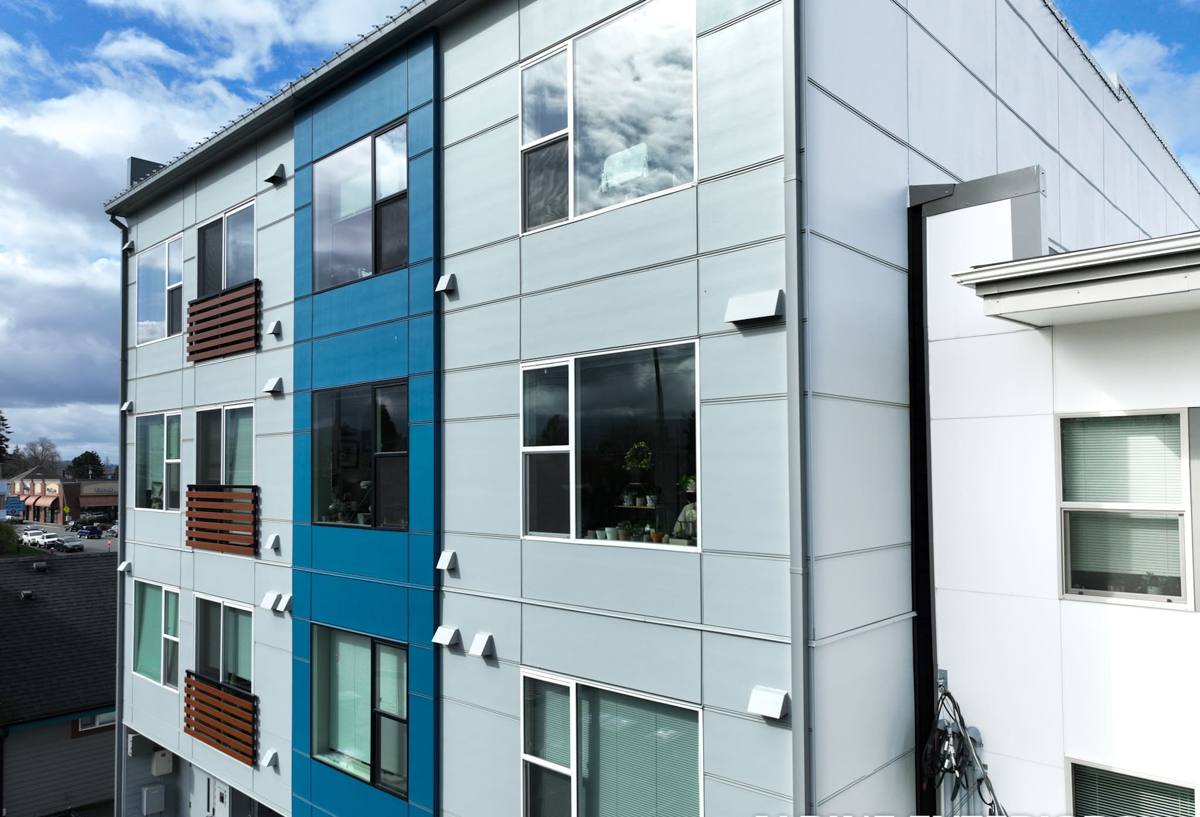
How to Tell When It's Replacement Time, Not Repair Time
A lot of siding problems in this neighborhood get patched for years before anyone calls a contractor, mostly because the damage hides behind paint or in shaded, low-traffic sides of the house. Here's what actually signals it's time for a full replacement rather than another round of caulk and touch-up paint:
- Soft or spongy spots when you press on the siding, especially near the bottom courses and around window trim
- Paint that keeps failing in the same spots within a year or two of repainting, even with quality paint
- Persistent moss or algae growth that returns within weeks of cleaning, particularly on north- and west-facing walls
- Visible cupping, warping, or separation at the seams between boards
- Rust streaks below nail heads or corner trim, a sign fasteners are corroding
- A musty smell near exterior walls inside the home, which often points to moisture already past the siding layer
- Siding that's original to a home built more than 20-25 years ago, especially if it's wood-based or an early composite
If you're seeing two or more of these, a repair is usually just delaying a bigger repair bill later. Once moisture gets behind the cladding in a climate like Bellingham's, it doesn't dry out on its own — it keeps working.
What a Correct Siding Replacement Actually Involves
Siding replacement isn't just pulling off old boards and nailing up new ones. In a wet coastal climate, the work that happens underneath the visible siding matters as much as the siding itself. A proper job on a Columbia home includes:
Tear-off and substrate inspection
Removing the old siding down to the sheathing lets us actually see what's happening underneath — rot, mold, insect damage, or compromised framing that's been hidden for years. This is often the first real look anyone's had at the wall assembly since the house was built.
Water-resistive barrier and flashing
A weather-resistant barrier goes over the sheathing, and flashing gets installed at every penetration — windows, doors, vents, and horizontal trim. This is the layer that actually stops water intrusion; the siding itself is the second line of defense, not the first. Given how much driving rain this area sees off the water, corners cut here are the most common cause of future rot.
Proper fastening and clearances
Fasteners need to be corrosion-resistant given the salt air exposure, and siding needs correct clearance from grade, roof lines, and decks so water has somewhere to go instead of wicking up into the material.
Finish work
Trim, caulking at appropriate joints only (not everywhere — over-caulking traps moisture), and touch-up painting on cut edges complete the job.
Skipping or rushing any one of these steps is how a siding job that looks fine on installation day turns into a moisture problem within a few winters.
Why We Only Install James Hardie Fiber Cement
We get asked regularly why we don't offer vinyl, LP SmartSide, or the cheaper fiber cement alternatives. The honest answer is that we've standardized on James Hardie because it's the product we're comfortable standing behind in this specific climate, and we'd rather install one product correctly than offer five and let homeowners guess which one holds up.
Fiber cement is non-combustible, which matters increasingly in Washington. It doesn't absorb and swell with moisture the way wood-based products can, which is a real advantage during a Whatcom County moss season when north-facing walls stay damp for extended stretches. Hardie's ColorPlus factory-applied finish is baked on under controlled conditions, which gives it more consistent fade and wear resistance than field-applied paint, and it comes with a real, transferable warranty backing that finish.
James Hardie also engineers specific product lines (their "HZ" designations) for different climate zones — a home in a salt-air, high-moisture zone doesn't need the same product formulation as one in a dry, high-heat region. That climate-specific engineering is part of why we don't treat siding as a one-size-fits-all product.
How Hardie Compares to the Alternatives Homeowners Often Ask About
| Material | Moisture behavior in coastal/wet climates | Maintenance burden | Fire resistance |
|---|---|---|---|
| James Hardie fiber cement | Doesn't swell or rot; handles sustained damp exposure well | Low — factory finish holds color for years | Non-combustible |
| LP SmartSide (engineered wood) | Wood-based; more sensitive to sustained moisture and requires diligent caulk/paint maintenance | Moderate to high | Combustible, treated for fire resistance |
| Vinyl siding | Doesn't rot, but can warp, crack in cold, and doesn't stop moisture from tracking behind panels | Low upfront, but limited repair options when damaged | Combustible, can melt/deform near heat |
| Primed cedar or spruce | Natural wood movement; needs consistent repainting to prevent moisture entry | High — ongoing painting and sealing | Combustible |
This isn't a knock on every homeowner who has one of these products on their home today — plenty perform fine with diligent upkeep. It's simply why, when we're the ones installing new siding, we install the product we believe holds up best with the least ongoing maintenance in this specific climate.
Our Process for a Columbia Siding Replacement
- On-site assessment — we walk the exterior, check problem areas you've noticed, and look at siding condition on all four sides, including the ones you don't see from the street.
- Written estimate — a clear scope of work and cost, with material selection (Hardie plank profile, color line) discussed based on your home's style and the wall orientations most exposed to weather.
- Tear-off and inspection — old siding comes off, sheathing gets inspected, and any rot or damage found gets addressed before new material goes up, not covered over.
- Barrier and flashing installation — the moisture-management layer goes in correctly around every window, door, and penetration.
- Hardie installation — installed to manufacturer specification for fastening, clearances, and joint treatment, which is also what keeps the warranty valid.
- Final finish and walkthrough — trim, touch-up, cleanup, and a walkthrough so you know exactly what was done and what to expect going forward.
What to Ask Before Hiring Anyone for Siding Work in Columbia
Siding replacement is a big investment, and this neighborhood's climate punishes bad workmanship faster than drier parts of the state. Before you hire, it's worth asking:
- Do you inspect and repair sheathing, or just cover over whatever's underneath?
- What water-resistive barrier and flashing details do you use, specifically?
- Are you a factory-certified or experienced Hardie installer, and can you speak to manufacturer installation specs?
- What's covered under warranty — material only, or labor too — and for how long?
- Do you have experience with homes in this specific area and its exposure conditions?
- Will I get a written, itemized estimate before work starts?
A contractor who can answer these clearly, without hedging, is usually a contractor who does this correctly on a regular basis.
What Drives the Cost of a Siding Replacement
| Cost factor | Why it matters |
|---|---|
| Home size and wall complexity | More square footage and more corners, gables, and trim details mean more labor and material |
| Extent of underlying damage | Rotted sheathing or framing found during tear-off adds repair cost, but skipping it just defers the problem |
| Siding profile and color line | Hardie offers multiple plank profiles and ColorPlus color lines at different price points |
| Trim and detail work | Window and corner trim, fascia, and soffit work add labor beyond the flat wall area |
| Access and site conditions | Multi-story sections, tight lot lines, or landscaping obstacles can affect labor time |
We don't quote off square footage alone — an accurate number requires seeing the home, which is what the estimate visit is for.
Why Local Experience in Columbia Actually Matters
A crew that already works in and around Bellingham knows which wall orientations in this neighborhood take the worst of the driving rain, how aggressively moss establishes itself on shaded north sides, and how salt air exposure changes fastener and flashing choices compared to an inland job. That's not marketing — it's the difference between a siding job that's engineered for this specific environment and one that's engineered for a generic climate zone. We'd rather bring that local knowledge to your project than treat every home the same regardless of where it sits.
If your Columbia-area home is due for new siding, or you're just not sure whether what you have needs repair or replacement, we're happy to take a look. Reach out for a free, no-pressure estimate — there's a form right below to get started.