 Bellingham Siding
 Decks Built for Cordata's Weather, Not Just Its View
Cordata sits in north Bellingham, close enough to the water and the marine air pattern that moves through Whatcom County that a deck here lives a different life than one built on the dry side of the state. Wood, fasteners, footings, and finishes all take on moisture in ways that show up slowly — a soft board here, a green stain there, a railing post that starts to wobble two or three winters in. A deck that's "built right" for Cordata isn't a different design so much as a different set of decisions at every step: how the frame drains, what the boards are made of, how the hardware resists corrosion, and how the whole structure sheds water instead of holding onto it.
This page is about custom deck building and replacement specifically for homes in Cordata — new decks, full tear-out-and-rebuild projects, and decks that need honest evaluation before another season of driving rain and moss goes by.
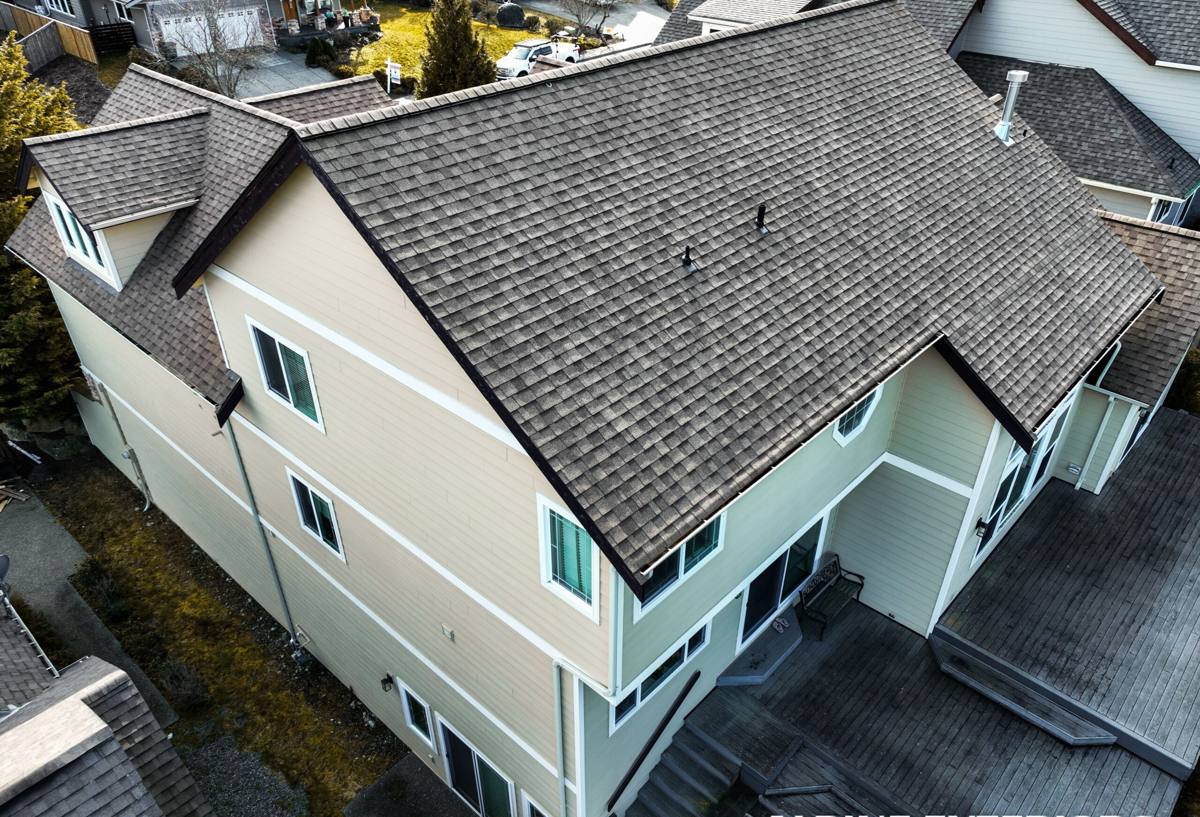
What Bellingham's Climate Actually Does to a Deck
Three things define deck performance in this part of Whatcom County, and they compound each other:
- Driving rain. Storms here don't just fall straight down — wind-driven rain gets pushed sideways into ledger connections, under railing caps, and into any gap where end-grain wood is exposed.
- Salt-influenced air. Proximity to Bellingham Bay and the Sound means fasteners, brackets, and any exposed metal see more corrosion pressure than the same hardware would in a dry inland climate.
- A long moss and algae season. Cool, damp, and shaded conditions for much of the year give moss and algae a long runway on deck boards, especially anything under trees or on the north side of a house.
None of these are exotic problems, but they're constant ones. A deck built without them in mind doesn't fail dramatically — it just ages faster than it should, and the owner ends up paying for it in maintenance, early replacement, or a rot repair that could have been avoided at the framing stage.
Where Decks Actually Fail Around Here
After years of working on homes across Whatcom County, the failure points we see repeat themselves in the same handful of places:
The Ledger Board Connection
This is where the deck attaches to the house, and it's the single most common source of hidden rot. If flashing wasn't installed correctly — or wasn't installed at all — water works its way behind the ledger and into the house's rim joist. This is often invisible from the deck surface and only shows up once siding or interior finishes are pulled back.
Joist Tops and End Grain
Horizontal wood surfaces hold water. Joist tops without protective tape, and cut ends of boards without sealer, absorb moisture every time it rains and dry out slower than the rest of the board. Over years, this is where rot starts even on decks that otherwise look fine.
Fasteners and Connectors
Standard hardware corrodes faster in this climate than homeowners expect. Rust streaks on decking, loosened structural screws, and corroded joist hangers are common on older decks that used the wrong grade of fastener for a coastal-influenced environment.
Post Bases and Footings
Posts set directly in concrete, or footings without proper drainage, trap moisture at the base of structural posts — exactly the spot where deck collapse risk concentrates over time.
Choosing Decking Material for a Marine Climate
There's no single "correct" material for every Cordata home — it depends on budget, how much upkeep the owner wants to do, and how much shade and moisture exposure the deck actually sees. Here's how the common options actually compare in this climate, not in a showroom:
| Material | Moisture & Moss Behavior | Maintenance | Typical Lifespan Here |
|---|---|---|---|
| Pressure-treated fir/hem-fir | Absorbs water readily; needs sealing to resist moss and graying | Annual cleaning, resealing every 1-2 years | 10-15 years before major repair |
| Cedar | Naturally moderate rot resistance, but still absorbs moisture without upkeep | Regular cleaning and refinishing to hold color and resist moss | 15-20 years with consistent care |
| Capped composite | Very low water absorption; resists moss growth much better than wood | Occasional washing, no sealing or staining | 25+ years, manufacturer-backed |
| PVC decking | Essentially non-absorbent; performs well in damp, shaded areas | Lowest upkeep of the common options | 25+ years, manufacturer-backed |
We'll walk through these trade-offs honestly during an estimate rather than pushing one product line. A shaded, tree-covered lot in Cordata is a very different decision than a south-facing deck that gets real sun exposure — the right material for one isn't automatically right for the other.
Why We're Selective About Uncapped Wood-Composite Blends
Older-generation composite decking without a full cap layer can absorb moisture at the surface over time, which is exactly the wrong trait for a climate with this much sustained dampness and moss pressure. Our standard is capped composite or PVC when a customer wants low-maintenance decking, specifically because of how this material category performs — or doesn't — under long wet seasons. It's a maintenance and moisture-behavior decision, not a brand judgment.
Framing, Footings, and Whatcom County Soil
Whatcom County soils vary block to block, but many areas including Cordata have clay-heavy or poorly-draining soil in places, which affects how footings perform over time. A footing that sits in standing water after a heavy rain event is under different stress than one with proper drainage around it. Correct deck framing in this environment includes:
- Footings sized and set to local frost and bearing requirements, with gravel or drainage consideration where soil is slow to drain
- Post bases that hold posts up off concrete and standing water rather than embedding wood directly
- Joist protection tape on every horizontal cut and top surface
- Corrosion-resistant, coated or stainless structural screws and joist hangers rated for exterior and ground-contact use
- Ledger flashing installed as a system — flashing, house wrap integration, and proper fastening — not just a bead of caulk
- Board spacing and framing pitch that lets water actually drain off the deck surface instead of pooling
These aren't upgrades — they're the baseline for a deck that's meant to last in this climate. Skipping any one of them is usually invisible on installation day and expensive five to ten years later.
Railings, Stairs, and Code Basics
Most decks attached to a Cordata home and elevated more than a modest height off grade need guardrails, and building code sets minimum requirements for guardrail height, baluster spacing (to prevent a small child from passing through), and stair handrail graspability. These requirements come from the state building code adopted locally, and they apply whether the deck is new construction or a rebuild of an existing structure. We build to code as a floor, not a ceiling — railings also need the same moisture and corrosion considerations as the deck frame itself, since posts and connections at railing height take direct weather exposure.
Moss, Algae, and Keeping a Deck From Aging Early
Moss on a deck isn't just cosmetic — a persistent moss or algae layer holds moisture against the board surface, which accelerates wood decay and can make composite surfaces slick and slippery underfoot. A few things reduce moss pressure on a Cordata deck over its lifetime:
- Trimming back overhanging branches and vegetation to let more light and airflow reach the deck surface
- Maintaining a gap under the deck (skirting with ventilation, not sealed enclosures) so moisture doesn't get trapped underneath
- Cleaning the deck surface at least once a year, more often on heavily shaded decks
- Choosing a decking material suited to the amount of shade and moisture the specific site actually gets, rather than the material that looks best in a sample board
- Keeping gutters and downspouts near the deck functioning, so roof runoff isn't adding extra water onto or under the structure
None of this eliminates moss entirely in a marine climate — that's not realistic — but it's the difference between a deck that needs occasional cleaning and one that's fighting a losing battle against standing moisture every winter.
Permits and Inspections
Deck permitting requirements depend on the deck's size, height above grade, and whether it's attached to the house, and they're handled through the applicable local building department for the property's jurisdiction. As a general rule, most attached decks and any deck with a meaningful drop to grade require a permit and inspection, particularly for the structural framing and guardrail components. We handle the permitting conversation as part of the project rather than leaving it to the homeowner to sort out, and we build to pass inspection the first time — not to squeak by.
Our Process, Start to Finish
A deck project on a Cordata property generally moves through the same stages:
- On-site assessment. We look at the existing structure (if there is one), the soil and drainage around the footprint, sun and shade exposure, and how the deck will connect to the house.
- Design and material selection. We talk through layout, decking and railing material, and budget trade-offs honestly — including what each material actually costs to maintain over time, not just to install.
- Permitting. We prepare and submit what's required for the local jurisdiction before framing begins.
- Demolition (if replacing an existing deck). Old structures are removed and the ledger area and framing underneath are inspected for hidden rot before anything new goes up.
- Framing. Footings, posts, beams, and joists go in with the flashing, tape, and corrosion-resistant hardware described above.
- Decking, railing, and stairs. Surface materials and railings are installed per code and per the plan agreed on up front.
- Final inspection and walkthrough. We confirm the structure passes inspection and walk the finished deck with the homeowner.
Why a Crew That Already Works in Cordata Matters
Deck problems in this climate are largely predictable if you've seen enough of them — which ledger connections tend to leak, which shaded lots grow moss fastest, which soil conditions need extra footing attention. A crew that regularly works Whatcom County homes brings that pattern recognition to the estimate, not just to the repair five years later. It also means straightforward answers on permitting for the local jurisdiction and realistic timelines that account for the region's wetter months, rather than a one-size-fits-all approach carried over from a drier climate.
If you're planning a new deck, replacing an aging one, or just want an honest read on whether your current deck has hidden rot or framing issues, we're happy to take a look. Reach out for a free, no-pressure estimate — someone will walk the site with you, answer questions, and give you a straight assessment before any work is scheduled.